
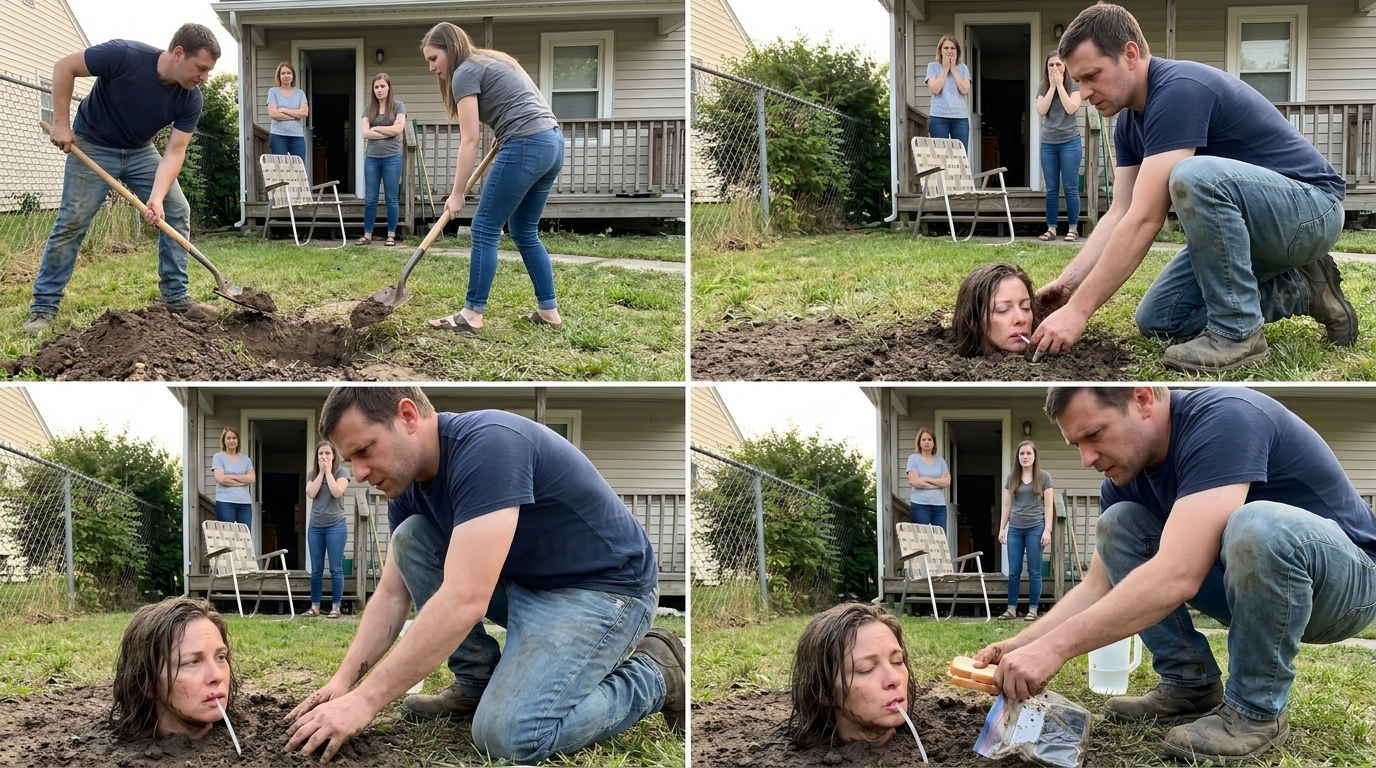
Years later, the phone remained in her memory as clearly as the first day.
Not every detail of the ordeal remained sharp.
Some memories softened.
Others became distant.
But she never forgot the small decision that changed everything.
She had decided to leave evidence behind.
That decision had not required courage in the way people later imagined.
She had been terrified.
Her hands had been shaking.
Her body had been exhausted.
She had simply reached a point where silence felt more dangerous than trying.
That was enough.
Her child grew into a lively, curious little person.
There were questions.
Endless questions.
Why does rain fall?
Where does the moon go?
Why do birds fly?
Why do people cry?
She answered what she could.
Some questions required honesty.
Others required time.
She never told the child every detail of the past.
Not yet.
A child did not need the weight of an adult's trauma.
But she wanted her child to grow up knowing one thing.
No one had the right to make fear the price of obedience.
She taught that gently.
Through ordinary choices.
Speak when something feels wrong.
Ask for help.
Do not protect cruelty simply because it comes from someone you love.
Believe people when they say they are afraid.
Those lessons became part of the life built after the backyard.
The legal case eventually became old news.
People stopped discussing it.
New stories replaced it.
The reporters moved on.
The public forgot the names.
She did not resent them.
People were not required to carry her past forever.
She only needed to carry it differently.
The official records remained.
The recordings remained preserved.
The testimony remained.
The truth no longer depended on attention.
One afternoon, she received notice that some of the evidence could finally be released to her.
The phone was returned through the proper process.
She held it in both hands.
The screen was dark.
The case had left marks on the device.
Scratches along one corner.
A faint crack near the edge.
She remembered the mud.
The plastic bag.
Her husband's hand.
The dispatcher.
Everything came back at once.
She almost put it down.
Instead, she turned it over.
It was only a phone.
But it had once been the quietest person in the room.
It had listened when everyone else refused to.
She placed it in a drawer.
She did not need to use it again.
She simply wanted to keep it.
Not as a symbol of suffering.
As a reminder that evidence can begin with something very small.
Her child eventually asked about it.
“What is that?”
She looked at the phone.
“A thing that helped me a long time ago.”
“How?”
She smiled.
“It helped me tell the truth.”
The child considered this.
Then asked another question.
“Was the truth scary?”
“Yes.”
“Did you tell it anyway?”
She nodded.
“Yes.”
That answer was enough.
She did not explain the backyard.
She did not explain the courtroom.
There would be time.
Years later, when the child was old enough to understand, she told the story carefully.
Not to frighten.
Not to create hatred.
To explain why boundaries mattered.
She described the warning signs.
The isolation.
The way control could begin with small things.
The way someone could make cruelty sound reasonable.
She explained why she had hidden the phone.
Then she explained how help came.
The child listened.
At the end, there was a long silence.
“Were you scared?”
“Yes.”
“Very?”
“Very.”
The child reached for her hand.
She held it.
“What happened after?”
She smiled.
“I got out.”
The child looked relieved.
“Then everything was okay?”
She considered the question.
“Not immediately.”
She explained that surviving something did not mean forgetting it.
It meant learning to live beyond it.
The child nodded slowly.
That was the lesson she wanted remembered.
Not the cruelty.
Not the people who had caused it.
The life afterward.
The years afterward.
The ordinary mornings.
The birthdays.
The school photographs.
The laughter.
The meals.
The quiet.
The freedom to close a door because she wanted privacy rather than because she feared someone entering.
The freedom to speak without rehearsing.
The freedom to disagree.
The freedom to leave.
One evening, she and her child sat outside.
The soil beneath their feet was dry and warm.
Her child drew shapes in the dirt with a stick.
She watched.
There was something almost impossible about the ordinary scene.
Once, soil had meant confinement.
Now it meant nothing more than earth.
She touched it with her fingertips.
The memory surfaced.
Then passed.
She looked at her child.
“Come inside when you're ready.”
“Okay.”
She stood.
The child continued drawing.
She walked toward the house.
Halfway to the door, she stopped.
For years, she had believed the final victory would be forgetting.
It was not.
The victory was remembering without being trapped.
The backyard would always exist in her history.
The recordings would always contain those voices.
The court documents would always describe what happened.
The scars left by fear would not disappear simply because the case ended.
But none of those things owned her.
She did.
Her future did.
Her child did not belong to the past either.
That was perhaps the greatest outcome of all.
The child would grow up without knowing what it was like to be buried alive.
Without learning to recognize footsteps by their weight.
Without believing that silence was the same as peace.
The cycle had stopped.
She went back outside.
Her child looked up.
“Mom?”
“Yes?”
“Can I show you something?”
She sat beside the child.
A crooked shape had been drawn in the dirt.
“What is it?”
“A house.”
She smiled.
“It needs a door.”
The child added one.
“And a window.”
Another line.
“A garden.”
More marks.
She watched the picture grow.
A house.
A door.
A window.
A garden.
A place where someone could come and go freely.
She felt something loosen inside her.
The image was simple.
But it carried everything.
A home was not walls.
It was the freedom to leave the room.
It was the freedom to speak.
It was the certainty that the person beside you would never use fear to control you.
She placed her hand beside the child's drawing.
The dirt was warm.
Nothing about it was dangerous now.
The sun lowered.
The evening breeze moved through the trees.
Her child leaned against her shoulder.
She listened.
No footsteps approached.
No voice demanded an apology.
No one told her to stay still.
No one stood above her.
There was only the sound of leaves, distant traffic, and her child's breathing.
She remembered the first breath she had taken through that hidden tube.
Then she took a full breath now.
Slowly.
Deeply.
Freely.
She looked toward the house.
The door stood open.
She reached for her child's hand.
“Let's go inside.”
They walked together.
Behind them, the dirt held no secret anymore.
The truth had already been brought into the light.
And this time, she was the one deciding where she would go.
The End
Read more original stories on Feel Every Story.
The Backyard Became a Prison Before Anyone Outside the House Knew Something Was Wrong
Part 8 of 8

