
The months after the trial were quieter.
That surprised her.
She had expected the verdict to transform everything immediately.
Instead, mornings still required patience.
Some nights she woke suddenly.
Sometimes a sound outside made her heart race.
Once, a man’s footsteps in a hallway stopped her completely.
She stood behind a locked door until the footsteps faded.
Then she laughed softly at herself.
Not because the fear was foolish.
Because she recognized it.
Recognition made it smaller.
She began meeting with a counselor.
At first, she disliked the questions.
How did you feel?
What do you remember?
What do you need?
She had spent so long being told what she felt that answering for herself felt unfamiliar.
Eventually, she learned.
Sometimes she needed rest.
Sometimes she needed silence.
Sometimes she needed someone to listen without fixing anything.
The baby grew.
Each new milestone felt larger than it should have.
The first deliberate smile.
The first attempt to reach for something.
The first night of longer sleep.
She kept photographs.
Not because she wanted to forget the past.
Because she wanted the future documented too.
Her new home became comfortable slowly.
She chose curtains.
Bought a small table.
Arranged photographs.
Placed the crib near the bed.
None of these things were dramatic.
That was why they mattered.
She had once lived in a house where every ordinary object seemed connected to someone else's authority.
Now she chose where things belonged.
One afternoon, she found herself standing in the kitchen with a cup of water.
She looked around.
No one was there.
She realized she had been holding the cup without drinking.
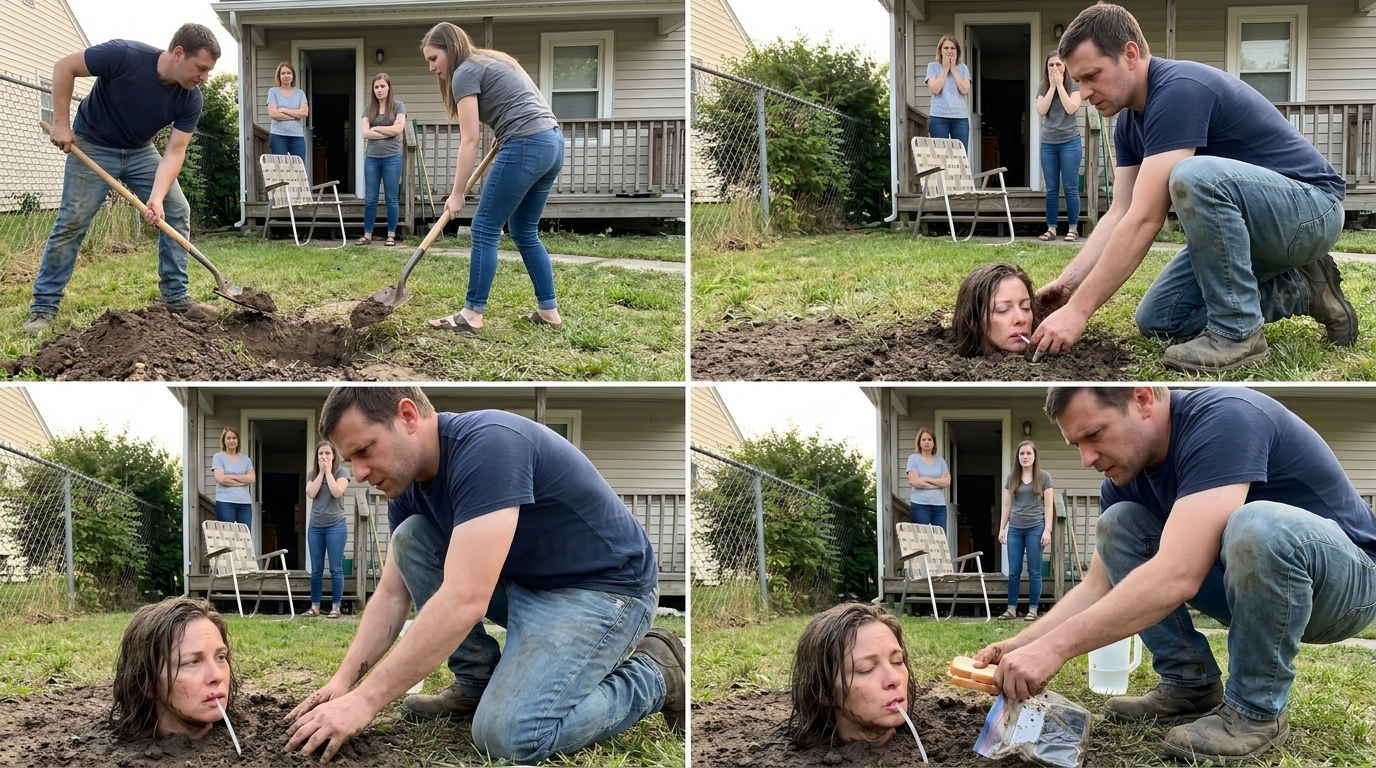
For a moment, she remembered the pitcher in the backyard.
Then she took a sip.
She smiled.
Something that had once been associated with humiliation had become ordinary again.
Healing often happened that way.
Not through one grand moment.
Through repetition.
A door opening without fear.
A meal eaten without permission.
A phone ringing without dread.
A quiet evening without expecting footsteps.
She remained in contact with the investigator for occasional updates.
The case was closed.
The recordings remained preserved.
The evidence remained in official custody.
There was no longer anything she needed to prove.
That realization took time.
For months, she had felt as though she needed to explain herself to everyone.
Now she understood that truth did not require constant defense.
One afternoon, a journalist contacted her.
The woman wanted an interview.
She declined.
Another request came.
She declined again.
Eventually, she agreed to speak once.
Not about every detail.
Not about the most painful moments.
She wanted to explain something she had not been able to say during the crisis.
The interview took place in a quiet room.
The journalist asked why she had recorded her husband.
She answered.
“Because I was tired of having my reality rewritten.”
The journalist asked whether she considered the phone her lifeline.
She thought.
“Yes.”
Then she added, “But the lifeline was not the phone. It was deciding that what happened to me was real.”
The journalist wrote that down.
The woman continued.
“I needed proof because I had been taught to doubt myself.”
The interview was published.
Some readers responded kindly.
Others criticized her.
She expected that.
This time, she did not read every comment.
She had learned that not every opinion deserved access to her peace.
Mara sent another letter.
The woman opened it months later.
Mara wrote that she had begun counseling too.
She said she was trying to understand why she had obeyed fear.
She did not ask for forgiveness.
That mattered.
At the end, Mara wrote that she hoped the woman and her child were safe.
The woman folded the letter.
She placed it in a drawer.
She did not know whether she would ever forgive Mara completely.
Perhaps forgiveness was not necessary.
Perhaps accountability was enough.
Her mother-in-law never contacted her directly.
There was no final conversation.
No dramatic confrontation.
The woman was relieved.
Not every story needed one.
Her husband remained part of the legal record but no longer part of her daily life.
That distinction felt liberating.
His voice existed on recordings.
His decisions existed in documents.
His actions existed in memory.
But he did not exist in her home.
That was enough.
One evening, she took her child outside.
The sky was turning orange.
The child sat on a blanket in the grass, reaching toward a small leaf.
The woman watched.
For a moment, she noticed the soil beneath them.
Her body reacted before her mind could stop it.
Her shoulders tightened.
Her breath shortened.
Then she looked at her child.
The fear loosened.
She sat down.
Her palm rested on the grass.
Soft.
Warm.
Safe.
She stayed there.
She did not force the memory away.
She allowed it to exist beside the present.
That was new.
The past did not have to disappear for the present to become good.
She thought about the first moment after rescue.
The officer telling her they were going to get her out.
The shovel entering the earth.
Her arm emerging.
The blanket around her shoulders.
The baby's heartbeat.
She remembered every detail.
But the memory no longer ended with terror.
It continued.
Hospital.
Evidence.
Court.
Recovery.
Home.
Child.
Life.
The story had kept moving.
That mattered.
Her child reached for her hand.
She took it.
Tiny fingers closed around one of hers.
She smiled.
A breeze moved across the grass.
For once, she did not listen for footsteps.
She listened to her child laughing.
Later that night, she opened an old box.
Inside was a copy of the case documents.
At the bottom was a photograph of the backyard.
She looked at it.
The image showed nothing extraordinary.
Grass.
Fence.
House.
A patch of disturbed earth.
Anyone else might have seen an ordinary yard.
She saw the place where her life had changed.
She almost threw the photograph away.
Instead, she kept it.
Not because she wanted the memory.
Because she wanted to remember what she had survived.
She placed it back in the box.
Then she closed the lid.
That was the difference.
Before, the memory had been open every day.
Now she could close the box.
The past still existed.
But she could decide when to open it.
Her child began crying from the other room.
She stood immediately.
“I'm coming.”
The words came naturally.
No hesitation.
No fear.
She walked toward the sound.
The baby quieted when she entered.
She lifted the child.
The room was warm.
The curtains moved gently.
Outside, traffic passed.
Life continued.
She held her child close.
There were still difficult days ahead.
She knew that.
Healing did not promise perfection.
It promised movement.
And she was moving.
Months later, she returned to the backyard one final time.
The house was no longer hers.
She did not go inside.
She stood outside the fence.
The ground looked completely ordinary.
Grass had grown over the place where she had been buried.
She remained there for a minute.
Then she turned away.
She did not say goodbye to the house.
She did not need to.
She had already left it behind.
Click Here to continue read next: PART8: The Last Secret Beneath the Soil Finally Finds Its Place in the Truth She Carries Forward With Her Child
The Backyard Became a Prison Before Anyone Outside the House Knew Something Was Wrong
Part 7 of 8

