
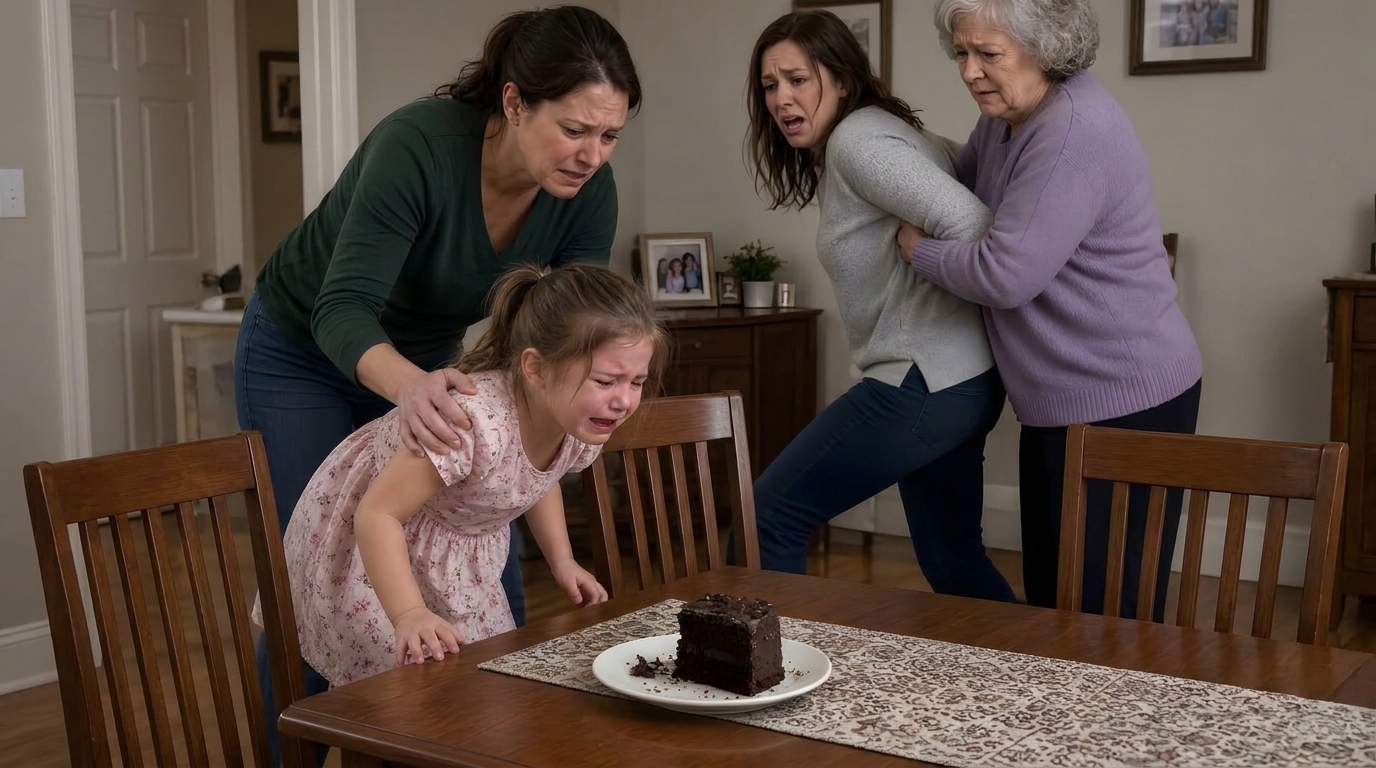
I didn't tell my daughter about my mother's confession.
She was too young to carry it.
Instead, I told her that Grandma had remembered something important and had admitted that she should have handled the situation differently.
My daughter listened while eating cereal.
“Did Grandma say sorry?”
“Yes.”
“Did she tell the truth?”
“Yes.”
That seemed to matter more than anything else.
She nodded.
“Then maybe she can come someday.”
“Maybe.”
“But not Aunt Vanessa?”
“Not yet.”
She accepted that without protest.
The weekend passed quietly.
On Sunday morning, my mother called again.
This time she asked whether she could come alone.
I looked at my daughter.
She was sitting on the floor building a tower from wooden blocks.
“Let me ask her.”
I crouched beside her.
“Grandma wants to come over.”
My daughter stopped building.
“Is Aunt Vanessa coming?”
“No.”
“Can Grandma come?”
I waited.
She thought for several seconds.
“Can you stay with me?”
“Of course.”
“Then okay.”
I called my mother back.
She arrived twenty minutes later.
She stood at the door holding nothing.
No groceries.
No gifts.
No cake.
That was important.
She wasn't trying to buy her way back into the house.
She was simply there.
My daughter stayed beside me.
My mother knelt several feet away.
“Hi, sweetheart.”
My daughter didn't answer.
My mother didn't push.
“I missed you.”
Still nothing.
“I know you're not ready to hug me.”
My daughter looked at her.
“That's okay.”
My mother swallowed.
“I want to say something.”
My daughter looked at me.
I nodded.
My mother kept her voice low.
“I was wrong.”
My daughter watched her.
“I should have helped you immediately.”
She looked at the floor.
“I was worried about Vanessa.”
My daughter frowned.
My mother continued.
“That was not fair to you.”
Silence.
“I am sorry.”
My daughter finally spoke.
“Why did you stop Mommy?”
My mother's eyes filled.
“Because I thought I could calm everything down.”
“But I was hurt.”
“I know.”
“Mommy wanted to come.”
“Yes.”
“Why didn't you let her?”
My mother looked at me.
Then back at my daughter.
“I made a bad decision.”
My daughter absorbed that.
Then she asked, “Will you do it again?”
My mother shook her head.
“I hope I never do.”
It was the right answer.
Not a promise no human being could guarantee.
Just an honest acknowledgment that she had to make better choices.
My daughter returned to her blocks.
My mother remained where she was.
She didn't try to get closer.
After a few minutes, my daughter pushed one of the blocks toward her.
“Do you want this?”
My mother's face crumpled.
“Yes.”
She took the block.
They built the tower together.
I watched them from the sofa.
Nothing was fixed.
But something had begun.
Later, after my daughter went to her room, my mother and I sat in the kitchen.
She looked at the old table.
“I hate this table.”
“So do I.”
“I keep thinking about that afternoon.”
“So do I.”
She rubbed her hands together.
“I should have taken Vanessa into another room.”
“Yes.”
“I should have checked your daughter first.”
“Yes.”
“I should have told you the truth immediately.”
“Yes.”
She looked at me.
“You don't make it easy.”
“I don't think it should be easy.”
She nodded.
“I understand.”
For the first time, we were talking without either of us trying to win.
Then my mother said something I hadn't expected.
“Vanessa is ashamed.”
“I know.”
“She wants to know whether she can write your daughter a letter.”
I considered it.
“A letter might be okay.”
“Would you read it first?”
“Yes.”
My mother nodded.
“She'll do that.”
That evening, Vanessa sent the letter.
It was only one page.
She didn't ask my daughter to forgive her.
She didn't explain the cake.
She didn't say she had been misunderstood.
She simply said she was sorry she had frightened her.
She said she understood that my daughter did not have to see her.
And she said she would wait.
I read it twice.
Then I gave it to my daughter.
“It's from Aunt Vanessa.”
She didn't touch it.
“Do I have to read it?”
“No.”
“Can you read it?”
“If you want.”
She nodded.
I read it aloud.
When I finished, she looked at me.
“Is she still angry?”
“No.”
“Does she want cake?”
I smiled.
“I don't know.”
My daughter thought.
“She can have some when I want her to.”
I laughed softly.
“That sounds fair.”
She asked me to put the letter away.
I did.
A week passed.
Then another.
My daughter began sitting at the kitchen table again.
Not for long.
Just long enough to color or eat fruit.
One afternoon, she looked at the empty chair across from her.
“That's where Aunt Vanessa sat.”
“Yes.”
“She was mad.”
“Yes.”
“Can we move the chair?”
I stood.
“Sure.”
Together we moved it into another room.
My daughter looked at the table.
“It feels better.”
Sometimes healing was as simple as changing where a chair stood.
My mother began visiting once a week.
She never stayed too long.
She never asked when Vanessa could come.
She never asked my daughter to hug her.
She brought books sometimes.
She sat on the floor when my daughter wanted to play.
When my daughter didn't want to talk, she respected the silence.
The change was slow.
That made it believable.
There were no dramatic declarations.
No instant forgiveness.
Just better choices repeated until they became familiar.
Vanessa remained away.
She sent occasional letters.
My daughter didn't always read them.
That was okay.
Then one afternoon, almost a month after the accident, my daughter asked, “Can Aunt Vanessa come to Grandma's house?”
I looked at her.
“Do you want her to?”
She nodded.
“Maybe.”
“Maybe isn't a yes.”
“I know.”
She thought.
“I want to see her.”
I felt a strange mixture of relief and caution.
“Are you sure?”
“Yes.”
“What if you feel scared?”
“I can leave.”
“Yes.”
“And you'll come?”
“Immediately.”
She nodded.
“Okay.”
I called my mother.
I told her what my daughter had said.
My mother cried.
Then she promised she would not make the meeting bigger than my daughter wanted.
Vanessa would come.
My daughter would decide when she had had enough.
No one would pressure her.
The meeting was planned for Saturday.
The night before, my daughter asked whether Vanessa would bring cake.
I smiled.
“No.”
“Good.”
She laughed.
It was the first time cake had made her laugh since the accident.
Saturday arrived.
I drove her to my mother's house.
She held my hand in the car.
When we arrived, Vanessa was already outside.
She stood beside the porch.
She looked nervous.
My daughter stopped walking.
Vanessa did not approach.
She waited.
My daughter looked at me.
“Can we go home?”
I squeezed her hand.
“Yes.”
Vanessa's face fell, but she nodded.
My daughter watched her.
Then, unexpectedly, she said, “Not yet.”
I looked at her.
She took one breath.
“I want to talk.”
Vanessa crouched slowly.
“Okay.”
My daughter stayed beside me.
“I was scared.”
“I know.”
“You made me hit the table.”
Vanessa's eyes filled.
“I know.”
“I don't like when people get angry.”
“I understand.”
My daughter looked at her.
“Are you going to get angry again?”
Vanessa shook her head.
“I will try very hard not to.”
My daughter thought about that answer.
Then she asked the question that would determine everything.
“Can I trust you?”
Vanessa didn't rush to answer.
“I don't know yet.”
My daughter looked surprised.
Vanessa continued.
“I hope you can someday. But I know I have to show you.”
My daughter looked at me.
I nodded.
Then she took one small step toward Vanessa.
Not an embrace.
Not forgiveness.
Just one step.
It was enough.
Click Here to continue read next: PART7: My Daughter Was Finally Ready to Face Vanessa, but One Simple Question Made Everyone Understand What Trust Really Meant
The Moment My Daughter Looked at Me and Asked Why Nobody Had Stopped Her Aunt
Part 6 of 8

