
The first morning after bringing her baby home, she woke before dawn.
For several seconds she did not know where she was.
There was no hospital monitor beside the bed. No nurse moving quietly beyond the curtain. No unfamiliar machinery humming in the corner. The room was dark except for a thin line of streetlight beneath the curtains.
Then the baby stirred.
She turned immediately.
The crib stood beside the bed, close enough for her to reach without standing. She watched the small chest rise and fall. A tiny hand moved beneath the blanket and disappeared again.
She exhaled.
The room was safe.
She repeated that silently until her body believed it.
For months, safety had meant watching doors, listening for footsteps, and measuring every word before speaking. Now there was a different kind of vigilance. It was no longer about surviving a man’s anger. It was about learning how to live after it.
She rose slowly and walked to the window.
Outside, the street was still quiet.
A motorcycle passed in the distance.
Someone opened a gate.
A dog barked once.
Ordinary noises.
She found herself listening anyway.
Then she smiled at herself.
That habit would not disappear in a day.
Perhaps it would take months.
Perhaps longer.
She had learned to forgive herself for that.
Her phone rested on the table.
She looked at it for a long moment.
The device was not the same one that had been buried beside her.
That phone was now evidence.
This one was new.
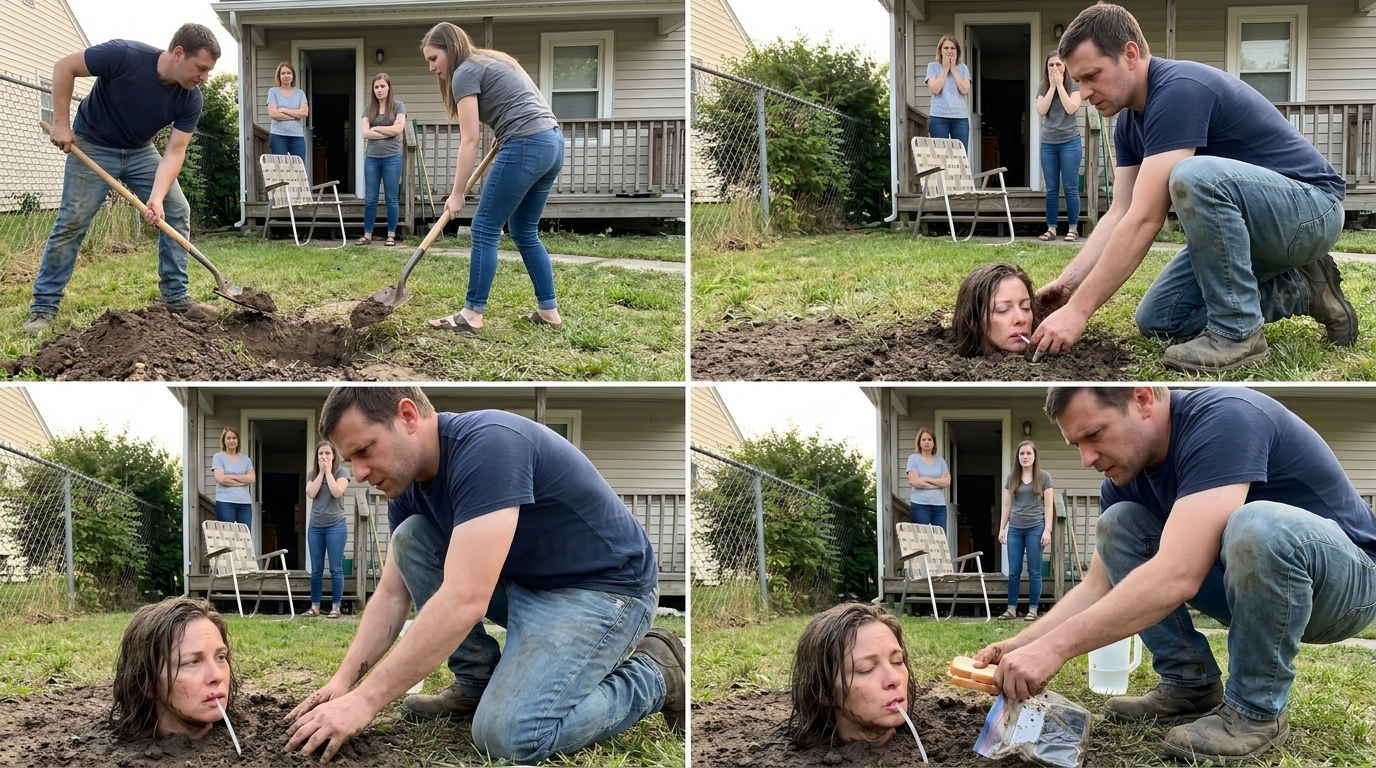
Still, seeing it made her remember the night she had hidden the other beneath the soil.
She remembered the dispatcher’s voice.
Keep him talking.
Those words had saved her.
But the recordings had done something else.
They had forced everyone to confront what they had been pretending not to see.
The case moved forward quietly.
There were no dramatic announcements at first.
There were interviews, documents, examinations, and meetings.
Her statement was taken more than once because different parts of the investigation required different details.
She answered the questions.
Sometimes she repeated herself.
Sometimes she had to close her eyes before describing the backyard.
The investigators never rushed her.
That helped.
One afternoon, an officer showed her a transcript of one of the recordings.
She read several pages.
Her husband's voice appeared again and again.
The words looked strangely harmless on paper.
That was the unsettling part.
Cruelty sounded different when written in black ink.
Without the pauses, the changes in tone, and the sound of his breathing, some sentences looked almost ordinary.
She remembered how he had spoken them.
That changed everything.
She pointed to one paragraph.
“This was before my mother-in-law came outside.”
The officer nodded.
“We know.”
She continued reading.
Then she reached the section where Mara asked what might happen to the baby.
Her eyes stopped.
She did not read the husband's response aloud.
She did not need to.
The officer waited.
Finally, she closed the transcript.
“I don't want to hear that sentence again.”
“You don't have to.”
She nodded.
That was another difference.
Nobody was forcing her to endure pain simply because evidence required it.
The legal process could be difficult without becoming another form of control.
Outside the building, reporters had begun asking questions.
Someone had discovered that a woman had been found buried in her own backyard while pregnant.
The details attracted attention.
Her name did not need to be published for people to speculate.
Some believed the story immediately.
Others wanted more.
A few questioned why she had stayed with her husband.
That question reached her through messages from strangers.
She read one.
Then another.
She stopped.
The question hurt.
Not because she did not know the answer.
Because it ignored everything that came before the backyard.
Leaving was not a single door she had failed to walk through.
It had been complicated by fear, isolation, manipulation, and the constant pressure to doubt herself.
She did not owe strangers a perfect explanation.
She placed the phone face down.
Her relative noticed.
“You don't have to read those.”
“I know.”
“Then don't.”
She smiled faintly.
“I’m learning.”
That was true.
She was learning where her responsibility ended.
Her responsibility was to tell the truth.
It was not to satisfy everyone who wanted a story.
Meanwhile, her husband's attorney began challenging parts of the evidence.
That was expected.
The woman had been warned that this could happen.
The recordings would be examined for context.
The defense would argue that the family had not intended serious harm.
They might say the incident was exaggerated.
They might say she had misunderstood.
She listened carefully.
The old fear returned.
For one night, she barely slept.
At two in the morning, the baby began crying.
She lifted the child from the crib and sat beside the window.
The baby's cheek rested against her shoulder.
She stared into the darkness.
She remembered the backyard.
Then she looked down.
The child was alive.
The truth was alive too.
That had to be enough.
The next morning, she met with the investigator.
“I’m afraid they’ll make me sound unreliable.”
“They may try.”
“What if people believe them?”
“Some might.”
She looked at him.
He did not soften the answer.
That helped more than reassurance would have.
“But the evidence doesn't depend on everyone believing you,” he continued. “It has to be evaluated as a whole.”
She nodded.
That was the part she had finally begun to understand.
She did not have to win every conversation.
She had to tell the truth consistently.
The rest belonged to the process.
Later that week, Mara requested another meeting.
This time, the woman agreed.
They sat across from each other in a quiet room.
Mara looked different.
Not transformed.
Just exhausted.
Her eyes were swollen.
Her hands remained clasped together.
“I don't know what to say,” Mara began.
“Then don't say something just because you think you should.”
Mara looked down.
“I should have stopped him.”
“Yes.”
The answer was immediate.
Mara flinched.
The woman did not apologize.
She was no longer willing to make truth comfortable for other people.
“I was afraid,” Mara said.
“I know.”
“I thought if I disagreed with him, he would turn on me.”
The woman studied her.
“That doesn't excuse what you did.”
“I know.”
Silence filled the room.
Mara finally whispered, “I laughed.”
The woman nodded.
“Yes.”
“I hate that I did that.”
“I believe you.”
Mara looked surprised.
The woman continued.
“But regret isn't the same as undoing it.”
Mara's eyes filled.
“I know.”
The woman stood.
She did not hug her.
She did not promise forgiveness.
She simply said, “Tell the investigators everything you remember.”
“I will.”
“And don't protect him anymore.”
Mara nodded.
When the woman walked away, she felt no triumph.
Only tiredness.
Some wounds did not need dramatic endings.
They needed boundaries.
Weeks later, Mara gave investigators additional information.
She described conversations that had occurred before the backyard incident.
She confirmed that the idea of frightening the woman into silence had been discussed.
She admitted that she had understood more than she originally claimed.
Her testimony strengthened the case.
The woman heard about it from the investigator.
She thanked him.
Then she asked one question.
“Did Mara tell the truth?”
“Yes.”
She nodded.
That was enough.
The trial preparation began.
Her attorney explained that she might have to speak in court.
The woman looked at the folder in front of her.
The thought frightened her.
She had already told the truth.
Now she would have to tell it again in front of strangers.
Her attorney saw the hesitation.
“You don't have to perform.”
The woman looked up.
“Just answer what you're asked.”
She nodded.
That sounded possible.
Not easy.
Possible.
That night, she placed her sleeping baby beside her and sat quietly.
She thought about the phone beneath the soil.
She thought about the dispatcher.
She thought about the first officer who told her not to move.
She thought about the recordings.
She realized the phone had done what she could not do alone.
It had carried the truth farther than her voice could reach.
Now she had to carry the rest.
Click Here to continue read next: PART6: In Court, the Quiet Details Become the Strongest Evidence Against the Story Her Husband Built Around Her
The Backyard Became a Prison Before Anyone Outside the House Knew Something Was Wrong
Part 5 of 8

