The morning after her son’s first birthday, Elena found an envelope resting beneath the front door of her small house. There was no return address, only her name written in careful handwriting she recognized immediately.
Carmela Villalobos had always written as though every letter were an official announcement. Even her shopping lists looked commanding, with straight lines and sharp corners. Elena stood in the hallway, holding the envelope between two fingers, wondering why the woman had chosen paper instead of sending another message through Mateo.
Her son was asleep in the bedroom, and the house was unusually quiet. Sunlight stretched across the kitchen floor, illuminating a few crumbs left from yesterday’s cake and a blue ribbon that had fallen from one of the birthday presents. Elena could still hear her mother laughing from the previous evening, and she wanted to preserve that peaceful feeling.
For several minutes, she considered placing the envelope in a drawer unopened. She had learned that not every message deserved an answer, and not every invitation to revisit the past was a genuine attempt to make things right. Yet ignoring the letter without knowing its contents felt different from choosing not to respond after reading it.
She opened it beside the kitchen window.
The first paragraph was brief. Carmela wrote that she had been thinking about her grandson and that it was painful to hear about his milestones from other people. She said she had always imagined being present for his first birthday and had hoped Elena would eventually understand how much family meant to her.
Elena read the paragraph twice, searching for the words that were missing.
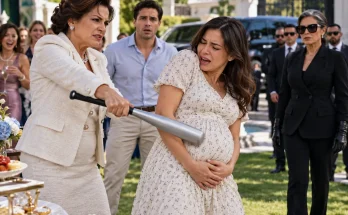
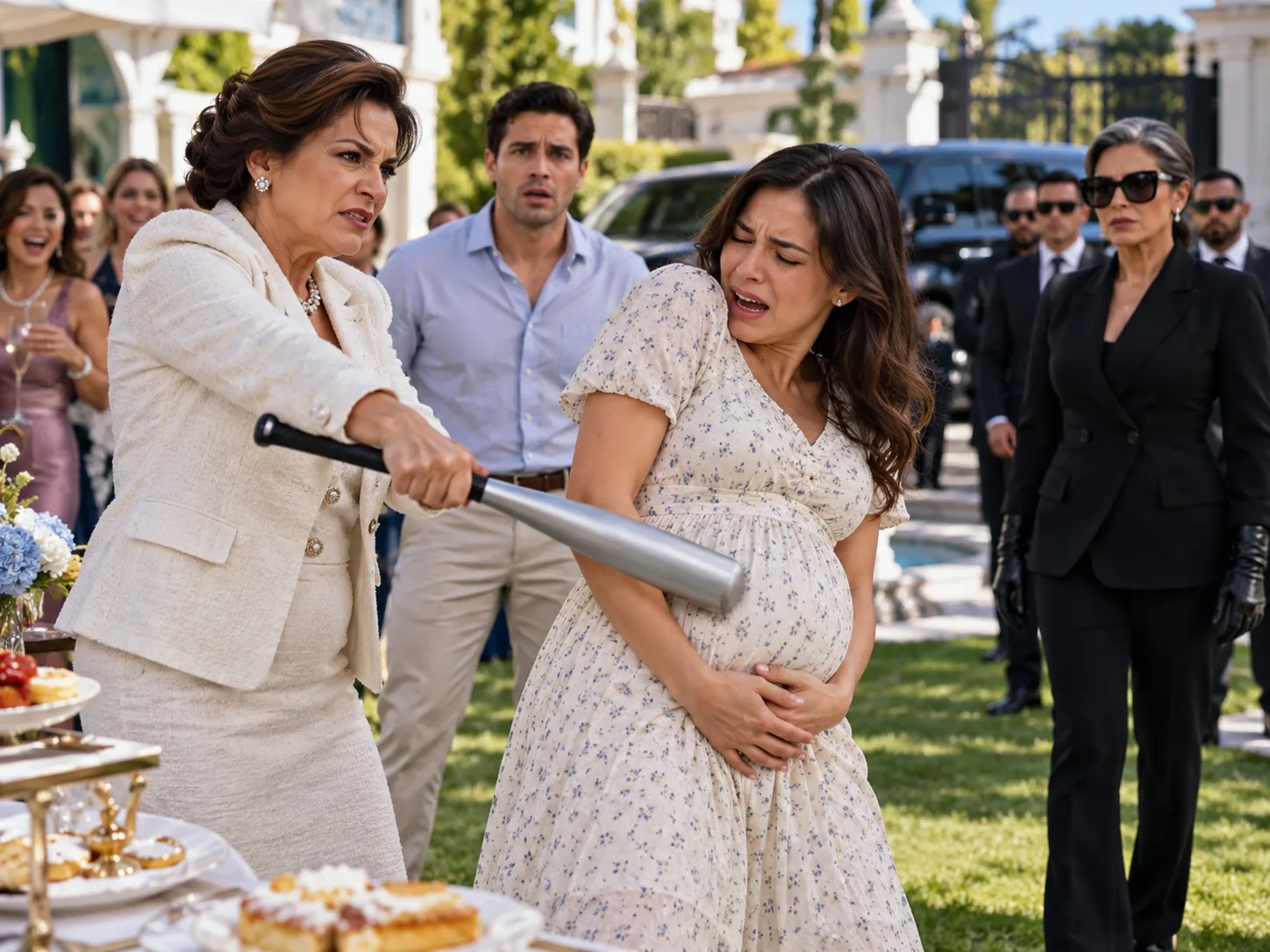
There was no mention of the baseball bat, the Sunday lunch, or the moment Elena had folded over in pain while the people around her stood watching. There was no acknowledgment that she had been pregnant, frightened, and dependent on strangers in a hospital to tell her whether her unborn child was safe.
The letter continued with a sentence about misunderstandings. Carmela regretted that the family had experienced such an unfortunate disagreement and said she hoped the legal matter would not prevent everyone from moving forward.
Elena lowered the page.
A disagreement was something people could have over dinner arrangements, money, or an argument about who had been invited to a celebration. What happened in the mansion was not a disagreement. Carmela had raised a metal bat and struck a pregnant woman, and the consequences had followed Elena long after the bruising faded.
The final paragraph asked whether Elena might consider a short visit, perhaps with Mateo present. Carmela promised that nobody would argue and that she would make every effort to keep the meeting pleasant. She ended by saying that a grandmother should not have to beg to know her own grandchild.
That last sentence changed the way Elena held the paper. For a moment, she felt the old pressure return: the expectation that she should be the reasonable one, the person who made everyone comfortable, the woman who swallowed her pain so the family could pretend it was whole.
Then her son stirred in the bedroom.
Elena folded the letter and placed it on the table. She thought about the child who had spent his first year surrounded by people who loved him without asking him to choose sides. She thought about the home where he could cry without being mocked, make a mess without being shamed, and grow without learning that cruelty became acceptable when it came from an older relative.
She would not teach him that family connections automatically created a right to enter his life.
Later that afternoon, Mateo arrived for his scheduled visit. He had become more consistent about showing up on time, bringing the things their son needed, and asking Elena about routines rather than assuming she would manage everything. He no longer treated each peaceful exchange as evidence that their marriage might eventually return to what it had been.
Elena placed the letter on the kitchen table.
Mateo recognized his mother's handwriting before he read the first line. His face tightened, but he did not reach for the paper immediately. He looked at Elena, waiting for permission instead of taking control of the conversation.
“She wants to visit him,” Elena said. “She says she regrets the disagreement.”
Mateo read the letter in silence. When he reached the final paragraph, he closed his eyes briefly. “She still hasn't said what she did.”
“No,” Elena answered. “She has described what happened as something that made her unhappy. She hasn't described what she did to me.”
He set the letter down carefully. In the past, he might have explained that his mother was struggling, that she had never learned to apologize, or that she expressed affection in difficult ways. This time, he did not offer any of those excuses.
“I can't tell you to let her see him,” he said. “And I can't promise she'll understand why.”
Elena studied his face. She had heard similar words from him before, but they had often been followed by a request for patience or another attempt to make her soften a boundary. She waited, expecting the familiar second half of the sentence.
It never came.
“I need you to understand something,” she told him. “This isn't punishment. I'm not keeping him from her to make her suffer. I'm deciding what kind of behavior is acceptable around my child.”
“I understand.”
“Do you? Because if she ever meets him, it won't be because she is tired of waiting. It will be because there is a reason to believe the meeting will be safe for him and respectful toward me.”
Mateo nodded. His eyes dropped to the letter again. “I'll tell her that.”
“No,” Elena said gently. “You can tell her what you believe. You cannot make a decision for me, and you cannot promise her access that I haven't agreed to.”
He accepted the correction without becoming defensive. It was a small moment, but Elena recognized how different it was from the conversations they had shared during the first weeks after the assault, when he had treated her boundaries as obstacles he needed to negotiate.
Before he left, Mateo asked whether she wanted him to take the letter back to his mother. Elena shook her head. She would keep it with the other documents connected to the incident, not because it was especially important, but because it showed that Carmela was still avoiding the truth.
After Mateo departed with their son for their usual short walk, Elena sat alone at the kitchen table. She had once believed that peace would arrive when Mateo finally defended her, when Carmela admitted her wrongdoing, or when the family acknowledged that Elena had never deserved the treatment she received.
Now she understood that none of those things could be the foundation of her life. Mateo could continue learning, Carmela could continue resisting, and the legal process could continue moving at its own uncertain pace. Elena still had a home to maintain, a child to raise, and a future that did not need permission from the Villalobos family.
She placed the letter in a folder, closed the drawer, and returned to the ordinary work of her afternoon.
Click here to continue reading: PART 18: When Mateo Returned to the Mansion Without Asking Elena to Follow Him or Repair His Mother’s Reputation
One Blow in the Garden Exposed the Cruelty I Had Spent Two Years Pretending Was Ordinary Family Trouble
Part 17 of 28