My son arrived on a quiet morning after a night of contractions and careful decisions. The hospital corridor smelled of clean linen and coffee, and the pale light coming through the windows seemed strangely gentle after the long hours of pain. My mother stayed beside me, following the staff's instructions and reminding me to breathe when I grew tired. There was no grand speech, no dramatic announcement, only the steady work of nurses and doctors helping me bring my child into the world.
When I finally heard him cry, I began to weep.
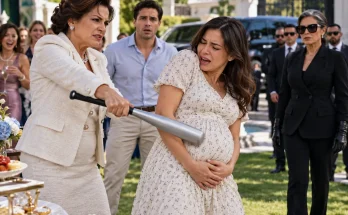
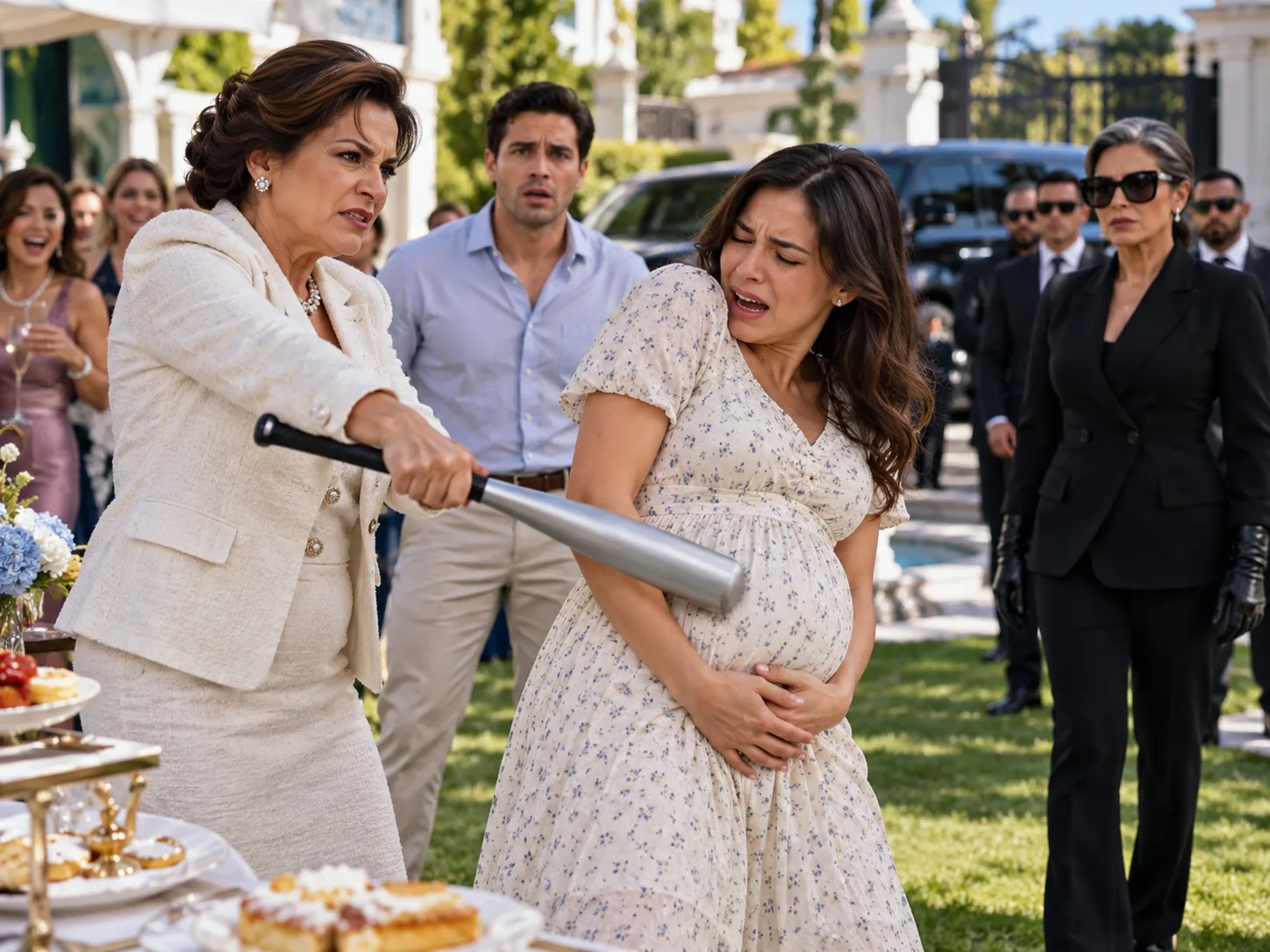
They placed him against me, warm and small, his face scrunched in protest at the brightness around him. I looked at his tiny fingers and the delicate curve of his ear, trying to absorb every detail before the moment moved on. My son was here. He was breathing, he was real, and for the first time in months, the future seemed to contain something beyond the memory of a bat falling onto the grass.
My mother stood close, tears running freely down her cheeks. She touched my shoulder and whispered that I had done well. I could not answer. I was too busy studying the child against my chest, feeling his small movements and listening to the uneven sounds he made as he settled.
We had not yet settled every detail of his name, but the choice I had been considering for weeks now felt right. When the nurse asked what we would call him, I gave his name clearly. My mother repeated it softly, smiling as though she wanted to learn its sound by heart.
Mateo arrived later, after the medical team confirmed that I was ready for a brief visit. He stood at the doorway, visibly nervous, and asked whether he could come in. I nodded. He approached the bed slowly, looking first at me and then at our son.
For several seconds, he said nothing.
“He's beautiful,” he whispered.
“Yes,” I replied.
He held out one hand, then stopped before touching the baby. “May I?”
I adjusted the blanket and nodded again. The nurse helped him position himself safely beside the bed. Mateo looked down at his son with an expression I had not seen before, a mixture of wonder and fear that made him seem younger than his years.
“Hello, little man,” he murmured. “I'm your dad.”
Our son moved his mouth and turned his head slightly toward the warmth of Mateo's hand. Mateo laughed softly through his tears. I watched them together and felt the complicated tenderness of the moment. I wanted my child to have a loving father. I wanted Mateo to become someone our son could trust. I also knew that the birth had not erased the garden, the hospital, or the years when I had been asked to endure what should never have been excused.
Mateo looked at me. “Thank you for letting me see him.”
“You're his father. We need to work out what that means in practice.”
He nodded. “I understand.”
He stayed for a short time, asking the nurse about the baby's feeding and care. When the staff needed to examine our son, Mateo stepped aside without complaint. He did not ask whether Carmela could come to the hospital. He did not suggest that the family should be reunited for photographs. He simply remained present until it was time for him to leave.
Before he went, he asked whether I needed anything.
“Not right now,” I said.
“Then I'll wait for you to tell me.”
It was a simple response, but I noticed the difference. He was not asking me to reassure him, and he was not treating access to the baby as a reward for his remorse. He was accepting that I had just given birth and that my needs, along with the baby's, had to come first.
After he left, my mother helped me settle back against the pillows. We spoke quietly about feeding, rest, and the instructions the nurses had given us. I was exhausted, but the exhaustion felt different from the helplessness I had experienced after the assault. There was work to do, and much of it would be difficult, yet I was no longer trying to do it while protecting other adults from the consequences of their own behavior.
The first message from Carmela arrived that afternoon.
I heard the baby has arrived. I hope you are both well. I would like to see my grandson.
I read it once and handed the phone to my mother. She asked whether I wanted to reply. I said no, not yet. I had only just given birth. I needed time to recover, and I did not owe anyone an immediate decision about a visit.
My lawyer had already explained that arrangements involving the baby would need to be considered carefully, with attention to his needs, my recovery, and the circumstances that had led me to leave the mansion. I would not make those decisions while tired and vulnerable simply to prevent Carmela from becoming angry.
The next day, Mateo called and asked whether I had received his mother's message. I told him I had.
“She says she just wants to welcome him,” he said.
“She can want that. I still need time.”
“I told her she has to wait until you're ready.”
I was quiet for a moment. “How did she take it?”
“Badly. She said I was allowing your mother to keep her grandson away.”
“And what did you tell her?”
“That my mother-in-law isn't the one who decides this. You and I need to make decisions based on what's best for our son, and right now you're recovering.”
I felt relief, but also sadness. This was what I had needed from Mateo long before the assault: not a promise to manage his mother privately, but a willingness to tell her that her wishes did not automatically outrank mine.
“Thank you,” I said.
He did not use the moment to ask whether I would come home. Instead, he asked when the medical team expected us to be discharged and whether there were supplies he could arrange. We discussed the practical details, and he agreed to deliver what was needed without entering my mother's home unless I invited him.
Over the following days, I learned my son's rhythms. I learned how he turned his head when he heard a familiar voice, how his fingers curled around mine, and how quickly a quiet room could fill with his cries. There were difficult hours when I felt overwhelmed, but my mother helped without making me feel incapable. She brought food, held the baby when I needed a shower, and reminded me that asking for assistance was part of caring for him, not evidence that I was failing.
Mateo visited according to the arrangements we had made. He washed his hands carefully, listened to the nurse's instructions, and asked questions about feeding and sleep. Sometimes he looked at me as though he wanted to talk about our marriage, but he respected the boundary when I said I was not ready. We were learning how to be parents without pretending we had resolved everything else.
Carmela continued to send messages. Some were brief wishes for the baby's health. Others included complaints about being excluded from a milestone she believed belonged to the entire Villalobos family. When the messages became accusatory, I preserved them and asked my lawyer how best to respond. The advice remained the same: keep communication clear, do not argue through relatives, and make decisions based on the child's welfare and the relevant legal guidance.
A month after the birth, Mateo asked to meet with me and the counselor again. I agreed. We discussed the practical arrangements for co-parenting and the boundaries we wanted to maintain with extended family. The counselor asked whether I felt safe having contact with Carmela. I explained that I did not, and that I would not agree to an unsupervised visit simply because she was a relative.
Mateo listened without interrupting.
“I want him to know his family,” he said when it was his turn to speak. “But I understand that can't mean ignoring what happened.”
“What would you do if she insulted me in front of him?” the counselor asked.
Mateo answered without looking at me. “I would stop the conversation and remove him from the situation if necessary. I wouldn't ask Lena to accept it for my sake.”
I wanted to believe that the answer marked a lasting change. I also knew that it was one answer in one meeting. We agreed that any contact with Carmela would depend on appropriate boundaries, and that decisions would be reviewed as our son grew and circumstances changed. Nothing was promised that we could not reasonably guarantee.
The formal report concerning the assault continued through the proper channels. I provided additional information when requested and made sure my statements remained accurate. I did not claim to know what outcome the authorities would reach, and I did not allow the family's rumors to determine my account. I knew what I had experienced. The witnesses knew what they had seen. The process would have to proceed on its own evidence.
Carmela's lawyer eventually communicated that she wished to avoid further conflict and hoped the family could move forward. My lawyer responded that any resolution would need to respect the seriousness of the incident and could not be based on pressure for me to withdraw my account or resume contact. No immediate resolution followed. There were further conversations, additional questions, and periods of waiting.
I found the uncertainty frustrating, but I had stopped measuring progress by whether Carmela appeared to regret her actions. I measured it by whether I could care for my son without being pulled into arguments about family loyalty, whether Mateo respected the arrangements we made, and whether I could say no without feeling compelled to defend myself for hours.
One evening, while my son slept against my shoulder, Mateo came to the doorway after a visit. He looked at the baby for a long moment, then turned toward me.
“I've been thinking about the life we wanted,” he said.
I waited.
“I still want to be with you. I want us to have a home together. But I know I can't ask you to return to the way things were.”
“No,” I said. “You can't.”
He looked down at his hands. “I don't know whether I can repair everything I've damaged.”
“I don't know either.”
He swallowed. “If you decide the marriage is over, I will respect that. I'll still be his father, and I'll keep showing up for him.”
I felt the weight of the words. They were not a request for immediate forgiveness, and he did not follow them with a plea. Perhaps counseling had helped him understand that responsibility did not guarantee a particular reward. Perhaps he was finally beginning to accept that I could choose a future he did not want.
“I need time to decide what I want,” I told him. “And I need to see that this change lasts.”
“I understand.”
After he left, I sat in the nursery with the baby resting against me. I thought about the woman I had been before the assault, how desperately I had wanted to prove that my marriage could succeed. I had believed that if I stayed patient enough, Carmela would eventually accept me and Mateo would eventually become strong enough to defend me. I had treated their choices as problems I could solve by changing myself.
Now I understood that I could love Mateo without promising to remain his wife. I could want our son to have a relationship with his father without giving Carmela unrestricted access to our lives. I could accept an apology without pretending the harm had disappeared.
Several months later, the legal process had still not produced every answer I wanted. I continued to cooperate with the authorities and follow my lawyer's advice. The family remained divided over what had happened, and Carmela still believed that I had humiliated her by refusing to return to the mansion. I could not force her to understand the difference between being held accountable and being attacked.
What I could do was raise my son in a home where the truth was not treated as a betrayal.
My mother and I grew closer during those months. We had difficult conversations about the eleven months we had spent apart, and we learned to disagree without withdrawing from each other. She did not tell me whom to love or what decision to make about Mateo. She helped me see the choices in front of me and trusted me to make them.
I eventually decided that I would not return to the Villalobos mansion. The decision was not an act of revenge, nor was it an attempt to win a contest of wealth or status. It was a recognition that I could not build a peaceful life in a place where I had been hurt and where my safety had been treated as negotiable. Mateo and I would continue working through the practical and legal questions of our separation, with our son's welfare at the center.
When I told Mateo, he closed his eyes and nodded. I could see the pain in his face, and I felt my own. We had once imagined growing old together, sharing holidays, and watching our child run through the garden of the mansion. I grieved that future, even as I accepted that the life we had actually built was not the one I had hoped for.
“I wish I had been different,” he said.
“So do I.”
He did not ask me to change my mind.
On a warm afternoon, I carried my son to the window and watched the light move across the garden. He was beginning to hold his head up more steadily, and his small hand caught the edge of my shirt. I kissed his forehead and thought of the moment Carmela had raised the bat, certain that she could frighten me into silence.
She had been wrong about the most important thing. My strength had never depended on defeating her, matching her wealth, or bringing someone more powerful through the gates. It had begun when I stopped pretending that what happened to me was acceptable.
My mother had come because I called her. The medical staff had cared for me because I asked for help. My lawyer had explained my choices because I was willing to tell the truth. And I had protected my son by refusing to return to a place where I did not feel safe.
None of those acts required Carmela's permission.
I still hoped Mateo would become the father our son deserved. I hoped he would continue learning to stand up to cruelty, even when the person responsible was his mother. I hoped that one day he would understand that choosing his child did not mean abandoning his family; it meant refusing to let family loyalty become an excuse for harm.
But those hopes no longer controlled my decisions.
My son would grow up knowing that love could be gentle and still have boundaries, that apologies mattered most when followed by changed behavior, and that no person became entitled to hurt another simply because of a family name. He would learn that courage was not the promise to protect someone someday. It was the choice to act when protection was needed.
I could not change the afternoon in the garden. I could not erase the fear I had felt or make the people who laughed understand what their laughter had cost me. I could not decide whether Mateo would become the man I had once believed he was.
But I could decide what came next.
I held my son close and looked out at the quiet garden, no longer imagining the iron gates of the Villalobos mansion or the people who had stood beyond them. My life was no longer a test I had to pass to earn a place in someone else's family.
It was ours to build.
And this time, I would not mistake silence for peace, endurance for love, or an unlocked gate for a home.
Click here to continue reading: PART 9: The Villalobos Family Tried to Rewrite the Garden Incident, but One Relative Finally Refused to Keep Protecting Carmela
One Blow in the Garden Exposed the Cruelty I Had Spent Two Years Pretending Was Ordinary Family Trouble
Part 8 of 28