
I met my mother the next afternoon.
She chose a quiet place, but neither of us ordered much. She sat across from me with both hands wrapped around a cup of coffee she barely touched.
For several minutes, we said nothing.
Finally, she looked at me.
“You've changed.”
I didn't argue.
“Maybe.”
“You used to understand me.”
“I still understand you.”
“Then why are you doing this?”
I looked down at the table.
“Because I understand my daughter too.”
My mother leaned back.
“She is frightened now. She won't always be.”
“I hope not.”
“She will forgive Vanessa.”
“Maybe.”
“She will forget.”
“Maybe.”
My mother frowned.
“Then why make everyone suffer until that happens?”
“Because she doesn't owe Vanessa a deadline.”
My mother looked toward the window.
People passed outside carrying bags, talking on phones, moving through an ordinary afternoon that had nothing to do with our argument.
“She loves Vanessa,” my mother said.
“My daughter loved the version of Vanessa who never scared her.”
My mother looked back at me.
“You're making this sound worse than it was.”
“No.”
I kept my voice calm.
“I'm finally describing it without making excuses.”
She was silent.
I continued.
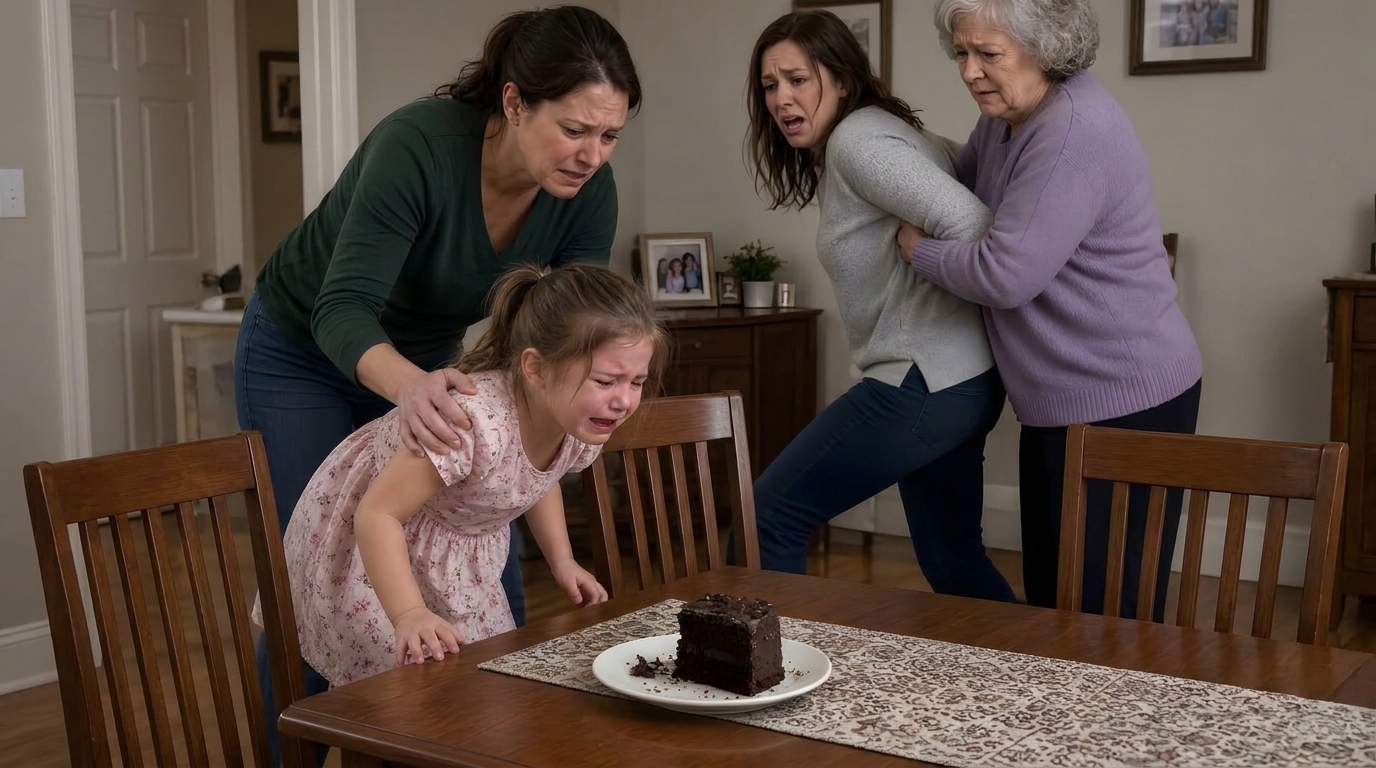
“Vanessa was upset about a piece of cake. She reacted physically. My daughter hit the table. She was hurt badly enough to need the hospital. She became afraid of Vanessa. When I tried to get to her, you stopped me.”
My mother lowered her eyes.
“I have already said I was wrong to stop you.”
“You said you were trying to help.”
“I was.”
“You were helping the wrong person.”
Her face tightened.
“That isn't fair.”
“Neither was what happened to her.”
My mother took a breath.
“She didn't deserve it.”
“No.”
“Vanessa didn't intend it.”
“I know.”
“You keep saying that.”
“Because I can believe Vanessa didn't intend to hurt her and still believe she has to take responsibility.”
My mother stared at me.
I could see the argument forming in her mind.
Then she seemed tired.
“She is my daughter.”
“And she is your granddaughter's aunt.”
“I know.”
“But those relationships don't erase what happened.”
My mother looked down at her coffee.
“I thought if we all forgave each other quickly, everything would go back to normal.”
I nodded slowly.
“That was the problem.”
She looked up.
“What do you mean?”
“There may not be a normal to go back to.”
That sentence hurt both of us.
I could see it.
For years, our family had survived by returning to normal as quickly as possible. Arguments ended. Feelings were swallowed. People hugged. Someone made coffee. Someone brought food. Then everyone acted as if the wound had closed because nobody wanted to look at it.
But this time, a five-year-old had been the one carrying the wound.
I couldn't ask her to pretend.
My mother wiped her eyes.
“What do you want me to do?”
“Listen to her.”
“She won't talk to me.”
“Then don't force her.”
“What about Vanessa?”
“She needs to understand that saying sorry doesn't automatically make my daughter feel safe.”
My mother nodded reluctantly.
“And if my daughter never wants to be around her?”
I looked directly at her.
“Then we respect that.”
My mother closed her eyes.
“That could be forever.”
“It could.”
“You're willing to lose your family over this?”
I shook my head.
“No. I'm willing to stop sacrificing my daughter to keep everyone comfortable.”
The words remained between us.
My mother looked older suddenly.
Not weak.
Just tired.
“I never wanted you to feel that I chose Vanessa over her.”
“But that's how it felt.”
“I was frightened.”
“So was she.”
“I know.”
It was the first time my mother said those words without trying to follow them with an excuse.
I noticed.
She noticed that I noticed.
Then she said, “I'm sorry.”
I didn't answer immediately.
“Are you sorry because I won't forgive Vanessa?”
“No.”
She looked down.
“I'm sorry because when your daughter needed you, I made it harder for you to reach her.”
That was the apology I had been waiting for.
Not because it fixed anything.
It didn't.
But because it finally named the part that had hurt me almost as much as the accident itself.
My mother had interfered when I tried to protect my child.
I reached across the table.
I didn't hug her.
Not yet.
But I touched her hand.
“We can't pretend nothing happened.”
“I know.”
“And Vanessa can't expect everything to return to normal.”
“I know.”
“She has to give my daughter time.”
My mother nodded.
“I'll tell her.”
When I returned home, my daughter was sitting on the living-room floor with crayons scattered around her.
She looked up.
“Did you see Grandma?”
“Yes.”
“Was she mad?”
“No.”
“Did she ask about me?”
This time I could answer differently.
“Yes.”
My daughter studied my face.
“What did you say?”
“I told her you need time.”
She nodded.
Then she held up her drawing.
It was another cake.
But there was something different about this one.
It had no black line through it.
I smiled.
“Are you going to eat cake again?”
“Maybe.”
“When?”
“When I want to.”
I laughed softly.
“That sounds fair.”
She put the crayon down.
“Can Aunt Vanessa come?”
I felt my heart tighten.
“Do you want her to?”
My daughter shook her head.
“Not yet.”
“Then not yet.”
She leaned against me.
For the first time since the hospital, her body felt completely relaxed.
I thought that was the end of the hardest part.
I was wrong.
That evening, Vanessa called.
I almost didn't answer.
When I did, she was quiet.
“I talked to Mom,” she said.
“I know.”
“She told me what you said.”
I waited.
“I want to apologize to your daughter.”
“Not today.”
“I understand.”
It sounded different.
There was no argument.
No demand.
No insistence that she deserved forgiveness.
“I really didn't mean to hurt her,” Vanessa said.
“I believe you.”
There was a pause.
“But I also know that doesn't change what happened.”
“I know.”
“Then give her time.”
“I will.”
We ended the call.
I sat beside my daughter while she colored.
For the first time, I allowed myself to believe that something might eventually be repaired.
Not because the family had forgotten.
Because they had finally stopped asking the child to carry the burden of making everyone comfortable.
That night, I tucked my daughter into bed.
She reached for my hand.
“Mommy?”
“Yes?”
“If I say no, you will listen?”
“Yes.”
“Even if Grandma is sad?”
“Yes.”
“Even if Aunt Vanessa is sad?”
“Yes.”
She thought for a moment.
“Okay.”
I kissed her forehead.
When I turned off the light, she didn't ask me to leave the door open.
I left it open anyway.
The next morning, my mother called.
She didn't ask whether Vanessa could visit.
She didn't ask when my daughter would forgive her.
She simply said, “How is she?”
I looked toward the kitchen.
My daughter was sitting at the table, eating breakfast.
“She slept well.”
My mother exhaled.
“That's good.”
“Yes.”
Neither of us said anything for a few seconds.
Then my mother said, “I'll wait.”
That was the first promise anyone had made that my daughter did not have to answer.
And I realized that the real choice had never been between my mother and Vanessa.
It had been between protecting the appearance of a peaceful family and protecting the child who trusted me to keep her safe.
I had finally made the choice.
My daughter still had questions.
She still avoided cake.
She still became tense when someone knocked unexpectedly.
But she no longer watched my face to decide whether she was allowed to be afraid.
She knew I would listen.
She knew I would come.
And when the family eventually stood on the other side of that door again, they would have to wait until she was ready to open it.
Click Here to continue read next: PART5: The Door Stayed Closed Until My Daughter Asked the Question I Had Been Avoiding Since the Day She Was Hurt
The Moment My Daughter Looked at Me and Asked Why Nobody Had Stopped Her Aunt
Part 4 of 8

