
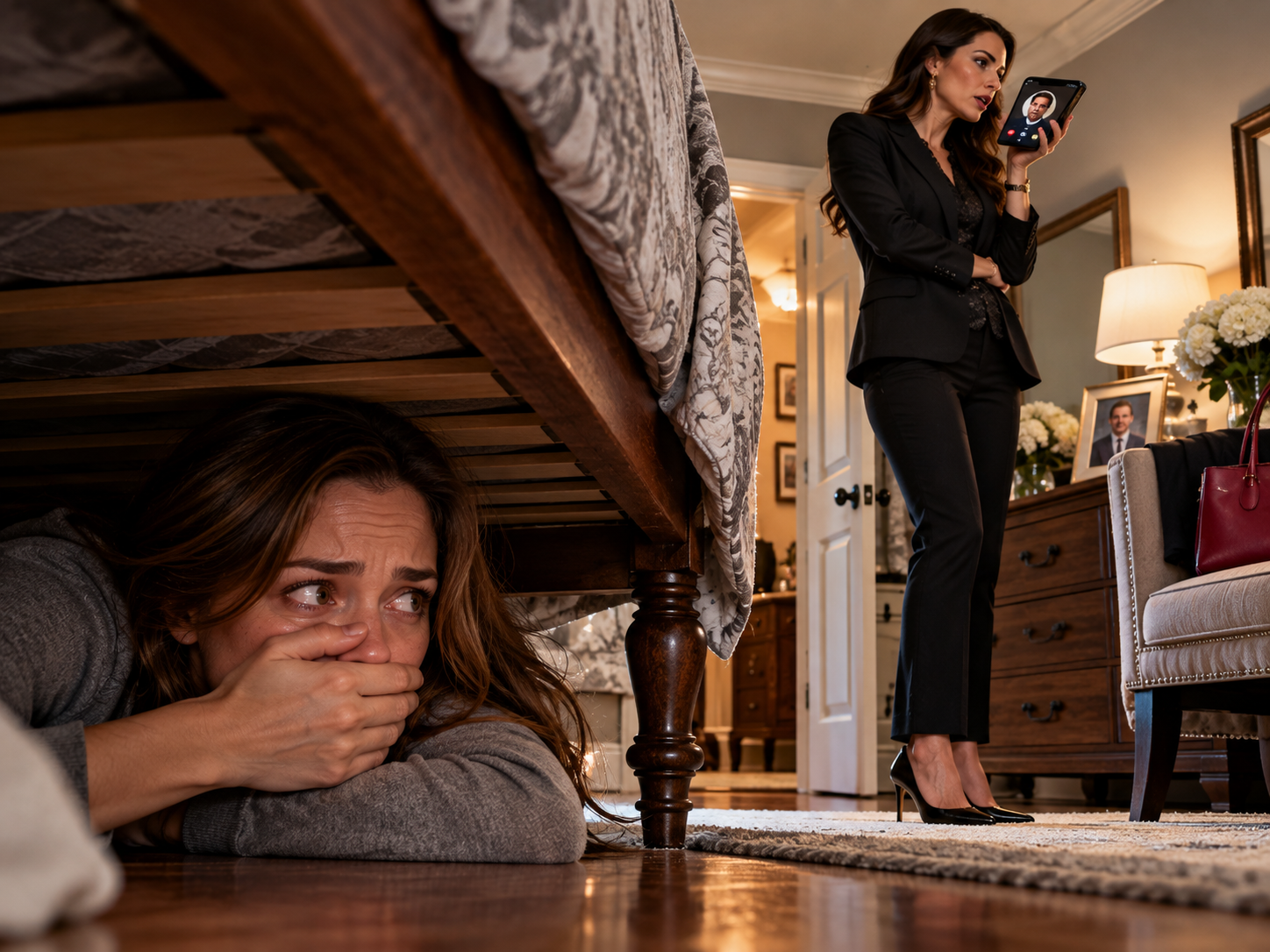
Detective Harris called me two days after I handed over Mark's letter. She confirmed that the Philadelphia address belonged to an office building that had housed several businesses before changing ownership. Investigators had already examined the location because of its connection to one of the intermediary companies. The building's current owner had no knowledge of Mark, but an archive service operating on the second floor had retained older business records.
The detective did not want me to visit the address. She explained that the letter could be an attempt to influence the investigation or direct attention toward evidence that Mark believed would benefit him. The police would examine the record first and determine whether it had any relevance to the accident. I agreed to stay away, though I could not stop thinking about the stranger whose body had been buried under my husband's name.
Until then, the case had centered on Mark's financial misconduct and the deception surrounding his disappearance. The dead man had been treated as an unfortunate consequence of the crash, someone whose identity had been obscured by the chaos of the night. If Mark had kept a document concerning him, it might reveal whether the stranger had knowingly helped with the disappearance or had simply been caught in a plan he did not understand.
Three days later, Detective Harris contacted me again. The archive service had located a sealed envelope containing copies of correspondence from the weeks before the accident. The documents were not conclusive, but one letter suggested that Mark had arranged to meet a man who used the name Peter Shaw. The letter referred to a vehicle, a change of identity, and an agreement to provide temporary financial assistance.
“Do you recognize that name?” the detective asked.
“No.”
“Neither do we. We are checking missing-person records and the information recovered from the storage unit.”
I thought about the man who had died. Had he been Peter Shaw? Had he agreed to help Mark disappear, believing he would receive money in return? Or had Mark used his willingness to help as cover for a plan that would leave him dead and nameless? The documents did not answer those questions, but they established that the meeting had been arranged before the crash.
I spent the afternoon reviewing my own records for any mention of Peter Shaw. I found nothing. Mark had been careful not to bring his business dealings into our home, at least not in a form I could recognize. His conversations had been full of vague references to partners, investments, and opportunities. I had assumed he was protecting our privacy. Now I understood that the vagueness had also protected him from scrutiny.
The following week, the police identified a possible match for Peter Shaw through a missing-person report filed in another county. The man had worked as a driver for a small transportation company and had disappeared shortly before the accident. His family had reported him missing after he failed to return home from a scheduled trip. The report had remained unresolved because there was no confirmed evidence linking him to the crash.
Detective Harris told me that the identification process would take time. The authorities needed to compare dental records and other evidence before notifying the family. She asked me not to contact anyone connected to the report, and I promised I would not.
I thought about the family waiting for news. For two years, I had believed I was the person who had lost someone on that highway. I had lived inside the grief, unable to imagine that another household might have been left with the same unanswered questions. If the body in the coffin belonged to Peter Shaw, then his family had been deprived of the chance to understand what happened to him.
I could not undo that harm, but I could help ensure the truth was established.
The police later confirmed that the remains had not been positively identified as Mark's. The dental comparison and additional evidence supported the conclusion that the dead man was Peter Shaw. His family was notified, and the authorities began reviewing the circumstances surrounding his death. Mark's account of the accident remained under investigation, but the false identification was no longer merely a suspicion.
When Detective Harris told me, I felt a strange combination of relief and sorrow. The truth had answered one question while making the tragedy more real. Mark had not died in the crash, but another man had, and his death had been used to build a false story that had shaped my life for two years.
I asked whether the family knew that Mark had used Peter's identity to disappear.
“They've been told what we can confirm at this stage,” the detective said. “We won't speculate beyond the evidence.”
That evening, I sat at the kitchen table with the blue mug in front of me. I had taken it out of the box because I wanted to decide whether I could keep it without treating it as a relic of a life that no longer existed. The crack near the handle caught the light. I remembered Mark holding it in both hands on winter mornings, complaining that the coffee cooled too quickly.
The memory still felt real. The deception did not erase the years we had shared, but it changed what I could safely assume about them. I could remember a kind gesture without deciding that it proved he had been an honest man. I could acknowledge that I had loved him without feeling obligated to defend the choices he had made.
I washed the mug and placed it in the cupboard.
Several days later, Vanessa requested a meeting through her attorney. My own attorney advised me that I was under no obligation to agree, and I initially declined. I had already given my statement, and the police had access to the evidence she possessed. I did not need to hear another explanation from someone who had entered my home without permission.
Then Vanessa sent a short written message through the attorneys. She wanted to explain why she had delayed reporting Mark's disappearance and why she had used the screams to draw attention to my house. She also wanted to tell me something she believed I deserved to know about the final months of my marriage.
I considered the request for several days. I did not want to forgive her merely because she was frightened or because she had finally decided to cooperate. But I also knew that the unanswered questions had become a weight I carried everywhere. I agreed to meet her in a lawyer's office, with my attorney present.
Vanessa looked thinner than she had on my porch. Her hair was pulled back, and she wore a plain gray sweater. She did not attempt to greet me warmly. Instead, she placed a folder on the table and folded her hands.
“I know you don't owe me anything,” she said. “I won't ask you to forgive me.”
“Then tell me what you came to say.”
She explained that Mark had begun moving money through the holding company long before the accident. At first, she had believed the transactions were legitimate investments. When she discovered that some account holders had not authorized the transfers, she confronted him. He told her that the paperwork was legally sufficient and that any discrepancies would be corrected later.
She had accepted that explanation because she was afraid of losing her job and because she had already signed documents that connected her to the transactions. As the amounts grew, she became increasingly uneasy. Mark promised to return the money, settle the accounts, and make everything right. Instead, he arranged his disappearance.
“Why didn't you go to the police then?” I asked.
“I thought I'd be arrested. I also thought he might have copies of documents that would make it look as if I had planned everything with him.”
“So you helped him.”
“Yes.”
The answer was direct. I appreciated that she did not try to soften it.
She told me that she had not known the full plan for the accident until afterward. Mark contacted her from another phone and instructed her to help process the remaining financial documents. He claimed the dead man had agreed to assist him and that no one would be harmed by the arrangement. Vanessa had not believed him completely, but she had been too frightened to challenge him.
“What changed?” I asked.
“I found out he was still using your authorization to move money. He told me you had agreed to everything and that you would never question it. When I realized he intended to leave you responsible for the records, I understood what he'd done.”
She said she had hired Daniel Price to find Mark because she wanted evidence that could protect her from being blamed for the entire scheme. She had entered my house because she believed the original authorization was hidden there. The screams were her attempt to provoke a response without openly confronting me.
“You could have told me the truth,” I said.
“I know.”
“You could have given the evidence to the police.”
“I know.”
Her repeated admissions did not make me feel better. They made the harm clearer. Vanessa had been trapped by Mark's lies, but she had also made choices that allowed those lies to continue. She had treated my fear as a tool because she believed it was safer than speaking honestly.
“What is it you think I need to know about my marriage?” I asked.
She opened the folder and removed a printed email from Mark. It had been sent several months before the accident. The message referred to the investment account and included a sentence about ensuring that I would be financially protected if anything happened to him.
At first glance, it appeared reassuring. Then I read the next paragraph. Mark had instructed Vanessa to keep the account documents separate from the household records and to make sure I signed the authorization without reviewing the attachments. He had written that I trusted him and would not want to become involved in the details.
I felt my face grow hot. I had remembered his explanation at the dining table as an ordinary act of trust between spouses. The email showed that he had planned to exploit that trust.
“Did he ever intend to protect me?” I asked.
Vanessa looked down. “I don't know. He said he wanted to make sure you would be comfortable if he had to leave. But I think he also knew that if the scheme failed, you would be the easiest person to blame.”
I folded the page and returned it to the folder.
That was the last thing I needed from her. Not because it answered every question, but because it ended the argument I had been having with myself. I no longer needed to search for a hidden explanation that would make Mark's behavior understandable. He had chosen what benefited him, even when that choice meant using the person who trusted him most.
I thanked Vanessa for providing the email. I did not offer forgiveness, and she did not ask for it. When we left the office, I walked to my car without looking back.
The investigation continued, but the shape of my life had begun to change. I no longer organized my days around discoveries about Mark. I returned to work, met Elaine for lunch, and started walking in the evenings. I still had difficult nights, especially when an unexpected sound reminded me of the woman entering my bedroom or the voice emerging from the phone. But the memories were becoming less like warnings and more like events that had happened to me.
One Saturday morning, I drove to a small park near the Delaware River and sat on a bench overlooking the water. The sky was pale, and the air smelled of wet earth. I thought about Peter Shaw's family, about Vanessa's fear, and about the people whose money had been moved through accounts they did not understand. The story had begun with a voice I believed belonged to a dead man. It had widened into a chain of decisions that affected people who had never met one another.
I could not repair all of it. I could only tell the truth when asked, preserve the evidence, and refuse to help anyone conceal what had happened.
For the first time, that felt sufficient.
Click here to continue reading: PART 7: As the Investigation Closed In on Mark’s Accomplices, I Discovered That Reclaiming My Life Required More Than Learning How My Husband Had Lied
The Woman Who Entered My House Without Knocking Knew My Husband’s Habits Better Than Anyone Should
Part 6 of 20

