Spring arrived before either woman noticed.
One morning, Linda opened the curtains and saw the first rosebud.
She called her mother.
“Come here.”
Her mother shuffled toward the window.
“Oh.”
The word carried more happiness than a celebration would have.
“It survived.”
Linda smiled.
“So did you.”
Her mother looked at her.
“That too.”
They went outside.
The rosebushes had suffered during the winter.
Several branches were dead.
Others had survived.
Her mother carefully trimmed the damaged growth.
Linda held the basket.
They had become a team without discussing it.
One person cut.
The other gathered.
Neither needed to give instructions.
Afterward, they sat on the porch.
Her mother brought iced tea.
Linda brought sandwiches.
The neighborhood sounded ordinary.
Children shouted somewhere down the block.
A lawn mower started.
A car door slammed.
A dog barked twice and stopped.
Linda looked around.
“Do you ever think about moving?”
Her mother shook her head.
“No.”
“Not even after everything?”
“This house belongs to me.”
Linda smiled.
“You sound like a lawyer.”
“I learned from experience.”
They laughed.
The house had nearly become the center of a nightmare.
Now it was simply home again.
That afternoon, Linda helped her mother organize her medical papers.
The hospital records were kept in one folder.
The investigation documents were in another.
Her father's letters were in a separate box.
Arthur's letters were sealed away.
Her mother watched her.
“You're very organized now.”
“I learned.”
“From whom?”
“Pain.”
Her mother nodded.
“Good teacher.”
“Terrible teacher.”
“Also true.”
They finished sorting.
Then Linda noticed something.
A blank space on the shelf.
“What was there?”
Her mother looked.
“Your father's old ledger.”
Linda's stomach tightened.
“What ledger?”
“He had a small black book.”
“Where?”
“I don't know.”
They searched the house.
Closets.
Drawers.
The attic.
The basement.
Nothing.
Linda began to feel the old anxiety returning.
Her mother noticed.
“Stop.”
Linda looked at her.
“We don't have to find everything.”
“But what if—”
“No.”
Her mother took her hand.
“That is exactly what we are not going to do.”
Linda breathed slowly.
Her mother continued.
“We spent too many years believing every unanswered question was a danger.”
Linda nodded.
“Sometimes an unanswered question is just an unanswered question.”
The lesson was simple.
But it was difficult to practice.
They did not search endlessly.
They stopped.
That evening, Linda received a call from Harris.
He had found the ledger.
It was not hidden.
It had been sitting in the property records office because her father had deposited it with his attorney years earlier.
Linda laughed when she heard.
“What?”
Harris asked.
“Nothing.”
“You sound relieved.”
“I am.”
The ledger contained notes about business transactions.
Most were mundane.
A few concerned Arthur.
One entry stood out.
Her father had written:
“Final warning given. He understands.”
There was no explanation.
No dramatic secret.
Just a line.
Linda realized that this was enough.
Her father had confronted Arthur.
Arthur had understood.
Arthur had then chosen what to do.
Linda did not need another hundred pages to establish responsibility.
Sometimes the truth was complete enough.
Later that week, her mother began volunteering at the church.
She helped older women understand financial statements, medical bills, and insurance paperwork.
She did not call herself an expert.
She simply told them what she had learned.
“Read everything.”
“Ask questions.”
“Don't hand your documents to someone just because they sound confident.”
“And if something hurts?”
“Get checked.”
The phrase became familiar.
People smiled when she said it.
She smiled too.
Linda occasionally joined her.
One afternoon, an elderly woman stayed behind after the meeting.
She asked Linda's mother for help understanding a bill.
They sat together for almost an hour.
When the woman left, she thanked them.
Her mother watched her go.
“I wish I had learned all this sooner.”
Linda looked at her.
“You learned when you needed to.”
Her mother nodded.
“I suppose.”
That night, Linda received another letter from Arthur.
She almost returned it unopened.
Instead, she read it.
He did not ask her to visit.
He did not ask for forgiveness.
He wrote that he had begun accepting responsibility.
He admitted that he had spent years calling his choices protection because the word made them easier to live with.
Linda read the sentence twice.
It was the first time Arthur had written anything that did not ask her to understand him.
She placed the letter in the drawer.
Her mother noticed.
“What did he say?”
“That he finally understands.”
“Do you believe him?”
“I don't know.”
Her mother nodded.
“You don't have to.”
That was another freedom.
Linda did not have to decide whether Arthur had changed.
She did not have to monitor him.
She did not have to rescue him.
She did not have to punish him.
His life was his responsibility.
Hers was hers.
A few weeks later, the final court documents arrived.
Arthur had been sentenced.
Gregory had been held accountable for his role.
The investigation into the fraudulent claims continued where necessary, but the major case against the men who had directly harmed Linda's family had reached its legal conclusion.
The capsule was no longer needed as physical evidence.
The data had been preserved.
The device itself had been destroyed according to the investigators' procedures.
Linda found that strangely comforting.
Something that had once been inside her mother was gone.
Not hidden.
Not waiting.
Gone.
Her mother seemed lighter when Linda told her.
“Good,” she said.
“That's all?”
“What else should I say?”
Linda laughed.
“You could be dramatic.”
“I've had enough drama.”
That Sunday, they made beef stew.
The same kind her mother had cooked before the hospital.
The smell filled the kitchen.
Linda chopped carrots.
Her mother stirred the pot.
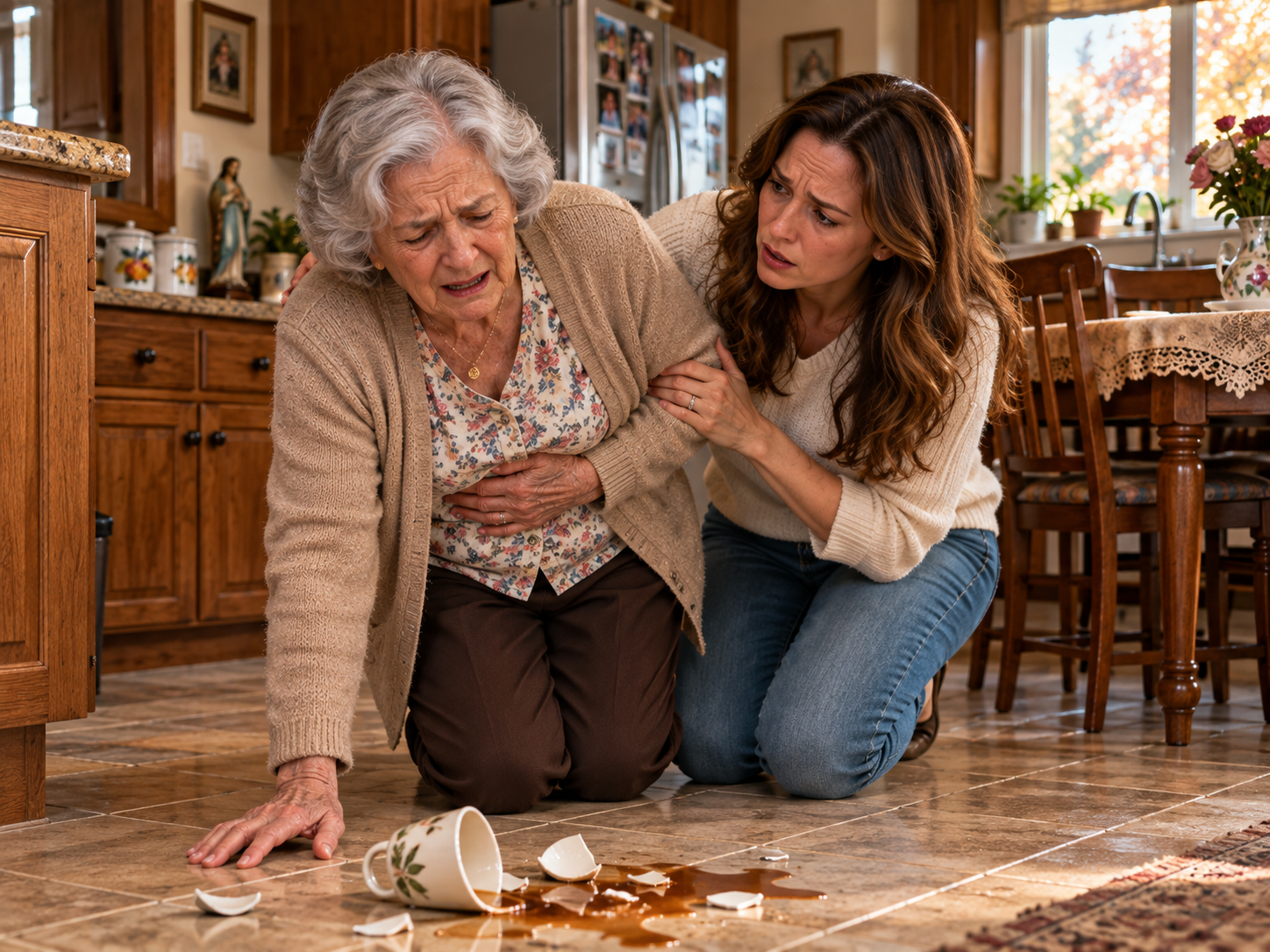
For a moment, Linda remembered the day her mother had dropped the mug.
She remembered the fear.
Then she looked at the stew.
The ordinary meal had become a marker of survival.
Her mother tasted it.
“Needs salt.”
Linda groaned.
“You always say that.”
“Because it always needs salt.”
They ate at the same table where so many difficult conversations had happened.
This time, there were no investigators.
No evidence.
No folders.
Just two bowls.
Halfway through dinner, her mother said, “Linda?”
“Yes?”
“If you ever think I'm hiding something from you—”
“I'll ask.”
“And if I tell you I'm fine?”
“I'll ask again.”
Her mother smiled.
“And if you think I'm being stubborn?”
“You are.”
They laughed.
Then her mother became serious.
“I mean it.”
“So do I.”
The promise was different from the old promises.
It was not a promise to keep secrets.
It was a promise to speak.
That distinction mattered.
The following morning, Linda visited her father's grave.
She brought the small wooden case containing his watch.
She did not leave it there.
She simply held it while she sat.
“I understand more now,” she said quietly.
The cemetery was almost empty.
Wind moved through the trees.
Linda spoke for several minutes.
She told him she was angry.
She told him she missed him.
She told him she wished he had trusted her sooner.
She told him she understood why he had been afraid.
And finally, she told him she was no longer carrying his unfinished work as a burden.
She would remember him.
But she would not live inside his fear.
When she returned home, her mother was waiting.
“Did you talk to him?”
Linda smiled.
“Yes.”
“What did you say?”
“Everything.”
Her mother nodded.
“That sounds right.”
They went outside.
The roses had opened fully.
Not every flower was perfect.
Some petals were damaged.
Some stems leaned toward the ground.
But the bushes were alive.
Linda looked at them.
Her mother touched one of the flowers.
“Beautiful.”
Linda nodded.
She had once thought survival meant returning to exactly what existed before.
Now she knew better.
Survival could mean becoming something different without losing what mattered.
The house was different.
They were different.
The memories were different.
But the love between mother and daughter had survived.
And this time, it was built on truth.
Click here to continue reading: PART 16: On the Anniversary of the Morning Linda Took Her Mother to the Hospital, They Returned to the Porch and Finally Understood What Surviving Had Truly Given Them
When my mother finally admitted how long the pain had lasted, I realized the truth had been sitting quietly in our family while my husband tried to keep me from asking questions
Part 15 of 28