A year passed.
Linda did not mark the date on the calendar.
She did not need to.
Her body remembered.
The first cool morning of October arrived, and she woke before sunrise.
For several minutes, she lay in bed listening to the quiet.
Then she remembered.
One year.
She got dressed and drove to her mother's house.
The porch light was already on.
Her mother was awake.
“You remembered,” her mother said.
Linda smiled.
“Of course.”
They did not say anything else about the date.
They didn't need to.
Her mother made coffee.
Linda brought breakfast.
They ate by the window.
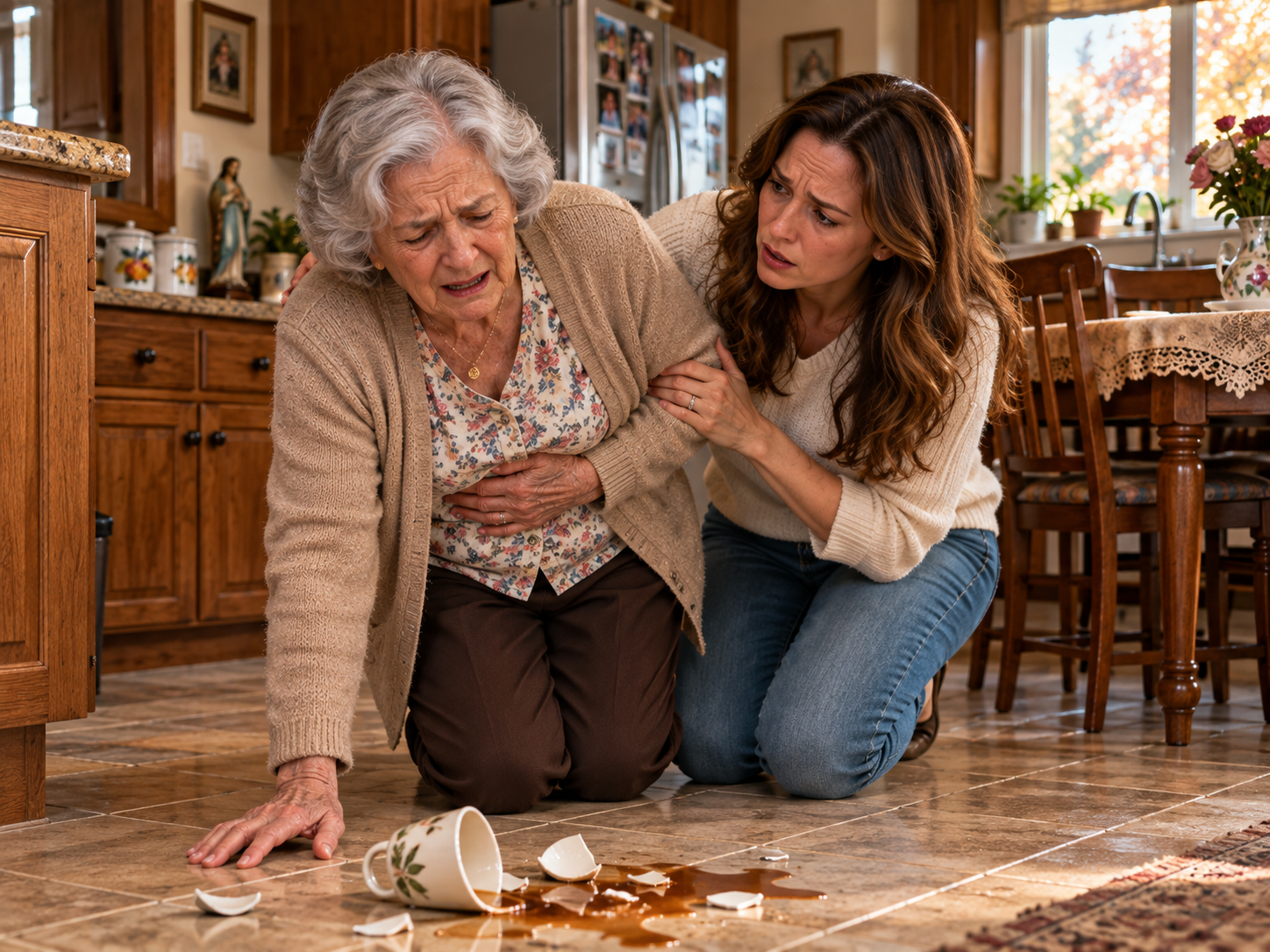
The same window where her mother had once sat holding a cup of tea while hiding severe abdominal pain.
Now she complained that the coffee was too weak.
Linda deliberately made it weaker the next morning.
Her mother laughed when she tasted it.
“You're impossible.”
“You raised me.”
“Unfortunately.”
They smiled.
After breakfast, they walked outside.
The roses had survived another summer.
Her mother touched the leaves.
“Look.”
A small red flower had opened late.
Linda bent closer.
“Beautiful.”
“Late bloomer.”
“Like you?”
Her mother laughed.
“Like us.”
They sat on the porch.
For a while, they watched the neighborhood wake.
A school bus passed.
A man carried newspapers toward his house.
A woman opened her curtains.
Nothing dramatic happened.
Linda found that comforting.
She had once believed meaningful moments had to arrive with sirens, hospital doors, police officers, or shocking discoveries.
Now she understood that ordinary mornings could carry more meaning than any of those things.
Her mother looked at her.
“Do you remember what you said when you drove me to the hospital?”
Linda thought.
“I said you were going.”
“No matter what?”
Linda smiled.
“Yes.”
Her mother nodded.
“I was angry with you.”
“I know.”
“I thought you were wasting money.”
“I know.”
“I thought Arthur knew better.”
Linda looked at her.
“I know.”
Her mother lowered her eyes.
“I was wrong.”
Linda reached over.
“You were scared.”
“I was also wrong.”
“That too.”
Her mother smiled.
“Fair enough.”
They sat quietly.
Linda remembered the hospital corridor.
The smell of disinfectant.
The bright lights.
Her mother's trembling hands.
The doctor's expression when the scan revealed the capsule.
Arthur arriving.
The fear in his face.
Maria's documents.
Gregory's ring.
Her father's letters.
The warehouse.
Evelyn's photograph.
So many pieces.
Yet none of them mattered as much now as the simple fact that her mother was sitting beside her.
Alive.
Complaining about coffee.
Arguing about roses.
That was enough.
Later that afternoon, Maria called.
She had moved to another state and started a new job.
They spoke for nearly half an hour.
Maria asked about Linda's mother.
“She’s doing well.”
“Really?”
“Better than ever.”
Maria laughed.
“I’m glad.”
There was a pause.
“I still think about what happened.”
“So do I.”
“Do you ever regret getting involved?”
Linda considered the question.
“No.”
Maria sounded surprised.
“Even after everything?”
“Knowing the truth hurt. Not knowing would have been worse.”
Maria was quiet.
Then she said, “I think I finally understand that.”
They said goodbye.
Linda put down the phone.
Her mother looked at her.
“Maria?”
“Yes.”
“How is she?”
“Good.”
“I'm glad.”
That evening, Linda cooked dinner.
Her mother insisted on helping.
They argued about the onions.
Then they argued about the amount of salt.
Then they ate.
Afterward, Linda washed dishes while her mother dried them.
The routine was almost absurdly ordinary.
That was why Linda loved it.
There was no secret.
No hidden folder.
No locked drawer.
No person waiting to tell them what they could or could not know.
When they finished, her mother took two cups of tea onto the porch.
The sun was setting.
The roses caught the last light.
Her mother looked at Linda.
“Are you happy?”
Linda did not answer immediately.
She had once believed happiness meant being certain that nothing bad would happen.
Now she knew that was impossible.
“I'm peaceful,” she said.
Her mother nodded.
“I like that better.”
“So do I.”
A breeze moved through the bushes.
Her mother leaned back.
“I used to think I had failed you.”
Linda turned toward her.
“You didn't.”
“I kept too many secrets.”
“Yes.”
“I let fear decide things.”
“Yes.”
Her mother sighed.
“But you still say I didn't fail you.”
“Because you learned.”
Her mother looked at her.
“So did you.”
Linda smiled.
That was true.
She had learned that asking questions was not disrespect.
That spending money on medical care was not selfish.
That a husband did not have the right to control what she knew.
That love could be sincere and still become harmful when mixed with fear and secrecy.
She had learned that someone could be responsible for terrible choices without becoming a fictional villain.
She had learned that forgiveness, if it ever came, did not require forgetting.
And she had learned that protecting someone did not mean making decisions for them.
Her mother took a sip of tea.
“You're quiet.”
“I'm thinking.”
“Dangerous.”
Linda laughed.
“About Dad.”
Her mother looked toward the roses.
“What about him?”
“I think he would have liked these.”
“He would have complained about the thorns.”
“That too.”
They laughed.
Linda looked toward the street.
“I used to be angry that he didn't tell me.”
“You still can be.”
“I know.”
“But?”
“But I understand.”
Her mother nodded.
“Understanding is not the same as excusing.”
“I learned that from you.”
“I hope you learned something useful from me.”
“I did.”
“What?”
Linda looked at her.
“Keep asking questions.”
Her mother smiled.
“Good.”
A week later, Linda returned to her father's grave.
This time she did not bring the watch.
She had placed it on a shelf at home.
She brought flowers instead.
She stood quietly.
“I don't need you to explain everything anymore,” she said.
The wind moved through the trees.
“I wish you had trusted me enough to tell me. But I understand why you were afraid.”
She paused.
“And I'm not angry anymore.”
The words surprised her.
She had not planned them.
But once spoken, they felt true.
She placed the flowers beside the stone.
Then she walked away.
At home, her mother was waiting on the porch.
Linda sat beside her.
“Everything okay?”
“Yes.”
Her mother looked at her.
“You sure?”
Linda smiled.
“Yes.”
Her mother nodded.
Neither woman asked for further explanation.
They had learned how to trust an answer.
The next morning, her mother went to church.
Linda went to work.
They returned in the afternoon.
Her mother had bought bread.
Linda had bought flowers.
They put both on the kitchen counter.
The day continued.
No revelation.
No emergency.
No hidden threat.
Just life.
That evening, they sat outside again.
Her mother looked at the roses.
“They'll need covering soon.”
Linda groaned.
“Winter.”
“Yes.”
“We'll manage.”
Her mother smiled.
“We always do.”
Linda looked at her.
There was no dramatic promise this time.
No vow to defeat every future problem.
Only a simple understanding.
Whatever came next, they would face it by speaking.
If something hurt, they would say so.
If something frightened them, they would say so.
If someone asked them to keep a secret that could put either of them in danger, they would question it.
They would not confuse silence with love again.
The evening darkened.
Her mother reached for Linda's hand.
“I'm glad you came that morning.”
Linda squeezed her fingers.
“I'll always come.”
Her mother smiled.
“I know.”
The roses moved softly in the breeze.
The porch light came on.
Inside the house, two cups waited beside the sink.
Nothing was hidden.
Nothing needed to be explained.
For the first time in years, the quiet around them did not feel like fear.
It felt like peace.
Click here to continue reading: PART 17: One Year After the Hospital, Linda Believed Her Family Had Finally Found Peace, Until Her Mother Received a Letter That Brought an Old Fear Back to the Porch
When my mother finally admitted how long the pain had lasted, I realized the truth had been sitting quietly in our family while my husband tried to keep me from asking questions
Part 16 of 28