
My daughter looked at me across the kitchen table.
“When I was little, I thought adults always knew what they were doing,” she said. “Now I have children, and I know that's not true.”
I smiled.
“No. We mostly learn while we're doing it.”
She laughed softly.
“I understand why you didn't tell us everything when we were young.”
“That was never about hiding the truth.”
“I know.”
“It was about timing.”
She nodded.
“I think I finally understand that too.”
For a few moments, neither of us spoke. Rain tapped lightly against the windows, and somewhere in the living room one of the grandchildren was laughing at something on television.
My daughter looked toward the sound.
“I want my children to know their grandmother,” she said.
“They should.”
“And I want them to know what happened eventually.”
“When they're ready.”
“Yes.”
I nodded.
“That is their story too.”
She looked relieved.
“I was worried you'd tell me to keep it secret.”
“I would never tell you to lie.”
She smiled.
“You always say that.”
“Because it's important.”
The conversation reminded me of something I had learned much earlier: protecting someone from the truth and protecting someone from unnecessary pain were not the same thing.
When my children were small, the details of the affair would have served no useful purpose. They could not have understood the months of messages, the secrecy, the physical betrayal, or the emotional decisions behind them. They would only have understood that one parent had hurt the other and that their family was changing.
That was enough.
As they grew, I answered more questions.
When my son was fourteen, he had asked directly whether his mother had cheated. I had told him yes.
When my daughter became an adult, she had learned more.
Neither child received every detail.
Neither needed to.
There is a point where truth becomes information rather than understanding.
I never wanted to give them information simply because I possessed it.
My daughter seemed to understand that now.
“What do you think Grandma should tell them?” she asked.
“The truth in a way they can understand.”
“That's vague.”
“It has to be.”
She smiled.
“You're still doing it.”
“Doing what?”
“Refusing to give me a script.”
“Because you don't need one.”
She laughed.
“I suppose that's fair.”
Before she left, she hugged me.
“I think I'm okay with the past now.”
“You don't have to be okay with all of it.”
“I know.”
“But?”
“But I don't feel responsible for it anymore.”
That was the sentence I had hoped she would eventually reach.
The children had never been responsible for our marriage.
They had not caused the affair.
They had not caused the divorce.
They had not needed to repair either.
Their responsibility had been simply to grow.
They had done that.
That evening, my granddaughter returned to the photograph.
She was sitting on the floor beside the shelf when I walked into the room.
“Grandpa?”
“Yes?”
“I have another question.”
I smiled.
“Of course you do.”
“Did you know Grandma when you were young?”
“Yes.”
“How young?”
“About your mother's age when she went to university.”
She looked surprised.
“Really?”
“Yes.”
“What happened?”
“We met at university.”
“Was it love?”
I laughed.
“Eventually.”
“What did you like about her?”
I thought about it.
“She made me laugh.”
My granddaughter smiled.
“That sounds important.”
“It was.”
“Was she funny?”
“She still is.”
She looked at the photograph again.
“Then why didn't you stay together?”
I sat beside her.
“Because sometimes loving someone isn't enough to make a marriage work.”
She frowned.
“What else does it need?”
“Trust.”
She nodded slowly.
“Like when you trust me not to take cookies?”
I laughed.
“Exactly.”
“But bigger.”
“Much bigger.”
She considered that.
“Did Grandma break your trust?”
“Yes.”
“Did you forgive her?”
“Yes.”
“Then why didn't you get married again?”
I smiled.
“Because forgiveness doesn't mean going back.”
She looked confused.
“Why?”
“Because sometimes you can forgive someone and still know that the relationship you had with them is over.”
She was quiet.
That answer was probably too complicated for her age, but she seemed willing to accept it.
“Are you happy now?”
“Yes.”
“Is Grandma happy?”
“I think she is.”
“Then that's good.”
“Yes.”
She put the photograph back where it had been.
Then she climbed onto the sofa beside me.
“Can we watch something?”
I laughed.
“After all those serious questions?”
“Yes.”
“That seems fair.”
She leaned against me.
I looked at her small hand resting on my arm.
This was the future.
Not the photograph.
Not the wedding.
Not the affair.
Not the divorce.
This.
A child who knew enough to understand that her family had changed but not so much that she had to carry the weight of every adult decision.
I was grateful.
Later that night, Elena asked what we had talked about.
I told her.
She smiled.
“She sounds like your daughter.”
“She does.”
“Curious.”
“Very.”
“Persistent.”
“Extremely.”
Elena laughed.
Then she looked at the photograph.
“Do you ever feel strange keeping it?”
“No.”
“Why?”
“Because I don't confuse keeping a memory with wanting the life back.”
She nodded.
“I understand.”
That was one of the reasons our marriage had remained peaceful.
Elena never treated my past as competition.
She understood that a person does not arrive in a relationship without history.
Neither did she expect me to erase mine to prove my loyalty to her.
That kind of trust had become precious to me.
The next morning, my former wife called.
Our granddaughter had apparently asked her some of the same questions.
“She asked whether I loved you,” my former wife said.
“What did you say?”
“That I did.”
I smiled.
“That was honest.”
“She asked why we divorced.”
“What did you tell her?”
“That I made choices that damaged the marriage.”
I was quiet.
“And?” she asked.
“That's enough for now.”
“I think so too.”
There was something powerful about hearing her say it.
Years earlier, she had explained the affair as boredom and attention.
Now she was describing it as choices.
That difference mattered.
She had stopped trying to find a reason that made the consequences disappear.
She understood that explanations could provide context without removing responsibility.
“She asked if you hated me,” my former wife continued.
“What did you say?”
“I told her no.”
I smiled.
“Thank you.”
“She also asked whether I was still your wife.”
My former wife laughed.
“I said no.”
“And?”
“She asked whether we were still family.”
I closed my eyes for a moment.
“There it is again.”
“Yes.”
“What did you tell her?”
“That we were.”
I smiled.
That question had traveled through three generations.
Are we still family?
The answer remained yes.
It had always been yes.
The marriage had ended.
The family had changed.
But the relationship between parent and child had never been conditional on the marriage surviving.
That was perhaps the most important truth of everything that happened.
Later that month, my daughter hosted a family dinner.
Everyone came.
The grandchildren were loud.
My son arrived carrying too much food.
My former wife brought dessert.
Elena helped set the table.
My daughter stood in the doorway watching everyone.
“What?” I asked.
“Nothing.”
“You're staring.”
“I learned from you.”
I laughed.
She looked around the room.
“Do you ever think about how strange this is?”
“All the time.”
“Mom and Elena in the same kitchen.”
“Yes.”
“Your first family and your second life.”
I smiled.
“That's one way to describe it.”
She shook her head.
“I don't mean it badly.”
“I know.”
“I just never imagined it.”
“Neither did I.”
She looked at the grandchildren.
“I'm glad they don't think it's strange.”
“They don't have our history.”
“Exactly.”
That was the gift of time.
Children born later did not inherit the emotional atmosphere of the original crisis.
They inherited the repaired version.
They knew Grandma.
They knew Grandpa.
They knew Elena.
They knew their parents.
They knew family gatherings.
They knew that people could sit together even when their histories were complicated.
They did not need to know why that was once impossible.
Not yet.
Perhaps not ever in full detail.
The details belonged to those who lived them.
The lessons belonged to everyone.
After dinner, my son helped me clear the table.
“Dad?”
“Yeah?”
“I was thinking about something.”
“That's becoming a family habit.”
He laughed.
“Do you think our kids will ever understand what happened?”
“Probably.”
“Should we tell them?”
“When they're old enough.”
“What if they judge Mom?”
“They may.”
“What if they judge you?”
“They may.”
“What if they don't understand?”
“They don't have to understand everything.”
He nodded.
“I used to think everyone needed to know the truth.”
“So did I.”
“And now?”
“Now I think people need the truth they can carry responsibly.”
He looked at me.
“That sounds right.”
We finished the dishes.
Before he left, he hugged me.
“Thanks, Dad.”
“For what?”
“For showing us how to live after something breaks.”
I stood there after he walked away.
Those words stayed with me.
How to live after something breaks.
That had become the real story.
Not how to prevent every break.
Not how to undo one.
How to live afterward.
I had learned.
My children had learned.
Perhaps their children would need to learn too.
But they would learn from a different starting point.
They would not begin with betrayal.
They would begin with a family that had already survived it.
That was enough.
Click here to continue reading: PART 22: When my son began preparing his own children for adulthood, I saw how the lessons from our broken marriage had quietly become part of the family we built afterward
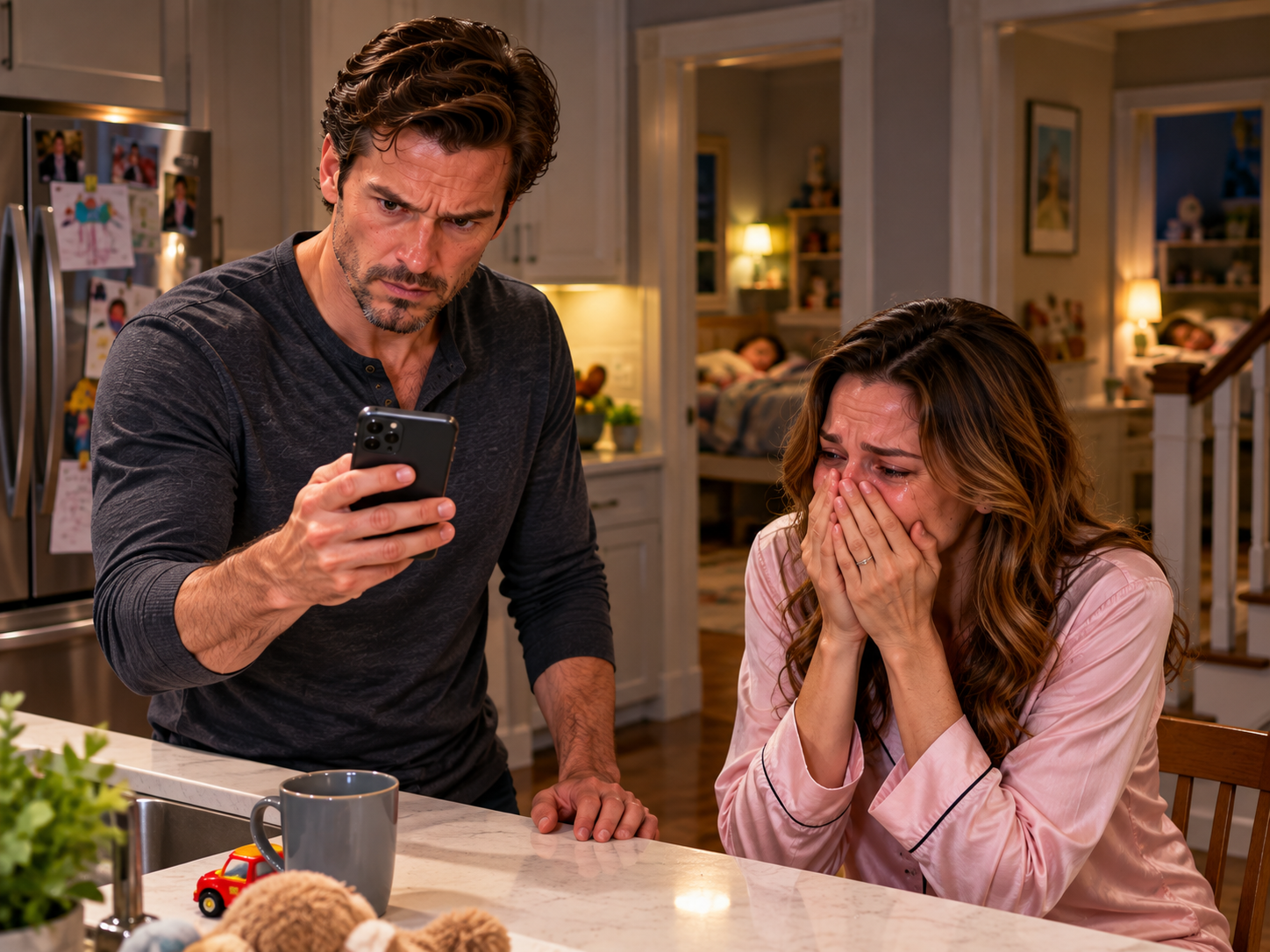
The message that appeared on my wife’s phone looked harmless at first, until I opened it and discovered months of choices I could never unknow
Part 21 of 28

