The anniversary of that first confrontation arrived quietly.
I almost missed it.
There was no reminder on my calendar.
No message from Carter.
No family gathering planned.
I noticed the date only because I was sorting through old financial records.
Five years.
Then six.
Then more.
Time had done something I hadn't expected.
It had made the original crisis smaller without making it less important.
I closed the folder.
Outside, the lake was calm.
I walked to the dock.
My father was already there.
He had aged.
So had my mother.
We all had.
He smiled when he saw me.
“You remembered.”
“The date?”
“Yes.”
“I did.”
He looked at the water.
“I remember that night too.”
“So do I.”
“I've thought about it often.”
“Why?”
“Because I still can't understand how certain I was that I was entitled to your house.”
I smiled.
“You weren't the only one.”
“No.”
He sighed.
“I wish I could change it.”
“You can't.”
“I know.”
“But you changed what came afterward.”
He looked at me.
“That matters?”
“Yes.”
He smiled.
“Good.”
We sat quietly.
Then he said, “I want you to know something.”
“What?”
“If the family ever becomes unhappy with the lake house arrangement, sell it.”
I laughed.
“You're very committed to that.”
“I am.”
“Why?”
“Because I finally understand.”
He looked toward the house.
“Family is more important than property.”
I nodded.
“But family also doesn't require property.”
“Exactly.”
My mother came outside.
She carried three cups of coffee.
“One for each of us.”
My father looked at her.
“You remembered.”
“I always remember.”
She handed me mine.
We sat together.
The lake reflected the morning sky.
For a while, nobody spoke.
Then my mother said, “Do you regret anything?”
I thought about it.
“I regret that I trusted someone who didn't respect me.”
She nodded.
“I regret that I didn't recognize the signs earlier.”
My father looked at me.
“But do you regret keeping the house?”
“No.”
He smiled.
“Good.”
I looked toward the windows.
“I also don't regret opening the door again.”
My mother smiled.
“That is important.”
“It is.”
The house had become a place where people came and went by choice.
Carter visited when he asked.
Chloe brought the children when she asked.
My parents stayed when we agreed.
Sarah came for coffee.
The family gathered for Lake Day when I said yes.
Sometimes I said no.
Nobody complained.
Sometimes I wanted the house empty.
Nobody took offense.
Sometimes I wanted everyone there.
They came.
That was the balance I had wanted all along.
Later that year, Carter called.
“I have news.”
“What?”
“I’m moving again.”
“Again?”
He laughed.
“Closer this time.”
“Where?”
He told me.
“That's good.”
“I think so.”
He paused.
“I want to make sure you're okay with me being closer.”
I smiled.
“You don't need my permission to live in the same city.”
“I know.”
“But I appreciate you asking.”
He laughed.
“Old habits.”
“Better ones.”
“Definitely.”
We ended the call.
A month later, he visited.
He stood at the gate.
I opened it.
He smiled.
“Can I come in?”
“Yes.”
He walked toward the house.
No suitcase.
No plans.
No family members waiting behind him.
Just Carter.
The man who had once believed the house belonged to him.
He looked toward the kitchen.
“Coffee?”
I laughed.
“You really are predictable.”
“I can make it.”
“Go ahead.”
He made coffee.
We sat outside.
The conversation was ordinary.
That was the final proof.
There was nothing left to negotiate.
No ownership dispute.
No secret plan.
No hidden business.
No need to defend myself.
We were simply two people who had once been married.
We had history.
We had consequences.
We had learned.
When he left, he returned the mug to the sink.
“I'll go.”
“Okay.”
He walked to the door.
Then stopped.
“Thank you.”
“For what?”
“For letting me come back without pretending the past didn't happen.”
I nodded.
“That matters.”
He left.
I closed the door.
The next Lake Day was the biggest one yet.
The children were teenagers.
They knew the rules.
One asked whether they could bring friends.
“Ask me first.”
“I know.”
They asked.
I said yes.
Another wanted to stay overnight.
I checked the calendar.
“Yes.”
Everyone helped clean.
Nobody complained.
My mother sat on the patio with Sarah.
My father grilled.
Chloe took photographs.
Carter laughed with the children near the pool.
I stood inside the kitchen and watched them through the glass.
The scene would have been impossible years earlier.
Not because people couldn't change.
Because nobody had been willing to admit what needed changing.
Now they had.
Not perfectly.
Not magically.
Through thousands of small choices.
Ask first.
Wait for an answer.
Accept no.
Return what you borrow.
Clean what you use.
Don't turn family into ownership.
Don't use love as leverage.
Don't mistake forgiveness for permission.
Those rules had become part of us.
After everyone left, I walked outside.
The sunset was spreading across the lake.
The house was quiet.
I looked at the front door.
For years, I had imagined the door as something I needed to guard.
Now I saw it differently.
A door isn't only something that keeps people out.
It is also what lets you choose who comes in.
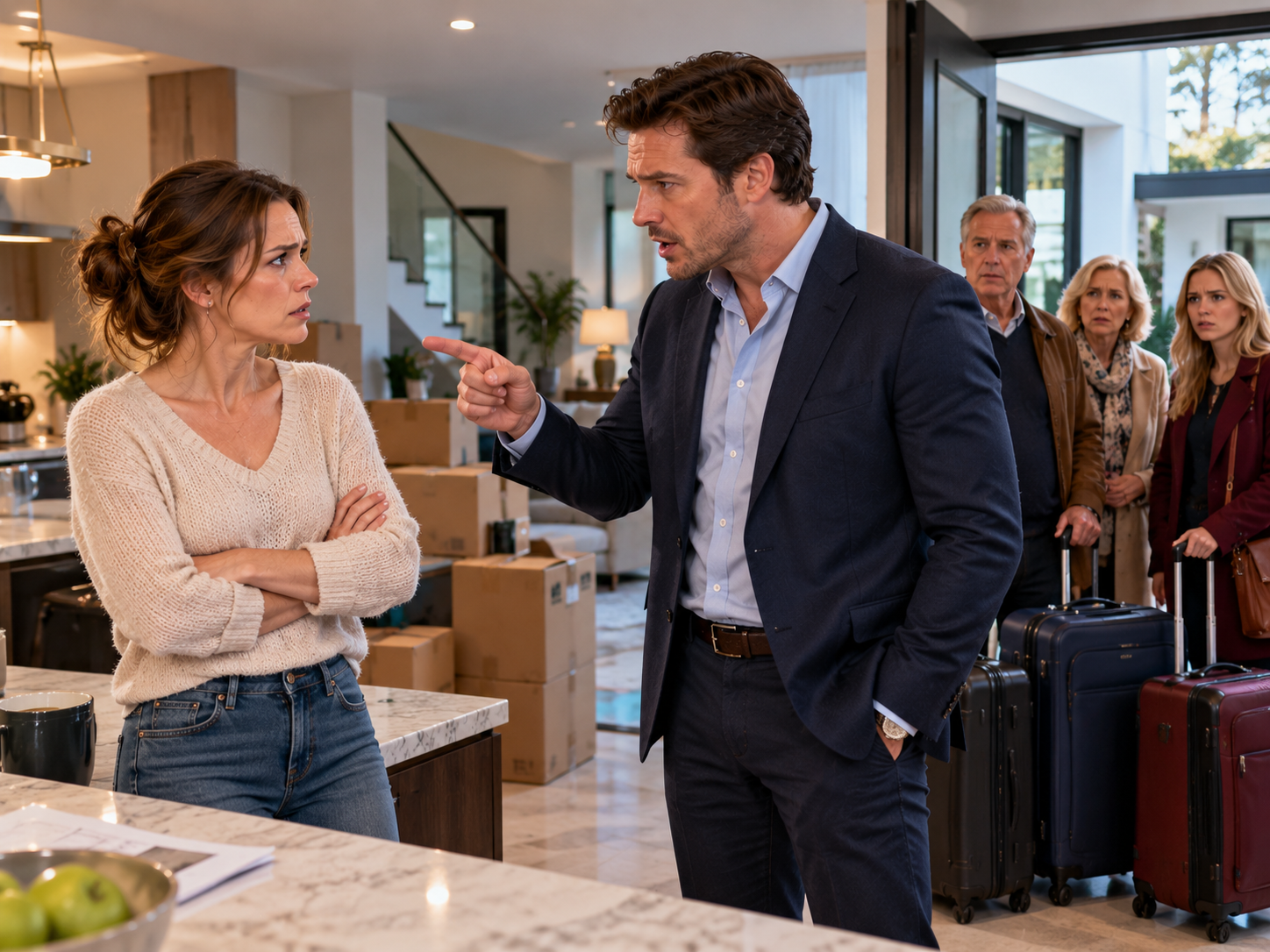
I thought about the night Carter had stood in the kitchen and told me that the house was his.
At the time, I had wondered whether I could protect myself.
I learned that I could.
I learned that documents mattered.
Evidence mattered.
Boundaries mattered.
But I also learned something beyond all of that.
Protection doesn't have to become isolation.
I could keep ownership without becoming possessive.
I could forgive without forgetting.
I could welcome people without surrendering control.
I could love my family without becoming responsible for every decision they made.
The lake house had survived.
So had I.
The old family document remained in the safe.
The deed remained in my name.
The estate plan remained clear.
The future had rules.
But the house no longer felt like a legal document.
It felt like home.
My home.
A place where I could hear laughter without wondering what it would cost me.
A place where someone could ask to stay and I could say yes because I wanted them there.
A place where I could say no without explaining myself until I was exhausted.
A place where family could gather without anyone confusing gathering with ownership.
I walked to the front door.
My hand rested on the handle.
For a moment, I thought about all the versions of myself who had stood in this same place.
The woman who had been stunned by Carter's announcement.
The woman who had spent the night photographing documents.
The woman who had called Margaret.
The woman who had fought to protect what was hers.
The woman who had later opened the door again.
They were all me.
None of them needed to be erased.
I opened the door.
Warm evening air moved through the house.
I stood there for a moment and listened.
Nothing.
No argument.
No demand.
No assumption.
Just the quiet of a home waiting for whatever I chose next.
I closed the door.
Not because I was afraid.
Because I wanted the house quiet.
And tomorrow, if someone knocked, I would decide again.
That was the freedom I had fought for.
Not a fortress.
Not isolation.
Not control over other people.
Choice.
I could open the door because I wanted to.
I could close it because I needed to.
I could love them without surrendering myself.
And if someone asked me to open it tomorrow, I would listen.
I would think.
I would decide.
Whatever answer I gave would be enough.
The End
Read more original stories on Feel Every Story.
My husband thought three relatives could simply move into the house I had bought, but his confidence made me wonder what he believed he had already arranged
Part 20 of 20