
The testimony began on a gray morning.
Adrian sat behind a table with his attorney.
He looked ordinary.
That was the first thing Grace whispered when she saw him.
“He doesn't look like someone who did all that.”
I squeezed her hand.
“Neither did Ezekiel.”
She nodded.
Adrian's attorney negotiated the terms carefully.
He would provide information.
He would acknowledge certain transactions.
He would explain his involvement.
In exchange, prosecutors would consider his cooperation when determining how to proceed against him.
Grace listened without comment.
The first questions concerned money.
Adrian explained that Ezekiel had accumulated debt through failed investments and business ventures.
At first, the amounts were manageable.
Then he borrowed again to repay earlier obligations.
The pattern accelerated.
Martin became involved.
Leona became aware of the situation.
Eventually Adrian learned about Grace's house.
“Why did the house matter?” the prosecutor asked.
“Because it was debt-free.”
“Who told you?”
“Ezekiel.”
“When?”
“Several years ago.”
Grace stared straight ahead.
The prosecutor continued.
“What did he say?”
“That his wife would eventually be willing to use it.”
“Did she know?”
“No.”
That answer was blunt.
Adrian admitted that he helped structure potential agreements.
He said he considered the property a possible source of repayment.
“But Grace refused to sign?”
“Yes.”
“Did that change the plan?”
“Yes.”
“When?”
“When Ezekiel's debt became impossible to manage.”
The prosecutor asked about the pregnancy.
Adrian described it as a turning point.
Not because he cared about the baby.
Because he believed the circumstances would create leverage.
Grace's jaw tightened.
“Who suggested using the delivery?”
Adrian hesitated.
Then answered.
“Ezekiel.”
The room seemed colder.
“What did he suggest?”
“That after the birth, Grace would be exhausted and more likely to accept documents.”
“Did he intend to deceive her?”
“Yes.”
“Did he intend to isolate her?”
“Yes.”
The prosecutor asked about the hospital.
Adrian said he had suggested that Grace's mother be kept away.
“Why?”
“Because he believed she would interfere.”
“How?”
“She would ask questions.”
That sentence cut deeper than I expected.
Questions.
That was all I had been.
An obstacle made of questions.
The prosecutor showed Adrian the message about telling me Grace had died.
“Who wrote this?”
“Ezekiel.”
“Who suggested the wording?”
Adrian looked down.
“I did.”
Grace closed her eyes.
I felt her hand tremble.
The prosecutor asked why.
Adrian answered quietly.
“Because grief would make her leave.”
“Meaning Grace's mother?”
“Yes.”
“And if she believed her daughter was dead?”
“She wouldn't keep searching.”
The room was silent.
I had known the truth.
But hearing it spoken aloud was different.
The false death had not been an emotional mistake.
It had been a strategy.
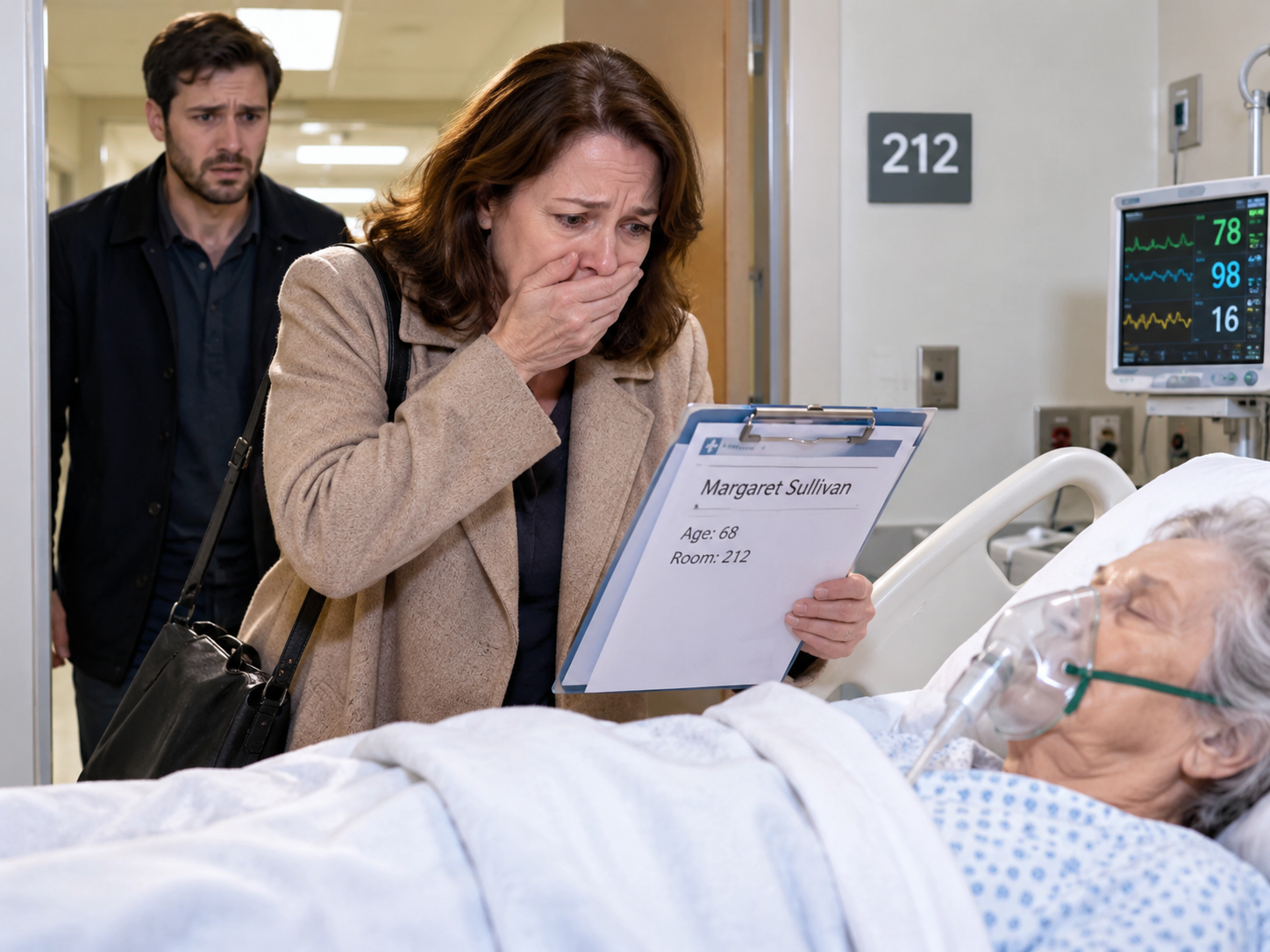
The prosecutor asked about room 212.
Adrian claimed he did not choose the room.
He said Ezekiel had given me the room number.
That detail mattered.
Because it meant the wrong room had been part of Ezekiel's improvisation.
The stranger in the bed had not been planted.
The room had simply been selected because it was away from the maternity area.
A coincidence had nearly destroyed the plan.
Grace later told me that fact gave her strange comfort.
“The thing that saved us wasn't planned.”
“No.”
“It was just a mistake.”
“Sometimes mistakes matter.”
Adrian continued.
He said Ezekiel believed the hospital would be the final stage.
Grace would sign.
The baby would be placed under temporary guardianship.
The house would be secured.
Insurance money would be redirected.
And I would remain convinced she had died.
“What about Leona?” the prosecutor asked.
Adrian said she knew enough to understand what was happening.
She did not know every detail.
But she knew Grace was being isolated.
She knew the property mattered.
She knew Daniel had been instructed to prevent me from reaching Grace.
Grace listened.
Then she asked Bennett quietly:
“Why didn't anyone stop him?”
Bennett answered honestly.
“Because everyone around him believed someone else was responsible.”
That was perhaps the ugliest truth.
Ezekiel blamed debt.
Martin blamed contracts.
Leona blamed loyalty.
Adrian blamed business.
Daniel blamed instructions.
Everyone had a reason.
Nobody claimed responsibility.
The testimony lasted hours.
When it ended, Grace walked outside.
She stood on the courthouse steps.
“I thought hearing everything would make me angry.”
“You are angry.”
“Yes.”
“But?”
She looked at me.
“I also feel tired.”
That was understandable.
Truth does not always produce relief.
Sometimes it produces exhaustion.
The legal proceedings continued.
The evidence was now extensive.
The financial records.
The messages.
The property documents.
The hospital records.
The testimony.
The photographs.
The security footage.
Grace's statement.
Nadia's statement.
Daniel's statement.
Martin's cooperation.
Leona's admissions.
Adrian's testimony.
No single piece told the whole story.
But the entire record was difficult to dismiss.
Ezekiel continued to deny some allegations.
He admitted financial desperation.
He admitted asking Grace to sign documents.
He admitted taking her to the apartment.
But he disputed the interpretation of the plan.
He said he never intended to permanently separate Grace from Leo.
He said he believed she needed protection.
He said the false death message was Adrian's idea.
Adrian said Ezekiel had approved it.
The disagreement would be decided through evidence.
Grace didn't attend every hearing.
She didn't need to.
She had already given her statement.
She had already told the truth.
The rest belonged to the legal system.
At home, life continued.
Leo learned to walk.
His first steps happened in the hallway.
Grace cried.
I laughed.
Leo fell onto his bottom and looked offended.
Grace scooped him up.
“You did it.”
He stared at her.
Then laughed.
That moment felt enormous.
Not because a toddler had crossed a hallway.
Because life had continued.
The same child who had been written as “Baby” on a financial list was now a little person with favorite toys, favorite sounds, and a stubborn habit of refusing vegetables.
Grace refused to let the people who had planned around him define him.
His room became brighter.
His shelves filled with books.
His walls filled with photographs.
His life became ordinary.
That was the victory she cared about.
One evening, she asked me whether I regretted getting involved.
“No.”
“Even when it became this complicated?”
“No.”
“What if you had stayed home that night?”
“I wouldn't have known.”
She nodded.
“Would you have wanted to?”
“No.”
She smiled.
“I wouldn't either.”
A few weeks later, the court issued another order protecting Grace's property.
The house could not be transferred without her explicit approval.
The financial accounts were separated.
The insurance policy was restored.
Leo's custody arrangements were formalized.
The practical pieces were finally becoming stable.
Then Bennett received one last financial record.
It was from the earliest period of Ezekiel's debt.
He called us into his office.
“There's one thing I think you should see.”
He showed us a payment.
It was made shortly after Grace's father died.
Grace looked at the date.
She remembered it.
“That was when I received the inheritance.”
The payment had gone from Ezekiel's account to Adrian.
The amount was small.
But the description was not.
“Introduction fee.”
Grace stared at it.
“Introduction to what?”
Bennett looked at the supporting documents.
“To Martin.”
That meant Martin had entered the story immediately after the inheritance.
Not years later.
Not during the crisis.
At the beginning.
Grace leaned back.
“So he knew about the money from the start.”
“Yes.”
She looked toward me.
“I think I finally understand.”
“What?”
“They didn't suddenly decide to take everything.”
She spoke slowly.
“They watched what became available.”
Bennett nodded.
“That appears consistent with the records.”
Grace closed her eyes.
Then she opened them.
“I don't want to spend another year looking backward.”
I looked at her.
“What do you want?”
She smiled.
“To build forward.”
That was the moment the investigation stopped being the center of our lives.
The case would continue.
The courts would decide.
The prosecutors would argue.
The evidence would be weighed.
But Grace had decided something important.
Her future would not be organized around what Ezekiel had done.
It would be organized around what she wanted.
And for the first time, that choice belonged entirely to her.
Click Here to continue read next: PART12: With the truth finally documented, Grace faced the hardest decision of all: what kind of life would she build after everything had been taken apart
The room number was wrong, but the fear in my son-in-law’s face told me the mistake had been deliberate
Part 11 of 16

