
The ambulance carried Grace to another medical facility while Bennett followed behind us.
By the time we arrived, the sky had begun turning gray.
Grace was taken into an examination room.
Leo went to the nursery for observation because of the breathing difficulty Nadia had mentioned.
I wanted to follow both of them.
Instead, I stood in the corridor unable to decide where I was needed most.
Bennett found me near a vending machine.
“You need to sit down.”
“I can't.”
“You haven't eaten.”
“I don't care.”
“You will care when you collapse.”
I looked at him.
“What did you find?”
He opened the folder.
“The company that owns the SUV is legitimate on paper.”
“On paper?”
“Yes.”
“That phrase worries me.”
“It should.”
He explained that the company had several links to informal lending operations. None of that proved Ezekiel had committed a crime by itself.
But the timing mattered.
The vehicle had been used to remove Grace and Leo from the hospital.
Ezekiel had been under financial pressure.
He had requested documents.
He had attempted to change beneficiaries.
He had prepared guardianship papers naming his mother.
And he had taken Grace somewhere private rather than bringing her home.
“Who is Leona dealing with?”
“We're still confirming that.”
I looked toward the nursery.
“Can they take Leo?”
“Not while the authorities are investigating this situation.”
“I'm not asking what they should do. I'm asking what could happen.”
Bennett met my eyes.
“If there are valid custody documents, we deal with them legally. If there aren't, then they have no authority simply because they printed paperwork.”
I nodded.
Grace was eventually moved to a private room.
When I entered, she looked smaller than I remembered.
The woman who had always seemed capable of carrying groceries in both hands, fixing broken appliances, and laughing at family arguments was now lying beneath a hospital blanket with an IV in her arm.
“Hi, Mom.”
I sat beside her.
“Hi, sweetheart.”
Neither of us spoke for a while.
The machines filled the silence.
“How's Leo?”
“They're watching him.”
She closed her eyes.
“Good.”
“You're safe.”
She nodded.
“I know.”
I wanted to tell her everything would be fine.
Instead, I said the only honest thing.
“We're going to deal with one thing at a time.”
Her eyes opened.
“Mom?”
“Yes?”
“I'm sorry.”
I shook my head.
“You don't apologize for this.”
“I should have told you.”
“I should have listened.”
She looked away.
“I thought you'd be disappointed in me.”
“Why?”
“Because I chose him.”
That sentence stayed between us.
I took her hand.
“You didn't choose what he became.”
She squeezed my fingers.
“I saw signs.”
“What signs?”
“He started checking my bank statements.”
“Why?”
“He said he was making sure we were organized.”
“And?”
“He began asking when your house would eventually be mine.”
My stomach tightened.
“What?”
“He said it was normal for families to discuss inheritance.”
I stared at her.
“Did he ask about my will?”
“Not directly.”
“Did he know you had copies of my estate documents?”
She nodded.
“He asked once whether you had changed your beneficiaries after Dad died.”
I felt a cold line move through me.
That question hadn't seemed strange at the time.
Now it sounded like part of a pattern.
Grace continued.
“He also wanted to know whether Leo would have access to your property.”
I looked down.
For years I had believed money could create arguments.
I had never imagined it could become the reason someone built an entire plan around a newborn child.
Bennett entered.
Grace looked at him.
“Did you find something?”
He nodded.
“We have more.”
He placed several printed pages on the table.
The first showed financial withdrawals.
The second contained correspondence connected to the insurance policy.
The third was a record of a conversation recovered from Ezekiel's phone.
Grace stared at it.
“What is that?”
“A conversation between your husband and another person.”
Her face went pale.
Bennett didn't dramatize it.
He simply explained that the conversation appeared to discuss what would happen if Grace became medically unstable after delivery.
They wanted temporary control over Leo.
They wanted access to insurance money.
They discussed making Grace appear unable to manage her own affairs if she refused to cooperate.
I felt my hand curl into a fist.
Grace covered her mouth.
“No.”
Bennett nodded slowly.
“There is more.”
He showed us another message.
Leona had been communicating with the same people.
Grace stared at her name.
“My mother-in-law?”
“Yes.”
She began to cry.
“I thought she hated me.”
“She may have,” Bennett said, “but that doesn't explain everything.”
The evidence suggested something more organized than a husband panicking over debt.
They had prepared documents.
They had arranged transportation.
They had identified a place to take Grace.
They had considered what might happen if she refused.
And they had planned around the possibility that her medical condition would make other people question her version of events.
Grace whispered, “I thought he was desperate.”
Bennett answered carefully.
“Desperation can explain poor decisions. It doesn't automatically explain preparation.”
That distinction mattered.
I sat beside my daughter and watched her absorb it.
She had spent months trying to convince herself that Ezekiel was frightened, not dangerous.
Now she was being forced to reconsider every argument, every apology, every promise.
A social worker arrived later that morning.
She asked Grace questions privately.
Was she afraid of Ezekiel?
Yes.
Had he prevented her from contacting anyone?
Yes.
Had he threatened her?
Not directly.
Had he controlled access to money?
Increasingly.
Had he attempted to obtain legal authority over the child?
Yes.
Did she want contact with him?
Grace shook her head.
“No.”
The social worker wrote something down.
When she left, Grace stared at the ceiling.
“I feel stupid.”
“You aren't stupid.”
“I stayed.”
“You were trying to survive a relationship you thought you could repair.”
She turned toward me.
“I kept thinking if I was patient enough, he'd become the man I married.”
I didn't know what to say.
So I said nothing.
Sometimes silence is kinder than a sentence that sounds wise but isn't.
That afternoon, Nadia formally gave her statement.
The hospital clerk confirmed the discrepancy involving the surname.
The security footage from the rear exit was preserved.
It showed Ezekiel pushing Grace in a wheelchair.
It showed her head falling forward.
It showed an assistant carrying the baby.
It showed the black SUV waiting.
There was no ambiguity about her condition.
She had not looked like a woman calmly leaving a hospital.
She had looked like someone who could barely remain awake.
The hospital administration began reviewing the discharge.
Suddenly everyone wanted answers.
Grace watched the footage later.
She covered her face.
“I don't remember this part.”
“You were exhausted,” I said.
“I remember the elevator.”
“What do you remember?”
“Ezekiel telling me we were going somewhere quiet.”
She paused.
“He said you were going to cause trouble.”
My heart sank.
“He told you I was coming?”
“He said you would interfere.”
That word.
Interfere.
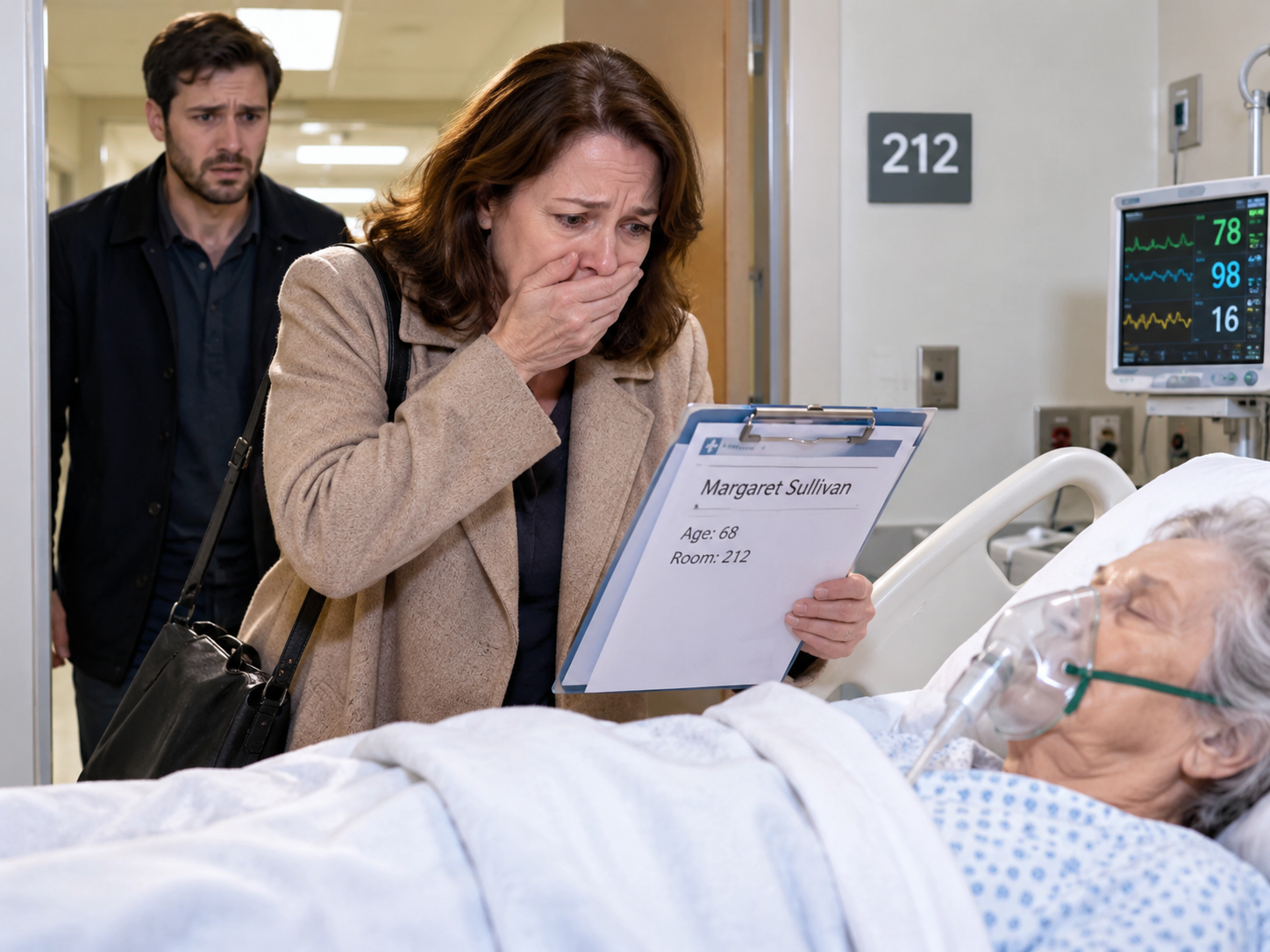
It explained why he had tried to keep me away from room 212.
It explained why he had fabricated my daughter's death.
If I believed Grace was dead, I would grieve.
I would leave.
I would never search for her.
He had counted on grief making me obedient.
The wrong room had been another layer of the deception.
Bennett believed the room number had been deliberately given to me.
The patient inside had been an accidental detail that almost ruined the lie.
I thought about that elderly woman.
Margaret Sullivan.
A stranger whose existence had prevented me from accepting a false death.
I wondered how many ordinary details had protected Grace that night.
A wrong room.
A nurse who noticed something wasn't right.
A surname discrepancy.
A frightened expression.
A daughter who managed to whisper one warning.
Small cracks.
Together, they had opened the entire wall.
Two days passed.
Statements.
Medical tests.
Legal calls.
Police interviews.
Grace slowly regained strength.
Leo's breathing stabilized.
But the emotional damage did not disappear simply because the immediate danger had ended.
Relatives began calling.
Some expressed concern.
Others asked whether Ezekiel had really meant to harm anyone.
One person even suggested that he had simply been overwhelmed by becoming a father.
I stopped answering those calls.
I didn't need people to hate him.
I needed them to stop making excuses for him.
On the third evening, Grace was discharged.
She stood at the hospital entrance holding Leo.
Her movements were careful.
Her face remained tired.
She looked at the car waiting outside.
“Where are we going?”
“Home.”
She hesitated.
“Your house?”
“Yes.”
She stared at me.
“I don't want to go back there.”
“You don't have to.”
“I feel embarrassed.”
I took Leo's tiny blanket and adjusted it around his shoulders.
“You are not returning as someone who failed.”
She looked at me.
“You're returning as someone who survived.”
Her eyes filled.
She nodded.
At home, the same kitchen waited.
The same table.
The same saucepan I had abandoned the night Ezekiel called.
I had cleaned everything before leaving for the hospital, but I had left the saucepan on the counter because I couldn't bear to throw away the evidence of that ordinary evening.
Grace noticed it.
“You never cleaned that?”
“I forgot.”
She smiled faintly.
“That's unlike you.”
“I had other things to do.”
She laughed.
It was the first real laugh I had heard from her in days.
That night, Leo slept in a borrowed bassinet beside Grace's bed.
I sat in an armchair nearby.
I couldn't sleep.
At four in the morning, Grace spoke into the darkness.
“Mom?”
“Yes?”
“Do you remember when I asked whether you ever let me be myself?”
“I remember.”
“I wasn't accusing you.”
“I know.”
“I was lost.”
I looked toward her.
She was staring at the ceiling.
“I spent so long trying to be the good wife, the calm daughter, the reasonable person, that I stopped knowing what I wanted.”
My throat tightened.
“I taught you to endure too much.”
“You taught me to survive.”
“Sometimes those aren't the same thing.”
She turned her head.
“No.”
Leo made a tiny sound.
We both looked toward him.
Grace smiled.
“I want to do things differently.”
“So do I.”
She reached for my hand.
I held it.
For several minutes, neither of us spoke.
Then Bennett called.
It was just after five.
His voice was serious.
“We found something else.”
I sat upright.
“What?”
“The people behind Ezekiel's debts weren't simply lending him money.”
I looked toward Grace.
She was awake now.
“What were they getting in return?”
Bennett paused.
“They were expecting control over assets if he couldn't repay them.”
“What assets?”
Another pause.
“That's what we need to discuss.”
My heart began beating faster.
Grace sat up.
“What is it?”
I repeated Bennett's question aloud.
He answered through the phone.
“Your daughter's house.”
I looked at Grace.
She went completely still.
Then Bennett added the detail that made everything else fall into place.
“Ezekiel had already started preparing to transfer it.”
Click Here to continue read next: PART4: The final pieces exposed why Grace had been targeted, and the truth forced both of us to confront what we had ignored for years
The room number was wrong, but the fear in my son-in-law’s face told me the mistake had been deliberate
Part 3 of 16

