
The morning after Grandma's birthday, I found her already dressed and sitting at the kitchen table with a cup of tea.
“You're up early,” I said.
“So are you.”
“I have a long drive.”
“You have time for breakfast.”
I made toast and sat opposite her. The birthday cake was still in the refrigerator, and the cabin smelled faintly of cinnamon. Outside, sunlight fell across the garden beds, revealing rows of young plants and the narrow path Grandpa had laid with flat stones.
Grandma watched me eat.
“I want to show you something before you leave.”
“What is it?”
“You'll see.”
After breakfast, she fetched a light jacket and her walking stick. We went outside together, moving slowly along the path beside the greenhouse. The morning was cool, and dew clung to the grass. Grandma stopped near the old apple tree, where Grandpa had once hung a wooden swing for us when Eric and I were children.
The swing was gone now, but the branch remained, thick and sturdy despite the years.
“Your grandfather wanted to plant another apple tree here,” she said. “He never got around to it.”
“We could plant one this year.”
She smiled. “Perhaps we could.”
We continued toward the back of the garden, where a small wooden bench stood beneath the trees. Grandma lowered herself onto it, then motioned for me to sit beside her.
For a while, we watched the sunlight move through the branches.
“I've been thinking about the cabin,” she said.
I waited.
“I spoke with Margaret Price again after your birthday. I told her I want to make sure the property is protected, but I don't want to leave you a responsibility you never asked for.”
“I appreciate that.”
“She explained several ways to arrange it. I could leave everything as it is, or I could create a plan that allows the cabin to remain in the family while making certain that the costs are covered.”
“Have you decided?”
“Not completely. But I know what I want to protect.”
She turned toward me.
“I want the cabin to remain a place where people can come without feeling they have to earn their welcome. I want the garden to be used. I want the house cared for. And I want the family to understand that none of those things matter if they become reasons to fight.”
I looked toward the greenhouse. Grandpa's tools were stored inside, and the shelves held seed trays, old jars, and the watering can Grandma had used for years.
“What would you like me to do?”
“Help me think through the plan. Not decide for me. Help me make sure the arrangements are practical.”
“I can do that.”
“And if you ever decide you don't want to be involved, tell me. I would rather know the truth than have you agree because you think I expect it.”
I reached for her hand.
“I want to help. I just don't want you thinking you have to give me something more to make it worth my time.”
She looked at me for a long moment.
“Daniel, you stayed after Christmas when everyone else left. You helped me clear the roof, thaw the pipe, and carry firewood. You listened when I told you I was tired. You don't have to prove your love by doing more.”
“I know.”
“Do you?”
I smiled faintly.
“I'm learning.”
She squeezed my hand.
“Then we're learning the same lesson.”
We returned to the cabin and spent the rest of the morning reviewing the property documents. Margaret Price had prepared a draft outlining the possible arrangements, but Grandma had not signed anything. We read the sections about maintenance, future access, and the responsibilities of anyone who might eventually oversee the property. Whenever a sentence was unclear, we wrote down a question for the attorney.
I made no attempt to steer Grandma toward the option I preferred. I asked what she wanted, explained what I understood, and let her take time with the decisions.
By noon, we had a list of questions and no final answer.
Grandma seemed pleased.
“Good,” she said, putting the papers away. “I don't want to sign something just because it is convenient to finish today.”
We ate lunch on the porch. She asked about my students, and I told her about a girl who had written a story about her grandmother's kitchen. The girl had described the room in such detail that I could almost smell the bread she wrote about.
“What did you tell her?” Grandma asked.
“That the details were the strongest part. She didn't have to explain that her character loved her grandmother. She showed it by describing the things the grandmother did.”
Grandma smiled.
“Perhaps she has a good teacher.”
“Perhaps she has a good subject.”
She laughed, then coughed into her napkin. The cough lasted longer than I liked, and I asked whether she had spoken with her doctor recently.
“I have an appointment next week.”
“Will you let me know what he says?”
“Of course.”
I didn't pretend I wasn't worried. I also didn't make her promise that she would be fine. The truth was that she was getting older, and no amount of money or careful planning could guarantee how much time we had left together.
That afternoon, Dad called to thank Grandma for the birthday gathering. She put him on speakerphone while she washed a cup.
“I enjoyed seeing everyone,” she told him.
“So did I,” he replied. “I was thinking about what you said at the table.”
“Which part?”
“About wanting us to visit because we want to, not because there's a holiday or a problem to solve.”
Grandma dried the cup.
“I'm glad you heard me.”
“I'd like to come up again in July. Just for a weekend.”
“You're welcome to come.”
“I'll call before I leave.”
“Please do. I may be in town.”
Dad laughed softly. “All right. I'll call first.”
When the conversation ended, Grandma placed the telephone back on its stand.
“He sounded sincere,” I said.
“He did.”
“Do you believe him?”
“I believe he wants to do better. Whether he will is something we'll learn.”
She glanced at me.
“You don't need to test him, Daniel. Just let him show you.”
I nodded. She had been telling me that in different ways for months, and I was beginning to understand that watching people carefully did not mean waiting for them to fail. It meant leaving enough room for them to surprise you.
Before I left that evening, Grandma packed a small bag of vegetables from the greenhouse. She added a jar of dried herbs, two apples, and the last slice of birthday cake.
“You'll have enough food for a week,” I said.
“Then you'll have no excuse not to eat properly.”
I hugged her on the porch. She held me longer than usual, and I felt the small tremor in her hands against my back.
“Call me when you get home,” she said.
“I will.”
“And don't wait until you have a reason to visit.”
“I won't.”
I drove toward Boulder beneath a wide, pale sky. The cabin disappeared behind the trees, but I carried the image of the garden with me: the straight rows, the old apple tree, the bench beneath the branches, and Grandma standing beside the greenhouse with her walking stick.
The six million dollars had given me choices I hadn't expected to have. I could pay my bills without worrying about every expense. I could set aside money for the future and make decisions based on what mattered to me rather than what I could afford. But the money had not told me how to live.
Grandma's example had.
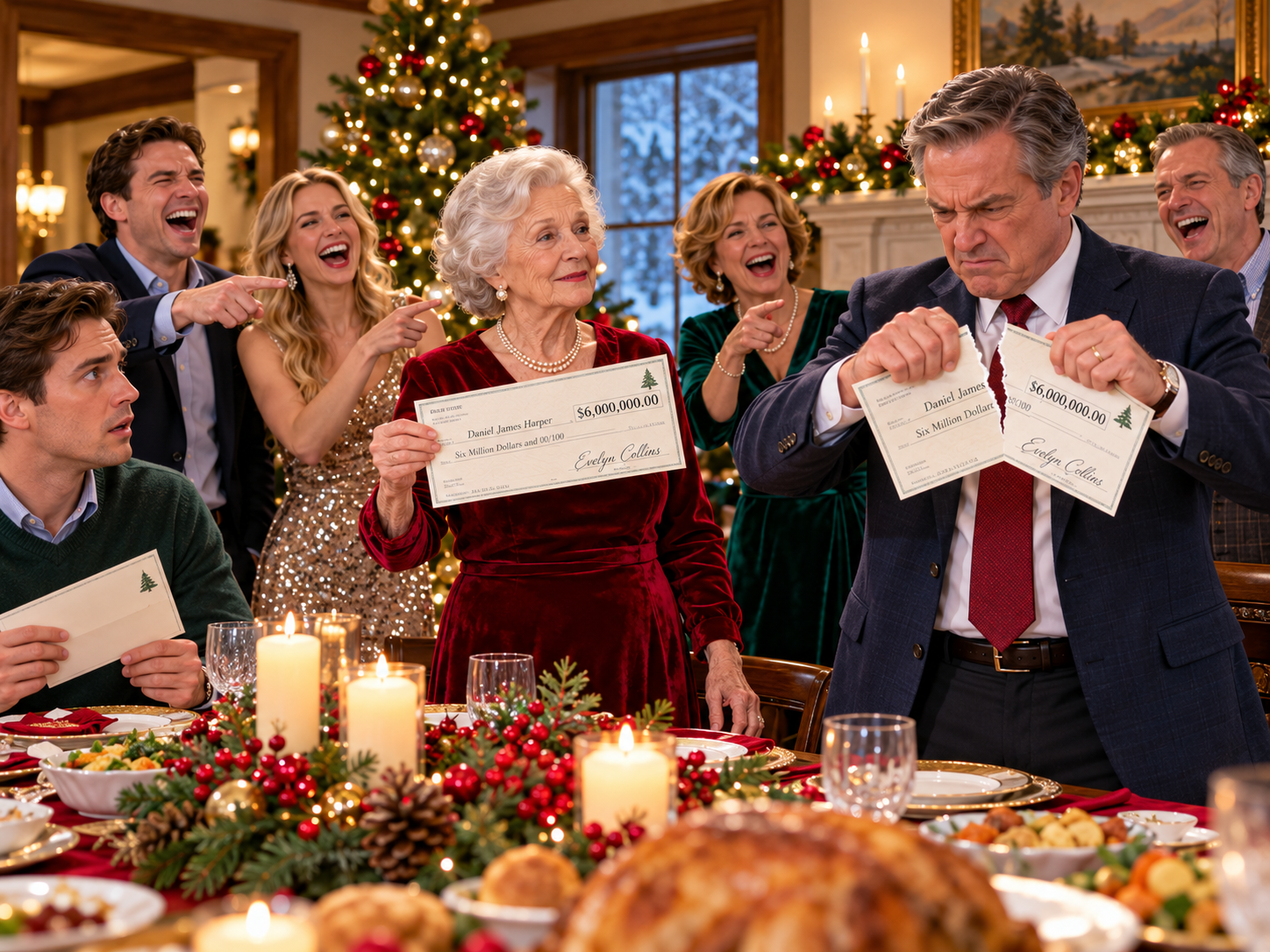
She had spent years building a home, saving carefully, and preparing for a future she might not be there to see. When she finally shared what she had built, the family had laughed because they assumed the amount was impossible. They had judged the gift before considering the person who gave it.
The checks had exposed their impatience. The months that followed had given them a chance to respond.
Some had apologized. Some had begun visiting more often. Others were still learning to distinguish helping Grandma from controlling her. Nothing was finished, and no one had been promised that the past would simply disappear.
But the family had begun to change in ways I could see.
Dad had repaired the porch rail and listened when Grandma refused the renovation he preferred. Eric had returned to the garden without asking me for money. Diane had apologized without demanding immediate forgiveness. Olivia had acknowledged that her laughter had been careless. Mom had started asking Grandma what she wanted instead of assuming she knew.
Those were small things, but they were real.
When I reached Boulder, I called Grandma as promised. She answered from her kitchen and asked whether I had eaten anything besides the vegetables she had packed.
“Yes,” I said. “I stopped for dinner.”
“What did you have?”
“Soup.”
“Good. What kind?”
I laughed. “Grandma, are you checking my meals now?”
“Someone has to.”
We talked for another fifteen minutes. Before we hung up, she reminded me about the apple tree we might plant in the fall.
“I'll bring the shovel,” I told her.
“And I'll decide where it goes.”
“Of course.”
After the call, I stood in my kitchen with the phone still in my hand. The house was quiet, but it no longer felt empty. I had a calendar full of classes, a trip planned for the next month, and a family that was slowly learning how to show up for one another.
I couldn't guarantee that the changes would last. I couldn't undo Christmas or give Grandma back the years when she waited by the window for a car that never arrived.
But I could keep my promises.
I could visit when I said I would. I could listen when she spoke. I could help her make decisions without trying to make them for her.
And when the time came to decide what should happen to the cabin, I would remember the reason she wanted to protect it in the first place.
Not because it was worth a certain amount of money.
Not because it belonged to a particular person.
Because it was a place where someone could open the door, set another plate at the table, and make room for family without asking what they had brought in return.
That was the inheritance I wanted to help preserve.
Click here to continue reading: PART 13: THE QUESTION GRANDMA HAD LEFT UNANSWERED
My Father Tore Up Six Million Dollars Before Grandma Could Explain Why She Had Chosen Us
Part 12 of 20

