
Martin did not ask whether I was angry.
That was one of the reasons I trusted him.
He asked whether I was certain.
I sat at the little desk in my bedroom with the Pine Harbor brochure open under the lamp. Downstairs, Graham was laughing at something on television. Paige was loading the dishwasher. Owen crossed the hallway without knocking.
The sounds were painfully ordinary.
“I’m certain,” I said. “I want to move into the cottage. And I want the rental property sold.”
“The house Graham and Paige live in?”
“Yes.”
Martin paused.
“Those are two different decisions.”
“I know.”
“I want to be sure you are not making one simply because of the other.”
I appreciated the warning.
“I bought that house because I thought it was good for my grandchildren,” I said. “Now I realize I don't want my financial life tied to Graham's household anymore.”
“They were renting before you bought it.”
“They can rent somewhere else.”
“I'll review the tenancy.”
“Please.”
“And Pine Harbor?”
“I’m not going.”
That answer came without hesitation.
The next morning, I woke before six.
For four years, that hour had belonged to everyone else. I had made breakfasts, checked school forms, packed lunches, started laundry, and remembered appointments before anyone else had properly opened their eyes.
That morning I made one cup of coffee.
I took it upstairs.
At seven, Paige knocked on my door.
“Evelyn?”
“Yes?”
“There isn't any coffee downstairs.”
“I made some for myself.”
She stared at me for a moment.
“Oh.”
I waited.
She left.
By eight, the kitchen was in mild chaos.
Owen could not find his gym shirt. Chloe needed lunch money. Graham discovered there was no bread. Paige opened the refrigerator and asked why nobody had mentioned the milk was gone.
I ate toast.
Graham finally looked at me.
“Did you go shopping yesterday?”
“No.”
“I thought Thursday was grocery day.”
“It usually is.”
“Are you going today?”
“No.”
He frowned.
“I have an appointment.”
“With whom?”
“Someone downtown.”
He looked at me as if I had just announced that I had a private life.
“Everything okay?”
“Everything is getting better.”
I kissed Chloe goodbye and left.
Martin had already reviewed the tenancy by the time I arrived.
The arrangement was month to month. Proper notice could end it legally.
He recommended giving them every day required and documenting everything.
“No games,” I said.
“Agreed.”
“No sudden lockout. No pressure. No tricks.”
“I would never advise that.”
“I know. I need to hear myself say it.”
Martin removed his glasses.
“You are allowed to stop subsidizing people without punishing them.”
The sentence stayed with me.
I had been paying for repairs and absorbing costs because I wanted my grandchildren secure.
Somewhere along the way, I had confused protecting them with becoming responsible for every part of their parents' lives.
“What date?” Martin asked.
“December first.”
“And your move?”
“Same morning.”
He studied me.
“I don't want them spending a month persuading me to change my mind.”
“They may try.”
“They'll have to find my new address first.”
He smiled faintly.
“Ruth knows.”
“Ruth can survive interrogation.”
“I've met your sister. I believe that.”
We arranged the notice.
A courier would deliver it.
I would include a personal letter to Graham explaining what I wanted him to know at that point.
Martin asked about the lottery.
“I'll decide when the time comes.”
“That is not normally a sentence I enjoy hearing from a client.”
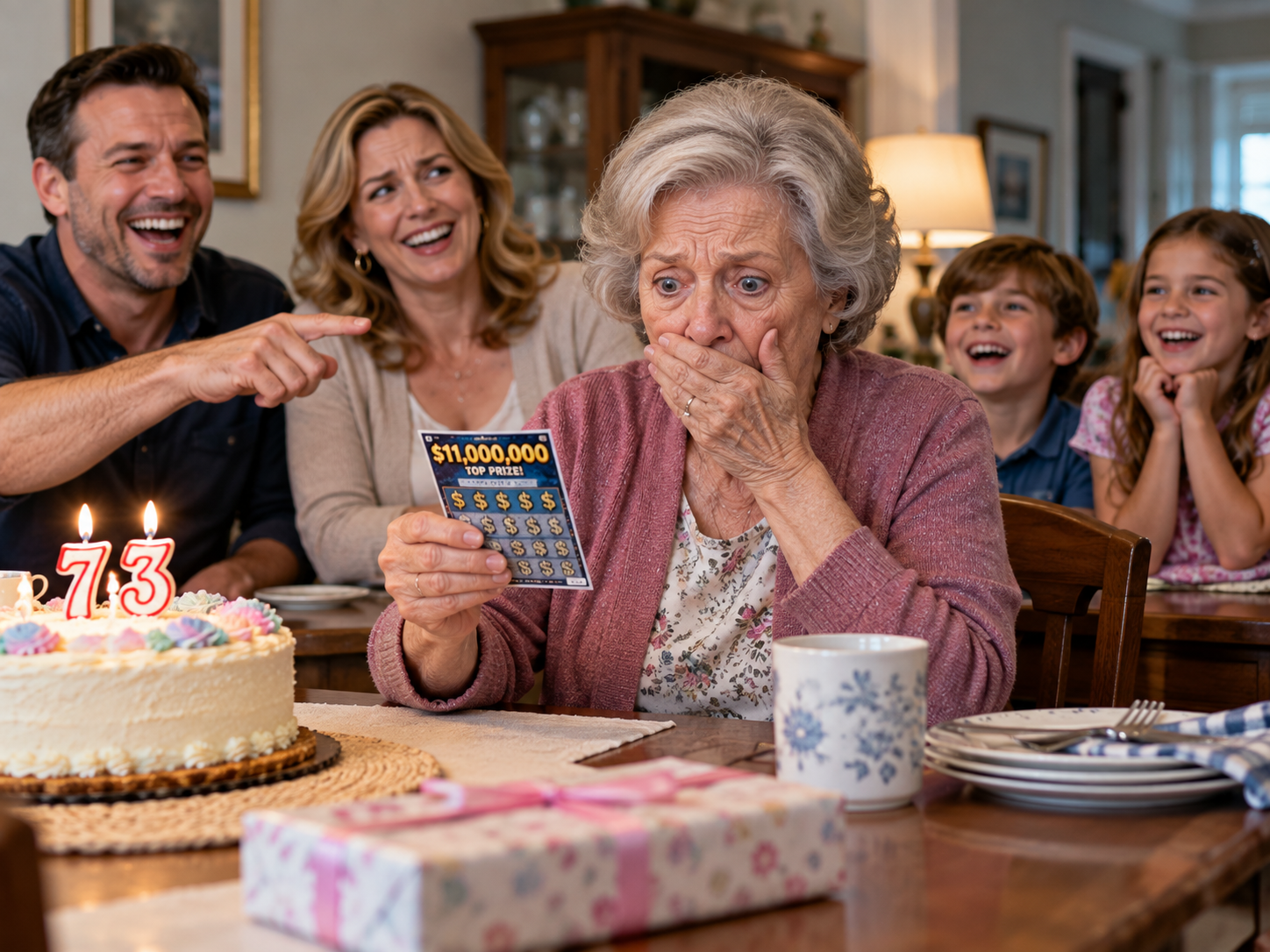
“I’m seventy-three. Allow me one surprise.”
He sighed.
“No financial promises.”
“Agreed.”
“No loans.”
“Agreed.”
“Do not sign anything they put in front of you.”
“I understand.”
“And if Paige suddenly remembers you are her favorite person—”
I laughed.
“I'll call you.”
Before leaving, I asked about Owen and Chloe's trusts.
They would remain protected if Graham and Paige divorced.
They would remain protected if something happened to me.
That was enough.
The children were innocent.
Owen was fourteen. If his parents told him his grandmother was moving to a comfortable senior community, why would he question them?
Chloe was eleven.
Neither child had chosen any of this.
That afternoon I drove to the cottage.
Ruth was in the kitchen arguing with a curtain rod.
“You bought the wrong screws,” she announced.
“I didn't buy screws.”
“Then whoever did should be prosecuted.”
I put my purse down.
“I’m moving December first.”
She stopped.
“What happened?”
“They found me a retirement community.”
Ruth slowly lowered the screwdriver.
“They what?”
“They toured it. Chose a studio. Paid a deposit.”
“Without you?”
“Yes.”
“Graham agreed?”
“He presented the brochure.”
Ruth pulled out a chair.
“Sit before I say something that makes you disown me.”
I sat.
She paced across the yellow kitchen.
“You cooked for them. You helped raise those children. You covered groceries when Graham was short. You drove everybody everywhere.”
“I know.”
“You gave them—”
“I know.”
She stopped.
Then her anger softened.
“Does Graham know about the ticket?”
“No.”
“The house?”
“No.”
“This cottage?”
“No.”
Ruth stared at me.
“When exactly were you planning to tell your family that you became a millionaire, bought their rental house, and acquired another home?”
“December first seems efficient.”
She stared another second.
Then she laughed.
I tried not to.
I failed.
The laughter did not erase the hurt, but it loosened something in my chest.
For months, the money had felt like an emergency exit.
Standing in that yellow kitchen, it began to feel like something else.
Permission.
Permission to choose.
We made a list of things the cottage still needed.
Guest-room linens.
Pantry supplies.
A plumber.
Thomas's photograph.
His fishing journal.
When I mentioned the journal, Ruth became quiet.
“You still have that letter?”
“Sometimes.”
Thomas had written it shortly before he died.
I had found it tucked inside his fishing journal three days after his funeral.
It was addressed to Graham.
Thomas had worried that our son might someday confuse taking responsibility for someone with loving them.
At the time, I thought grief had made Thomas overly severe.
Four years later, I understood.
“Are you going to give it to Graham?” Ruth asked.
“Not yet.”
“When?”
“When I know he can hear his father's words without hearing an accusation.”
Ruth nodded.
We left the subject alone.
Over the next two weeks, I packed gradually.
Winter clothes disappeared first.
Then books.
Then jewelry.
Then photographs.
Thomas's watch.
Small bags went into Ruth's car whenever she visited.
My suitcase stayed hidden behind coats.
Paige became strangely enthusiastic about Pine Harbor.
She left brochures on my bed.
Watercolor classes.
Shopping shuttles.
Card games.
“You like cards,” she said one evening.
“I do.”
“They have bridge on Wednesdays.”
“How convenient.”
She missed my tone.
Later she showed me photographs of the dining room.
“It's almost like a hotel.”
I looked at the tiny tables.
“Will you visit?”
She seemed surprised.
“Of course.”
“How often?”
“Oh, Evelyn. You'll be busy. We'll be busy. We'll work something out.”
I nodded.
That answer told me enough.
Graham was different.
He avoided the subject until paperwork appeared.
One Saturday he handed me a form.
“They need medical information.”
I didn't take it.
“I thought nothing was final.”
“It isn't. This gets things started.”
“Then there's no hurry.”
His jaw tightened.
“January is six weeks away.”
“I know.”
“You said you agreed.”
“I agreed that January first was a good date for things to change.”
He studied me.
“Are you upset?”
“Yes.”
That surprised him.
He had expected reassurance.
I folded my hands.
“You and Paige chose a place for me without asking. You chose the room. You chose the date. You discussed giving Owen my bedroom.”
“We thought you'd resist.”
“Perhaps I deserved the chance.”
“We were trying to make a difficult conversation easier.”
“For whom?”
He looked away.
“For everyone.”
“No,” I said. “For you.”
He rubbed his face.
“I don't know.”
That was the first honest thing he had said about Pine Harbor.
I stood.
“When you figure out why, perhaps we can talk.”
He did not follow.
That night I heard Graham and Paige arguing behind their bedroom door.
I could not make out everything.
But I heard my name.
Then Paige said they could not keep reorganizing the whole house around me.
I went to bed.
I did not listen further.
November thirtieth arrived cold and bright.
Chloe had no school that day, so we made grilled cheese together.
She sat on the counter, swinging one foot.
“Does Pine Harbor let grandchildren stay overnight?”
“I don't know.”
“Dad says you have your own apartment.”
“A small one.”
“Will you like it?”
I looked at her.
“No.”
Her foot stopped.
“Then why are you going?”
I set down the spatula.
“I’m not.”
She frowned.
“Does Dad know?”
“Not yet.”
“Are you going somewhere else?”
“Yes.”
“Where?”
“A house with a yellow kitchen.”
Her eyes widened.
“Yellow?”
“Very yellow.”
“Can I visit?”
The question tightened my throat.
“When your parents and I arrange it.”
She smiled.
“I'm glad.”
“Why?”
“Because Pine Harbor smells funny.”
I laughed so hard I had to turn away from the stove.
That evening, I cooked dinner as usual.
Meatloaf.
Potatoes.
Green beans.
Paige talked about work.
Graham complained about insurance.
Owen asked whether he could repaint my room after I moved.
“What color?”
“Dark blue.”
He looked embarrassed.
“I'm sorry, Grandma.”
“For what?”
“For taking your room.”
“You aren't taking it from me.”
His shoulders relaxed.
After dinner, I washed the final pan I intended to wash in that kitchen.
At nine, I packed the last things.
Thomas's photograph went between two sweaters.
His fishing journal went into my handbag.
My keys rested on the bedside table.
Then Martin called.
“Everything is ready.”
“The courier?”
“Eight-thirty.”
“My taxi?”
“Nine-fifteen?”
“Yes.”
“Evelyn, you can still separate the property notice from the move.”
I looked around my bedroom.
Four years of my life fit into one suitcase and several boxes already waiting at the cottage.
“No.”
“All right.”
“Martin?”
“Yes?”
“Thank you for asking.”
After the call, I opened Thomas's fishing journal.
The paper smelled faintly of cedar and dust.
The letter remained tucked inside the back cover.
I did not open it.
“Tomorrow,” I whispered.
At 6:12 the next morning, I woke before the alarm.
December first.
I dressed carefully.
Made coffee.
Carried my suitcase to the top of the stairs.
Then I heard a vehicle stop outside.
Too early for the taxi.
Through the window I saw a courier approaching the front door with a large envelope.
The bell rang.
Graham called from downstairs.
“I’ve got it.”
I stood beside my suitcase and listened as my son opened the door.
Click Here to continue read next: PART3: The Notice on the Kitchen Counter Changed Everything Before My Taxi Arrived, and My Son Finally Discovered Who Had Been Collecting His Rent
A Birthday Joke Became Worth Millions Before Anyone at the Table Realized I Had Just Found My Way Out
Part 2 of 8

