
The hardest part came after the apology.
Not during it.
Afterward.
It would have been easier if my parents had remained cruel.
Cruelty creates distance.
An apology creates a question.
What do you do with people who finally admit they hurt you?
I did not know.
For several weeks, I kept waiting for the old pattern to return.
I expected Mom to ask about a bill.
I expected Dad to mention a loan.
I expected Mason to need help.
Nothing happened.
That silence mattered.
It showed me that perhaps the apology had been more than another tactic.
Still, I remained careful.
Elena advised me to keep every financial boundary in place.
“Trust can grow back,” she told me. “But it doesn't have to grow back into financial dependence.”
I smiled.
“That sounds like something I should write down.”
“You should.”
So I did.
No shared accounts.
No guarantees.
No informal loans.
No signing documents I had not reviewed.
No paying bills simply because someone felt embarrassed asking for help.
Those rules did not make me cold.
They made me clear.
Mason was the first to test the new arrangement.
He called one evening.
“I got a job.”
“That’s good.”
“It pays less than my old one.”
“That’s still good.”
He laughed awkwardly.
“Yeah.”
There was a pause.
“I wanted to say I'm sorry.”
I sat on my sofa.
“For what?”
“For blaming you.”
I did not answer immediately.
He continued.
“I was angry because I lost the car.”
“I know.”
“I thought you did it to hurt me.”
“I didn't.”
“I know that now.”
Another pause.
“I should've been paying for it myself.”
“Yes.”
He laughed softly.
“Still blunt.”
“Still true.”
“I know.”
That was all.
We did not become close overnight.
But something shifted.
Mason began paying his own bills.
He moved into a small apartment several months later.
Mom told me he was doing better.
I was glad.
I did not offer money.
He did not ask.
That was progress.
Dad also changed.
He became much more deliberate with paperwork.
When he opened a new account, he told me about it only because he wanted to assure me that my information was nowhere on the documents.
The first time he said that, I realized how much trust had been damaged.
Even ordinary paperwork had become loaded.
“I appreciate that,” I told him.
“I know I have to earn it.”
“Yes.”
He nodded.
Mom was different.
She seemed to carry more regret than Dad.
Sometimes she apologized for small things that had nothing to do with money.
“I shouldn't have compared you to Mason.”
“I shouldn't have called you ungrateful.”
“I shouldn't have told you that family meant you had to pay.”
I told her she did not need to apologize every time we spoke.
She said, “I know.”
Then she did it anyway.
Maybe that was how she was learning.
The family did not become perfect.
There were still awkward moments.
Dad occasionally became defensive.
Mason occasionally complained.
Mom sometimes asked whether I was “sure” I couldn't help with something.
But the difference was that I could now say no without feeling as though I had committed a crime.
That was the real change.
One Sunday, Mom invited me over for lunch.
When I arrived, Dad was outside repairing a broken fence panel.
Mason had already come by.
He was wearing work clothes.
For a second, I thought about the old house.
The large yard.
The expensive furniture.
The constant stream of bills.
Then I looked at the small rental.
There was less space.
Less money.
Less appearance.
But there was also less pretending.
Mom served lunch.
Nobody mentioned what anything cost.
Nobody discussed debt.
Nobody asked what I earned.
We talked about a movie.
Then Dad complained about the neighbor's dog.
Mason laughed.
Mom rolled her eyes.
I laughed too.
The moment was ordinary.
That made it precious.
After lunch, I helped Mom wash dishes.
She looked at me.
“Are you happy?”
The question caught me off guard.
“Yes.”
“Really?”
“Yes.”
She smiled.
“I’m glad.”
I dried a plate.
“Are you?”
She thought for a moment.
“I think I am learning.”
“That sounds difficult.”
“It is.”
She placed another plate in the rack.
“But I think I needed to.”
I nodded.
The old version of me would have tried to make everything easier for her.
I would have offered money.
Suggested solutions.
Called someone.
Made a spreadsheet.
This time I simply stood beside her.
Sometimes support meant staying.
Sometimes it meant doing nothing.
I was learning the difference.
That evening, I returned to my apartment and opened my budgeting app.
The numbers looked completely different from the ones I had tracked a year earlier.
My savings were growing.
My retirement account was growing.
My emergency fund was intact.
There were no unexplained withdrawals.
No household expenses hidden among my transactions.
No payments made because someone had convinced me that refusing would make me a bad daughter.
I closed the app.
Then I opened my calendar.
I had planned a trip for the following month.
Nothing luxurious.
Just four days away.
I had postponed travel for years because there was always another expense.
This time there wasn't.
I booked the hotel.
Then I stared at the confirmation email.
A strange feeling rose in my chest.
Not guilt.
Excitement.
I had forgotten what it felt like to plan something without calculating who might need the money instead.
That night, I called Mom.
“I'm going away next month.”
“Where?”
I told her.
She sounded genuinely pleased.
“That sounds wonderful.”
“I think so.”
“You deserve it.”
I smiled.
“Thank you.”
After we hung up, I stood by the window.
The city stretched below me.
The apartment was quiet.
My life was quiet.
For a long time, I had thought quiet meant loneliness.
Now I understood that quiet could also mean freedom.
The family still existed.
The past still existed.
The damage had not magically disappeared.
But the pattern had changed.
That was enough.
I no longer needed my parents to approve of my independence.
I no longer needed Mason to understand why I had stopped paying.
I no longer needed relatives to believe my version of events.
I knew what had happened.
My records knew.
The banks knew.
My family knew.
And most importantly, I knew myself.
I had spent years believing that being needed was proof that I was loved.
Now I understood something better.
Love could survive a boundary.
If it couldn't, then it had never been the kind of love I needed.
The lesson had cost me years.
It had cost my parents a house.
It had cost Mason a car.
It had cost our family the comfortable story we had told ourselves.
But it had also given me something none of those things could buy.
A life that belonged to me.
Click Here to continue read next: PART8: One Year After Christmas Eve, I Finally Understood Why Walking Away Had Been the Most Loving Choice I Could Make
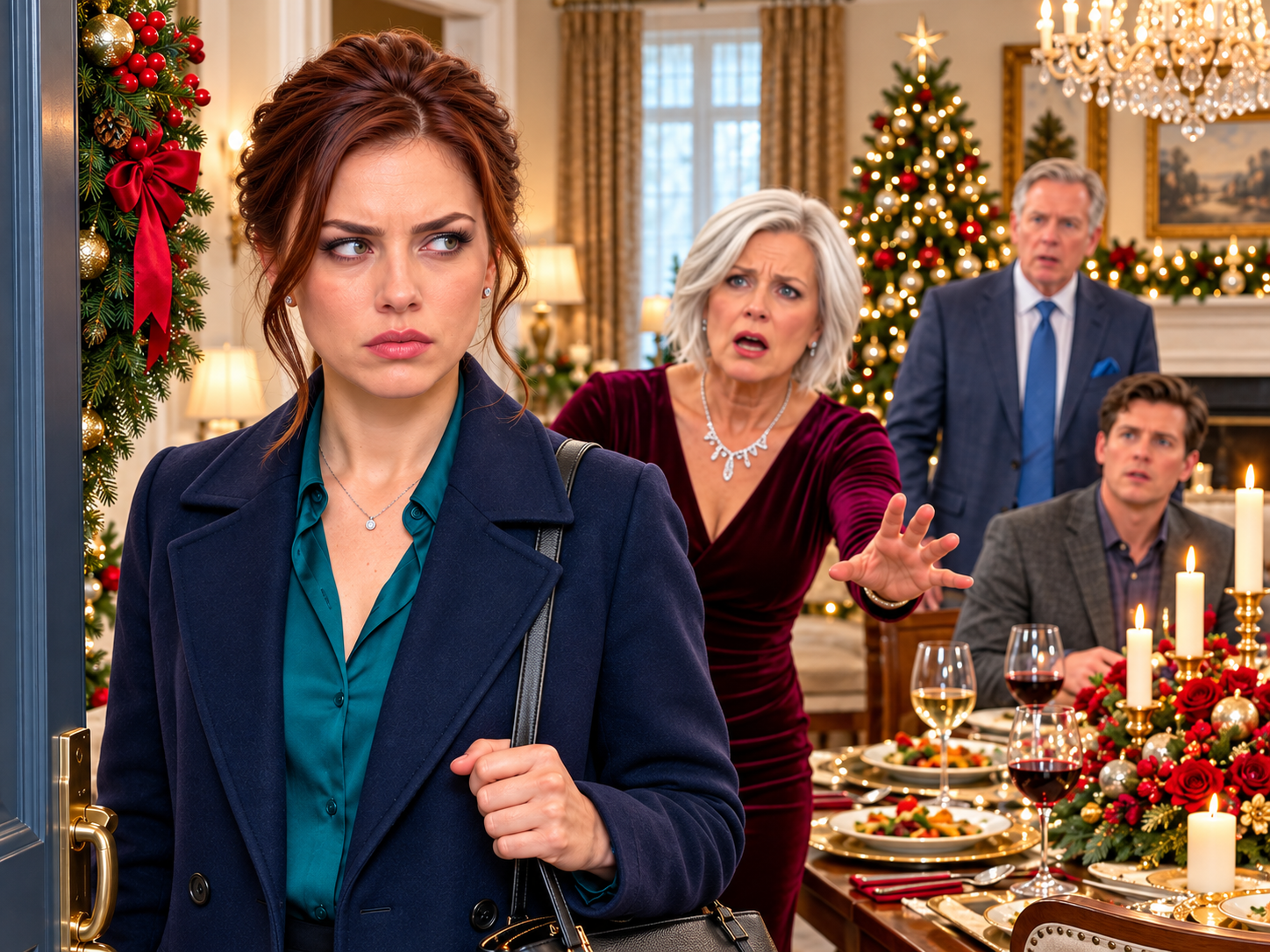
The Christmas Dinner That Turned Into an Unexpected Demand for Independence, and the Question That Exposed Everything They Had Been Hiding
Part 7 of 8

