
Dad called on a warm afternoon in early summer.
I was leaving work when his name appeared on my phone.
For several seconds, I considered letting it ring.
Then I answered.
“Hi, Dad.”
He did not greet me.
“You have to stop telling people what happened.”
I paused beside my car.
“I haven't been telling people anything.”
“Yes, you have.”
“Who?”
He hesitated.
“That doesn't matter.”
“It does if you're accusing me.”
His breathing was heavy.
“I've heard what you've been saying.”
“I've answered questions.”
“You've made us look terrible.”
I leaned against the car.
“You did that yourself.”
Silence.
I expected him to become angry.
Instead, his voice dropped.
“You don't understand what happened.”
“Then explain it.”
He said nothing.
I waited.
Finally, he spoke.
“We were trying to keep the family together.”
“By using my information?”
“It wasn't supposed to go that far.”
“That isn't an explanation.”
“We needed help.”
“You had help.”
“You weren't supposed to cut us off.”
“You told me to leave.”
“I didn't think you would actually do it.”
That sentence stopped me.
For the first time, Dad had said something honest.
I looked at the parking lot.
“You didn't think I would leave?”
“No.”
“Why?”
He sighed.
“Because you're my daughter.”
I understood then.
He had never imagined the possibility that I might interpret his words literally.
When he said I needed to support myself, he had expected me to argue.
When Mom asked whether I would keep paying, she had expected me to say yes.
When they told me I had until the end of the week, they expected me to spend those days apologizing and negotiating.
They had assumed my attachment to them was stronger than my attachment to my own boundaries.
Dad continued.
“You were always the responsible one.”
I almost smiled.
“That was the problem.”
“You were good at handling things.”
“That doesn't mean they were mine to handle.”
He became quiet.
Then he said, “Your mother and I made mistakes.”
I closed my eyes.
There it was.
Not an apology.
Not yet.
But closer than anything I had heard before.
“What kind of mistakes?”
He took a long breath.
“We trusted that you would keep helping.”
“You didn't just trust it.”
“No.”
“You planned around it.”
Another pause.
“Yes.”
The admission hurt more than anger would have.
I had spent months wondering whether I had exaggerated everything.
Now he was confirming it.
“You built your life around my money.”
“We thought you would always be there.”
“That isn't love.”
He did not respond.
I looked at the sky.
A cloud had settled over the late afternoon sun.
“I don't want your house,” I said.
“We don't have it.”
“I don't want your cars.”
“They're gone.”
“I don't want your money.”
“We don't have much.”
“I don't want anything from you.”
His voice became quieter.
“Then what do you want?”
I answered immediately.
“I want you to stop expecting something from me.”
The line went silent.
That was the first time Dad seemed to understand what I had been saying for months.
I was not asking them to suffer.
I was asking them to stop reaching into my life whenever theirs became uncomfortable.
Eventually he said, “I don't know how to fix this.”
“Neither do I.”
“Can we still be family?”
I thought about the question.
“Yes.”
He sounded relieved.
“But not the way we were.”
His relief disappeared.
“What does that mean?”
“It means you can't ask me for money because we're family.”
“Okay.”
“You can't use my name on anything.”
“Okay.”
“You can't tell people I'm responsible for your expenses.”
“I won't.”
“And if you need help, you can ask.”
He paused.
“Would you help?”
“Sometimes.”
“Sometimes?”
“Yes.”
“That's all?”
“That has to be enough.”
He sighed.
“All right.”
We ended the call a few minutes later.
I sat in my car without starting the engine.
I expected to feel victorious.
Instead, I felt tired.
There was no pleasure in setting boundaries with someone who had once carried me on his shoulders.
Childhood memories do not disappear because adulthood becomes difficult.
I remembered Dad teaching me to ride a bicycle.
Mom sewing a button back onto my school uniform.
Mason and me fighting over the television.
Family vacations.
Christmas mornings.
Those memories were real.
So were the financial problems.
One truth did not erase the other.
That was something I had struggled to understand.
For a long time, I thought I had two choices.
Either my parents were good people and I had to forgive everything.
Or they had treated me badly and none of the good memories mattered.
The truth was harder.
People can love you and still use you.
They can believe they are doing what is best while making choices that hurt you.
They can provide genuine care and still develop unhealthy expectations.
Understanding that did not excuse what happened.
It simply made the past less confusing.
Mom called a few weeks later.
Her voice sounded hesitant.
“I wanted to ask you something.”
“What?”
“Would you come for dinner?”
I almost said no.
Then I asked, “Where?”
“The apartment.”
I agreed.
Not because everything was fixed.
Because I wanted to see what remained when money was removed from the room.
The rental was smaller than the old house.
Much smaller.
The furniture looked crowded.
There were boxes stacked beside the hallway.
Mason was sitting on the sofa.
He stood when I entered.
“Hey.”
“Hey.”
Neither of us knew what to say.
Mom came from the kitchen.
She hugged me.
I allowed it.
Dad stood near the window.
He looked older.
For a few minutes, we talked about ordinary things.
Work.
Weather.
A neighbor.
The food.
No one mentioned money.
That was the strangest part.
Dinner was simple.
Chicken.
Rice.
Vegetables.
No expensive wine.
No polished table setting.
No performance.
Mason ate quietly.
Afterward, he helped Mom clear the dishes.
I watched him.
This was the brother who had laughed when I was told to leave.
Now he was carrying plates into a small kitchen.
Life had changed all of us.
After dinner, Dad asked me to stay.
Mason went into the other room.
Mom remained at the table.
Dad looked at his hands.
“I owe you an apology.”
I said nothing.
He continued.
“I was wrong to tell you that you owed us for being raised.”
My throat tightened.
“I was wrong to expect you to keep paying after we told you to leave.”
He swallowed.
“And I was wrong to use your information.”
Mom looked down.
“I was wrong too.”
I believed them.
Not because the apology erased anything.
Because for once, they weren't asking me to prove my love by accepting another demand.
I nodded.
“Thank you.”
Dad looked at me.
“Can you forgive us?”
I thought about it.
“I can forgive you.”
His shoulders lowered.
“But forgiveness doesn't mean everything goes back to the way it was.”
“I know.”
“Good.”
Mom reached across the table.
I let her take my hand.
It was a small gesture.
No promises.
No money.
No documents.
Just a mother holding her daughter's hand.
For the first time in a long time, I didn't feel like an account number.
I felt like a person.
Click Here to continue read next: PART7: When My Family Finally Stopped Asking for Money, I Had to Decide Whether Their Apology Deserved a Place in My New Life
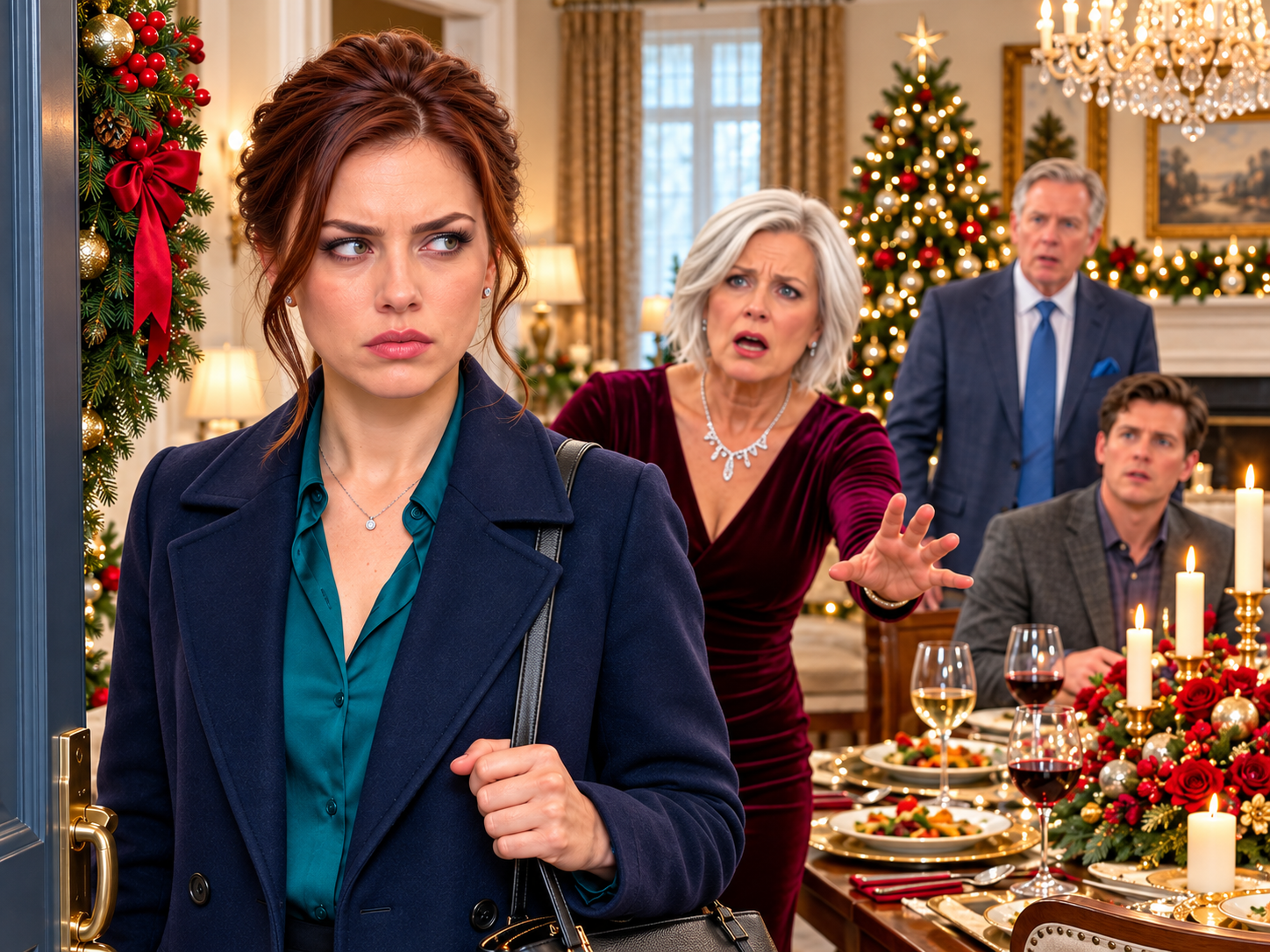
The Christmas Dinner That Turned Into an Unexpected Demand for Independence, and the Question That Exposed Everything They Had Been Hiding
Part 6 of 8

