
The Open Book Project had grown beyond anything I had expected.
What began as a folding table, six women, and a stack of photocopied checklists had become a monthly workshop with volunteers, donated meeting space, and people arriving from towns I had never heard of.
I still preferred the small sessions.
Large rooms made people perform confidence.
Small rooms allowed them to admit what they did not know.
On a rainy Thursday evening, twelve people gathered around three pushed-together tables. I had just finished explaining how to locate a beneficiary designation when a woman near the window raised her hand.
She looked to be in her early forties.
Her name was Rachel.
She had been quiet throughout the class, taking notes in neat, narrow handwriting.
“What if the person who controls everything is also the person you love most?” she asked.
No one moved.
I knew the question.
Not the exact circumstances.
The feeling.
I placed my pen on the table.
“Then you start by separating love from access,” I said.
Rachel frowned slightly.
“What does that mean?”
“It means someone can be trustworthy and still not be the only person who knows where the documents are.”
She looked down.
“My husband says I'm worrying about things that don't matter.”
I did not tell her what that meant.
I asked a different question.
“Do you know what accounts exist?”
“Some.”
“Do you know which ones have your name on them?”
She hesitated.
“No.”
“Then that's where you begin.”
After the workshop, Rachel waited until everyone else had left.
She pulled a folded piece of paper from her bag.
“I found this in our home office.”
It was a bank notice.
The account belonged to a company I had never heard of.
Her husband was listed as the sole manager.
Her name appeared nowhere.
“Do you own part of the company?”
“I thought I did.”
“Do you have an agreement saying that?”
She shook her head.
I did not speculate.
I gave her the same advice I had once received from Evelyn.
Gather records.
Do not sign anything you do not understand.
Do not confront someone simply because you have discovered something you cannot yet explain.
And get independent legal advice if property or substantial money is involved.
Rachel stared at the paper.
“Did you go through this?”
I understood what she meant.
“Yes.”
She waited.
“Was it worth it?”
I thought about the question.
“It was painful.”
“That isn't what I asked.”
“No,” I said. “It wasn't worth losing the marriage. But understanding what was happening was worth everything.”
She folded the paper again.
“I think I'm scared.”
“So was I.”
She looked surprised.
I rarely spoke about myself during the workshops.
“You?”
“Yes.”
“What did you do?”
“I learned before I decided.”
That became the advice she remembered.
The next morning, Evelyn called.
“I heard you've become an instructor.”
“Someone told you?”
“Your name is on the community center's website.”
I laughed.
“You're checking my website now?”
“I'm allowed to know whether my former client is becoming famous.”
“I am not famous.”
“Good. Fame is expensive.”
We talked for several minutes.
Then she mentioned something I had not expected.
“Travis contacted my office.”
I sat down.
“Why?”
“He wants a copy of one of the old settlement schedules.”
“Why would he need that?”
“His accountant is restructuring his remaining business interests.”
I felt the old instinct.
Curiosity.
Then suspicion.
Then the urge to understand every detail.
I let the feeling pass.
“Do you need me to do anything?”
“No.”
“Then I don't need to know.”
Evelyn laughed softly.
“You really have changed.”
“I've had practice.”
A week later, Rachel returned.
She had seen an attorney.
The attorney had found that the company was legitimate but that Rachel had never been an owner.
Her husband had apparently told her for years that she would receive an ownership interest after the business became profitable.
It had never happened.
She was angry.
But beneath the anger was something else.
Relief.
She finally knew.
She could decide what came next.
That was the part I understood most deeply.
Knowledge did not always produce a happy ending.
Sometimes it produced a difficult one.
But uncertainty had its own cost.
I had paid that cost for years.
I did not want anyone else to pay it simply because they were afraid of what the truth might require.
The Open Book Project received a small grant.
We rented a permanent room.
There were shelves.
A printer.
A filing cabinet.
A whiteboard.
I stood in the doorway after the volunteers left and looked around.
It was modest.
But it was ours.
Not mine.
Not owned by one person.
Shared.
Transparent.
Everyone had keys.
Everyone knew where the records were.
We created a simple rule.
No financial decision affecting the organization could be made by one person without documentation.
Some people thought it was excessive.
I thought it was healthy.
Transparency did not mean distrust.
It meant no one had to guess.
Months later, a local newspaper interviewed me.
The reporter asked what had inspired the project.
I considered giving her a short answer.
Instead, I told her the truth.
“I learned that financial dependence can become emotional dependence if you aren't careful.”
She asked whether I regretted my marriage.
I paused.
“No.”
That surprised her.
“Why not?”
“Because regret makes the past sound like a mistake that should never have happened.”
I looked toward the window.
“My marriage happened. It contained good things and bad things. It taught me things I would not have learned otherwise.”
“Would you do it again?”
I smiled.
“No.”
The reporter laughed.
“So you do regret it.”
“No,” I said. “I learned from it.”
The distinction mattered.
A past decision could be wrong for the future without becoming meaningless.
That evening, the article appeared online.
I read it once.
Then I closed the page.
I did not search the comments.
I did not look for Travis's name.
I had no interest in knowing whether he had read it.
Two days later, someone sent me a screenshot.
A stranger had written that people like me were lucky because we had property to fall back on.
I almost replied.
Then I deleted the message.
They did not know my life.
They knew one paragraph.
That was enough.
A week after the article, I received a letter from a woman named Denise.
She had been widowed.
Her husband had handled every account.
After his death, she discovered debts she knew nothing about.
She wrote that she felt ashamed.
I wrote back.
I told her shame belonged nowhere near a learning process.
I invited her to the next workshop.
She came.
She sat in the back.
At the end, she asked about life insurance.
Then she asked about retirement accounts.
Then she asked about taxes.
Her questions became more confident each month.
Eventually, she volunteered.
I watched her explain beneficiary forms to another widow.
I smiled.
That was how knowledge moved.
One person learned.
Then another.
Then another.
Not dramatically.
Not perfectly.
Just steadily.
One winter evening, after everyone had left, I locked the Open Book office.
Snow had begun falling lightly.
I walked toward my car.
My phone buzzed.
A message from Travis.
I almost ignored it.
Then I saw the first sentence.
I heard about the project.
I stopped.
He wrote that he was glad I had found something meaningful.
Then he said:
I used to think control was the same as security.
I read the sentence twice.
The message continued.
I was wrong.
I put the phone away.
I did not answer.
But I did not delete it either.
Some truths could be acknowledged without reopening the door.
I drove home through the snow.
When I entered my cottage, the porch light reflected against the wet pavement.
Inside, the house was warm.
My father's watch rested on the shelf.
The brass key sat beside it.
The notebook was open on my desk.
The last line I had written was still there.
Keep your promises to yourself.
I added another sentence beneath it.
And give other people room to keep theirs.
Then I closed the notebook.
Click Here to continue read next: PART10: A Business Owner Offered to Fund Our Project, and His Generous Proposal Revealed Why Transparency Had Become Nonnegotiable for Me
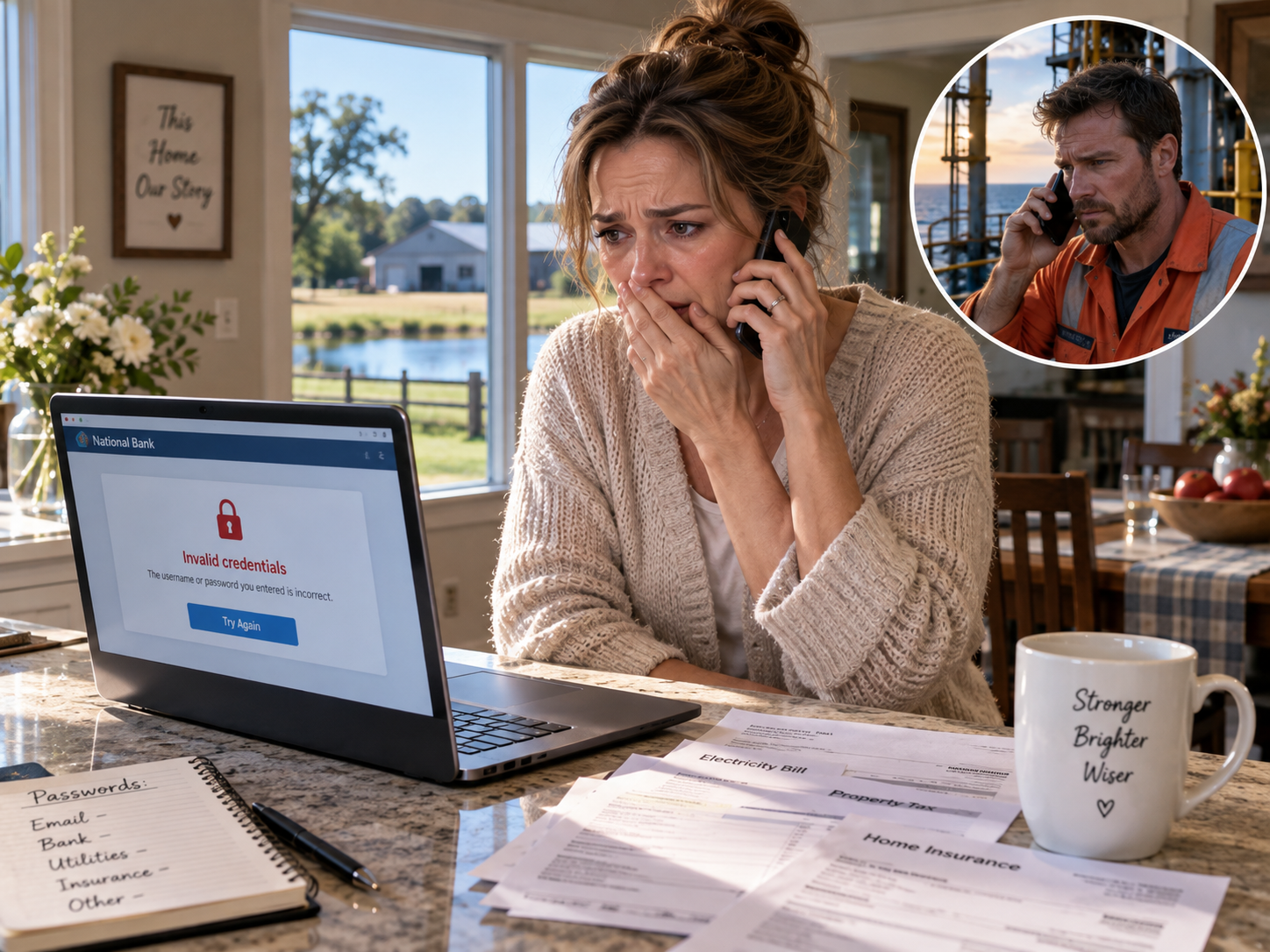
The Morning My Password Failed, I Realized My Husband Had Quietly Moved Our Money and Changed More Than I Knew
Part 9 of 16

