
The offer arrived in March.
A local contractor named Daniel Mercer wanted to donate fifty thousand dollars to the Open Book Project.
It was more money than we had ever received.
The board was excited.
Our printer was old.
The office needed better computers.
We could afford evening classes.
We could translate our materials.
The possibilities were enormous.
Daniel came to the office with a polished proposal.
He was friendly.
Confident.
He spoke quickly.
“I don't want anything complicated,” he said. “I just want to help.”
That sentence sounded harmless.
It was also exactly the kind of sentence I had learned to examine.
I asked whether there were conditions.
“Nothing significant.”
“Please put them in writing.”
He smiled.
“Of course.”
The written proposal arrived two days later.
It contained several clauses.
The donation would be made through his holding company.
The Open Book Project would promote his company at selected events.
His logo would appear on materials.
He would receive access to certain aggregated participant information.
That last clause stopped me.
“What information?”
“Names, contact details, general financial interests.”
“No.”
He blinked.
“It would only help us understand the audience.”
“No participant data.”
He leaned back.
“You're being overly cautious.”
The phrase hit me harder than it should have.
I heard Travis's voice in it.
You panic.
You're making this difficult.
You're overthinking it.
I looked at Daniel.
“Maybe.”
He smiled.
“But our participants trust us.”
The board agreed.
We rejected the proposal as written.
Daniel withdrew the donation.
Some board members were disappointed.
One asked whether I had been too rigid.
I said perhaps.
Then I asked whether we wanted money badly enough to weaken the rule that made people trust us.
No one answered immediately.
Finally, the board chair said no.
The room relaxed.
We created a new policy.
No donor could receive participant information.
No donor could control curriculum.
No donor could condition funding on individual access.
No staff member could approve a significant financial arrangement alone.
Every agreement had to be documented.
It was not glamorous.
It was necessary.
Later that month, Rachel joined the volunteer team.
She had left her husband.
The decision had been hers.
I did not ask whether it was difficult.
Her face answered.
She helped organize documents for new participants.
One evening, she said, “I used to think independence meant doing everything alone.”
“It doesn't.”
“What does it mean?”
“Being able to participate in your own decisions.”
She smiled.
“That sounds better.”
“It is.”
Spring became summer.
The project expanded into schools.
We taught teenagers how interest worked.
How credit cards worked.
Why signing a document mattered.
Why passwords should not be shared casually.
Why a bank account in your name could still have someone else controlling access.
The students asked surprisingly direct questions.
One boy asked whether marriage meant you had to combine everything.
“No.”
“Then why do people do it?”
“Convenience. Trust. Shared goals. Sometimes tradition.”
“What's safest?”
I smiled.
“There's no single safest arrangement for every family. What matters is that everyone understands the arrangement and has access to the information they need.”
The boy nodded.
He seemed satisfied.
I liked that answer because it left room for people to choose.
My own life had taught me the danger of confusing one person's preferred arrangement with a universal rule.
That autumn, the Open Book Project received a larger grant from a foundation.
This time, the agreement was thirty pages.
I read every page.
The board joked that I would find a comma hidden somewhere.
I laughed.
Maybe I would.
The grant funded three new staff positions.
For the first time, the project became an organization rather than a volunteer effort.
We hired an accountant.
I insisted on independent bookkeeping.
The accountant looked at me.
“You don't trust your own team?”
“I trust them enough to build systems that don't require blind trust.”
He smiled.
“That's a good answer.”
I had heard that before.
Years earlier, from my own fear.
The organization grew.
And with growth came mistakes.
One employee accidentally sent a spreadsheet containing internal donor information to the wrong email address.
No participant data was included.
We disclosed the error internally.
We corrected it.
We changed the process.
No one was fired.
No one pretended it had not happened.
Transparency worked in both directions.
It meant admitting mistakes when they were inconvenient.
That became another principle of the organization.
The following winter, Evelyn invited me to dinner.
She had represented me for years.
Now she was retiring.
“You'll be missed,” I told her.
“Not by my clients.”
“By me.”
She smiled.
“I have one question.”
“What?”
“Do you still keep everything?”
I laughed.
“Not everything.”
“Good.”
“I learned that too.”
She raised her glass.
“To knowing when to keep something and when to let it go.”
We drank.
Later, we walked outside.
The air was cold.
She stopped near her car.
“You know what impressed me most?”
“What?”
“You never asked me to tell you what decision to make.”
I thought about that.
“I wanted to.”
“I know.”
“But you never did.”
“No.”
She smiled.
“You learned faster than most people.”
I shook my head.
“I had a good teacher.”
“You had a good crisis.”
We both laughed.
At home, I thought about that conversation.
She was right.
The crisis had forced questions I would otherwise have avoided.
But the answers had still been mine.
A few weeks later, Travis sent another message.
His company had been sold.
He had accepted a position with a larger firm.
He wrote that he was moving to another state.
He did not ask to see me.
He did not ask for anything.
He simply wanted to tell me.
I wished him well.
That was the entire exchange.
It felt strangely complete.
No anger.
No longing.
No unfinished argument.
Just two people who had once shared a life and now occupied separate ones.
I placed my phone down.
Outside, rain began falling.
I opened the window slightly.
The smell of wet earth entered the room.
I thought about the old property.
The pond.
The workshop.
The oak tree.
The house.
I missed them sometimes.
But missing something did not mean you had made the wrong decision by leaving it.
Some places belonged to a chapter.
Not the whole book.
I closed the window.
Then I opened the Open Book budget.
We had money allocated for scholarships.
I checked the figures.
Everything balanced.
I smiled.
Numbers had once frightened me because someone else used them to control me.
Now numbers were simply information.
That was perhaps the quietest victory.
Not becoming wealthy.
Not proving someone wrong.
Not winning a lawsuit.
Simply being able to look at a number without fear.
Click Here to continue read next: PART11: When the Open Book Project Faced Its First Serious Crisis, I Had to Choose Between Protecting Its Reputation and Telling the Truth
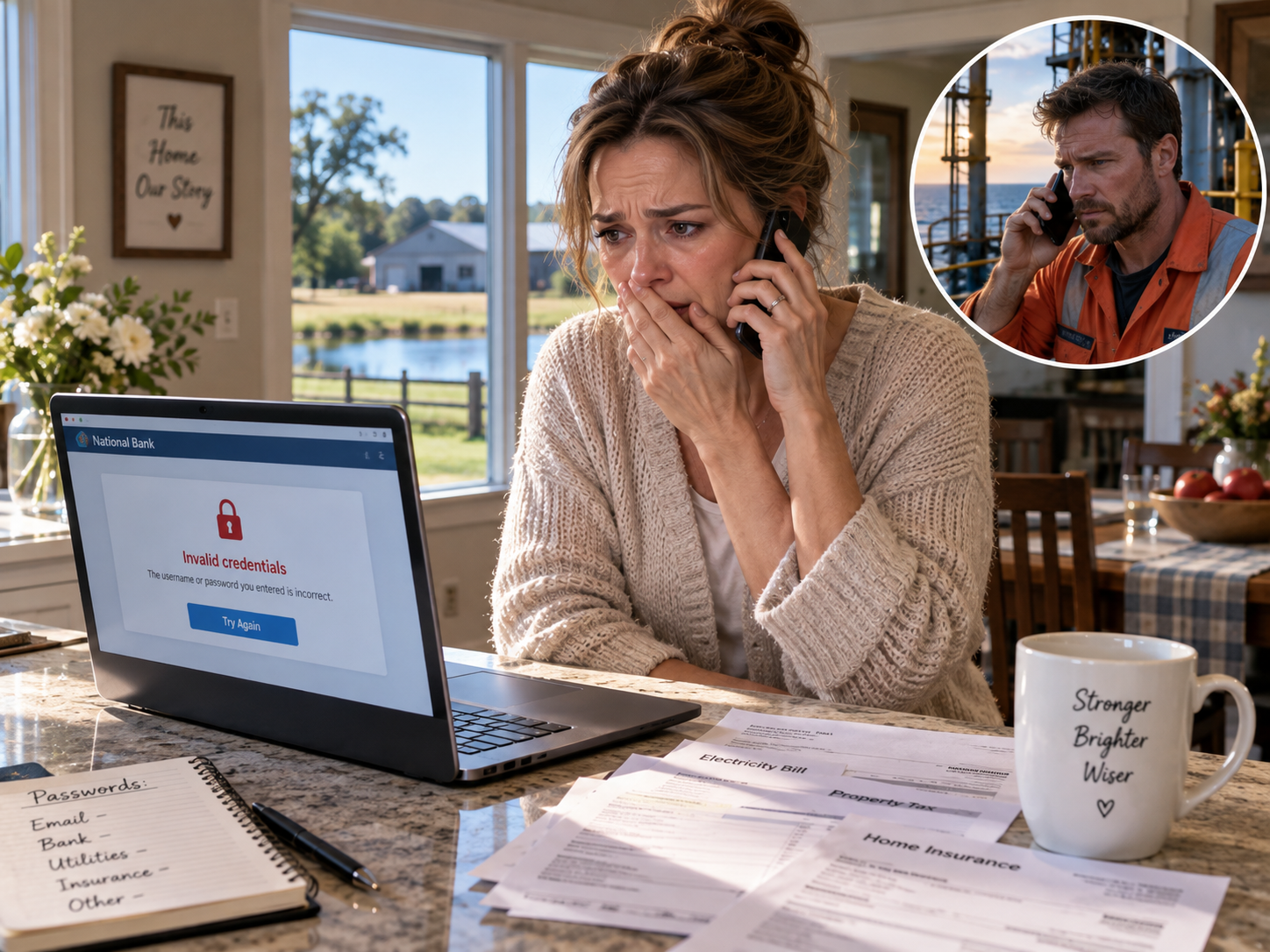
The Morning My Password Failed, I Realized My Husband Had Quietly Moved Our Money and Changed More Than I Knew
Part 10 of 16

