
The letter arrived on a Tuesday morning.
I was standing at the kitchen counter, stirring honey into tea, when the mail slipped through the slot beside the front door. Most days I ignored it until evening. That morning, something made me look.
The envelope was plain.
My name was printed neatly across the front.
There was no return address.
I set down the spoon.
For a moment, I simply stared at it.
Then I opened it.
Inside was a single sheet of paper and a photocopy of an old document.
The document was from the title company that had handled the sale of my father's property.
At first, I could not see why anyone would send it to me.
Then I noticed the date.
It had been recorded several years earlier, shortly before the property was sold.
The document concerned an inquiry made by a lender connected to Hale Offshore Consulting.
I already knew about the inquiry.
What I did not know was that the title company had retained a handwritten note from the file.
The note read:
Owner refused authorization.
I sat down.
The words were ordinary.
But they carried the weight of a door that had almost opened.
I called the title company.
The woman who answered searched the reference number.
“Yes,” she said. “That note is in the archived file.”
“Why was it sent to me now?”
There was a pause.
“Your former husband's attorney requested the file recently.”
I felt my shoulders tighten.
“Why?”
“I don't know.”
I thanked her and ended the call.
For several minutes, I did nothing.
Then I called Evelyn.
She was retired now, but she had given me permission to contact her if an old legal matter resurfaced.
She answered on the third ring.
“June?”
“I received something.”
I explained.
She listened without interrupting.
When I finished, she said, “Send me a copy.”
“I will.”
“Don't contact Travis.”
“I wasn't planning to.”
“Good.”
That afternoon, I forwarded the documents.
Evelyn called the next morning.
“The note doesn't change your ownership history.”
“I know.”
“It doesn't create a new claim.”
“I know.”
“But it tells us something useful.”
“What?”
“Someone is reconstructing the old transaction.”
I looked out the window.
“Who?”
“We don't know.”
That uncertainty bothered me more than I wanted to admit.
For years, uncertainty had been the space where fear lived.
I had worked hard to make my life concrete.
Now one anonymous envelope had reopened an old door.
I refused to let it stay open.
I made a list.
What I knew.
The property had been mine.
The financing inquiry had never become a valid lien.
The false signature had been challenged.
The settlement had preserved my interests.
The property had later been sold.
The sale had closed.
The proceeds had been distributed.
Nothing had changed.
I underlined the last sentence.
Nothing had changed.
That became my anchor.
A week later, Evelyn called again.
“The inquiry came from a company called Northline Capital.”
I searched my records.
The name appeared nowhere.
“Who owns it?”
“We're checking.”
Two days later, we had an answer.
Northline Capital had purchased a portfolio of old business debts from another lender.
One of those debts had belonged to Hale Offshore Consulting.
I sat quietly.
“So they're reviewing old collateral files?”
“Possibly.”
“And my property appears in one.”
“Yes.”
“But it was never collateral.”
“Correct.”
“Then why are they contacting me?”
“We don't know yet.”
I contacted the title company again.
They confirmed that the property had transferred cleanly to the buyer.
No lien.
No mortgage.
No claim.
I saved the confirmation.
Then I did something I had learned to do years earlier.
I stopped.
I did not investigate every possibility.
I did not search the internet for Northline Capital.
I did not call Travis.
I waited for facts.
Three days later, a formal letter arrived.
Northline Capital requested confirmation that I had never authorized the use of the property as collateral.
I read the letter twice.
The request was neutral.
It did not accuse me.
It did not threaten me.
It simply asked for documentation.
I forwarded it to the attorney now handling the organization's legal work and asked for advice.
She reviewed it.
“You can provide the title record and closing statement.”
“That's all?”
“For this request, yes.”
I sent the documents.
Then I waited.
The answer came two weeks later.
Northline Capital acknowledged that its records had been incomplete.
The loan file had incorrectly included the property in an internal collateral schedule.
They removed it.
No claim existed.
The matter was closed.
I should have felt relieved.
Instead, I felt tired.
Not because the problem had been large.
Because it had reminded me how quickly an old life could cast a shadow over a new one.
That evening, Rachel called.
“How are you?”
“Fine.”
“That wasn't convincing.”
I laughed.
“I had a paperwork scare.”
“Do you want to talk about it?”
I told her.
When I finished, she said, “You know what I would have done three years ago?”
“What?”
“Panicked.”
“So would I.”
“What did you do?”
“I checked the facts.”
She laughed.
“Look at us.”
I smiled.
“Yes.”
The following month, the Open Book Project received a request from a regional bank.
They wanted us to develop a training program for customers who had difficulty understanding financial documents.
The proposal was significant.
It would fund our education work for two years.
But there was a condition.
The bank wanted final approval over the curriculum.
I rejected the condition.
The board debated.
The bank increased the offer.
I still said no.
Some people thought I was being stubborn.
Maybe I was.
But I knew the difference between accepting support and surrendering independence.
We countered with an alternative.
The bank could fund the program.
We would acknowledge the partnership.
But curriculum decisions would remain independent.
They accepted.
The agreement was signed.
Everyone understood the terms.
No hidden expectations.
No private arrangements.
No one needed to guess.
That felt better than a larger check.
Later that year, I received a message from Travis.
He had heard about the partnership.
He wrote:
You built something I never thought you would.
I stared at the screen.
I typed a response.
Then deleted it.
I tried again.
Deleted it.
Finally, I wrote:
So did you.
I sent it.
His response came several minutes later.
I hope that's true.
I did not answer.
Sometimes a person could acknowledge another person's growth without becoming part of it.
That was enough.
Winter came early.
The garden disappeared under frost.
I moved the potted herbs indoors.
The old watch stopped.
I took it to a repair shop.
The jeweler opened the back and examined the mechanism.
“Old movement,” he said.
“Can it be repaired?”
“Yes.”
“How long?”
“A few days.”
I left it there.
For the first time, I realized I was comfortable leaving something important in someone else's hands.
Trust had not become the enemy.
Blind trust had.
There was a difference.
Three days later, the watch was ready.
The jeweler had cleaned it and replaced a worn spring.
I put it on.
Tick.
Tick.
Tick.
The sound returned.
I walked home through the cold.
At the corner, I saw my reflection in a dark shop window.
Older.
Calmer.
Different.
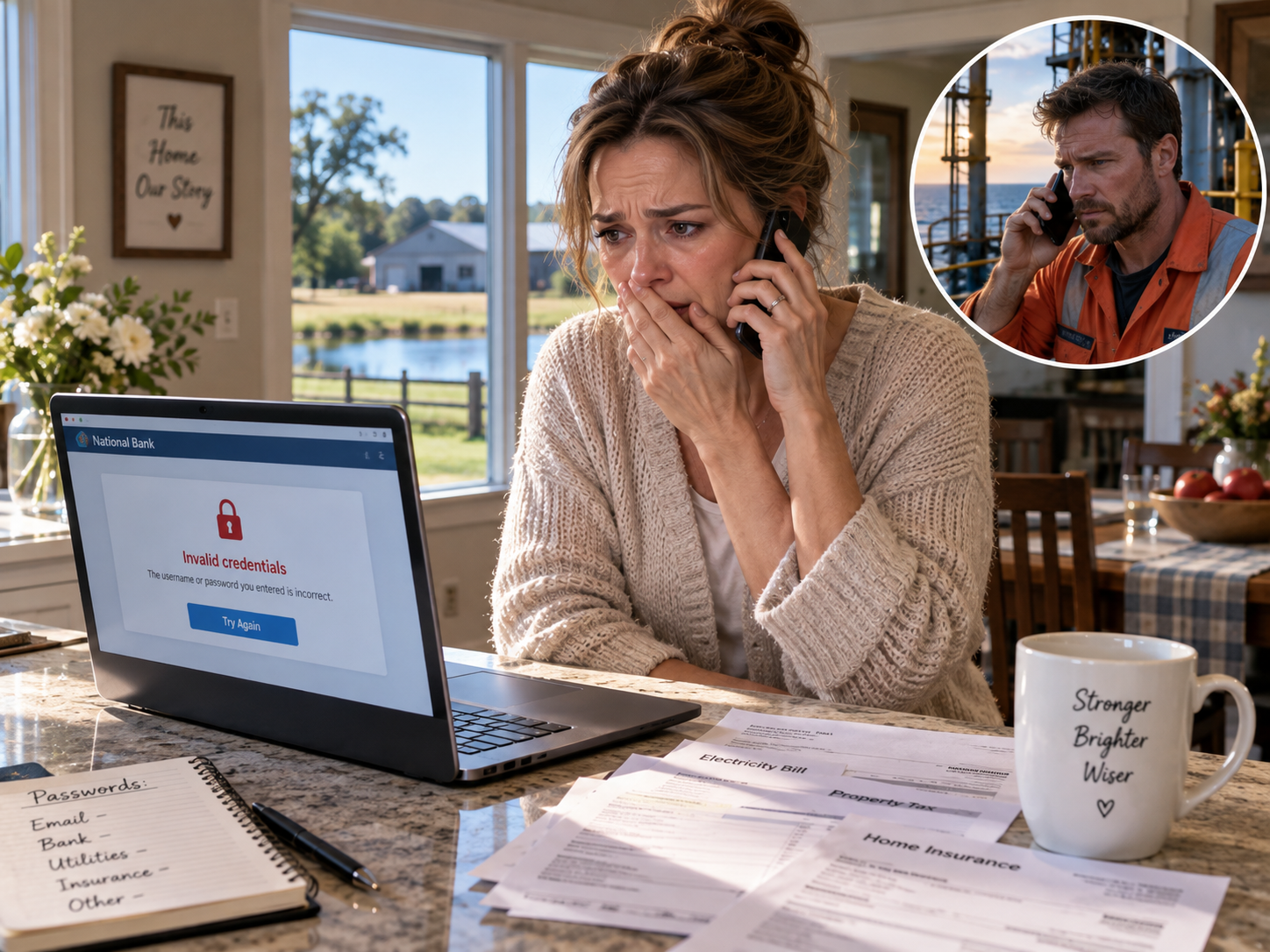
I thought about the woman who had once stood in a kitchen staring at a failed password.
She had not known how much of her life was about to change.
I wished I could tell her one thing.
You are allowed to ask.
Not just once.
Not only when something goes wrong.
Every time you need to.
You are allowed to know.
You are allowed to stop.
You are allowed to read.
You are allowed to say no.
And when you finally say yes, let it be because you understand what you are choosing.
I reached my front door.
The key turned easily.
Inside, the house was warm.
I hung my coat.
I placed my father's watch on the shelf.
Then I made tea.
The letter from Northline Capital remained in my records.
Not because I feared it.
Because records were meant to tell the truth.
I no longer needed to destroy reminders of the past.
I simply needed to keep them in their proper place.
Behind me.
Click Here to continue read next: PART14: When the Foundation Asked Me to Tell My Story on a Larger Stage, I Had to Decide How Much of the Past I Was Willing to Reveal
The Morning My Password Failed, I Realized My Husband Had Quietly Moved Our Money and Changed More Than I Knew
Part 13 of 16

