
Three years after the divorce, I bought a small piece of land.
Not eleven acres.
Not a family estate.
Four acres at the edge of a quiet town.
There was an old cottage on it with a crooked porch and a garden that had been abandoned for years.
The realtor asked why I wanted it.
I said, “Because I like the trees.”
That was true.
There was no hidden reason.
No business plan.
No financial strategy.
No desire to prove anything.
I wanted trees.
So I bought the place.
This time, the process felt entirely different.
I read the purchase agreement.
I reviewed the title report.
I asked questions.
I hired an independent attorney.
I reviewed the insurance.
I compared lenders.
I read every page before signing.
At closing, the attorney smiled.
“You've done your homework.”
“Yes.”
She handed me the pen.
I signed.
The deed was recorded in my name.
I carried the folder outside.
The sun was low.
Wind moved through the trees.
I stood there for a while.
Then I laughed.
Not because of the property.
Because I remembered how afraid I had once been of my own signature.
Now I understood what it meant.
A signature was not obedience.
It was consent.
That distinction had taken me years to learn.
I restored the cottage slowly.
The roof first.
Then the porch.
Then the kitchen.
I planted herbs.
I repaired the fence.
I turned the old shed into a small office.
On the wall above my desk, I hung my father's letter.
Beside it, I placed the brass key.
I eventually learned what the key opened.
A small cabinet in the old workshop at my former property.
The buyer had found it while repairing the wall and mailed the key back to me.
Inside the cabinet had been nothing valuable.
Only another notebook.
My father had written one sentence on the first page.
Keep your promises to yourself.
I sat there for a long time.
The phrase seemed almost painfully simple.
But I understood it.
I had spent years keeping promises to everyone else.
Be patient.
Be supportive.
Don't make things difficult.
Trust him.
Let him handle it.
Keep the peace.
I had mistaken those things for marriage.
Some of them were.
Some were not.
A promise to yourself could be simple too.
I will understand what I sign.
I will ask when I don't know.
I will protect what I am responsible for.
I will leave when staying requires me to disappear.
I will not confuse forgiveness with surrender.
I will not confuse love with ownership.
I wrote those sentences in my notebook.
Then I closed it.
Life continued.
I watched my garden grow.
I traveled.
I made new friends.
I dated once, briefly.
The man was kind.
He asked too many questions about my finances.
I laughed.
Then I explained why.
He listened.
He did not become defensive.
That mattered more than any romantic gesture.
Eventually, we stopped seeing each other.
There was no disaster.
No betrayal.
No dramatic ending.
Just two people who wanted different things.
I was grateful for the experience.
I had learned that healthy relationships did not require the absence of questions.
They required room for them.
One afternoon, I received a package.
Inside was the wooden box containing my father's watch.
I had accidentally left it at a repair shop after sending it for cleaning.
The jeweler had included a note.
The watch is running well.
I smiled.
It seemed appropriate.
The watch had survived.
So had I.
That evening, I sat on the porch.
The trees moved in the wind.
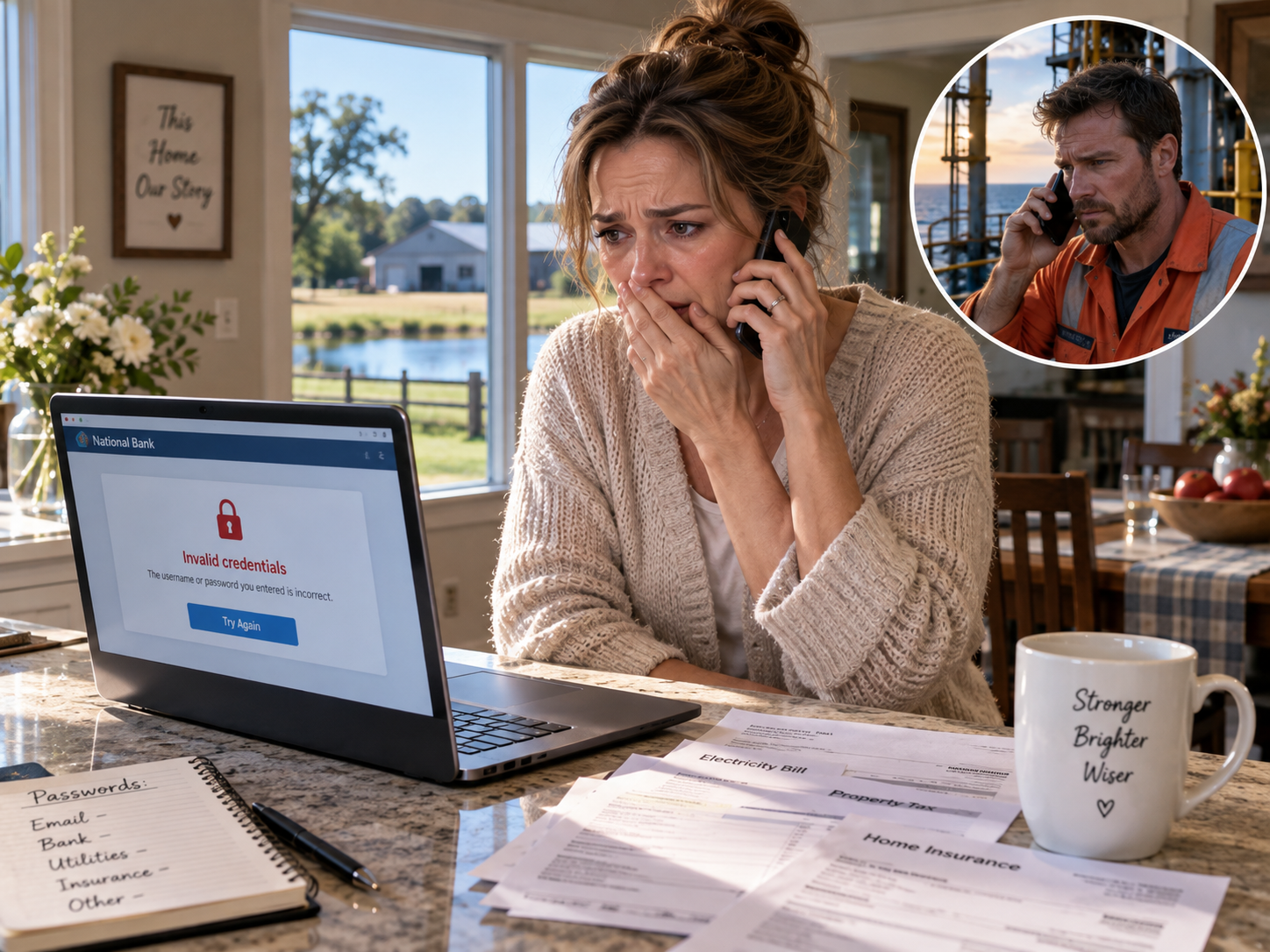
I thought about the morning the password failed.
If someone had told me then what my life would eventually look like, I would not have believed them.
I would have imagined lawyers, bank records, and arguments.
I would not have imagined the blue chair.
The tomato plants.
The financial classes.
The little cottage.
The quiet.
Especially the quiet.
The deepest change was not that I had learned how to protect myself from other people.
It was that I had stopped abandoning myself to keep other people comfortable.
That distinction was harder than it sounded.
It required practice.
There were still moments when I second-guessed myself.
A large bill arrived.
I checked it.
A contract appeared.
I read it.
A bank email came through.
I opened it.
A decision needed to be made.
I considered it.
None of those things were dramatic.
That was the point.
A life did not become secure because nothing unexpected happened.
It became stronger when you knew how to meet what happened.
I sometimes wondered whether Travis understood that now.
I hoped he did.
Not for him.
For the people around him.
His company survived, but it became smaller.
He stopped taking on large risks.
He eventually sold his interest in the offshore business and moved into consulting.
Evelyn told me none of this unless it mattered legally.
I did not ask for updates.
Years later, I happened to see his name in an industry article.
He had helped a small contractor restructure its finances after a difficult year.
The article quoted him discussing transparency.
I read the sentence.
Then I closed the page.
People change.
Sometimes slowly.
Sometimes because consequences force them to.
Sometimes because they finally see themselves clearly.
I did not need to know which had happened to Travis.
My life was no longer connected to the answer.
One spring, the financial-literacy program asked whether I would help create a permanent workshop.
I agreed.
We called it the Open Book Project.
The name was intentionally simple.
The goal was simple too.
Teach people how to understand their money before a crisis forced them to.
We taught couples to review accounts together.
We taught young adults how to read leases and loan documents.
We taught widows how to locate insurance policies and beneficiary forms.
We taught anyone who attended that asking questions was not a sign of weakness.
It was a form of participation.
The program grew.
Then another community center asked for the materials.
Then another.
I watched the project move beyond the room where it began.
I thought about my father's note.
Leave something useful behind.
Maybe this was what he had meant.
Not the house.
Not the workshop.
Not the land.
Something that remained useful after you were gone.
One evening, I returned to my cottage after a long day.
The porch light was on.
The garden smelled like wet soil.
I opened the front door.
On the table sat the old deed from my father's property.
I had framed it years earlier.
I looked at the name printed there.
JUNE ELIZABETH HALE.
The same name that had appeared on the tax record.
The same name that had appeared on the deed.
The same name Travis had tried to place beneath a signature that was not mine.
The same name that had eventually appeared on the sale documents.
I used to think that name represented property.
Now I understood that it represented a person.
Me.
I touched the glass over the frame.
Then I walked to the kitchen.
I made tea.
I opened my notebook.
At the top of a fresh page, I wrote:
I own my choices.
I looked at the sentence.
It felt complete.
Not because everything in life was under my control.
It wasn't.
People could lie.
Plans could fail.
Markets could fall.
Contracts could go wrong.
People you loved could disappoint you.
You could make mistakes.
You could miss signs.
You could trust someone who did not deserve it.
None of that meant you had to surrender the rest of your life.
You could learn.
You could ask.
You could rebuild.
You could begin again.
I closed the notebook.
Outside, the last light disappeared behind the trees.
My father's watch ticked softly on the shelf.
The sound was steady.
I thought about time.
About how much of mine I had spent trying to prevent conflict.
Trying to be agreeable.
Trying not to ask too many questions.
Trying to preserve a marriage that had already begun depending on my silence.
I could regret that time.
Sometimes I did.
But regret could become another form of control if you allowed it to dictate the present.
So I let the past remain where it belonged.
Behind me.
Not erased.
Not denied.
Just finished.
I turned off the kitchen light.
Before bed, I checked the front door.
Locked.
I checked the stove.
Off.
I checked my phone.
No urgent messages.
Then I smiled.
Not because I had escaped something.
Because I had built something.
A life where I could sleep without wondering what someone else had signed in my name.
A life where questions were allowed.
A life where money was a tool rather than a weapon.
A life where love could exist without ownership.
And when I finally understood that, I understood what had really happened the morning my password failed.
The account had been closed.
The money had been moved.
The documents had been manipulated.
The marriage had ended.
But the thing Travis had never been able to take was the one thing I had spent years forgetting I possessed.
The right to decide what happened next.
I turned off the light.
The house became quiet.
This time, I welcomed the silence.
Click Here to continue read next: PART9: The Woman Who Sat Across From Me at the Open Book Workshop Had One Question That Brought Back Everything I Thought I Had Finally Left Behind
The Morning My Password Failed, I Realized My Husband Had Quietly Moved Our Money and Changed More Than I Knew
Part 8 of 16

