
The box arrived without warning.
It came from the buyer of my old property.
Inside were several items discovered in the attic after the renovation.
A stack of photographs.
Two old notebooks.
A brass key.
And a sealed envelope with my father's handwriting.
I recognized the handwriting immediately.
My name was written across the front.
I sat at my desk for nearly ten minutes before opening it.
Inside was a letter dated six months before his death.
My father wrote that he knew I would eventually have to make difficult decisions about the property.
He wrote that the land was valuable.
But he also warned me not to confuse value with obligation.
I smiled.
That sounded like him.
Then I reached the final paragraph.
He had written that the property was mine to keep, sell, improve, divide, or give away.
No one else should ever convince me that accepting help meant surrendering authority.
I put the letter down.
For years, I had thought the lesson of the property was ownership.
My father had meant something broader.
Choice.
I opened the notebooks.
They contained records of repairs he had made, money he had spent, and plans for the workshop.
One page contained a rough drawing of the pond.
Another listed trees he wanted to plant.
At the bottom of one page, he had written:
Leave something useful behind.
I cried then.
Not dramatically.
Just quietly.
The kind of crying that comes when a person realizes someone they loved had left pieces of themselves in ordinary places.
The next day, I contacted the family who had bought the property.
I asked whether they wanted the notebooks.
They said yes.
I kept the photographs.
The brass key went into a small drawer.
I did not know what it opened.
Perhaps nothing anymore.
I liked having it.
Months passed.
My life settled into a rhythm.
The financial-literacy program expanded.
I helped create a basic document checklist for people who had never managed household finances.
Account numbers.
Beneficiaries.
Insurance.
Property records.
Tax documents.
Emergency contacts.
Debt information.
Copies of wills.
Passwords stored safely.
The list was practical.
That was what I wanted.
No speeches.
No fear.
No assumptions about marriage.
Just information.
One evening, Evelyn called.
“Travis's attorney has finally closed the remaining financial matters.”
I sat down.
“Everything?”
“Everything connected to the settlement.”
“And the company?”
“Separate.”
I nodded.
“Is he okay?”
“He's functioning.”
That answer was enough.
I realized I had asked without needing the answer.
That was progress.
Later that night, I received an email from Travis.
He wrote that he had paid the last major business obligation connected to the old dispute.
He wrote that he was moving into a smaller apartment.
He wrote that he had finally hired an accountant instead of trying to manage everything himself.
Then he wrote:
I wish I had learned to ask for help before I decided I was entitled to control everything.
I read it once.
Then I closed the message.
I did not respond.
Not every ending required a final conversation.
Some endings were simply the absence of another beginning.
The following spring, I returned to the community center for another financial class.
A new group sat around the table.
One woman was visibly nervous.
“I don't understand any of this,” she said.
“You don't need to understand all of it today.”
“What should I start with?”
“Start with your name.”
She looked confused.
“Find out what accounts have your name on them. Find out what property has your name on it. Find out what debts have your name on them.”
She nodded.
“Then make copies.”
Another woman asked about joint accounts.
We discussed them.
Another asked about inherited property.
We discussed that too.
No one asked me about Travis.
I preferred it that way.
The story had stopped being about him.
That was the final change.
For a long time, every document I found seemed to point toward Travis.
The account.
The company.
The property.
The trust.
The signature.
The transfers.
The messages.
Eventually, the documents began pointing somewhere else.
Toward me.
My decisions.
My boundaries.
My finances.
My work.
My future.
One afternoon, I drove past the road leading to the old property.
I had not planned to.
The road simply appeared during a trip across town.
I slowed down.
The new fence was different.
The house had been painted a warm gray.
There were bicycles near the porch.
A child's swing hung from the oak tree.
I pulled over.
For a moment, I felt the old ache.
Then I saw a little girl run across the yard.
The workshop door was open.
Someone had repaired the old roof.
I smiled.
The place looked alive.
That was enough.
I drove on.
I did not need to own the place to know that it had mattered.
The same was true of my marriage.
It had mattered.
It had contained real affection.
Real memories.
Real mistakes.
Real damage.
Real lessons.
Acknowledging that did not require me to return to it.
That evening, I opened the wooden box containing my father's watch.
I placed the old photograph beside it.
The picture showed the pond years before the sale.
I turned it over.
On the back, Travis had written the date.
I stared at the handwriting.
Then I put the photograph away.
Not because it hurt.
Because it belonged to the past.
I was learning the difference between remembering and returning.
That distinction changed everything.
A year after the divorce, I received an invitation to speak at a women's business conference.
The topic was personal financial awareness.
I almost declined.
Then I accepted.
The room was large.
Hundreds of people.
I stood at the podium and looked at the audience.
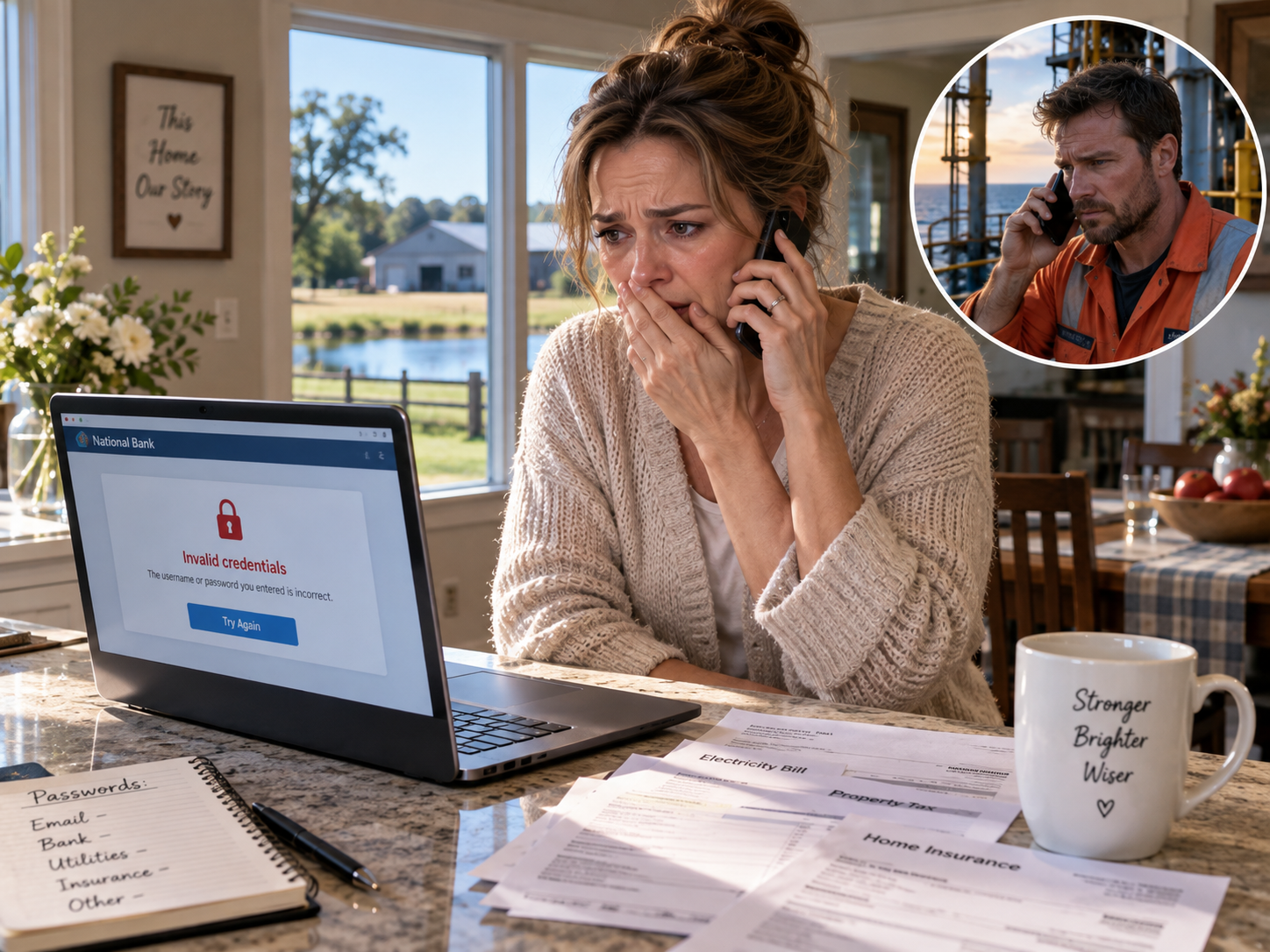
I thought about the morning the bank password failed.
I thought about Denise.
The tax office.
The deed.
The brown envelope.
The first visit to Evelyn.
The cashier's check.
The false signature.
The trust.
The company.
The fear.
The settlement.
The sale.
The little house.
The blue chair.
All of it seemed impossibly far away.
I did not tell the audience my entire story.
I told them the lesson.
“Financial knowledge isn't about distrusting the people you love,” I said. “It's about understanding the life you are building together.”
I paused.
“And if someone becomes angry because you want to understand your own finances, don't let their anger answer the question for you.”
The room was quiet.
Then someone began applauding.
Others joined.
I smiled.
Not because I had won.
There was no victory speech.
No defeated enemy.
Just a room full of people thinking about their own lives.
Afterward, a woman approached me.
She said she had inherited a house from her mother.
Her husband wanted to refinance it.
She had never read the deed.
She asked where to begin.
I gave her the checklist.
“Start here.”
She thanked me.
I watched her leave.
The lesson had moved beyond me.
That mattered.
Because perhaps that was what my father meant by leaving something useful behind.
Not property.
Not money.
Knowledge.
The ability to stand on your own feet.
The courage to ask questions.
The patience to read the fine print.
And the willingness to believe your own eyes when the answer is right in front of you.
That night, I returned home.
I took off my father's watch.
I placed it beside the brass key.
Then I turned off the light.
For the first time in many years, tomorrow did not feel like something I had to prepare myself to survive.
It felt like something I could simply live.
Click Here to continue read next: PART8: The Last Thing I Learned About Ownership Had Nothing to Do With Land, Money, or the Signature That Nearly Changed Everything
The Morning My Password Failed, I Realized My Husband Had Quietly Moved Our Money and Changed More Than I Knew
Part 7 of 16

