
The garden was quiet the morning Noah turned eighteen.
The same garden where he had taken his first uncertain steps now held a young man who was taller than me and already planning his university studies.
Elias stood beside the kitchen window, watching him pack a suitcase.
I watched from the doorway.
“You packed too much,” I said.
Noah looked at the suitcase.
“I packed exactly what I need.”
“You have six pairs of shoes.”
“They're different.”
“They are all black.”
“They're different kinds of black.”
Elias laughed.
I shook my head.
For a moment, everything felt ordinary.
Then Noah closed the suitcase.
He looked at me.
“Mom.”
“Yes?”
“Can we talk?”
Something in his voice told me this was not about shoes.
We sat outside.
He had grown into a thoughtful young man.
He had my habit of noticing details.
He had Elias's patience.
And he carried none of the insecurity I had once mistaken for humility.
“I've been thinking about Grandma and Grandpa,” he said.
I nodded.
“I know.”
“I want to meet Grandma.”
I did not answer immediately.
“Why?”
“Because she's part of my history.”
I smiled faintly.
“That is true.”
“And I don't want to hate someone I've never met.”
I felt something loosen inside me.
“You don't have to hate her.”
“Do you?”
I looked toward the garden.
“No.”
It was the honest answer.
“I don't hate her.”
“What do you feel?”
I thought about it.
“Distance.”
He nodded.
“That makes sense.”
“I won't stop you from meeting her.”
His eyes lifted.
“Really?”
“Yes.”
“But I want you to understand something first.”
He waited.
“You can meet someone and still decide they don't belong in your life.”
He nodded.
“I know.”
“You don't owe her forgiveness.”
“I know.”
“You don't owe her affection.”
“I know.”
“And you don't have to protect me by pretending you like her.”
He smiled.
“I don't think I can do that anyway.”
I laughed.
He reached across the table.
“Thank you.”
We arranged the meeting carefully.
My mother was living quietly by then.
She had sold the last of the family property years earlier and moved into a modest apartment.
When Noah entered, she stood.
She looked at him for a long time.
I could see the shock on her face.
He was no longer the newborn she had rejected.
He was a young man.
Confident.
Calm.
His own person.
“Hello,” he said.
My mother covered her mouth.
“Hello.”
She started crying.
Noah did not move toward her.
Neither did I.
She wiped her face.
“You look so much like your father.”
Noah smiled politely.
“I've heard that.”
They sat.
The first conversation was awkward.
There were long silences.
My mother apologized.
Not dramatically.
Not with excuses.
She said she had been ashamed.
She said she had been afraid of what people would think.
She admitted that she had treated my pregnancy as a disgrace because she had cared too much about the Mercer name.
Noah listened.
Then he asked a question.
“Why didn't you want to hold me?”
My mother closed her eyes.
“I was wrong.”
“That doesn't answer it.”
She looked at him.
“No.”
Her voice trembled.
“I thought your mother had ruined the family. I believed your father had abandoned her. I thought you would become another reason people would judge us.”
Noah was quiet.
Then he said, “You were worried about people you didn't even know.”
“Yes.”
“And you were willing to hurt Mom because of that.”
“Yes.”
He nodded.
“I understand.”
My mother looked at me.
I said nothing.
That was their conversation.
It did not need my intervention.
When it ended, Noah stood.
My mother reached for his hand.
He allowed her to hold it.
For a few seconds.
Then he stepped back.
“I don't know what our relationship will be.”
She nodded through tears.
“That is fair.”
He turned toward me.
We left together.
In the car, he was quiet.
After several minutes, he said, “I don't hate her.”
“I know.”
“I don't forgive everything either.”
“You don't have to.”
He looked out the window.
“I think I understand you better now.”
I smiled.
“What do you mean?”
“You didn't keep me away because you wanted revenge.”
“No.”
“You were protecting the kind of family we had.”
I felt tears gather in my eyes.
He continued.
“You wanted me to know that people don't get access to us just because they're related to us.”
I looked at him.
“That is exactly what I wanted you to understand.”
He reached for my hand.
I squeezed it.
That evening, Elias was waiting at home.
“How was it?”
Noah answered first.
“Complicated.”
Elias nodded.
“That's usually the honest answer.”
We laughed.
Later that night, after Noah went upstairs, I stood alone in the kitchen.
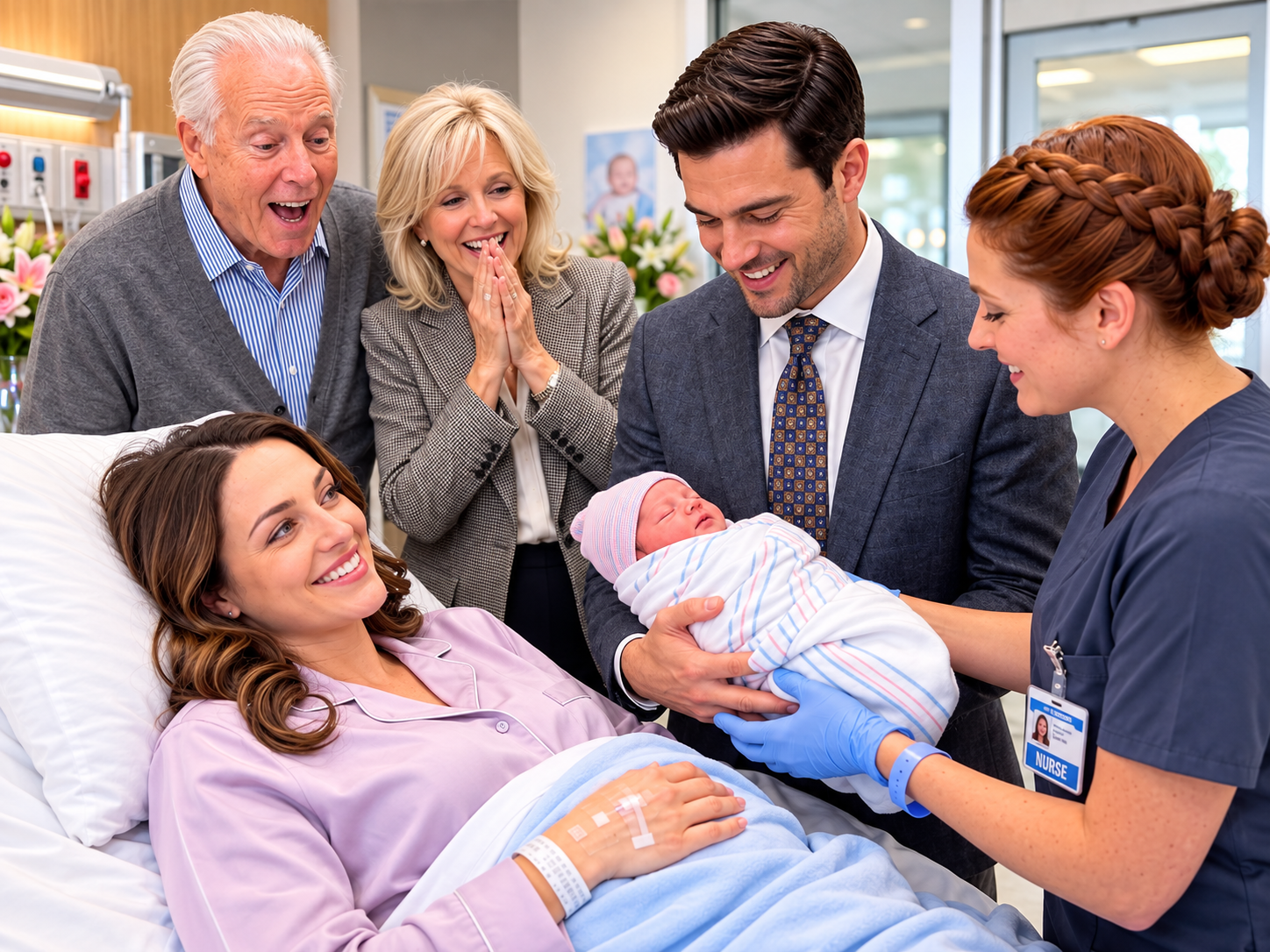
I remembered the hospital.
The bright lights.
The monitor.
My mother's voice.
My father's cold refusal.
The folder on the table.
The moment Elias entered.
The way my parents recognized him.
The boardroom.
The evidence.
The collapse.
The years afterward.
It seemed impossible that so much could have begun with one sentence.
We will never accept a child without a father.
They had intended those words to make me feel ashamed.
Instead, they revealed themselves.
My son had never been fatherless.
He had never needed the Mercer name.
He had never needed their money.
He had needed what every child needs.
Someone to choose him.
Someone to protect him.
Someone to tell him the truth.
Someone to stay.
Elias had stayed.
I had stayed.
And eventually, we built a family around that promise.
The Mercer family had once believed wealth was inheritance.
I had learned that inheritance could be something else.
A habit of honesty.
A willingness to question powerful people.
The courage to leave when staying would require betrayal.
The ability to love without demanding obedience.
Those were the things I wanted Noah to carry forward.
Not the company.
Not the mansion.
Not the jewelry.
Not the family reputation my parents had spent so much of their lives defending.
Those things had disappeared.
What remained was simpler.
A father who had never questioned whether his son belonged.
A mother who had learned to trust her own judgment.
A young man who understood that family was defined by conduct, not entitlement.
And a life that no longer depended on anyone's permission.
A few months later, Noah left for university.
The house became quieter.
I missed the noise.
Elias did too.
One evening, we sat in the garden after sunset.
“You remember the first time you held him?” I asked.
Elias smiled.
“Of course.”
“You walked into that hospital room and everyone looked terrified.”
“They had reasons.”
I laughed.
“You weren't afraid.”
“I was.”
I looked at him.
“Of what?”
“That I would never be enough.”
The answer surprised me.
“You?”
He shrugged.
“I knew how much responsibility came with being his father.”
I reached for his hand.
“You were enough.”
He squeezed my fingers.
“So were you.”
We sat quietly.
The air smelled of wet grass.
Somewhere beyond the fence, a dog barked.
A car passed on the road.
Ordinary sounds.
A peaceful life.
The kind of life I had once believed I could never have without the Mercer family's approval.
I had been wrong.
Years earlier, my parents had walked out of my hospital room believing they had punished me.
They thought they had made my future smaller.
Instead, they had forced me to build one that belonged entirely to me.
Their rejection had not destroyed my family.
It had clarified it.
Their threats had not taken away my security.
They had shown me exactly what security could never be built on.
And their obsession with protecting the family name had taught me the final lesson I needed.
A name is only an inheritance if you choose to carry it.
Love is different.
Love has to be demonstrated.
Trust has to be earned.
And family has to be lived.
I looked toward the empty chair where Noah used to sit.
For the first time, I did not feel the ache of everything I had lost.
I felt gratitude for everything I had built.
The hospital room was no longer the place where my story broke.
It was the place where I finally stopped letting other people write it.
And when I remembered my newborn son's tiny hand closing around my finger, I understood what I had understood even then, before I had words for it.
He had never needed their acceptance.
Neither had I.
The End
Read more original stories on Feel Every Story.
The Mansion Finally Became What I Had Wanted From the Beginning, Not a Prize for My Family but a Promise to Those Who Came After
Part 8 of 24

