The first message Victoria sent after their agreement was so ordinary that Emma read it three times before answering. It arrived on a Wednesday afternoon while she was sitting at the kitchen table, sorting receipts into a folder Daniel had labeled HOUSEHOLD in his unmistakably careful handwriting. Victoria had written, I saw the first yellow leaves on the maple tree outside Mom and Dad’s house today. It made me think of the autumn we tried to build a treehouse and Dad had to rescue us from the ladder.
Emma stared at the screen, caught between a smile and the ache that always accompanied memories of their childhood. She remembered the ladder wobbling, Victoria laughing too hard to climb down, and their father standing beneath them with his arms raised, telling them both to stop moving. It was a harmless memory, untouched by the lies that had later divided their family. For a moment, Emma could almost hear their younger voices again.
She typed a reply, erased it, and typed another. Finally, she sent, I remember. You blamed the ladder for being crooked.
Victoria responded with a single laughing face and the words, I absolutely did. Then she stopped. There was no request to meet, no emotional confession hidden inside a casual conversation, and no reminder that they were sisters who ought to be close. Emma placed her phone facedown and returned to the receipts. The exchange had lasted less than a minute, yet it left her unsettled in a way she could not entirely explain.
Daniel noticed her quietness when he came into the kitchen carrying two mugs of tea. He set one beside her and glanced at the phone. “Victoria?” he asked gently.
“Just a memory from when we were children.”
“Was it okay?”
Emma considered the question rather than answering automatically. “Yes. I think so. It was nice, actually. And that makes me feel guilty, which is ridiculous.”
“Why would a good memory make you guilty?”
“Because I spent so long trying to understand how someone who knew me so well could do what she did. Sometimes remembering the good parts feels like I’m pretending the bad parts never happened.”
Daniel pulled out the chair opposite her. “You don't have to pretend either thing. You can remember the sister you had when you were children and still be honest about the sister who betrayed you later.”
Emma looked at him over the rim of her mug. She had heard versions of that truth before, but she was beginning to understand it in a deeper way. Her childhood had not become a lie simply because Victoria had later lied to her. Their happy memories did not erase the deliberate choices Victoria had made, and those choices did not have the power to erase every happy memory.
That evening, Emma wrote the thought in the notebook she had begun keeping during her recovery. She had once used the pages to record medical appointments, pain levels, and the small physical milestones that marked her return to ordinary life. Later, the notebook had become a place to untangle emotions she could not always explain aloud. She wrote that she could acknowledge the past without giving it authority over her future. Then she underlined the sentence once, closed the notebook, and left it beside her bed.
Over the next several weeks, the occasional messages continued. Victoria asked whether Emma had found a particular photograph their mother remembered from an old family album. She mentioned that their father’s garden had produced more tomatoes than anyone could reasonably eat. She sent a brief note before their mother’s birthday, saying she hoped Emma would attend if she felt comfortable. None of the messages demanded a response, and Emma answered only when she genuinely wanted to.
That distinction mattered more than she expected. Before the wedding, Victoria had treated communication as something she could control: which messages reached Daniel, which information reached the family, and which version of Emma everyone was permitted to believe. Now Emma could leave her phone untouched for an afternoon without fearing that silence would be used against her. She could reply the next morning, or not at all, and the decision belonged to her.
There were still difficult days. Once, Victoria mentioned the chapel in a message about an upcoming family event, asking whether Emma would prefer that she stay away. The word chapel brought the whole scene rushing back: the weight of her hospital bracelet against her wrist, the hush of the guests, the sight of Victoria standing in the dress intended for Emma’s wedding. Her chest tightened, and she had to put the phone down.
For several minutes, she sat on the edge of the bed, breathing slowly. The memory did not mean she had lost the progress she had made. It meant the experience still hurt. She reminded herself that healing was not a staircase on which every step led permanently upward. Some days she could look back without pain; on others, the same memory could catch her unexpectedly.
When she was ready, she answered Victoria. I appreciate you asking. I don't need you to avoid every place connected to what happened, but I need you to understand that I may sometimes feel uncomfortable. If that happens, I'll decide what I can manage.
Victoria’s reply came later that evening. I understand. I won't ask you to make it easier for me.
Emma read those words carefully. They were not a grand apology, and they did not undo the damage. But Victoria had accepted a boundary without trying to negotiate it into something more convenient. Emma allowed herself to recognize that small change without mistaking it for proof that everything had changed.
The next Sunday, Daniel’s mother invited them to lunch. Since their wedding, she had become more thoughtful about the way she spoke of the family. She no longer referred to Victoria as though she were a harmless source of misunderstandings, and she had stopped asking Emma whether she might eventually “put everything behind her.” Instead, she asked what Emma wanted, then listened to the answer.
During lunch, she brought out a small box containing photographs from Daniel’s childhood. One showed him at about ten years old, wearing an oversized coat and holding a fish that appeared nearly as long as his arm. He groaned when his mother placed it in front of him.
“Please tell me you haven't shown that to everyone you've ever met,” he said.
“Only the people I like,” his mother replied. “And a few people I was trying to impress.”
Emma laughed, and Daniel gave her a mock look of betrayal. The ease of the moment surprised her. For so long, family gatherings had been shadowed by what happened at the wedding that she had almost forgotten they could also contain embarrassment, affection, and silly stories about children who had grown up.
After lunch, Daniel’s mother walked Emma to the door. “I want to say something, and you don't have to reassure me afterward,” she said. “I believed what Victoria told me because it was easier than asking harder questions. I wanted to think there had been a misunderstanding, and I let that desire do my thinking for me. I'm sorry.”
Emma felt the old reflex to comfort her rise immediately. She nearly said that it was all right, that everyone had been confused, that the past was complicated. Instead, she let the apology remain where it belonged.
“Thank you for saying that,” she replied. “I know you care about me. I just need people to understand that caring about someone doesn't mean assuming the easiest explanation is true.”
Daniel’s mother nodded. “You're right.”
Emma drove home with Daniel beside her, the afternoon light slipping through the trees. She thought about how many people had made decisions during her absence because they believed they understood what had happened. Some had trusted Victoria because she spoke confidently. Others had accepted her explanations because questioning them would have required effort, discomfort, or a willingness to admit that someone in their family might be capable of deliberate cruelty.
She could understand why people had made those choices without excusing them. Understanding had become something different from surrender. She no longer needed to call every mistake malicious, but neither would she call every wound an accident simply to preserve the peace.
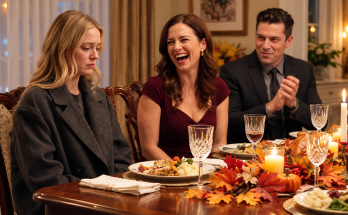
A few days later, her mother phoned to ask whether Emma would join a small family dinner for their father’s birthday. Victoria would be there, along with Aunt Margaret. Their mother made a point of saying that Emma could decline without explanation and that no one would expect the sisters to sit together.
Emma looked across the living room at Daniel, who was repairing a loose hinge on a cabinet. She considered how she might feel entering the house and seeing Victoria across the table. She imagined the possible silences, the glances, and the temptation to measure every word for hidden meaning. She also imagined her father cutting the cake badly, as he always did, and her mother insisting that the crooked slices were perfectly normal.
“I'll come,” Emma told her mother. “But I want to be clear that I'm coming for Dad's birthday. I'm not agreeing to a family reconciliation.”
“I understand,” her mother said. “We'll make sure everyone understands.”
When Emma ended the call, Daniel set down his screwdriver. “Are you sure?”
“Not completely,” she admitted. “But I want to be there. I don't want to give Victoria the power to decide which family events I can attend, even if she isn't trying to do that anymore.”
“Then we'll go together. And if you decide you've had enough, we leave.”
Emma leaned against the cabinet and smiled faintly. “You make it sound simple.”
“It isn't simple,” he said. “But the decision can still be yours.”
That night, Emma placed the birthday invitation on the refrigerator beneath a small magnet shaped like a yellow house. She did not feel triumphant, and she was not suddenly eager to rebuild a relationship with Victoria. She felt cautious, curious, and a little afraid. For the first time, those feelings did not seem like reasons to retreat automatically.
She was not going to the dinner to prove she had forgiven her sister. She was going because she wanted to celebrate her father, because she missed some parts of family life, and because her own choices deserved room to grow beyond the worst day of her life.
Before bed, she checked her phone. Victoria had sent one more message: I know Dad's birthday is important to you. I'll respect whatever distance you need at dinner. I won't bring up the wedding.
Emma did not reply immediately. She placed the phone on her nightstand, turned off the light, and lay beside Daniel, listening to the familiar quiet of their home. The message might have been sincere. It might also have been the easiest thing Victoria could say at that moment. Emma understood that she did not have to decide which possibility was true tonight.
For now, it was enough that the next step belonged to her.
Click here to continue reading: PART 14: A Birthday Dinner Brings the Family Together Again, but Emma Discovers That Respect Is Measured by Actions Rather Than Promises
The Bride Was Waiting Behind the Church Doors When She Heard Her Own Sister Promise to Love the Man She Had Left Behind
Part 13 of 20