The letter arrived on a Wednesday morning, delivered to my attorney’s office and forwarded to me with a short note asking me to read it carefully before responding. By then, I had learned not to judge a legal document by the confidence of its language. My father had always been good at sounding certain, especially when he wanted someone else to stop asking questions. This letter was no different. It described the estate dispute as a family misunderstanding, accused me of escalating a private matter unnecessarily, and suggested that I had allowed resentment to distort my judgment.
I read it at my kitchen table with Grandma Dot’s brass key beside my coffee mug. Pickles sat on the windowsill, watching a bird that had landed on the railing outside. The ordinary scene made my father’s words seem even more distant from the life I was building. He still wrote as though I were the daughter who could be persuaded to abandon her own concerns if he sounded disappointed enough. He did not seem to understand that the old pressure no longer worked simply because he applied it.
The letter proposed that I consider withdrawing the civil claims and agreeing not to pursue further recovery from the estate-related transactions. In return, my parents were willing to put the matter behind us and discuss “a reasonable family reconciliation.” There was no detailed accounting, no specific explanation of the disputed transfers, and no clear offer addressing the property Grandma had left me. The proposal asked me to surrender the legal process first and trust that the family would behave differently afterward.
I forwarded the letter to my attorney and asked him to explain what, if anything, I needed to do. He told me not to respond directly. We would evaluate the proposal against the evidence and the claims already filed. If my parents wanted to settle the dispute, they could make a formal offer with terms specific enough to assess. A promise to reconcile was not a substitute for an accounting, and a general statement that everyone wanted peace did not resolve the legal questions.
For a moment, I was tempted to imagine what would happen if I agreed. Perhaps Dad would stop sending accusations. Perhaps Mom would invite me to dinner, and we could sit around a table without discussing court filings or money. Perhaps Britney’s imprisonment would become something we never mentioned, and the family would pretend that the Thanksgiving humiliation had been a misunderstanding. The fantasy was appealing because it offered a quick escape from exhaustion. But it depended on the same old arrangement: I would give up what I needed, and everyone else would decide that peace had been restored.
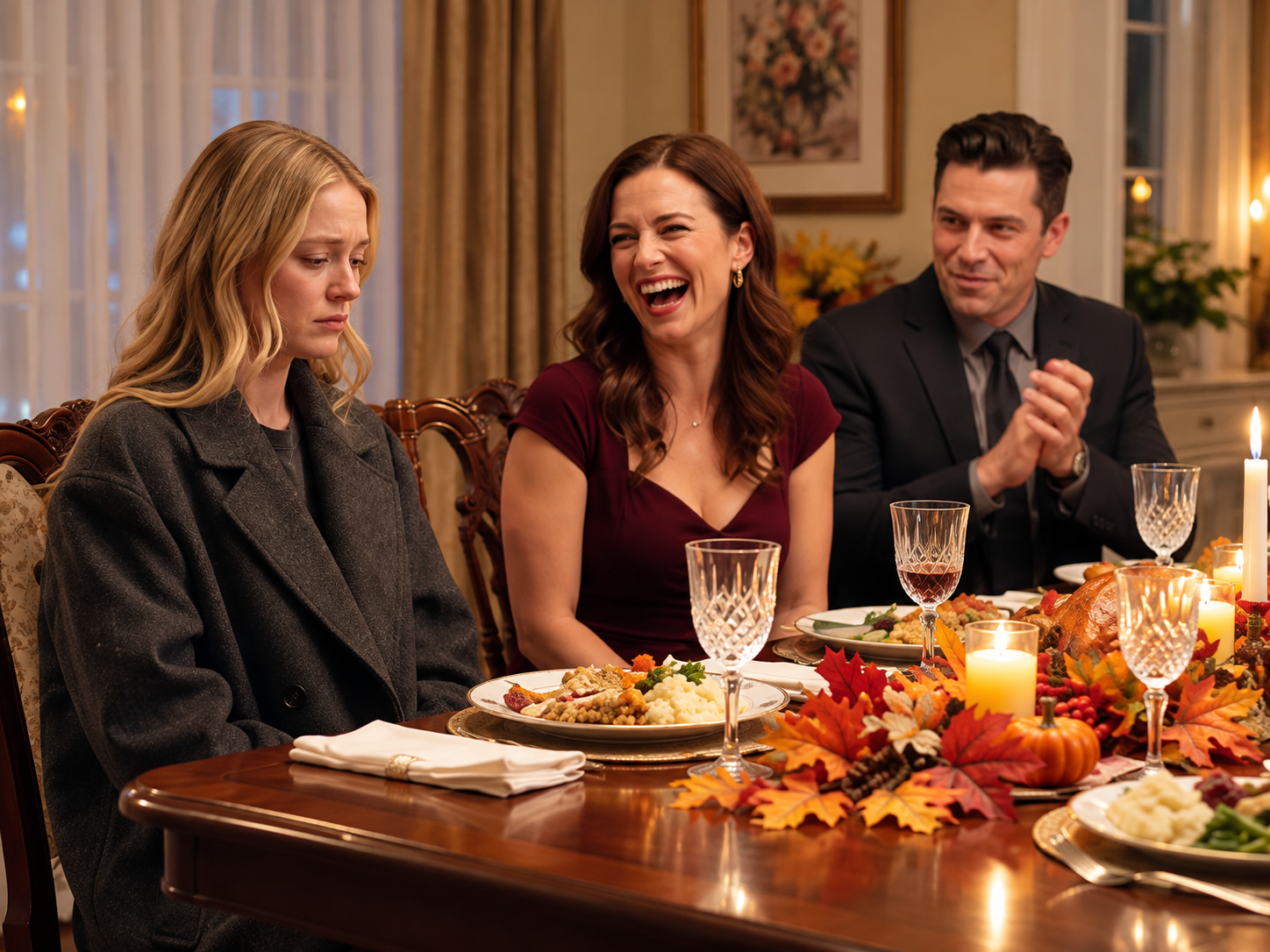
I remembered the words Dad had spoken at Thanksgiving, when he said nobody needed my money or me. Travis had clapped sarcastically, Britney had laughed, and Mom had made it clear that she did not consider me part of a real family. Those comments had been cruel, but the most revealing part was what followed. Even after humiliating me, they had expected the rent transfers, the truck payments, and the other financial support to continue. They had wanted my money without respecting my place at the table.
I was no longer willing to accept that contradiction as normal. I told my attorney that I would consider any proposal that addressed the actual legal issues, but I would not withdraw the case in exchange for a vague promise of reconciliation. He acknowledged my instructions and handled the response through the proper channels. I did not contact Dad to tell him how angry I was. I did not need to win an argument with him in order to maintain my decision.
Over the following weeks, the attorneys exchanged further correspondence. My parents continued to dispute aspects of the case, and their side challenged the interpretation of some financial movements. My attorney reviewed those challenges and explained which records supported our position and which points required additional evidence. The process was frustratingly methodical. No one announced that the truth had won. Instead, each claim had to be examined, each date checked, and each conclusion supported.
At work, I found myself applying the same patience to a complicated insurance claim. The file contained inconsistent statements and a sequence of events that did not immediately make sense. I resisted the urge to decide what had happened before I had reviewed the documents. I built a timeline, checked the records, and separated confirmed facts from assumptions. When my manager reviewed my findings, he praised the clarity of the analysis. I thanked him, thinking privately that I had learned the value of careful evidence through circumstances I would never have chosen.
The identity-theft matter was no longer dominating every day, but I continued to keep the records organized. I retained the issuer’s correspondence, the police report information, the FTC affidavit, and the documentation showing the steps taken to address the fraudulent Visa account. I checked my credit reports at reasonable intervals and maintained the freezes I had placed. I was not going to allow the account to become an invisible problem again simply because the most urgent stage had passed.
One evening, I received another message from my father. It was not a formal legal communication. He wrote that I had become obsessed with documents and had forgotten that family should matter more than money. He said Grandma would be ashamed to see what I was doing. I read the message once, then put the phone down. For years, that kind of statement would have sent me into a long defense of my character. Now I recognized it as an attempt to make my loyalty the subject instead of the disputed estate.
I did not answer. Instead, I saved the message and continued preparing dinner. There was something freeing about refusing to step into a familiar argument. I could love the memory of Grandma without allowing Dad to use her name to silence me. I could value family without treating the word as permission for dishonesty. And I could pursue a legal remedy without believing that the act made me a cruel daughter.
Mom sent a separate message a few days later, asking whether I had considered how difficult the situation was for her. I knew she was under pressure. The legal case affected her marriage, her finances, and the story she had told herself about the years after Grandma died. But I had also been under pressure, and no one had asked whether I could manage the cost of supporting everyone else while postponing my own future. I replied that I understood the situation was difficult, but I could not make decisions about the estate based solely on how uncomfortable the truth had become.
She did not respond to that message. I was disappointed, though not surprised. Part of me still wanted her to say that she understood. I wanted her to recognize that I was not trying to punish her but to stop living inside a version of the past that depended on my silence. I could not make her reach that understanding, and I was learning to stop treating every unanswered message as a task I needed to complete.
The next update from my attorney was more concrete. The financial review had identified additional records relevant to the movement of funds after the sale of Grandma’s house. The documents did not automatically settle every disputed issue, but they helped clarify the sequence of transactions and gave the attorney a stronger basis for pursuing the claims. He explained the next procedural steps and reminded me that the court would determine what remedies were available. I wrote down the deadlines and placed the new documents in my case folder.
That night, I took the cedar chest out of the corner of my bedroom and cleaned the dust from its lid. I had kept it because it was Grandma’s, not because I believed it contained some hidden answer. Inside were the quilts, a few photographs, and small things that had survived the years. I lifted each item carefully, remembering how Grandma had folded the quilts before putting them away. The chest had outlasted the arguments surrounding her estate. It held no legal verdict, but it preserved a part of her life that belonged to memory rather than litigation.
I realized that I had spent months thinking about what my family had taken from me. That was understandable. The inheritance mattered, the fraudulent account had caused real harm, and the financial support I had provided had delayed my plans. But the future I was building could not depend entirely on the outcome of those disputes. Even if the court recovered money, it would not return the years I had spent trying to earn affection. Even if my credit records were corrected, it would not make Britney’s choices disappear. Recovery was necessary, but it was not the whole of healing.
I began making practical plans that did not require the legal case to end first. I reviewed the condo’s maintenance schedule, set aside money for repairs, and planned a modest trip for later in the year. I did not book anything extravagant or ignore the uncertainty in my budget. I simply allowed myself to plan for something enjoyable without first asking whether a relative might need the money more. The act felt small, but it challenged a rule I had followed for years: that my own happiness had to wait until everyone else was safe.
The trip would be short, just a few days away from work and familiar streets. I chose a destination within a reasonable budget and checked the dates against my professional commitments. When I made the reservation, I felt a quick flash of guilt, as if I had secretly taken something from someone. Then I remembered that I had paid my bills, maintained my savings plan, and met my responsibilities. No one had a claim on every dollar I earned simply because we shared a last name.
Britney’s next letter arrived before I left. She wrote that she had been thinking about the way she used to describe me to other people. She had called me dependable, generous, and practical, but she now recognized that she had used those descriptions to make her behavior seem less serious. She had told herself that I was capable of handling the consequences, as though my ability to survive the damage made it acceptable to cause it. She said she was beginning to understand that someone’s strength did not make them a safe target.
I read the letter slowly. It was the clearest account she had given of her thinking, and it mattered that she was naming the harm without asking me to solve it. Still, I did not confuse reflection with transformation. I hoped she would continue the work, but I knew that trust would depend on what she did over time, not how well she wrote about remorse while serving her sentence.
I placed her letter with the others and prepared for my trip. I would not be taking the estate file or checking my email every hour. My attorney had the relevant instructions, the deadlines were recorded, and there was no action I needed to take while I was away. I told myself that if a genuine emergency arose, it could be handled when I returned or through the appropriate professional. I was allowed to leave my own life unattended for a few days without everything falling apart.
On the morning I departed, I locked the condo door and looked back through the small window beside the entrance. The living room was tidy, the quilt was folded on the sofa, and Pickles was settled with the pet sitter’s familiar blanket. I felt a quiet satisfaction that had nothing to do with proving anything to my family. I had built a home, protected my finances, and made decisions based on what I could responsibly afford. That was not a dramatic victory, but it was real.
As I walked toward my car, I thought about Dad’s demand that I put family before money. I finally understood the flaw in the argument. I had not chosen money over my family. I had chosen not to let money become the price of remaining connected to them. I had chosen honesty over silence and accountability over a reconciliation that required me to abandon the facts. Whatever happened next, I would not return to the old role simply because my father insisted that it was the only way to prove I cared.
Click here to continue reading: PART 14: My First Weekend Away Showed Me How Much of My Life I Had Spent Waiting for Someone Else to Be Happy
My Father Raised His Glass to Insult Me at Thanksgiving, Unaware That the Daughter He Mocked Had Been Paying for Nearly Everything He Owned
Part 13 of 20