
The last day of the school year arrived with a mixture of excitement and exhaustion. Oliver's classroom was crowded with backpacks, unfinished art projects, and children who seemed to have forgotten every rule about indoor voices. Mrs. Bennett handed out certificates, thanked the families who had volunteered throughout the year, and reminded the children to keep reading during the summer.
Oliver came home carrying a folder full of drawings and a small card from his teacher. He placed everything on the dining table and announced that he was officially old enough to stay awake until midnight during the holidays.
Daniel raised an eyebrow. “Is that what your certificate says?”
“No, but it should.”
They laughed, and Oliver began sorting through his papers. At the bottom of the folder, he found a sheet he had drawn months earlier: the three figures beneath the yellow sun. He had added details since then. The house had a door, the flowers had stems, and the figures now had faces with small, careful expressions.
“Can we put this in the book?” he asked.
“Of course.”
Oliver opened the family book and searched for a place. He eventually decided to add the drawing near the end, after the pictures of the restaurant and the music box. Daniel helped him attach it with a strip of clear tape.
“What should we write underneath?” Daniel asked.
Oliver thought for a while.
“Maybe: We remember Mommy, and we keep growing.”
Daniel read the sentence aloud. “I think that's exactly right.”
They wrote it together, taking care not to smudge the ink. Oliver closed the book and carried it to the living room, where he placed it on the shelf beside Grace's photograph. He had begun to understand that keeping the book did not mean he needed to look at it every day. It could remain there until he wanted it, just as the lullaby could be sung when it brought comfort or left alone when he wanted to play.
Later that week, Mara invited them to a small summer gathering at the restaurant. The staff had planned an afternoon meal for regular customers and their families before the busiest season began. There would be simple food, a few games for children, and a chance for the employees to spend time together outside their usual routines.
Oliver was excited because he had been promised a chance to help decorate the tables. Daniel agreed to bring him, although he felt a slight tension when he thought about returning to the place where the story had begun. The restaurant no longer represented only that terrible evening of crying. It also held the memory of Mara's song and the moment when his son had found comfort in a voice he did not recognize.
When they arrived, Mara was arranging paper flowers near the windows. She greeted Oliver with a smile and handed him a stack of napkins.
“Your job is to make these look neat,” she told him.
Oliver took the task seriously. He folded each napkin into a triangle, then attempted a more complicated shape that collapsed when he placed it on the table. Mara showed him how to make a simple fan, and he practiced until he could complete one without help.
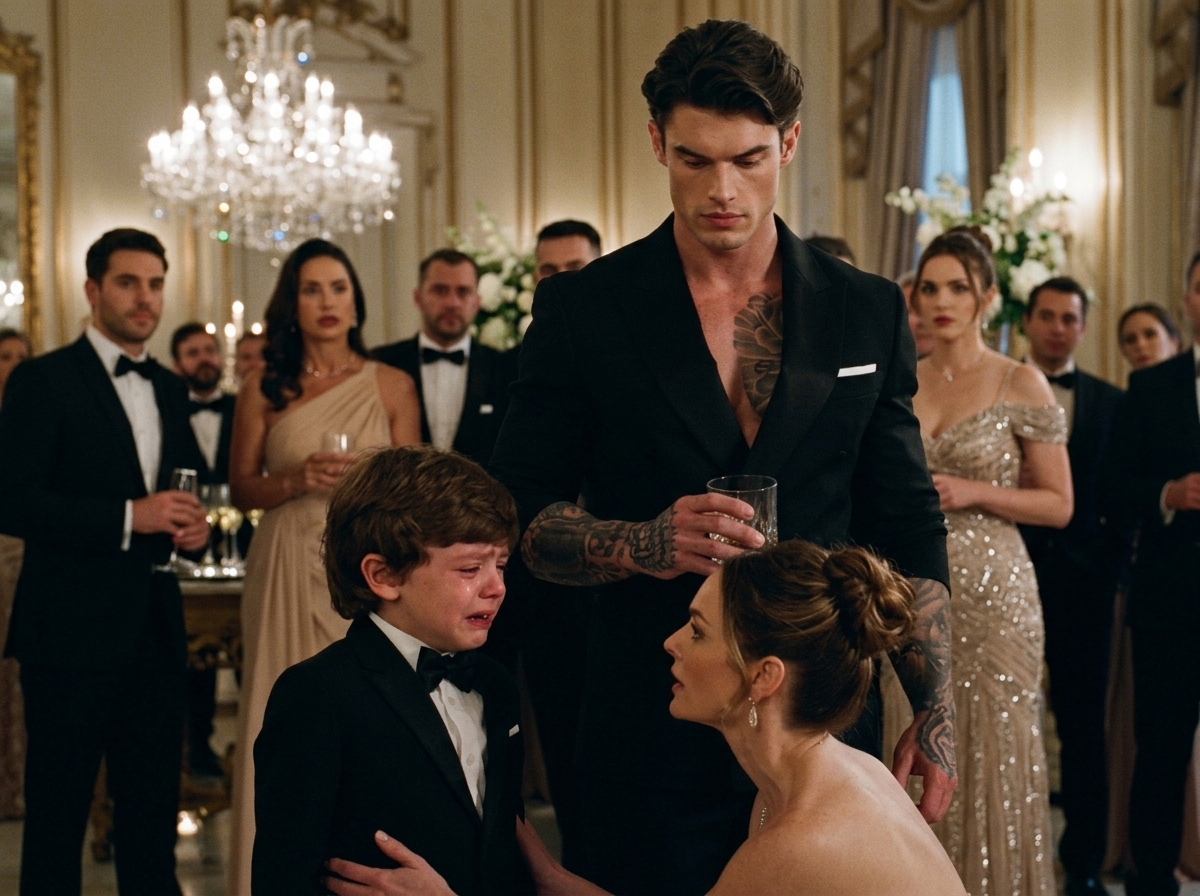
Daniel watched from a nearby table. He remembered the desperate man he had been that first evening, standing before a room of diners and offering money because he could not bear to hear his son cry. He had believed that if he could make the sound stop, he could protect Oliver from the loss that had changed both their lives.
Now Oliver was laughing over napkins, and Daniel understood that the crying had never been the enemy. His son had needed comfort, not correction. He had needed someone willing to stay with him through a feeling that could not be hurried away.
As the gathering continued, several customers recognized Mara and asked about the lullaby she had sung months earlier. She explained that it had been passed down through her family and had comforted children for generations. She did not describe Grace's private history, and she did not tell the story as if she alone had rescued Oliver. She spoke about the song with respect for everyone who had carried it.
One older woman said she wished she had known a song like that when her own children were young. Another customer asked whether Mara had written it herself. Mara explained that the words came from Grace's family tradition and had been preserved in her mother's notebook.
Oliver listened from his chair. When the conversation ended, he looked at Mara.
“Can I sing it now?”
Mara turned toward him. “Would you like to?”
He nodded. “Not because I'm sad. I just want to.”
Daniel felt a quiet warmth spread through him. He had once worried that the song might become inseparable from grief, something Oliver could approach only when he was distressed. But his son had made it part of his life in a different way. It could hold sorrow, comfort, and affection without being limited to any one of them.
Mara asked the people nearby whether they would mind listening to a song. She did not announce a performance or tell them what they were supposed to feel. Oliver stood beside her, and Daniel moved closer but remained a little behind his son.
Oliver began softly. He sang the opening line, then continued through the verse about the long night and the safety of loving arms. His voice was clearer than it had been in the classroom, though he still stretched one note longer than necessary. Mara joined him for the final verse, and Daniel hummed along from where he stood.
The restaurant grew quiet. A server paused near the counter, holding a tray. Two children sitting by the window watched Oliver with open curiosity. No one interrupted, and no one asked him to explain the song when it ended.
Oliver looked around, then smiled.
“Thank you,” he said simply, and returned to his napkins.
Daniel's eyes stung, but this time the tears came with a feeling of gratitude rather than helplessness. His son had chosen to share the lullaby because he wanted to, and afterward he had returned to the ordinary business of being six years old. The moment mattered, but it did not need to become the center of everything.
When the gathering ended, Mara walked them to the door. She thanked Oliver for helping with the decorations and told him that his napkin fans had been the most carefully arranged ones in the room.
“Even better than the grown-ups'?” he asked.
“Especially better than the grown-ups'.”
Oliver beamed.
On the drive home, Daniel asked whether he had enjoyed singing.
“Yes,” Oliver said. “But I don't want to sing it every time people ask.”
“You don't have to.”
“I can sing it when I want to.”
“Exactly.”
Oliver leaned back and watched the passing buildings. After a few minutes, he asked whether they could visit the cemetery the following weekend. He wanted to tell Grace about the gathering and leave another picture near her grave.
Daniel agreed. They would bring a copy of the drawing, not the original, so Oliver could keep the family book at home.
On Sunday morning, they drove to the cemetery with a small envelope containing the picture. Oliver had chosen a drawing of the restaurant, complete with tables, paper flowers, and three figures near the window. He had drawn himself standing beside Mara, with Daniel a little behind them. Above their heads, he had placed a small music note.
At the grave, Oliver knelt and placed the envelope beneath the ledge. He straightened it carefully, then stepped back.
“Hi, Mommy,” he said. “I sang your song at the restaurant. People listened, and nobody laughed. I didn't feel scared. I just wanted to sing it.”
Daniel stood beside him, allowing the boy to speak at his own pace.
“I still miss you,” Oliver continued. “I wish you could see my drawings. Dad says we can keep making them. I think you'd like the yellow flowers.”
He paused and looked toward the garden beyond the cemetery path.
“I don't cry every day now, but I still love you.”
The words were quiet, almost conversational. Daniel felt them settle inside him with a tenderness that was difficult to describe. Oliver had not stopped missing Grace. He had simply learned that the absence did not have to define every moment of his life.
After a while, Oliver reached for his father's hand. They stood together beside the grave, neither trying to turn the visit into a ceremony larger than it needed to be.
Daniel spoke next. He told Grace about the school year, the community gathering, and the way Oliver had offered to help another child draw a plate of toast. He told her that their son was becoming thoughtful and brave, not because he never felt afraid, but because he was learning to act with kindness even when he did.
He also told her about his own progress. He had begun to ask for help, to leave work at a reasonable hour, and to accept that a difficult day did not mean he had failed as a father. He still wished Grace were there. That wish had not weakened. But he was learning to carry it without allowing it to close every door around him.
When they left the cemetery, Oliver asked to stop for pancakes. Daniel agreed, and they found a small café near the road. The pancakes were round, the syrup was generous, and Oliver insisted that the smallest one looked like a moon.
“Does that mean we have to sing the song?” Daniel asked.
Oliver grinned. “No. It means we have to eat the moon.”
They finished breakfast laughing, and the sound followed them into the car.
That evening, Daniel found the family book open on the coffee table. Oliver had added a new sentence beneath the restaurant drawing: A song can help you remember, but you can also make new memories.
Daniel read it slowly. He was struck by how much his son had learned without being asked to turn his pain into a lesson. The words belonged to Oliver, and Daniel would not correct them or replace them with something more polished.
He closed the book and returned it to the shelf beside Grace's photograph. The lullaby notebook rested nearby, its pages protected inside a folder. These objects did not make the house a museum of the past. They were reminders that love could be carried forward through ordinary choices.
Later, at bedtime, Oliver asked Daniel to sing the song. They sang it together, softly, without a special occasion or a difficult question to answer. When the final verse ended, Oliver yawned and pulled his blanket closer.
“Dad?”
“Yes?”
“I'm glad Mara knew the song.”
“So am I.”
“And I'm glad you learned it.”
Daniel smiled. “Me too.”
Oliver closed his eyes. Daniel stayed beside him until his breathing became steady, then stood and turned off the light. He left the hallway lamp glowing, as he always did, and paused at the doorway.
The house held all the things that had once seemed impossible to keep together: sorrow and laughter, photographs and new drawings, memories of Grace and plans for the days ahead. Daniel no longer believed he had to choose between remembering his wife and helping his son grow. They could do both.
The song had traveled from Grace to the nurse who remembered her, from that nurse to Mara, and from Mara to the child who needed it. Now Oliver carried it not as a burden or a rule, but as a gift he could choose to share. One day, he might sing it to someone else, or he might simply hum it while drawing in the sunlight. Either way, its meaning would remain rooted in the love that had brought it to him.
Daniel looked once more toward Grace's photograph. He could not bring her back, and he no longer tried to make himself believe that grief would vanish if he behaved correctly. What he could do was keep living honestly, take care of their son, and allow the love they had shared to remain part of the future.
In the quiet house, where Grace's photograph stood beside the words she had once sung, that love continued to reach their son.
Click here to continue reading: PART 13: The Day Oliver Discovered That Memories Could Change Without Disappearing
A Wealthy Father Challenged an Entire Restaurant to Calm His Grieving Son, Until a Quiet Waitress Sang Words That Made the Boy Stop Crying
Part 12 of 28

