
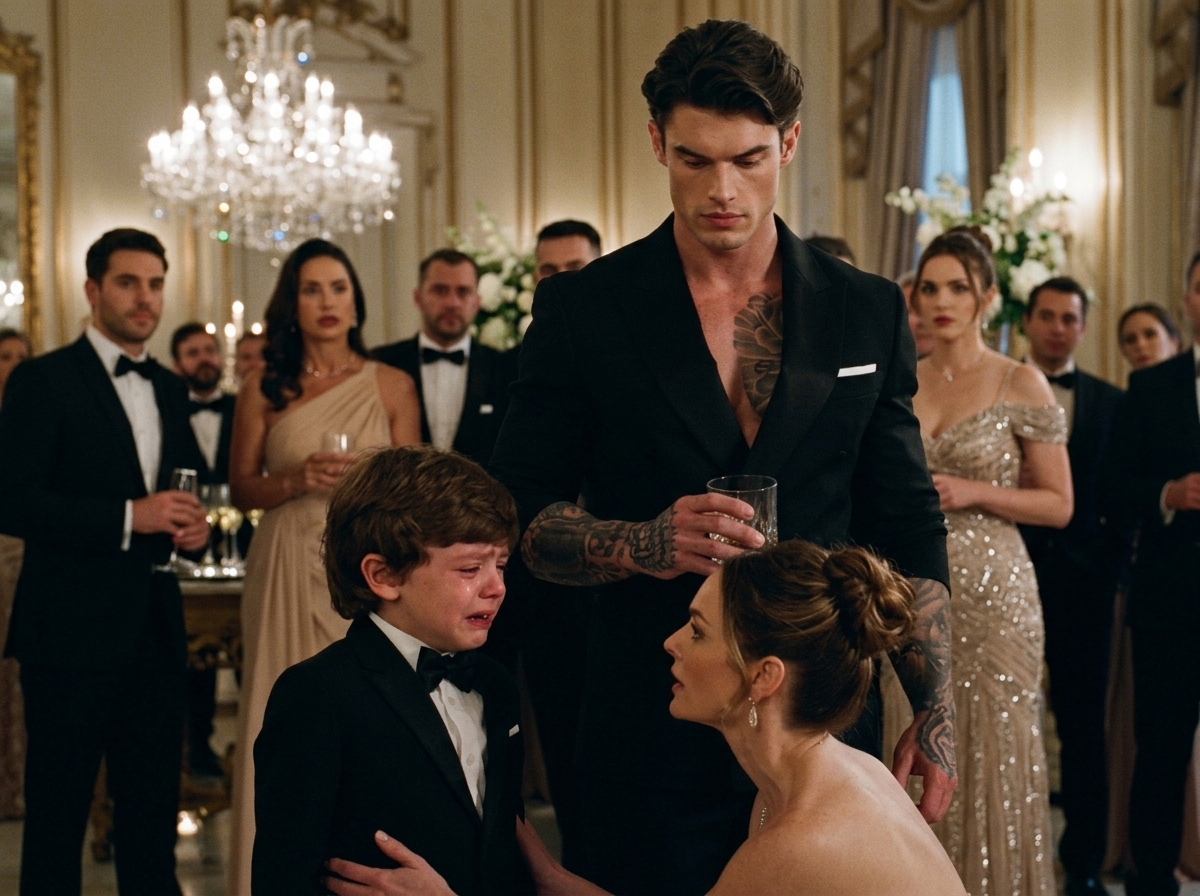
The invitation came from the community center where Daniel attended the bereaved parents' meetings. The facilitator, a thoughtful woman named Helen, approached him after a Thursday session and asked whether he would consider helping with a family afternoon planned for early summer. The event would bring together children and adults who had experienced the death of someone close to them. There would be drawing tables, shared stories, quiet activities, and a small music corner for anyone who wanted to participate.
Daniel's first instinct was to decline. He had joined the meetings because he needed somewhere to speak honestly about Grace, not because he wanted to stand in front of a room and explain his grief. He worried that helping organize an event might turn something personal into a responsibility he could not manage.
Helen seemed to recognize his hesitation.
“You wouldn't have to tell your story publicly,” she said. “We need practical help as much as anything. Someone who can arrange the tables, speak with volunteers, and make sure the children have what they need.”
Daniel considered the request. He had spent years coordinating complex property projects, and the practical work would be familiar. Yet he suspected Helen had invited him because she had noticed how carefully he listened when other parents spoke.
“I'll think about it,” he replied.
That evening, he told Oliver about the event while they ate dinner. Oliver's interest sharpened when Daniel mentioned the drawing tables.
“Can I draw there?”
“If you want to.”
“Can I bring our book?”
Daniel paused. The family book had always been a private project, something they shared with Mara and a few people at school. He did not want Oliver to feel that he needed to make his family's grief available to strangers simply because the community center was organizing an event.
“It's your book,” he said. “You can decide whether you want to bring it. You don't have to show anyone anything.”
Oliver thought about this, chewing slowly.
“Maybe I could bring the drawings but not the letter.”
“That sounds like a good choice.”
“Could we have a place where people can write letters to people they miss?”
Daniel felt a small surprise at the suggestion. The idea had come from Oliver himself, and he seemed to be considering what other children might need rather than simply what he wanted to do.
“I think that's something we could ask Helen about.”
The next day, Daniel contacted the center and offered to help with the practical arrangements. He suggested a quiet table where children could write letters or draw pictures for people who had died, with the option of keeping their work or taking it home. Helen liked the idea and arranged for a volunteer to supervise the space without reading anything unless a child specifically asked for help.
Oliver decided he would bring three drawings from his book: the yellow flowers, the family beneath the sun, and the music box Mara had drawn. He did not want to bring the entire book, and Daniel supported the decision.
When Mara heard about the event, she offered to help at the music corner. She could sing the lullaby if a child asked for it, but she made clear that she would not perform it as an exhibition. The song had helped Oliver because it had been offered when he needed comfort, not because anyone had demanded that it impress an audience.
Daniel agreed. They spoke with Helen, who understood that the music corner should be an invitation rather than a performance. Families could bring songs, poems, or recordings that reminded them of someone they missed, but no one would be asked to explain the story behind them.
The morning of the event arrived warm and bright. Daniel reached the center early, carrying boxes of paper, pencils, markers, and folders. He arranged chairs near the windows, set out cups of water, and helped volunteers prepare a table with simple snacks. Mara arrived shortly afterward, bringing the wooden music box that had belonged to her mother.
Oliver followed his father into the room with his drawings tucked safely inside a folder. He looked around at the other children, some of whom were sitting close to their parents, while others moved between activity tables with the restless curiosity of a Saturday morning.
A boy near the doorway held a photograph in both hands. He appeared younger than Oliver and kept glancing toward the adults around him. When Helen greeted him, he nodded but did not speak. His father explained quietly that the boy's grandmother had died recently and that he had been uncertain whether he wanted to attend.
Helen welcomed them without pressing for details and showed them the drawing table.
Oliver watched the boy settle into a chair. He remembered the first time he had been unable to stop crying in the restaurant, the way the room had seemed too large and the people around him too distant. He remembered Mara's voice reaching him without demanding that he explain himself.
He approached the boy slowly, holding a yellow pencil.
“Do you want to draw?” Oliver asked.
The boy looked at the paper. “I don't know what to draw.”
“You could draw something you liked doing with your grandmother.”
The boy's fingers tightened around the photograph. “We used to make toast.”
Oliver considered this. “You could draw toast.”
For a moment, the boy looked almost offended by the simplicity of the suggestion. Then he picked up a pencil and began sketching a plate. Oliver sat nearby and drew the yellow flowers from his own garden, not asking questions or watching too closely.
Daniel saw the exchange from across the room. He felt pride, but he did not interrupt. Oliver had offered another child a small opening, and the boy was free to accept it or not.
As the event continued, families moved among the tables. Some wrote letters, others drew pictures, and a few sat quietly without participating in any activity. One woman asked Mara whether she could sing the lullaby her mother had preserved. Mara explained that she could share it if the woman wanted to listen, but she would not insist that it was the right song for everyone.
The woman nodded. “I think I'd like to hear it.”
Mara sang softly, using the same gentle melody she had sung in the restaurant months earlier. She did not look toward Oliver or Daniel, and she did not introduce the song with a long explanation. She simply let the words fill the small room.
A few people listened with their eyes closed. Others continued drawing. The boy who had been making toast looked up from his picture and listened until the song ended.
“Can you sing it again?” he asked.
Mara smiled. “If you'd like.”
He nodded. This time, she sang the first verse, then invited him to hum along if he wanted. He did not sing the words, but a faint sound emerged from his throat, uncertain and quiet. His father placed a hand on his shoulder without asking him to do more.
Afterward, the boy returned to his drawing. He added a second piece of toast and a small cup beside the plate.
Oliver looked at the picture. “That looks like good toast.”
“My grandmother put too much butter on it,” the boy said.
Oliver smiled. “My dad puts too much syrup on pancakes.”
Their conversation moved toward ordinary food complaints, and the two boys began discussing which breakfast was best. Daniel watched them from a distance, recognizing how quickly a moment of shared sadness could make room for something else without making the sadness disappear.
Later, Helen invited anyone who wished to share a few words to speak near the front of the room. No one was required to participate. A woman talked about her father, a man described missing his sister's phone calls, and a teenager read a short poem. Some speakers cried; others managed a few sentences and returned to their seats.
Daniel had not planned to speak. He stood near the back, prepared to remain a helper rather than a participant. Then he noticed Oliver looking toward him, not urging him forward, simply watching with quiet interest.
Daniel thought of how often he had taught his son that feelings were allowed while keeping his own carefully hidden. He did not need to reveal every detail of his grief, but perhaps he could offer a small truth.
When Helen asked whether anyone else wished to speak, Daniel raised his hand.
He walked to the front without notes. The room seemed quieter than he expected, but the people sitting before him were not strangers in the way he had once imagined. They were parents, children, siblings, and friends who understood that grief could make ordinary days feel unfamiliar.
“My wife, Grace, died three years ago,” he began. “Our son was very young, and for a long time I thought I had to keep him from seeing how much I missed her. I thought that if I stayed strong enough, I could make the loss easier for him.”
He paused, looking down at his hands.
“I was wrong about what strength had to look like. I couldn't take away his sadness, and I couldn't answer every question. But I could stay with him. I could listen. I could learn to say when I missed her too.”
He told them about the lullaby, but he did not repeat the entire story of the restaurant or describe the promise of money he had once made in desperation. He spoke instead about a song passed from one person to another, and how a small act of kindness had reminded him that comfort did not always arrive in the form people expected.
“The song didn't make us stop missing Grace,” he said. “It helped us understand that missing her didn't mean we had to stop living. We could remember her while making pancakes, drawing pictures, or talking about the things we were afraid to say aloud.”
When he finished, he returned to his seat. There was no dramatic applause, only a few gentle claps and several people nodding. Daniel felt relieved. He had not tried to make his grief meaningful for everyone else. He had simply shared what he had learned.
At the end of the afternoon, Helen thanked the volunteers and invited families to take their drawings home. Oliver placed his three pictures back into the folder. Before leaving, he asked the boy with the toast drawing whether he wanted to keep his picture.
“I'm taking it home,” the boy said.
“Me too.”
They exchanged a small wave. Oliver did not ask for his name or promise to become his friend. The encounter had been brief, but it had given both children a moment in which their sadness could exist alongside something ordinary.
Outside, the sun had warmed the pavement. Daniel carried the supply boxes to his car while Mara walked beside Oliver. The boy was quiet until they reached the corner.
“Dad, I liked helping that boy draw toast.”
Daniel smiled. “You were kind to him.”
“He didn't need me to make him stop being sad.”
“No,” Daniel said. “He needed someone to sit with him while he decided what to do.”
Oliver looked pleased by the answer. “That's what Mara did for me.”
“Yes. It is.”
They drove home with the windows partly open. The air smelled of cut grass and warm pavement, and Oliver began humming the lullaby under his breath. Mara joined him for a line, then stopped when he continued alone.
Daniel listened from the front seat, feeling grateful for the people who had helped his family find its way through grief without demanding that any of them become a different person.
That night, he placed Oliver's drawings on the shelf beside Grace's photograph. He did not add a plaque or a formal description. The pictures were simply part of the home now, alongside the family book and the notebook containing the lullaby.
He realized that Grace's memory had reached beyond the walls of their house, not because they had turned her life into a public story, but because the kindness she had passed to others continued to travel. It moved through Mara's voice, Oliver's quiet offer of a pencil, and the people who listened without asking for more than someone was ready to give.
The event had not ended grief for anyone who attended. It had offered a room where grief did not need to be hidden, and that was enough.
Click here to continue reading: PART 12: The Song Oliver Chose to Carry Into the Future
A Wealthy Father Challenged an Entire Restaurant to Calm His Grieving Son, Until a Quiet Waitress Sang Words That Made the Boy Stop Crying
Part 11 of 28

