
The first sign that something was wrong was not dramatic.
Michael simply stopped complaining.
At first, I thought it was a good thing.
He no longer argued when I reminded him to rest his leg. He stopped grumbling when Catherine called three times in one afternoon. He even let me reorganize the workshop shelves without protesting.
That should have made me suspicious.
Michael was not naturally agreeable.
If he believed something was wrong, he said so.
If he thought I was wasting money, he told me.
If I moved one of his screwdrivers two inches from where he expected it to be, he could find it with remarkable speed and ask why I had committed such a crime.
But now he was quiet.
Too quiet.
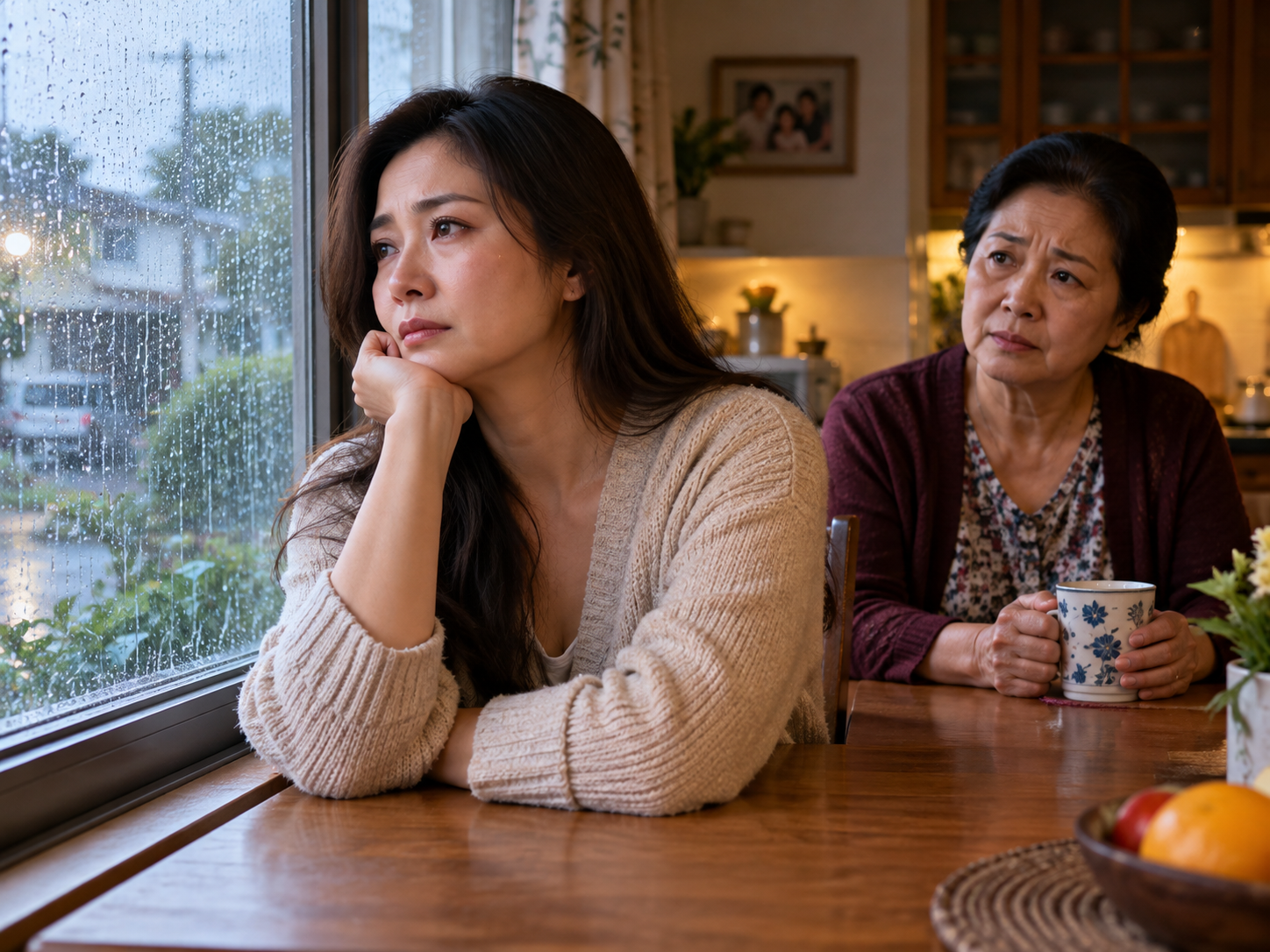
One Tuesday morning, I found him sitting at the kitchen table before sunrise.
He had a cup of coffee in front of him, untouched.
“What happened?”
He looked up.
“Nothing.”
I pulled out the chair opposite him.
“You're lying.”
“I haven't said anything.”
“Exactly.”
He smiled faintly.
“I couldn't sleep.”
“Why?”
He looked toward the window.
“I've been thinking about the workshop.”
That sounded harmless.
“Did someone complain?”
“No.”
“Did you break something?”
“No.”
“Then what?”
He finally looked at me.
“I might sell it.”
I stared at him.
The workshop was more than a business.
It was the place where Michael had spent most of his adult life. It was where he had rebuilt his confidence after the accident. It was where people knew him, trusted him, and came to him when something important stopped working.
“Why?”
“My leg.”
The answer was quiet.
I looked down.
He had been having more difficult days lately.
He tried to hide them.
Sometimes, after walking home, he would sit on the porch before entering the house. Sometimes he rubbed his knee when he thought I wasn't watching.
“How bad is it?”
“Not terrible.”
“Michael.”
He sighed.
“It hurts more than it used to.”
“Why didn't you tell me?”
“Because I didn't want you to worry.”
I leaned back.
“That stopped working about twenty years ago.”
He smiled.
Then the smile disappeared.
“The doctor thinks I should reduce the hours.”
“That makes sense.”
“I don't want to.”
“I know.”
He rubbed his hands together.
“I don't want you to spend your life taking care of me.”
My heart tightened.
“I married you. I didn't sign a contract saying I'd only stay while everything was convenient.”
“That isn't what I mean.”
“Then tell me what you mean.”
He looked down.
“I've watched people become caregivers instead of spouses.”
I understood.
He was afraid.
Not of pain.
Not of age.
Of becoming a burden.
I reached across the table.
“You don't get to decide what my life is supposed to be without asking me.”
He looked at me.
“I know.”
“No, you don't.”
My voice softened.
“I chose you when I knew about your leg. I chose you when I knew you had a past. I chose you after I learned things about your family that neither of us expected. You keep acting like I made one decision twenty years ago and have been trapped inside it ever since.”
He was silent.
“I keep choosing you,” I said.
His eyes filled slightly.
“I know.”
“Then let me.”
He took my hand.
For a while, neither of us spoke.
We agreed that he would reduce his workshop hours rather than sell immediately.
But I could tell something had changed.
Michael had begun thinking about the future.
So had I.
A few weeks later, we visited the doctor together.
The diagnosis was not catastrophic.
That was the first relief.
His injury had simply deteriorated with age.
There would be more pain.
More limitations.
But there were treatments, exercises, and adjustments that could help.
Michael listened carefully.
I took notes.
On the way home, he said, “You didn't have to come.”
“I know.”
“You always say that.”
“Because you always forget.”
He smiled.
At home, we began making changes.
A chair went beside the workbench.
The heavier equipment was moved lower.
We arranged for another repairman to help with the jobs Michael could no longer handle safely.
The workshop changed.
Michael changed with it.
At first, he hated every adjustment.
Then he discovered something unexpected.
He could teach.
The young man we hired was named Daniel.
He was twenty-four, impatient, clever, and constantly convinced he already knew everything.
Michael liked him immediately.
“You're going to drive me crazy,” Michael told him on his first day.
Daniel grinned.
“Then I'm learning.”
Michael laughed.
Watching them together reminded me of the boy Michael had once been.
Patient.
Curious.
Determined.
Except now he had someone to pass those qualities to.
The workshop survived.
It became smaller.
Quieter.
But it remained his.
One evening, Daniel asked me something while Michael was outside.
“Did he always know how to fix everything?”
I laughed.
“No.”
Daniel looked surprised.
“What did he do before?”
“Made mistakes.”
Daniel nodded thoughtfully.
“That's probably why he's good.”
I looked toward Michael.
He was standing in the doorway, listening.
“Did you hear that?”
“Yes.”
“You're becoming sentimental,” I said.
“Don't tell anyone.”
That evening, we ate dinner together.
Michael seemed lighter.
Then his phone rang.
It was Catherine.
He answered.
His expression changed.
“Slow down,” he said.
I watched him listen.
“What hospital?”
My stomach tightened.
He stood.
“We're coming.”
He hung up.
“What happened?”
“Catherine fell.”
We rushed to the hospital.
She had broken her wrist.
Nothing life-threatening.
But she was frightened.
At eighty, a fall was different from a fall at forty.
The doctor wanted to keep her overnight.
Michael sat beside her bed.
I watched him hold her hand.
She looked embarrassed.
“I told you I was fine,” she murmured.
Michael laughed.
“You sound like me.”
“I taught you everything.”
“You taught me to lie about pain.”
Catherine smiled.
I stepped closer.
She looked at me.
“Take care of him.”
I shook my head.
“He takes care of me too.”
Her eyes softened.
“That is why I wanted you.”
I frowned.
“What do you mean?”
She glanced at Michael.
He looked confused too.
Catherine reached beneath her pillow and pulled out a small envelope.
“I should have given this to you years ago.”
Michael stared.
Another envelope.
Another secret.
But this one was different.
It contained a letter written by his father.
The letter was dated three days before the accident.
Michael read it slowly.
His face changed with every line.
When he finished, he folded it carefully.
“What does it say?” I asked.
He looked at me.
“My father knew he was going to leave.”
“Leave where?”
“He planned to go away with Catherine's sister.”
Catherine closed her eyes.
Michael stared at the letter.
“But he never left.”
I understood.
The accident had happened before he could.
Michael sat down.
For years, he had believed the accident had ended one story.
Now he realized it had interrupted another.
He looked at his mother.
“Why did you keep this?”
Catherine's voice was weak.
“Because I thought knowing it would destroy you.”
Michael looked at me.
I knew that expression.
He was standing at the edge of another old wound.
This time, however, he did not walk into it alone.
He reached for my hand.
And I held on.
Click Here to continue read next: PART10: Michael’s Father’s Last Letter Changed the Story He Had Believed About His Childhood, and the Truth Forced All Three of Us to Reconsider What Forgiveness Meant
At Forty, I Had Stopped Expecting Love to Knock, So When My Mother Offered Michael, I Made a Choice I Thought Would Cost Me Nothing
Part 9 of 16

