
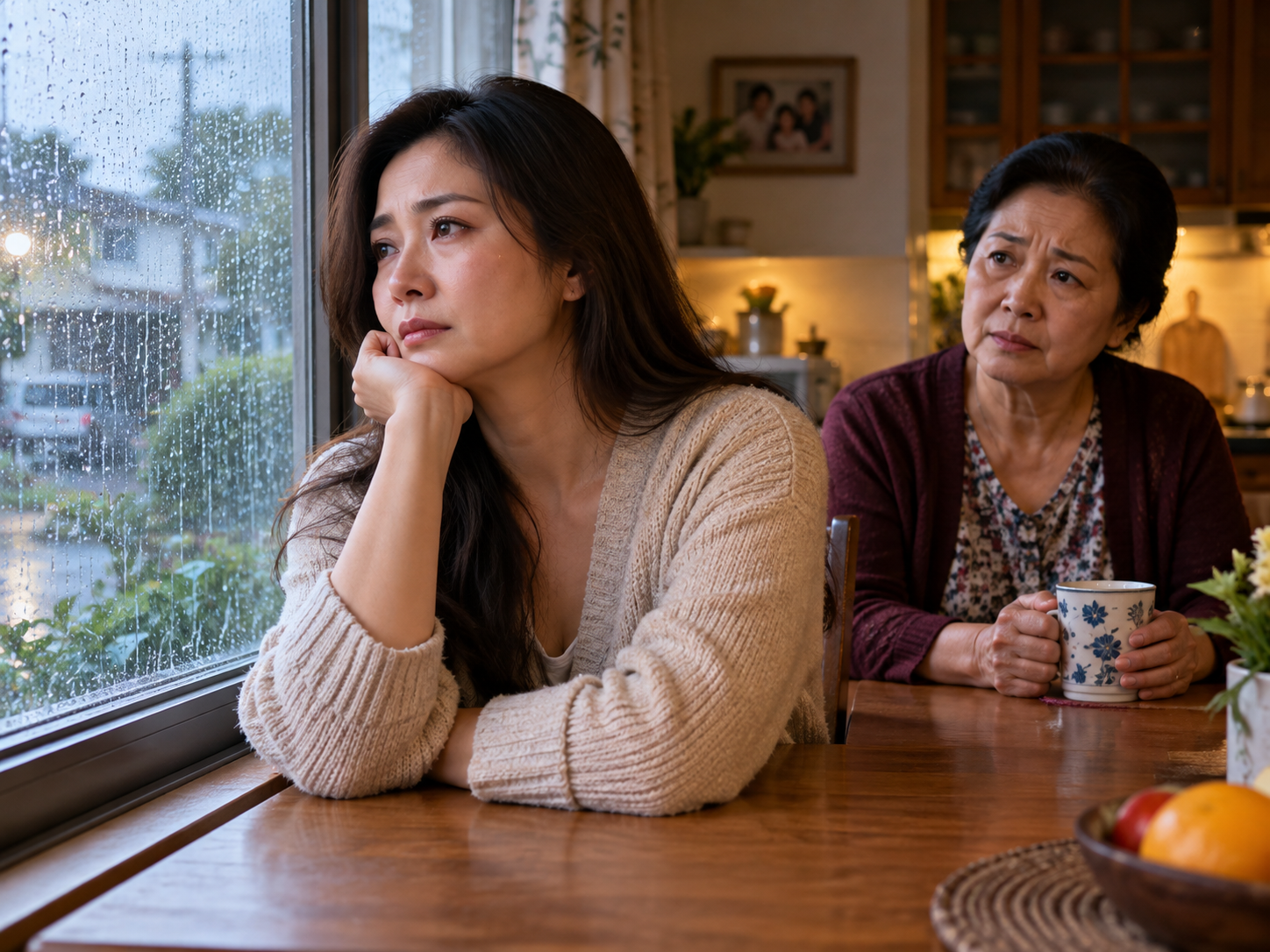
We read the letter again the next morning.
Catherine was still in the hospital.
Michael had brought the envelope home because he did not want her to watch him struggle with it.
The handwriting belonged to his father.
There was no doubt.
The letter began simply.
He apologized.
Not for the accident.
For everything that had happened before it.
He admitted that he had been planning to leave.
He admitted that he had lied.
He admitted that he had been afraid of becoming the man everyone believed him to be.
Michael read the final paragraph twice.
Then he placed the letter on the table.
“He loved me.”
I looked at him.
“Yes.”
“He was still a terrible husband.”
“Yes.”
Michael stared at the paper.
“I thought those things couldn't both be true.”
“They can.”
He leaned back.
“That makes everything harder.”
I nodded.
“Truth usually does.”
He smiled faintly.
“You've become very philosophical.”
“I've had practice.”
He reached for my hand.
“I don't know whether I forgive him.”
“You don't have to.”
“What if I want to?”
“Then forgive him.”
“What if tomorrow I don't?”
“Then tomorrow you don't.”
He looked at me.
“You make it sound simple.”
“It isn't simple.”
I squeezed his fingers.
“It's just yours.”
That afternoon, we returned to the hospital.
Catherine was awake.
Michael sat beside her.
“I read the letter.”
She looked at him.
“I know.”
“Why didn't you tell me he was planning to leave?”
She swallowed.
“Because I was angry.”
“At him?”
“At both of you.”
Michael frowned.
“I was seventeen.”
“I know.”
Her voice broke.
“I was angry at everyone.”
Michael looked down.
“I wish you'd trusted me.”
“I wish I had been brave enough.”
They sat quietly.
Then Catherine said something I had never heard her say.
“I was afraid you would stop loving your father.”
Michael looked at her.
“He was my father.”
“That wasn't enough for me.”
She looked toward the window.
“I wanted you to remember him kindly.”
Michael's eyes filled.
“But you can't choose which parts of a person someone else remembers.”
Catherine nodded.
“I know.”
That was the beginning of a different kind of peace between them.
Not complete.
Not immediate.
But honest.
Catherine came home a week later.
She needed help for several weeks.
Michael wanted to do everything.
I refused to let him.
“You have one injured leg,” I reminded him.
“She has one injured wrist.”
“That doesn't mean you need to injure the other leg trying to help.”
He laughed.
We hired someone to help Catherine during the day.
Michael still visited every morning.
I visited every afternoon.
The arrangement worked.
For the first time, Michael understood that accepting help did not make him weak.
It simply meant other people loved him enough to share the weight.
Our life became fuller.
Daniel took over more responsibility at the workshop.
Michael worked fewer hours.
I began managing the accounts from home.
The house became busier.
Sometimes I missed the quiet.
Then I would remember how lonely quiet had once felt.
One evening, Daniel asked Michael whether he intended to keep the workshop forever.
Michael thought about it.
“No.”
Daniel looked surprised.
“Why?”
“Because nothing lasts forever.”
“That's depressing.”
Michael laughed.
“It's practical.”
Daniel looked at me.
“Did he always talk like that?”
“Yes.”
“Then I understand why you married him.”
I laughed.
Michael pretended to be offended.
A few weeks later, something unexpected happened.
The hospital called.
The girl whose operation Michael had paid for was doing well.
She wanted to meet him.
Michael hesitated.
“Do I have to?”
“No.”
“What would you do?”
“I'd ask myself whether meeting her would help her or me.”
He thought about it.
Then he agreed.
We met her at a small café near the hospital.
She was nineteen now.
Healthy.
Quiet.
She had her father's eyes.
When she saw Michael, she stood.
“Thank you.”
Michael shook his head.
“You don't owe me anything.”
“I know.”
She smiled.
“My father says that too.”
Michael looked uncomfortable.
“He's trying to change.”
“People can change.”
Michael glanced at me.
I smiled.
The girl sat down.
For nearly an hour, they talked.
Not about the accident.
Not about money.
About school.
Work.
The future.
When we left, Michael seemed thoughtful.
“She reminded me of someone.”
“Who?”
“You.”
I laughed.
“She doesn't look like me.”
“Not physically.”
I understood.
He meant courage.
That night, he said something I had not expected.
“I think I'm done being angry.”
I looked at him.
“Completely?”
“No.”
He smiled.
“I'll probably still get angry sometimes.”
“That sounds healthier.”
He nodded.
The next morning, Michael opened the workshop early.
He stood in the doorway for a long time.
Then he turned to me.
“I want to change something.”
“What?”
“The name.”
I stared.
The old sign above the door had carried his surname for decades.
“What will you call it?”
He smiled.
“Second Chance Repairs.”
I laughed.
“That sounds like a place that fixes people.”
“Maybe it does.”
We kept the name.
Daniel painted the new sign.
Catherine complained that the letters were crooked.
Michael said they were artistic.
I said they were crooked.
Daniel defended himself.
The argument lasted ten minutes.
Then everyone laughed.
That was our family now.
Not perfect.
Not free from history.
But no longer controlled by it.
Months passed.
Catherine's wrist healed.
Michael's leg stabilized.
The workshop became more manageable.
Our marriage deepened.
Sometimes I wondered how different my life might have been if I had married someone else.
Then I stopped.
There was no point.
A life is not measured by the roads not taken.
It is lived through the road beneath your feet.
One evening, I found Michael standing alone in the workshop.
He was holding his father's letter.
“What are you doing?”
“Deciding.”
“About?”
He placed the letter inside a wooden drawer.
“I don't need to read it anymore.”
I smiled.
“Are you throwing it away?”
“No.”
“Why keep it?”
“Because it happened.”
He closed the drawer.
“But it doesn't have to happen again.”
I walked over.
He took my hand.
“I used to think the past was something I had to defeat.”
“And now?”
“Now I think I just have to stop carrying it everywhere.”
I leaned against him.
Outside, rain began again.
Michael looked toward the door.
“Do you remember our first night?”
“Yes.”
“You were terrified.”
“So were you.”
“I was.”
We laughed.
He wrapped an arm around me.
This time, there was no floor between us.
No uncertainty.
No question about whether either of us belonged there.
We stood together while the rain fell.
And for a moment, everything was quiet.
Then Catherine shouted from the house.
“Dinner!”
Michael sighed.
“Some things never change.”
I laughed.
“No.”
And we walked home together.
Click Here to continue read next: PART11: The Day Michael Finally Let Someone Else Lead the Workshop, I Realized His Greatest Fear Had Never Been Losing His Work
At Forty, I Had Stopped Expecting Love to Knock, So When My Mother Offered Michael, I Made a Choice I Thought Would Cost Me Nothing
Part 10 of 16

