
The account contained more money than any of them expected.
Not enough to make the family unimaginably wealthy.
Enough to change hundreds of lives.
The legal documents were clear.
The funds had been placed into a protected structure intended for people harmed by identity fraud, coercion, financial abuse, and forced displacement.
Daniel had contributed to it.
Others had contributed anonymously.
Some payments came from accounts associated with people who had once worked for Henry.
The money was cleanly traceable in some places and difficult to classify in others.
That distinction mattered.
Anna wanted every questionable payment frozen.
Rose agreed.
Edward was more cautious.
“We can't distribute money simply because we believe the purpose was good.”
Clara nodded.
“We need legal confirmation.”
Margaret sat quietly at the end of the table.
She had listened to the discussion for nearly an hour.
Finally she said, “Do not use any of it for us.”
Everyone looked at her.
Anna nodded.
“That was never our intention.”
Margaret looked toward Clara.
“I spent too much of my life believing money could solve what fear had broken.”
Clara reached across the table.
“It can't.”
“No.”
“But it can help someone else.”
“Yes.”
That became the principle.
They would not use the fourth account to compensate themselves.
They would establish a separate legal trust.
Independent oversight.
Public reporting.
No family member could personally control the funds.
Rose insisted on that.
“If the story taught us anything,” she said, “it's that private control makes secrets too easy.”
Thomas smiled.
“I'm putting that sentence in the draft.”
The legal work took months.
Some accounts were frozen.
Some were released.
Several transactions required court review.
The family resisted the temptation to move quickly.
They had learned that rushing evidence could destroy the very truth they wanted preserved.
Meanwhile, the archive expanded.
People began contacting the foundation with their own stories.
Some had been separated from relatives.
Some had discovered secret debts opened in their names.
Others had spent decades believing they had been abandoned by parents who had actually been prevented from contacting them.
Anna listened to many of them.
She understood the particular pain of waiting for someone who might never come.
Rose helped establish a confidential records program.
Clara worked with researchers to compare historical documents.
Edward handled the financial reports.
Margaret rarely appeared publicly.
But she answered every letter addressed to her.
Some were angry.
Some were cruel.
Some simply asked why.
She never defended herself.
“I was afraid,” she wrote.
Then she added what she had learned.
“Fear explains a decision. It does not erase its consequences.”
Clara found one of those letters months later.
She read it twice.
Then she placed it in the archive.
Not as evidence against her mother.
As evidence of change.
One winter afternoon, a young woman arrived at the estate carrying a photograph.
She said her grandmother had worked for Henry.
She believed she had a connection to one of the names in the ledger.
Anna met her in the archive.
The woman was nervous.
“I don't know if this is important.”
Anna smiled.
“Bring us what you have.”
The photograph showed a group of employees standing outside the Hale offices.
One man had been identified in the original records.
Another had never been named.
Clara examined the photograph.
The unidentified man wore a watch with a distinctive engraving.
Thomas recognized it.
“That belonged to Gerald Mercer.”
Clara frowned.
“Then he was there.”
The young woman nodded.
“My grandmother said he wasn't a banker when she knew him.”
Anna looked up.
“What was he?”
“A courier.”
The word changed the investigation.
They searched old records.
Mercer had indeed worked as a courier before becoming a banker.
He had handled documents for Henry.
But one detail remained unexplained.
Why had Henry promoted him?
The answer appeared in a ledger recovered from the monastery.
Mercer had been the person who transported Anna's medical records.
He had also carried Rose's identity documents.
He had been present when both girls were moved.
Clara felt sick.
“He knew them personally.”
Anna looked at the entry.
“He wasn't only moving money.”
“No.”
“He was moving people.”
The foundation researchers traced Mercer’s later career.
He had accumulated wealth quickly.
He had purchased property through shell companies.
He had maintained contact with several people on Henry's list.
But he had died before the investigation began.
There would be no trial.
No courtroom confrontation.
Only documents.
Clara accepted that.
“History doesn't always give us the ending we want.”
Anna nodded.
“We still have the truth.”
Years earlier, that sentence would have sounded hollow.
Now it did not.
The fourth account was eventually placed under independent trusteeship.
A public report explained its origins, its uncertain transactions, and the safeguards around its use.
No family member received personal control.
The first grants went to organizations helping people recover stolen identities and locate separated relatives.
The foundation also funded archival work.
Rose insisted that records be preserved even when they embarrassed the institutions that created them.
“Otherwise,” she said, “someone will repeat the same mistake and claim nobody knew.”
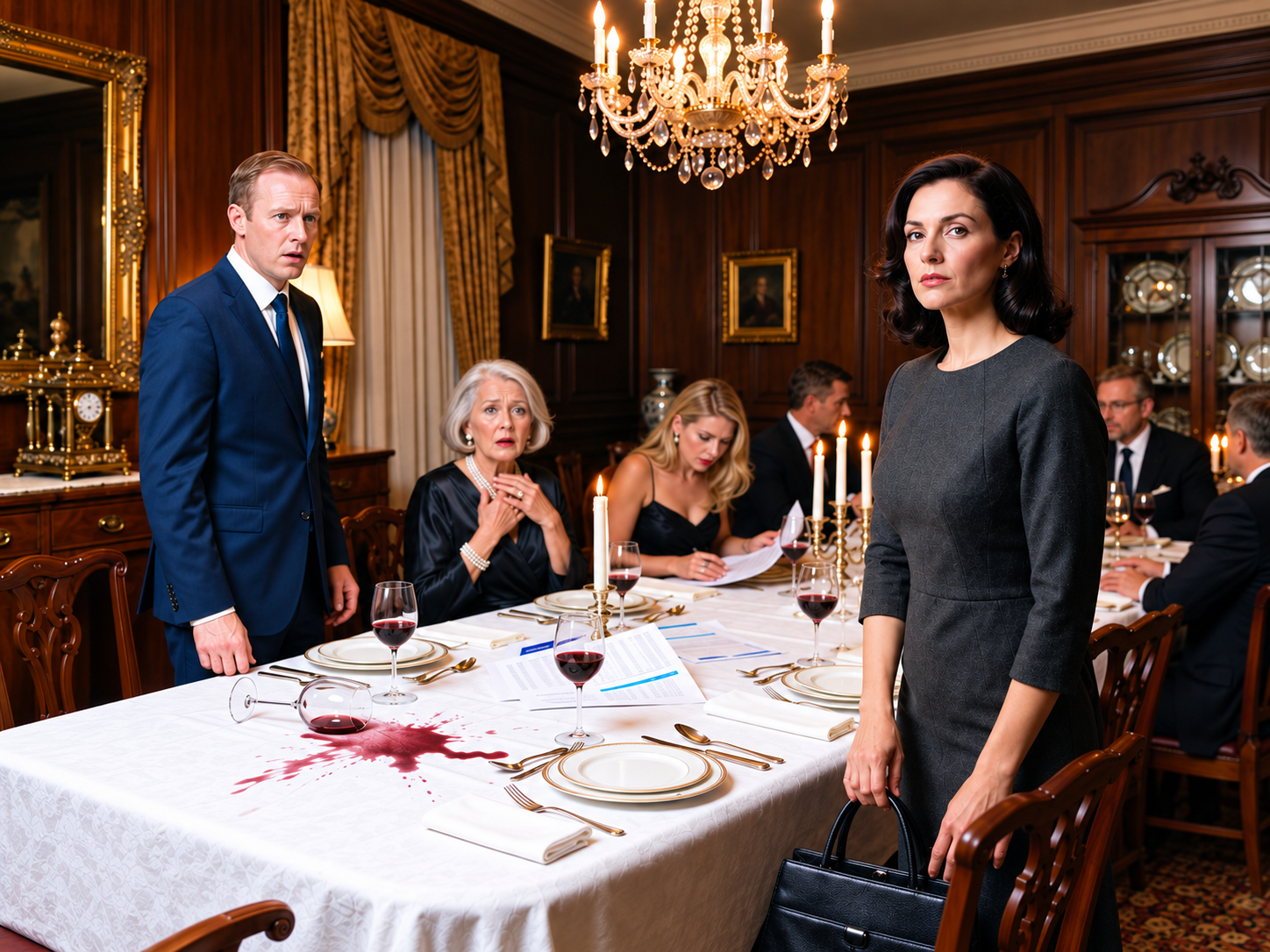
On the anniversary of the original dinner, the family gathered again.
The same dining room.
The same chandelier.
A different tablecloth.
There was no blood.
No hidden key.
No police.
Just food.
Margaret looked around.
“I used to hate this room.”
Clara smiled.
“I did too.”
Anna lifted her glass.
“Now?”
Margaret thought about it.
“Now I think it reminds me that rooms don't hold secrets. People do.”
Edward laughed.
“That sounds like something Clara would write.”
Clara raised an eyebrow.
“I'll take that as a compliment.”
Rose looked toward the archive door.
“It isn't locked.”
Thomas answered, “It hasn't been for years.”
Anna smiled.
“That matters.”
After dinner, Clara remained behind.
She walked to the archive.
The fourth account documents had been placed in a new cabinet.
The key was held by independent trustees.
The family's old brass keys were displayed in glass.
Archive 17.
Room 4.
The railway station.
The monastery.
Four doors.
Four stages of the same history.
Clara touched the glass.
Then she heard footsteps.
Anna entered.
“Still thinking?”
“Yes.”
“About what?”
“How many times we thought we had reached the end.”
Anna smiled.
“Maybe there is no end.”
Clara looked at her.
“There should be.”
“Why?”
“So people can rest.”
Anna considered that.
“Maybe the ending is simply knowing we don't have to hide anymore.”
Clara smiled.
“That sounds like you.”
Anna looked toward the old photograph.
“Tomorrow Rose wants to show me something.”
“What?”
“She found another document.”
Clara groaned.
“Of course she did.”
They laughed.
Neither woman knew that Rose had found one final envelope.
It was not from Henry.
Not from Daniel.
Not from Simon.
It carried no signature.
Only a date.
The date of the original dinner.
Inside was a photograph taken from outside the estate.
The dining-room window was visible.
A figure stood behind the glass.
Watching.
The photograph had been taken before the wineglass fell.
Rose stared at it.
Someone else had been there that night.
Click Here to continue read next: PART16: The Final Photograph Explained Who Had Been Watching the Dinner, and the Family Finally Learned What Had Started the Night of the Broken Glass
The Dinner Was Meant to Settle an Inheritance, Until a Glass Fell and Everyone Stopped Pretending
Part 15 of 16

