
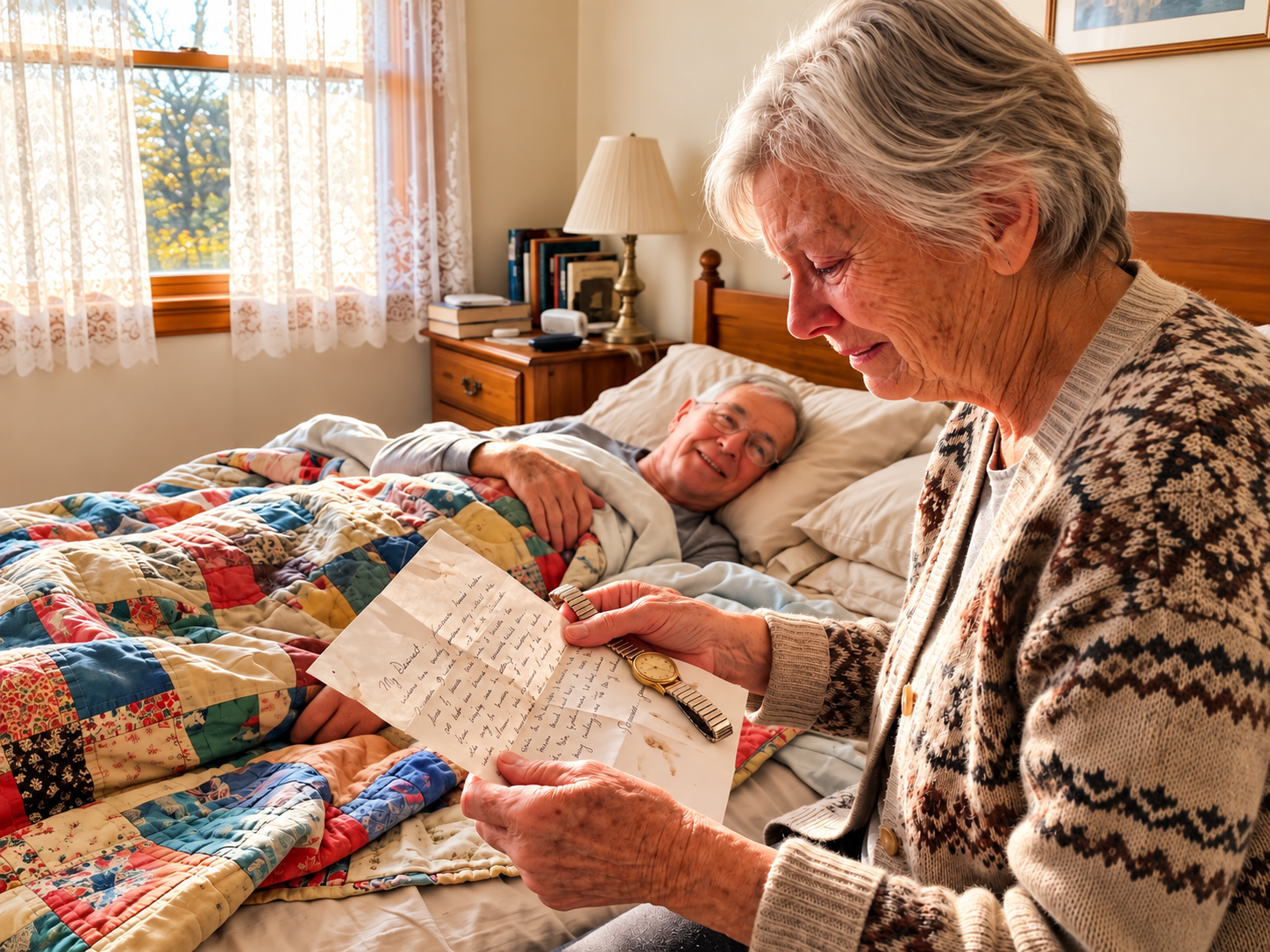
The last hearing ended on a gray morning in November.
Margaret did not attend.
Neither did Anna.
They had already provided their statements.
The record was corrected.
The old accusations were formally withdrawn.
The evidence gathered over decades was preserved.
The families connected to the original fraud received copies of the documents.
There was no dramatic celebration.
No newspaper headline large enough to contain what had happened.
The world simply continued.
People went to work.
Children went to school.
Buses crossed the city.
Rain fell against windows.
And somewhere, a family that had spent decades divided by silence finally had permission to remember its history without shame.
Margaret was eighty-seven when the final notice arrived.
She opened it at the kitchen table.
Anna was visiting.
They read it together.
Anna placed the paper down.
“That's it.”
Margaret nodded.
“I suppose it is.”
“No more hearings.”
“No.”
“No more files.”
“No.”
“No more secrets.”
Margaret smiled.
“There may always be secrets.”
Anna laughed.
“Don't ruin the moment.”
Margaret laughed too.
That evening they opened the blue box.
It had become a family ritual.
Every few months, someone added something.
A photograph.
A letter.
A legal document.
A child's drawing.
A recipe Daniel had written badly.
A photograph of Eleanor holding Emily.
A picture of Thomas standing outside his workshop.
The box no longer represented fear.
It represented memory.
Anna lifted the old watch.
“Do you still think we should repair it?”
Margaret shook her head.
“No.”
“Why?”
“Because it tells the truth about what happened.”
Anna turned the watch over.
Her initials remained.
A.E.E.
She smiled.
“I was very dramatic.”
“You were twenty-three.”
“Still dramatic.”
Margaret laughed.
Then Anna noticed something.
The clasp was loose.
She opened it.
The hidden compartment was empty.
Of course it was.
The evidence had already been removed and preserved.
But inside the empty space was a tiny scrap of paper.
Anna stared.
“What?”
Margaret leaned closer.
The handwriting was Daniel's.
It was only one sentence.
Not everything needs to be carried forever.
Anna's eyes filled.
She knew exactly what he meant.
The watch had carried the evidence.
The family had carried the guilt.
Margaret had carried grief.
Anna had carried anger.
Eleanor had carried fear.
Thomas had carried a stolen identity.
George had carried knowledge.
But they did not have to carry those things forever.
Anna folded the paper.
She placed it back inside the watch.
Then she closed the clasp.
“I think Dad would like that.”
Margaret nodded.
“I think so too.”
They sat together until the room became dark.
Years later, Margaret's granddaughter brought her own children to the house.
They ran through the hallway.
They climbed onto the old sofa.
They asked why there were so many photographs.
Margaret showed them the family album.
She told them about Daniel's terrible singing.
She told them Eleanor liked strong coffee.
She told them Thomas could repair almost anything.
She told them Anna once believed she was terrible at cooking.
Anna protested from the kitchen.
“I was terrible.”
The children laughed.
No one told them the whole story yet.
They were too young.
But one day they would know.
Not as a tragedy.
As a history.
As a warning about fear.
As proof that people could make mistakes without becoming only their mistakes.
One afternoon, Anna found Margaret standing beside the writing desk.
“What are you doing?”
“Deciding what to keep.”
Anna smiled.
“You're eighty-nine. You can keep everything.”
“I don't need everything.”
She opened the drawers.
Letters.
Photographs.
Documents.
She separated them into two piles.
One for the family.
One for the archive.
The most important records would be preserved professionally.
The personal letters would remain with Anna.
The childhood drawings would go to the grandchildren.
Daniel's final letters would stay with Margaret until she decided otherwise.
And the watch?
Anna already knew.
It would remain in the family.
But not hidden.
Margaret placed it into a small wooden case.
She had engraved something beneath it.
Anna read the words.
3:17 — We came home.
Anna looked at her mother.
“You did that?”
“Yes.”
“I love it.”
Margaret smiled.
“Good.”
They closed the case.
That evening, they sat on the porch.
The garden had changed.
The maple tree was taller.
The old fence had been replaced.
A bird nested beneath the roof.
The world kept moving.
Anna leaned back.
“Do you ever wish Dad had told you sooner?”
Margaret answered immediately.
“Every day.”
Anna nodded.
“Me too.”
“Do you wish you had come home sooner?”
Anna looked at the sky.
“Yes.”
“Then why didn't you?”
“Because I didn't know I was allowed.”
Margaret took her hand.
“You were always allowed.”
“I know that now.”
They sat quietly.
After a while, Anna said, “I think that's what I want the children to understand.”
“What?”
“That home isn't a place people have to earn their way back into.”
Margaret smiled.
“That is a good lesson.”
“It took us long enough.”
“Twenty-six years.”
Anna laughed softly.
“Exactly.”
Inside the house, the grandfather clock began to chime.
Margaret listened.
For years, clocks had frightened her.
They had marked birthdays.
Hospital visits.
Departures.
Funerals.
But now the sound was ordinary.
Comforting.
The clock continued.
One.
Two.
Three.
Anna looked toward the window.
“Three seventeen.”
Margaret smiled.
She checked the wall clock.
It was 3:17 in the afternoon.
Neither woman moved.
They simply listened.
No one was disappearing.
No train was waiting.
No letter was being hidden.
No door was closing.
The hour passed.
The hands moved forward.
Margaret looked at Anna.
“There.”
Anna smiled.
“Time moved.”
“Yes.”
“And nothing terrible happened.”
“No.”
They laughed.
The moment was almost absurdly ordinary.
That was why it mattered.
Years earlier, 3:17 had been the hour Margaret associated with losing her daughter.
Now it was simply an afternoon.
A clock.
A garden.
A mother and daughter sitting together.
Life had taken the number back.
One evening, Margaret opened the blue box for the last time.
She was ninety-one.
Anna sat beside her.
Eleanor had died peacefully two years earlier.
Thomas had moved closer.
Emily had children of her own.
George was gone.
The family had grown.
The secrets had become history.
Margaret removed the final letter.
Daniel's handwriting was faint.
She had read it many times.
But she had never read the last line aloud.
She handed it to Anna.
“Your turn.”
Anna read.
The letter ended simply.
If there is anything worth leaving behind, let it be the truth.
Anna looked at her mother.
“That was all?”
“That was all.”
She folded the paper.
“Then that's enough.”
Margaret nodded.
Together they placed the letter into the box.
They did not lock it.
They never locked it again.
The blue box remained on the shelf where everyone could reach it.
The family documents were stored properly.
The photographs were placed in albums.
The letters were preserved.
The childhood drawings were framed.
And the watch sat in its wooden case.
3:17.
Still stopped.
Still remembered.
But no longer feared.
Margaret died the following spring.
Anna was beside her.
So was her daughter.
The house was full.
There were flowers on the table.
Someone had made too much coffee.
Children whispered in the hallway.
The curtains moved in the afternoon breeze.
Anna held her mother's hand.
Margaret opened her eyes once.
“Is everyone here?”
“Yes.”
She smiled.
“Good.”
Anna leaned closer.
“You can rest.”
Margaret looked toward the mantel.
The watch was there.
She smiled.
“I think we finally fixed it.”
Anna's eyes filled.
“It never needed fixing.”
Margaret closed her eyes.
The room became quiet.
And for the first time, the silence did not mean someone was hiding something.
It meant everyone was there.
After the funeral, Anna returned to the bedroom alone.
She opened the wooden case.
The watch remained at 3:17.
She touched the glass.
“Mom was right.”
She smiled through tears.
“It didn't need fixing.”
She carried it downstairs.
The family was waiting.
Anna placed the watch in the center of the table.
Her daughter looked at it.
“What does 3:17 mean?”
Anna looked around the room.
She saw Daniel in the photographs.
Eleanor.
Thomas.
Margaret.
All the people who had been afraid.
All the people who had lied.
All the people who had eventually told the truth.
“It means a family can lose years,” Anna said.
Her daughter waited.
“But it doesn't have to lose forever.”
She picked up the watch.
Then she handed it to the youngest child at the table.
“Keep it.”
The child held it carefully.
“Why?”
Anna smiled.
“So you remember that when you're afraid, you tell the truth.”
The child nodded solemnly.
“Okay.”
Outside, evening settled over the house.
The last light touched the windows.
Somewhere in the hallway, a clock continued ticking.
Forward.
Minute after minute.
No one stopped it.
No one needed to.
And the old watch, frozen forever at 3:17, remained exactly where it belonged—not as a monument to the night a daughter disappeared, but as a quiet reminder of the morning a family finally found its way home.
The End
Read more original stories on Feel Every Story.
The Letter Her Husband Asked Her Never to Open Until He Could No Longer Explain What It Meant
Part 16 of 16

