
The final shape of Lauren Manning’s story cannot be found in the moment she escaped the North Tower.
That moment was decisive, but it was not the conclusion.
The conclusion is also not the hospital.
It is not the rehabilitation center.
It is not the memoir.
It is not the anniversary interview.
It is not even the twenty-fifth anniversary itself.
Her story remains open because the life created after September 11 continues beyond every milestone used to measure it.
On the morning of September 11, 2001, Manning had entered the North Tower as a financial professional and mother of a ten-month-old son. She had no reason to believe that the day would divide her life into before and after.
The attack changed that immediately.
She was engulfed by fire, escaped the building, and suffered burns over more than 82 percent of her body. The injuries were so severe that her survival was initially considered unlikely.
The medical crisis that followed lasted far longer than the attack itself.
Nearly two months passed while she remained in a medically induced coma.
During that time, her husband communicated with the outside world.
Thousands of letters arrived.
Her family waited.
Her colleagues were counted among the dead.
When Manning emerged from the coma, she had to learn that the professional world she had left behind had been transformed permanently.
Six hundred fifty-eight Cantor Fitzgerald colleagues and friends were gone.
The number was devastating because it belonged to people she had known.
The workplace that had once represented career and professional ambition had become inseparable from mourning.
But Manning still had a family waiting for her.
Her son was alive.
Her husband was there.
The possibility of a future remained.
Recovery therefore began with something much larger than physical treatment.
It required rebuilding a life.
After leaving the hospital, Manning continued rehabilitation.
She returned home in 2002, but the return was not the same as returning to the life she had left. Therapy remained part of her routine. Her body required continued adaptation. Her professional future had to be reconsidered.
Her recovery became public.
She received attention and recognition.
She spoke about what had happened.
She eventually wrote about it.
“Unmeasured Strength” gave her an opportunity to describe the experience in her own words and to place the hospital years inside a larger biography.
Her husband’s earlier account, “Love, Greg & Lauren,” provided another perspective on those same months.
Together, the accounts made clear that survival is experienced not only by the person in the hospital bed but also by the people waiting, communicating, hoping, and trying to maintain family life outside it.
Manning’s own voice became increasingly prominent.
She spoke publicly about recovery and leadership.
She became an author.
She became a speaker.
She became involved in advocacy.
Eventually, her professional interests moved toward narrative medicine and healthcare communication.
That movement was not a rejection of her earlier career.
It was a continuation under new circumstances.
The financial executive who had worked with complex information became a professional interested in how human stories can become lost inside complex systems.
The patient who had once been unable to speak became someone whose work centered on helping people be heard.
The survivor who had once been described by others became an author of her own experience.
Those changes formed a coherent sequence.
Nothing about the sequence made the original catastrophe desirable or necessary.
The value was not in the event itself.
The value was in what Manning subsequently did with experiences she had never chosen.
That distinction is essential.
Her story does not require claiming that tragedy was beneficial.
It does not require pretending that the deaths of her colleagues were somehow redeemed by her later career.
Their deaths remained losses.
Her injuries remained injuries.
Her pain remained pain.
What changed was the life that continued around them.
By 2026, Manning was leading Narrative Mindworks and working in an area focused on helping people be heard. She had studied narrative medicine at Columbia University and carried the lessons of her own medical experience into her professional work.
She also remained connected to survivor advocacy and organizations such as Sanctuary for Families.
These roles demonstrated that her identity had expanded far beyond the office where her career had once been centered.
The expansion did not make the earlier life irrelevant.
It made the biography larger.
Manning could look backward and see the young professional she had been.
She could remember the North Tower as a place associated with the beginning of her career, not only its destruction.
She could remember the colleagues she had lost.
She could remember the hospital.
She could remember rehabilitation.
She could remember returning home.
She could remember her son growing up.
She could remember writing the memoir.
She could remember studying narrative medicine.
She could remember building a new professional role.
And she could stand in 2026 and still be living with the consequences of the morning that connected all those memories.
The twenty-fifth anniversary therefore became a moment of perspective rather than closure.
NY1’s September 2026 interview showed Manning speaking about the attack and its aftermath while emphasizing the life that existed beyond the event. Forbes likewise presented her in the context of survival, grief, motherhood, and the work she had built in the years afterward.
Those accounts confirm something important about the chronology.
Manning is alive as of September 2026.
There is no verified date of death for her.
There is no verified cause of death.
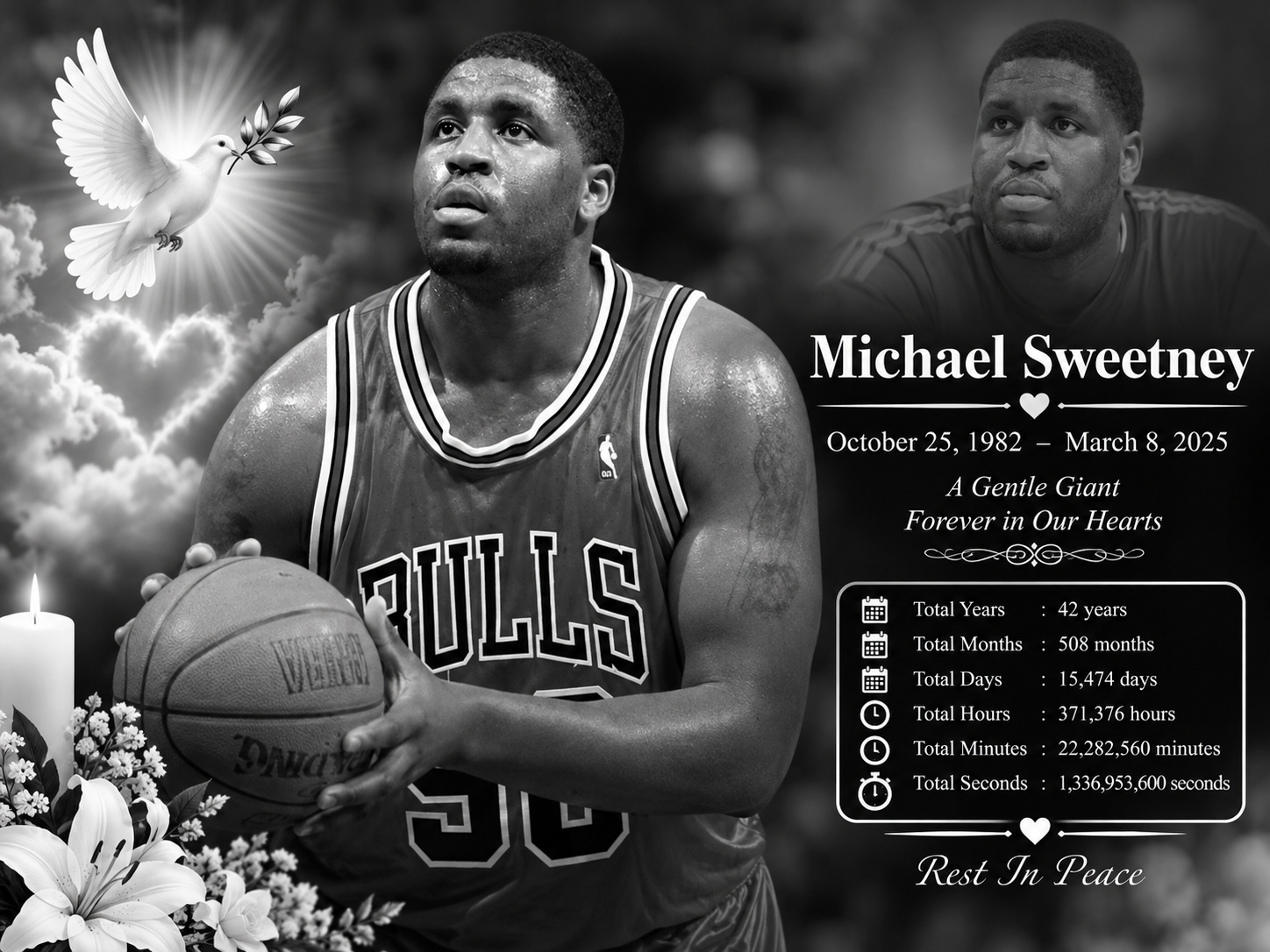
The memorial image associated with the earlier request does not change that fact. The image identifies another person, Michael Sweeney, with different dates and therefore cannot be used as evidence about Manning.
That correction matters because the entire direction of Manning’s story depends on the truth that she continued living.
Her biography is not an obituary.
It is not a memorial account of a person who died in 2001.
It is the story of a woman who survived and then spent the next twenty-five years living with what survival required.
The difference is profound.
A death story ends by explaining what was lost.
Manning’s story asks what happened because she lived.
The answer includes a family.
A book.
A career transformation.
Public speaking.
Healthcare study.
Narrative work.
Advocacy.
Memory.
Pain.
Leadership.
And continued work.
There is no single sentence capable of summarizing all of that.
Perhaps that is appropriate.
Manning’s own professional focus on narrative suggests that people cannot always be reduced to one defining statement.
A story needs context.
It needs chronology.
It needs different voices.
It needs room for contradiction.
It needs space for what remains unresolved.
Her life contains all of those elements.
She survived a catastrophe and remained changed by it.
She built a new career without becoming a different person entirely.
She remembered people who died while continuing to build a future.
She acknowledged pain while continuing to work.
She became publicly known for September 11 while insisting that September 11 was not the whole of her identity.
The tension between those realities is not a weakness in the story.
It is the story.
Twenty-five years after the attack, the world could still describe Manning through what happened to her in the North Tower.
But she could also describe herself through what she had done afterward.
That difference between being described and describing oneself became one of the deepest threads running through her life.
As a patient, others had to speak for her.
As a survivor, journalists and audiences wanted to hear from her.
As an author, she took control of the written account.
As a healthcare professional, she turned toward helping other people find their own voices.
The movement was gradual, but unmistakable.
The person who once could not tell her own story eventually devoted professional attention to the importance of listening.
That is where the long chronology comes together.
The Wall Street career explains who she was before the attack.
The fire explains why her life changed.
The hospital explains the scale of the survival.
The rehabilitation explains the work required afterward.
Her family explains what she was returning to.
Her memoir explains her own account.
Her public speaking explains how that account reached others.
Narrative medicine explains how experience became professional knowledge.
Narrative Mindworks explains how that knowledge became ongoing work.
The twenty-fifth anniversary explains why her story still matters to the public.
And the fact that she remains alive explains why the story cannot honestly be given a final ending.
There is no verified death date to place at the bottom of the page.
There is no final medical event that closes the biography.
There is no reason to pretend that the life has reached its last chapter.
Instead, there is a woman who continues to live with the consequences of an event that happened a quarter-century ago.
She continues to remember people who did not survive.
She continues to work.
She continues to speak.
She continues to listen.
She continues to live with a body permanently changed by fire.
She continues to exist within a family history that began long before September 11 and continued long afterward.
And she continues to add meaning to a story that began with survival but never ended there.
The deepest continuity is therefore not the fire, the hospital, or even the anniversary.
It is the decision to continue living a life that contains all of them.
Manning cannot return to the morning before the planes struck.
She cannot restore the 658 colleagues who died.
She cannot remove every consequence from her body.
She cannot make the twenty-five years disappear.
But she can carry memory forward.
She can tell the story.
She can help other people tell theirs.
She can remain a mother, author, speaker, professional, advocate, and survivor without allowing any single title to erase the others.
That is where this chapter of her biography ends—not with death, not with a fictional final scene, and not with the suggestion that every wound has healed.
It ends with continuity.
The North Tower is part of her past.
The hospital is part of her past.
The rehabilitation is part of her past.
The losses are part of her past.
The work that followed is part of her present.
And the future remains unwritten.
Twenty-five years after September 11, Lauren Manning was still here.
Still carrying the names of people who were gone.
Still living with the marks left by the fire.
Still connected to the family waiting for her all those years ago.
Still building work around the importance of human stories.
Still refusing to let one terrible morning become the entire definition of a life.
The story that began with survival therefore does not finish by saying that she survived.
It finishes with something more precise.
She survived—and then she lived.
The End
Read more original stories on Feel Every Story.
Before the World Knew Her as a Survivor, Lauren Manning Was Building a Life on Wall Street, Raising a Young Family, and Moving Through Manhattan With Ordinary Ambitions
Part 16 of 16

