
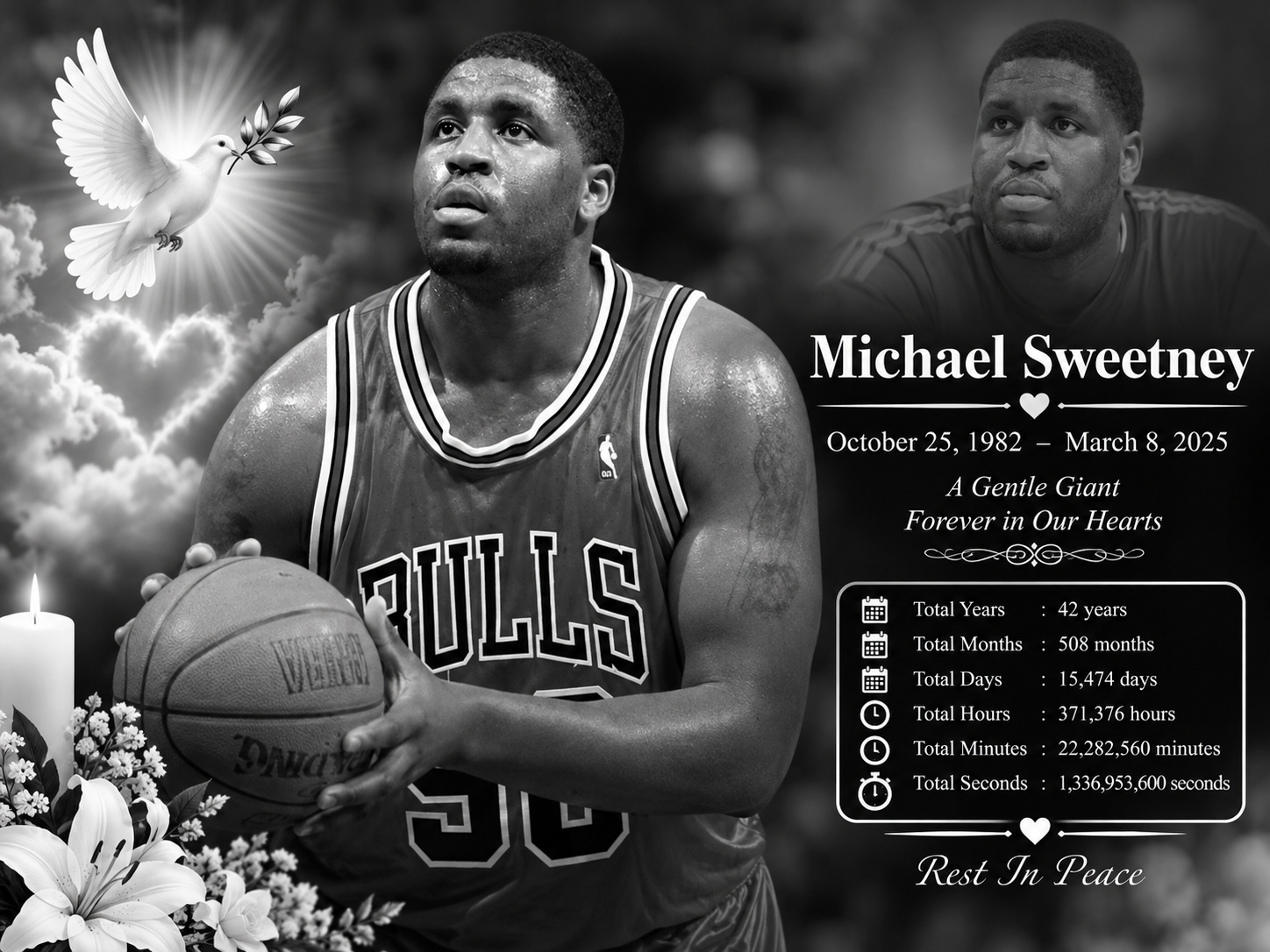
The final chapter of Lauren Manning's story cannot honestly be written as an obituary.
She is alive.
That fact matters because the memorial image that prompted this biography suggests a different story. The image displays the name Michael Sweeney, not Lauren Manning, and therefore does not establish Manning's identity, date of death, or cause of death.
Current reporting provides the opposite conclusion. In September 2026, twenty-five years after the World Trade Center attacks, Manning was interviewed publicly about her recovery and appeared in a Forbes feature discussing survival, grief, motherhood, and life after September 11. ([NY1][1])
There is consequently no verified date of death for Lauren Manning and no verified cause of death to report.
Her biography ends, for now, in the present tense.
That present tense is remarkable only because of how uncertain her future once appeared.
On September 11, 2001, Manning entered the North Tower while running late for work. She had been working at Cantor Fitzgerald, where she was a partner and managing director of the global market data division. She was a wife and the mother of a ten-month-old son. ([NY1][1])
When the first plane struck, the ordinary morning ended.
The fire filled the lobby.
Manning was engulfed.
She could not breathe, scream, or move.
Then she forced herself through the flames and escaped the building.
Outside, she saw the second plane strike the South Tower.
Her body had been burned over more than 82 percent of its surface, and her odds of survival fell below 10 percent. ([NY1][1])
What followed was not one miraculous recovery moment. It was a succession of medical emergencies and incremental gains.
She spent nearly two months in a medically induced coma.
She underwent numerous procedures.
She suffered severe complications.
She eventually awakened.
She learned that 658 Cantor Fitzgerald colleagues had died.
She began rehabilitation.
She stood.
She walked.
She saw her son again.
She left the hospital.
She returned home.
And then she continued recovering.
The chronology is important because it resists the temptation to compress the entire experience into a single inspirational moment. Survival was not one decision followed by an easy ascent. It was a long sequence of decisions, treatments, setbacks, and adaptations.
Her husband Greg's letters documented the early period. Those letters later became “Love, Greg & Lauren,” published in 2002. The book preserved the uncertainty surrounding her condition at a time when the family could not know how the story would end. ([Lauren Manning][2])
Manning eventually created her own account through “Unmeasured Strength.” Published in 2011, the memoir allowed her to describe the experience from her own perspective and to place the attacks within the larger context of her life.
That larger context matters.
Manning was not simply a survivor.
Before September 11, she had already been a professional with a substantial career in finance.
She had studied at Fordham University and earned an MBA.
She had worked at Lehman Brothers.
She had become a partner at Cantor Fitzgerald.
She had been appointed managing director.
She had a husband.
She had a child.
She had a life that existed independently of the attack.
After September 11, she became something else as well.
She became a patient.
Then a rehabilitation survivor.
Then an author.
Then a public speaker.
Then an advocate.
Then a professional working in narrative medicine and healthcare communication.
The transformation did not happen because she discarded her former life. It happened because the old life could no longer contain everything that had happened to her.
Her financial career had taught her about organizations, leadership, information, and decision-making.
Her medical experience taught her what those systems looked like from the patient's side.
Narrative medicine provided a language for connecting the two.
Manning studied narrative medicine at Columbia University, and NY1 reported that she now leads Narrative Mindworks, focused on helping people be heard. ([NY1][1])
That work became part of the legacy of her survival without reducing the survival itself to a business lesson.
The patient needs more than treatment.
The patient also needs to be recognized as a person.
Manning's own experience made that distinction difficult to ignore.
A medical chart could record the percentage of her body that had been burned.
It could record procedures.
It could record complications.
It could record hospital dates.
But none of those entries could fully capture the experience of waking after weeks in a coma and learning that hundreds of colleagues were dead.
None could describe the shock of being unable to hold a ten-month-old child.
None could explain the emotional complexity of surviving when people around you did not.
Those were narrative facts.
They belonged to a different kind of record.
Manning's public work therefore became partly about keeping those human details visible.
She also became involved with Sanctuary for Families, serving on its board. The organization works with survivors of domestic violence and sex trafficking. ([Lauren Manning][2]) Her involvement extended her work beyond the specific history of September 11 toward a broader concern with survivors and the systems that support them.
Her public speaking created another form of continuity.
She could speak to executives about leadership.
She could speak to healthcare professionals about listening.
She could speak to general audiences about surviving adversity.
She could speak to families about grief and recovery.
The same life contained all of those subjects.
By 2021, twenty years after the attacks, Manning was still living with physical consequences. She told CBS New York that she experienced a low level of pain every day and that her skin remained fragile. ([NY1][1])
That detail is crucial to understanding the true outcome.
The body did not simply heal and return to its previous condition.
Manning learned to live with permanent changes.
Recovery was therefore not the restoration of the old life.
It was the construction of a different one.
In 2021, she also returned to the World Trade Center memorial and reflected on the rebuilt site. The memorial preserved the names of those who died, while the surrounding city continued its own process of rebuilding. ([NY1][1])
Manning's life followed a parallel but more complicated process.
She could not rebuild her body exactly as it had been.
She could not bring her colleagues back.
She could not return to September 10, 2001.
She could, however, continue.
That continuation became especially visible in 2026.
At the twenty-fifth anniversary, NY1 returned to Manning's story. She spoke about the morning of the attack, the decision to fight through the flames, the colleagues she lost, the family waiting for her, and the years of living with the consequences. ([NY1][1])
Forbes also featured her in September 2026, describing her as a 9/11 survivor, author, and founder of Narrative Mind Works. The conversation focused on survival, grief, motherhood, and the choices involved in moving forward after adversity. ([Forbes][4])
That is where the biography reaches its true outcome.
Not death.
Not a memorial.
Not a final hospital room.
A living woman twenty-five years after a catastrophe, still carrying physical pain and memory while continuing to work.
The original unanswered question—whether she would survive—was answered long ago.
The more important question became what survival would mean over decades.
Manning's life provides a factual answer through its chronology.
It meant rehabilitation.
It meant motherhood.
It meant remembering colleagues who did not survive.
It meant writing.
It meant public speaking.
It meant building another professional identity.
It meant studying narrative medicine.
It meant working to make patients and other people feel heard.
It meant continuing to live with injuries that remained physically present.
It meant refusing to treat September 11 as the only meaningful fact about her existence.
Her own words, reported by NY1 in 2026, captured that distinction: she emphasized that she had a life before September 11 and a life after it. ([NY1][1])
That is more precise than calling her story a simple tale of triumph.
The day caused permanent damage.
People she loved and worked with died.
Her original career ended.
Her body was permanently altered.
Her family experienced months of separation and uncertainty.
Those facts do not disappear because she continued living.
At the same time, those facts do not erase everything that came afterward.
Her children grew.
Her marriage continued.
Her professional life changed direction.
Her memoir became part of the historical record.
Her public speaking gave audiences access to the survivor's perspective.
Her work in narrative medicine gave her another way to use what she had learned.
Her involvement with survivor-focused organizations extended that work beyond her own experience.
Her story continued reaching new audiences as the anniversary of September 11 returned.
And in 2026, a quarter-century after the attacks, she was still speaking for herself.
That last point may be the simplest way to understand the entire chronology.
In 2001, others had to speak about Lauren Manning because she was unconscious and fighting for her life.
Greg documented her condition.
Doctors described the injuries.
Journalists reported on her recovery.
Later, Manning reclaimed the narrative.
She wrote her memoir.
She gave interviews.
She spoke to audiences.
She built organizations and professional projects.
She described what happened in her own words.
She explained what survival had actually required.
And she corrected the most dangerous misunderstanding of all: that surviving the event meant the story was finished.
It was not finished.
The hospital was not the end.
Rehabilitation was not the end.
The memoir was not the end.
The twentieth anniversary was not the end.
The twenty-fifth anniversary was not the end.
Lauren Manning remains alive as of September 2026, continuing her work and living with the consequences of an event that occurred twenty-five years earlier. ([NY1][1])
So the biography cannot honestly close with a date of death.
It closes with a life still unfolding.
The image that began this story may show a memorial, but it does not belong to Lauren Manning. Its name and dates identify someone else.
Lauren Manning's verified story has a different ending.
She entered the North Tower on September 11, 2001.
She walked out through fire.
She spent months fighting to remain alive.
She spent years learning how to live in a changed body.
She raised her family.
She wrote her story.
She changed careers.
She turned toward healthcare and narrative.
She continued speaking about the people who did not make it out.
And twenty-five years later, she was still here to tell the story herself.
Click Here to continue read next: PART9: After the Twenty-Fifth Anniversary Passed, Manning’s Story Continued Beyond the Headlines, With Her Work Turning Memory Into a Practical Language for Human Care
Before the World Knew Her as a Survivor, Lauren Manning Was Building a Life on Wall Street, Raising a Young Family, and Moving Through Manhattan With Ordinary Ambitions
Part 8 of 16

