
Twenty-five years after the attacks, Lauren Manning stood in a position that could not have been imagined during the first days of her hospitalization. She was no longer simply the critically injured patient whose survival was uncertain. She was an author, mother, entrepreneur, speaker, and leader in healthcare-related narrative work.
Yet the anniversary inevitably brought the old story back.
The date itself carried enormous weight. September 11 was not only the day Manning nearly died. It was the day 658 of her Cantor Fitzgerald colleagues were killed, the day thousands of families lost loved ones, and the day the World Trade Center became permanently associated with mass death and destruction.
For Manning, the anniversary also returned her to a particular physical memory: entering the North Tower while running late for work.
In her September 2026 NY1 interview, she described the building's lobby filling with an enormous wall of flames after the plane struck the tower. She recalled being unable to breathe, scream, or move before deciding to force her way through the fire. ([NY1][1])
That description was not the account of someone recalling a distant historical event. It came from a survivor who continued to live with the physical consequences of the attack.
Manning suffered burns over 82 percent of her body, and her survival odds fell below 10 percent. She spent almost two months in a medically induced coma and later underwent prolonged rehabilitation. ([NY1][1])
Those numbers explain why her survival became such a prominent part of the public memory of September 11. But Manning herself has repeatedly resisted being reduced to the numbers.
The percentage of burned skin can be measured.
The number of surgeries can be counted.
The number of colleagues lost can be recorded.
But the years after the attack cannot be represented by a single statistic.
They contain marriage, motherhood, professional reinvention, writing, public speaking, advocacy, and the gradual construction of a life that had not existed in the same form before.
The twenty-fifth anniversary therefore became an opportunity to look at the entire chronology.
Before September 11, Manning had already accomplished a great deal. She had grown up in Georgia, attended Glynn Academy, studied at Fordham University, and entered the financial world. She worked at Lehman Brothers before joining Cantor Fitzgerald, where she became a partner and eventually managing director of global market data.
She had a husband and a young son.
She had a professional future.
She had routines.
She had an ordinary relationship with the World Trade Center because it was part of her working life.
Then one morning changed all of it.
The fire forced her into a different kind of life, but it did not erase the person she had been.
That became important when she later began speaking publicly. Her story could not simply be “woman survives terrible burns.” It was also “financial executive becomes patient,” “mother becomes separated from her child,” “wife waits through uncertain treatment,” “colleague survives while hundreds of colleagues die,” and eventually “professional rebuilds a career around a new understanding of communication.”
The complexity mattered.
Her husband Greg's early documentation preserved the uncertainty of the hospital period. His letters later became “Love, Greg & Lauren,” a record of a family trying to understand whether Lauren would survive. ([Lauren Manning][2])
Manning's own memoir, “Unmeasured Strength,” later shifted the narrative into her hands.
The difference was subtle but important.
The early story had been about what doctors were doing to save her.
The later story became about what she did with the life those doctors helped preserve.
She returned to public life.
She spoke.
She wrote.
She worked.
She raised her family.
She studied narrative medicine.
She developed Narrative Mindworks.
She became involved with survivor-focused organizations.
Each step moved the center of gravity farther away from the hospital.
Yet the hospital remained relevant because it had changed the questions she wanted to ask.
One of those questions concerned the way healthcare systems hear patients.
A person in a hospital can be surrounded by experts and still struggle to communicate what the experience actually feels like. Manning had lived through a period when her body was being treated while she herself was unable to participate fully in the conversation.
Her later work in narrative medicine addressed that gap.
NY1 reported in September 2026 that Manning studied narrative medicine at Columbia and now leads Narrative Mindworks, focused on helping people be heard. ([NY1][1])
That work became one of the clearest examples of how her professional life after 2001 differed from the career she had expected before it.
She had once worked with financial data.
Now she worked with human stories.
The change was not simply symbolic. Data can tell a healthcare system how severe an injury is. Narrative can tell the system what that injury means to the person experiencing it.
Manning's own biography contained both forms.
Her medical records could state that more than 82 percent of her body had been burned.
Her life could explain what it meant to survive that injury.
The two kinds of knowledge were not competitors. They answered different questions.
This distinction also influenced how Manning spoke about the people who died.
She did not present survival as a victory over those who were lost. In her September 2026 NY1 interview, she spoke about the 658 Cantor Fitzgerald colleagues who died and described her continued life partly as a way of carrying something forward for those who never had the opportunity to escape. ([NY1][1])
That perspective placed remembrance alongside survival.
The two were not opposites.
She could live and grieve at the same time.
She could rebuild and remember.
She could acknowledge permanent injury without treating herself as permanently defined by injury.
The twentieth anniversary had already demonstrated that tension. In 2021, Manning visited the World Trade Center memorial and spoke about the experience of seeing the rebuilt site. The physical landscape had changed, but the memory of the original towers remained. ([NY1][1])
By 2026, the site had become part of a city that had spent twenty-five years incorporating the attacks into its history.
Manning had spent those same twenty-five years incorporating the attacks into her life.
Those processes were related but not identical.
A city can rebuild a building.
A person cannot rebuild a body in quite the same way.
A memorial can preserve names.
A survivor carries memories in ways that cannot be separated from daily life.
Manning's continuing pain made that difference especially clear. She told CBS New York in 2021 that she lived with ongoing pain and fragile skin. The physical consequences remained even after decades had passed. ([NY1][1])
That is why the word “recovery” needs care when describing her story.
Recovery did not mean the body returned to its pre-2001 condition.
Recovery meant that Manning learned how to live with the body she had.
She also learned how to build relationships, work, parent, write, speak, and lead within that reality.
The twenty-fifth anniversary brought that distinction into public view again.
Forbes featured Manning in September 2026 in a conversation about surviving 9/11, grief, motherhood, and choosing how to move forward after adversity. ([Forbes][4])
The subject was no longer merely the fire.
It was what happened after the fire.
That was the deeper story.
The attack had taken away colleagues, a career path, physical health, and an assumption that ordinary life was secure.
But it had not taken away every possibility.
Manning's later work demonstrated that another professional identity could emerge.
Her family life continued.
Her voice returned.
Her writing became part of the historical record.
Her experience became relevant to healthcare communication.
Her public role expanded.
And her story became one of the many survivor accounts through which later generations could understand September 11 beyond statistics.
Yet there was still one final misconception to correct.
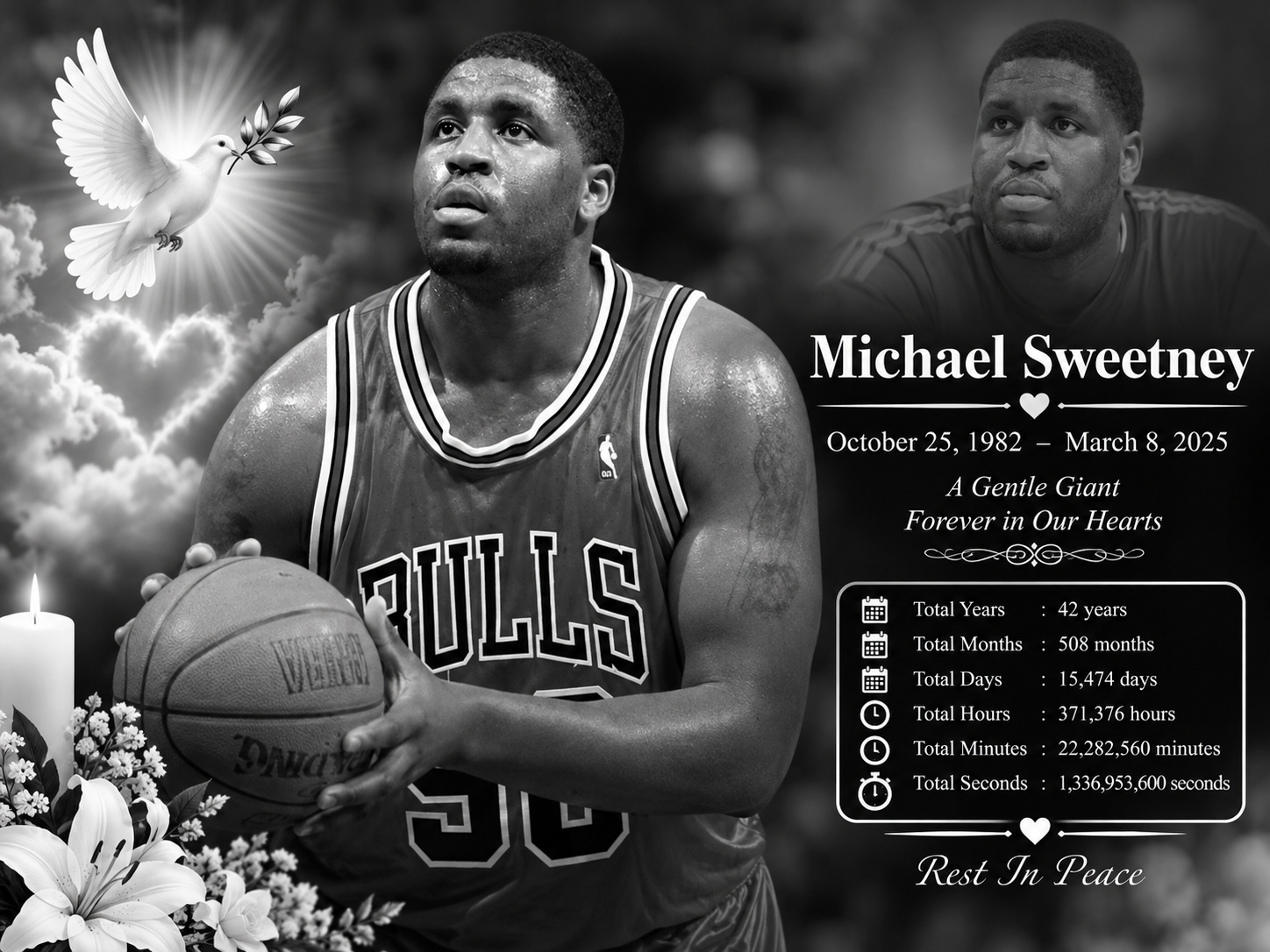
The memorial-style image that prompted this biography does not depict Lauren Manning. It displays the name “Michael Sweeney” and dates that belong to another person, so those details cannot be used to establish Manning's birth or death.
More importantly, the current record shows that Manning is alive in September 2026. NY1 interviewed her on September 8, and Forbes featured her in September at the twenty-fifth-anniversary period. ([NY1][1])
There is therefore no verified date of death or cause of death to provide for Lauren Manning.
The story does not end with a funeral.
It ends with a woman still working, still speaking, still living with the consequences of what happened, and still deciding what the next chapter should contain.
Click Here to continue read next: PART8: Twenty-Five Years Later, Lauren Manning Remains More Than the Survivor of a Catastrophe, Carrying Memory Forward While Building a Life That Refuses to End at September 11
Before the World Knew Her as a Survivor, Lauren Manning Was Building a Life on Wall Street, Raising a Young Family, and Moving Through Manhattan With Ordinary Ambitions
Part 7 of 16

