
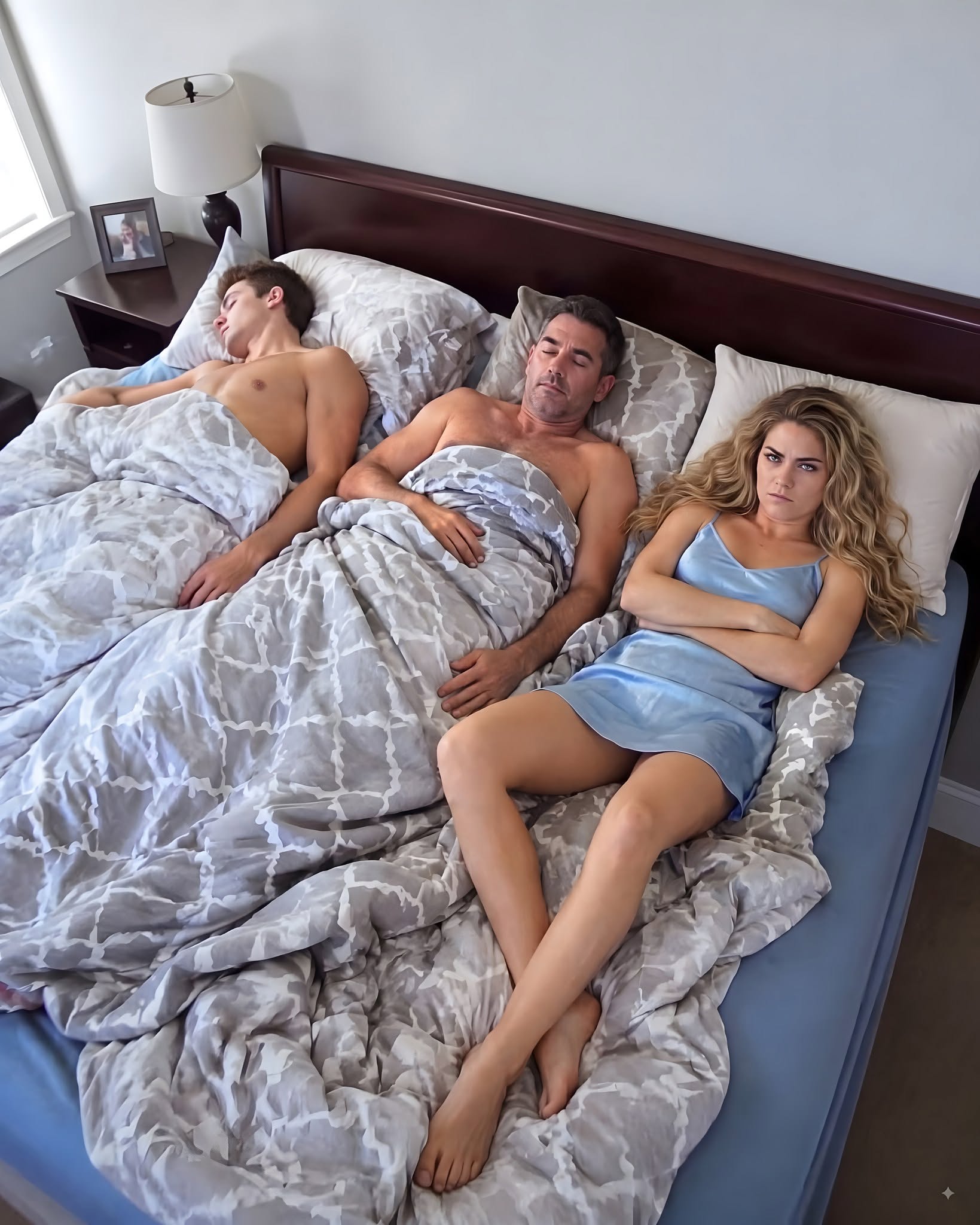
FINAL PART — “Which Two Babies Were Switched?”
“Which two?”
The question sat between us like a bomb.
Rebecca looked at the two birth certificates again.
Mine.
My husband’s.
Same hospital.
Same day.
Eleven minutes apart.
And somehow, my birth date had been altered for years.
My husband whispered:
“This can’t be real.”
Rebecca slid the old photograph closer.
On the back, beneath the names of the three men, someone had written:
THE THREE FAMILIES MUST NEVER KNOW THE CHILDREN WERE SWITCHED.
I stared at the sentence.
“Three families?”
Rebecca nodded.
“That’s what bothered me too.”
My husband looked at her.
“If two babies were switched, why three families?”
Nobody answered.
Then I remembered Elise.
She had copies of the old medical records.
I called her immediately.
She answered on the second ring.
“What happened?”
I told her.
The photograph.
The certificates.
The altered date.
The note.
For several seconds, she was silent.
Then she said:
“Don’t go anywhere.”
My stomach dropped.
“Why?”
“Because I think I know what those three families were.”
Elise arrived forty minutes later carrying a sealed evidence folder.
She sat at our table and looked at the birth certificates.
“Where did you get these?”
“Rebecca’s son found them.”
Elise closed her eyes.
“I was afraid something like this existed.”
My husband leaned forward.
“What do you know?”
She opened the folder.
Inside were old neonatal records.
Yellowed paper.
Handwritten notes.
Hospital bracelets.
Then she placed three names on the table.
Mine.
My husband’s.
And a third baby.
Baby Girl Ward.
I stopped breathing.
“Ward?”
Elise nodded.
“Samuel Ward.”
My biological father.
Or the man we had believed was my biological father.
Rebecca whispered:
“There were three babies.”
“Yes.”
All three had been born within the same hour.
Same hospital.
Same private maternity wing.
And all three families were connected to the men in that photograph.
My father-in-law.
Samuel Ward.
And the man who raised me.
My husband stared at Elise.
“What happened?”
Elise took a slow breath.
“According to these records, the maternity ward lost power for twenty-seven minutes that night.”
I felt cold.
“An outage?”
“Yes.”
“Cameras?”
“Offline.”
“Electronic tags?”
“Not functioning.”
Rebecca whispered:
“Perfect time to switch babies.”
Elise nodded.
“But here’s the problem.”
“What?”
“The handwritten nurse log shows that three infants were moved from the nursery during the outage.”
My husband frowned.
“Moved where?”
“Into a private examination room.”
“By who?”
Elise looked at me.
“Your father-in-law.”
I laughed once.
Of course.
Even before we were old enough to speak, he had already been moving children around.
My husband looked sick.
“Why?”
Elise opened another page.
“Blood typing.”
I stared at her.
“Newborns?”
“Yes.”
“Why?”
“He was already obsessed with inherited illness.”
Daniel’s condition.
The family mutation.
This started before Daniel had even been diagnosed.
Rebecca whispered:
“He was screening babies.”
Elise nodded.
“And one of the babies had something he wanted.”
“What?”
“A rare compatibility profile.”
My stomach twisted.
“For Daniel?”
“Daniel hadn’t been born yet.”
That stopped everyone.
“Then for who?” I asked.
Elise looked at my husband.
“His mother.”
My husband went pale.
“She was sick even then?”
“Yes.”
His mother, Margaret, had inherited the same disorder.
Before Daniel.
Before my husband.
Before any of us knew.
My father-in-law had already started testing blood relatives and connected families.
Then Elise pointed to the third name.
Baby Girl Ward.
“According to the original samples, this infant was the strongest match.”
I stared at the name.
“Where did she go?”
Elise’s eyes filled with sadness.
“That’s the mystery.”
We ordered new DNA testing immediately.
Not private testing.
Not one of my father-in-law’s labs.
A court-supervised laboratory.
Samples from me.
My husband.
Rebecca.
Margaret.
My mother.
Daniel.
And archived samples from Samuel Ward and the man who raised me.
Then we waited.
The longest five days of my life.
On the sixth morning, the detective called.
“We have the results.”
My husband squeezed my hand.
“Tell us.”
The detective took a breath.
“You and your husband are not biologically related.”
I closed my eyes.
That was the first thing I needed to hear.
My husband exhaled so hard he almost laughed.
Then came the rest.
“The woman you know as your mother is your biological mother.”
I stared at the phone.
My mother.
Actually my mother.
After everything, at least that part was real.
“And my father?”
The detective hesitated.
“The man who raised you.”
I stopped.
“What?”
“He is your biological father.”
I sat down.
Samuel Ward was not my father.
The files had been manipulated.
My husband whispered:
“So her childhood was the one thing they didn’t fake?”
The detective said:
“Not exactly.”
My stomach sank.
Of course.
“Then what?”
“Your birth certificate was altered because you were temporarily registered under another identity after the switch.”
I stared at the wall.
“So I was switched.”
“Yes.”
“Then switched back?”
A pause.
“Yes.”
Rebecca whispered:
“What?”
The detective continued.
“The evidence suggests three newborns were deliberately exchanged that night.”
My husband looked at me.
“Three?”
“Yes.”
“And then?”
“By the following afternoon, two had been returned.”
I felt sick.
“Which two?”
“You and your husband.”
Silence.
My husband’s hand tightened around mine.
“We were both switched?”
“Yes.”
“But returned to our biological families.”
“Yes.”
I whispered:
“Then who wasn’t?”
The detective answered quietly.
“Baby Girl Ward.”
Samuel Ward’s daughter had never been returned.
That was the third family.
The missing baby.
The one strong enough to match Margaret.
The child my father-in-law had apparently decided was too medically valuable to give back.
I covered my mouth.
“What happened to her?”
“We believe she was raised under another identity.”
Rebecca stared at me.
“Who?”
The detective said:
“We found a match.”
Nobody moved.
“To who?”
He answered:
“Anna.”
I stopped breathing.
My husband’s first wife.
The woman who had returned on our wedding night.
The woman my father-in-law had tested.
Drugged.
Threatened.
Driven away.
Anna.
I whispered:
“She was the missing baby?”
“Yes.”
Her birth records had been falsified.
She had been raised by a couple who believed they had adopted her legally.
Samuel Ward had spent years being told his daughter had died shortly after birth.
Another fake death certificate.
Another stolen child.
Another life built on someone else’s decision.
My husband sat back.
“Oh God.”
Rebecca closed her eyes.
“That’s why he tested Anna so aggressively.”
Elise nodded.
“He knew exactly who she was.”
I felt sick.
“Did Anna know?”
“No.”
Not yet.
We told her in person.
Anna listened without interrupting.
Then she asked one question.
“Samuel Ward?”
I nodded.
“He was your biological father.”
Anna stared at the floor.
“He died eighteen years ago.”
“Yes.”
She smiled bitterly.
“So I find out I had a father after he’s already gone.”
Nobody knew what to say.
Then Anna looked at my husband.
“Did your father know?”
“Yes.”
“All my life?”
“Yes.”
“And he still let me marry into this family?”
My husband whispered:
“Yes.”
Anna laughed through tears.
“Of course he did.”
She looked at me.
“He never saw people.”
“No.”
“Only uses.”
I nodded.
Anna wiped her face.
Then she asked:
“Did Samuel know I was alive?”
Elise looked down.
“We found letters.”
Anna froze.
“What letters?”
“Samuel never believed the death certificate.”
Her eyes filled instantly.
“He looked for me?”
“For years.”
Elise handed her copies.
Dozens of letters.
Requests to hospitals.
Private investigators.
Police departments.
Adoption agencies.
All asking the same thing:
Where is my daughter?
Anna pressed the papers against her chest and sobbed.
And suddenly, every person in the room understood the real size of what my father-in-law had stolen.
Not blood.
Not just medical choices.
Time.
Fathers from daughters.
Mothers from children.
Brothers from brothers.
Years that could never be returned.
The criminal case grew even larger.
The investigation found evidence that my father-in-law had been manipulating medical records for over thirty years.
But something surprising happened during the trial preparation.
Daniel asked to testify.
His lawyers advised against it.
His doctors advised against the stress.
He insisted.
When the day came, Daniel entered the courtroom slowly.
His father looked at him.
For the first time, I saw something like hope on the old man’s face.
Maybe he thought Daniel would defend him.
After all, everything had supposedly been done to save him.
Daniel sat.
Took the oath.
And looked directly at his father.
The prosecutor asked:
“Did you ever ask your father to test women without their consent?”
“No.”
“Did you ask him to select spouses for genetic compatibility?”
“No.”
“Did you ask him to conceal medical complications?”
“No.”
“Did you ask him to falsify death records?”
“No.”
His father stared at him.
The prosecutor asked one final question.
“Do you believe your father did these things because he loved you?”
Daniel was silent for a long time.
Then he said:
“I believe he told himself that.”
His father’s face changed.
Daniel continued:
“But love without consent becomes control.”
The courtroom went still.
“He spent my whole life saying every terrible thing was necessary because I was sick.”
Daniel’s eyes filled.
“But I would rather have died loved honestly than lived because other people were treated like parts.”
His father looked away.
That was the first time I ever saw him unable to control the room.
Months later, my father-in-law was convicted on multiple charges related to unlawful medical procedures, coercion, falsified records, confinement, and the cover-up surrounding Rachel’s death.
Other cases remained open.
There were too many victims for one trial.
Too many years.
Too many documents.
But the system he had built was gone.
The underground clinic was closed.
The records were seized.
The “tradition” became evidence.
And nobody ever slept between another newly married couple in that family again.
My marriage did not magically heal.
That mattered to me.
After everything, I didn’t want a fairy-tale ending that pretended trauma disappeared because the villain was arrested.
My husband and I stayed separated for almost a year.
We went to counseling separately.
Then together.
I learned how angry I was at him.
Not because he knew the whole plan.
He didn’t.
But because on our wedding night, before any of the darker truth came out, he had still asked me to tolerate something that made me uncomfortable simply because his family called it tradition.
He had to face that.
One evening, he said:
“I kept thinking the biggest mistake I made was not knowing what Dad was doing.”
I looked at him.
“It wasn’t.”
“I know.”
“What was it?”
He answered:
“I saw you were uncomfortable, and I asked you to endure it because confronting my father felt harder.”
For the first time, I believed he understood.
He continued:
“I can’t change that.”
“No.”
“But I can make sure I never do it again.”
I nodded.
That was the beginning.
Not forgiveness.
The beginning.
Anna eventually met some surviving relatives from Samuel Ward’s side of the family.
One elderly aunt recognized her immediately.
She touched Anna’s face and whispered:
“You have his eyes.”
Anna cried for an hour afterward.
Not because blood suddenly created a family.
Because somebody remembered the father she never got to meet.
Rebecca slowly rebuilt a relationship with our mother.
Her son remained completely outside Daniel’s medical care unless and until he was old enough to understand and choose anything for himself.
Daniel found another treatment path through a legitimate hospital.
It wasn’t miraculous.
But it helped.
He started walking farther.
Eating better.
Living.
For the first time, his treatment plan had one rule his father had never respected:
No one else gets harmed to keep Daniel alive.
A year and three months after the wedding, I returned to the hotel.
Alone.
The bridal suite had been renovated.
The underground clinic was sealed as part of the investigation.
Room 317 was empty.
I stood outside the room where everything had begun.
Then my husband appeared at the end of the hallway.
I had invited him.
He stopped a few feet away.
“Hi.”
“Hi.”
He looked nervous.
“Why here?”
I smiled slightly.
“Because this place used to belong to the worst night of my life.”
He waited.
“I don’t want it to.”
I handed him something.
My wedding ring.
He stared at it.
“I thought you were giving it back.”
“I am.”
His face fell.
Then I continued:
“So you can ask me again.”
He looked up.
“What?”
“The first wedding wasn’t fully ours.”
My voice shook.
“Your father manipulated how we met. He hid things from both of us. Our families filled the day with expectations nobody explained.”
I took a breath.
“I want a choice.”
His eyes filled.
“So…”
I smiled.
“Ask me.”
He laughed through tears.
Right there in the hallway, he got down on one knee.
No flowers.
No relatives.
No father.
No ritual.
Just us.
He held out the ring.
“Will you marry me?”
I looked at him for a long time.
Then I said:
“Yes.”
He started crying.
I laughed.
“Don’t make this dramatic.”
“You’re literally making me propose outside the room where my father tried to turn our wedding into a medical experiment.”
“Fair.”
He slipped the ring onto my finger.
Then stood.
“And for the record?”
“What?”
“Nobody is sleeping between us.”
I laughed so hard I cried.
Our second wedding was tiny.
Twenty-two people.
Anna came.
Rebecca came with her son.
Daniel came using a cane.
My mother sat quietly in the front row.
Margaret attended too.
There was no “lucky elder.”
No blessing for a son.
No demand that we produce children.
No one asked what our future family should look like.
At the reception, Daniel tapped his glass.
Everyone turned.
He smiled.
“I’d like to propose a new family tradition.”
I groaned.
Everyone laughed.
Daniel continued:
“Whenever someone says, ‘We’ve always done it this way,’ the youngest person in the room gets to ask one question.”
Rebecca’s son shouted:
“WHY?”
Everyone laughed again.
Daniel pointed at him.
“Exactly.”
Then he raised his glass.
“To asking why.”
We all raised ours.
And I realized that was the tradition worth keeping.
Not obedience.
Not silence.
Not sacrificing yourself to belong.
Questions.
Consent.
Choice.
That night, my husband and I returned home.
Our real wedding night.
No hotel.
No relatives outside the door.
No clock we were afraid to watch.
At 2:59 a.m., we were still awake talking.
Then the clock changed.
3:00.
My husband looked at it.
Then at me.
I raised an eyebrow.
“Should we expect your father to appear with a pillow?”
He laughed.
“No.”
“Good.”
He took my hand.
For a moment, neither of us spoke.
A year earlier, 3 a.m. had meant fear.
Someone else deciding where I should lie.
How I should behave.
What my body might be used for.
Now it was simply a time on a clock.
Nothing more.
My husband squeezed my hand.
“What are you thinking?”
I looked at him.
“That I spent a long time wondering whether our marriage was fake because someone manipulated how it started.”
“And?”
“It wasn’t fake.”
His eyes softened.
“But?”
“But the first version belonged too much to other people.”
I leaned against him.
“This one belongs to us.”
Outside, the world was quiet.
No footsteps.
No locked doors.
No hidden basement waiting beneath us.
And at exactly 3:00 a.m., nothing happened.
That was the most beautiful part.
Nothing happened because nobody had the right to demand that it did.
I closed my eyes.
And for the first time since my wedding night, I slept without fear.


One Comment on “On our wedding night, my father-in-law insisted on sleeping between us because of a family tradition he called the “spirit of the birth of a son.””