
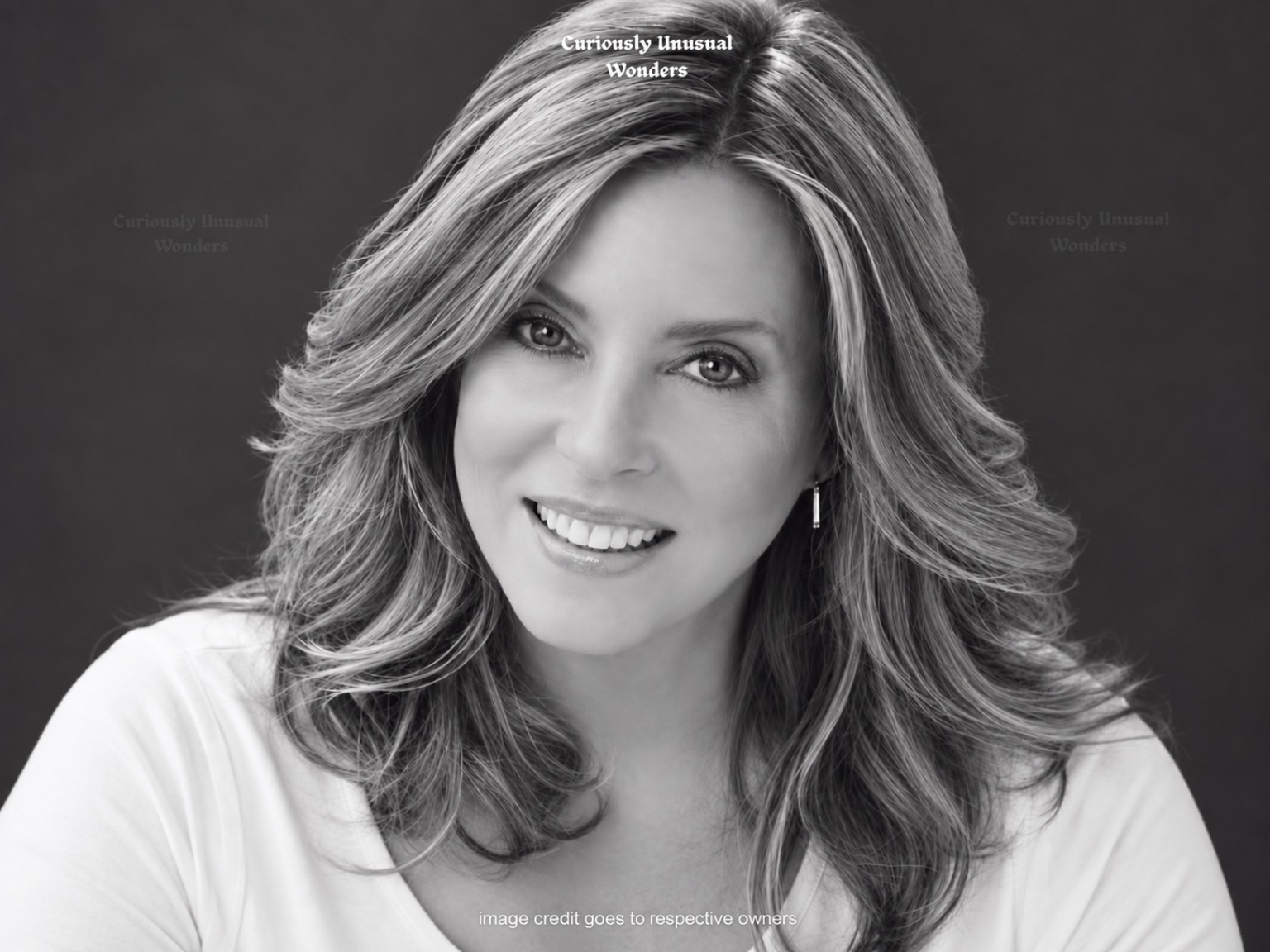
By the time Lauren Manning published Unmeasured Strength in 2011, ten years had passed since the morning that nearly killed her. The distance between September 11, 2001, and 2011 allowed her to tell a story that could not have been understood from the hospital bed alone. She could describe the fire, the surgeries, and the months of rehabilitation, but she could also describe what it meant to live afterward. The book became one of the principal ways her experience reached a wider audience. ([PublishersWeekly.com][14])
The memoir was published by Henry Holt and drew attention because Manning’s experience combined an extraordinary medical recovery with an unusually direct account of the emotional consequences. She had been burned over more than 80 percent of her body and had spent months in intensive medical care. Her recovery was not merely a return to physical movement. It involved adapting to scars, changed routines, altered professional possibilities, and the deaths of hundreds of colleagues. ([Vogue][5])
Manning’s story became especially powerful because she did not present recovery as the disappearance of adversity. She continued to live with the consequences of her injuries. She described finding what she called a “new normal,” a phrase that recognized both the permanence of the changes and the possibility of making ordinary life within them. ([Lauren Manning][11])
Her experience also changed the meaning of home. Returning in March 2002 had been a milestone, but home was not a place where the story ended. It was where the long-term work continued. Her family had to learn new routines. Manning had to balance motherhood with rehabilitation. Greg had to adjust from crisis caregiving to life with a wife whose injuries would remain part of their family’s daily reality.
Their relationship had already been tested by the months of uncertainty. Greg’s emails had documented the period when Lauren could not speak for herself. Those records became a book, Love, Greg & Lauren, which allowed others to see the recovery through the perspective of the husband waiting beside her. The project also reflected how deeply the recovery belonged to both of them, even though Lauren’s body carried the physical injuries. ([CBS News][3])
The family’s story continued to expand as their children grew. Tyler, who had been ten months old on September 11, became old enough to understand more about what had happened to his mother. Manning later spoke about how the attacks and her survival affected him. His childhood unfolded alongside a history he had not personally experienced but could not escape because it had shaped his mother’s life. ([Famous Birthdays][9])
For Manning, motherhood became one of the strongest reasons to keep building forward. Her survival had begun with an urgent desire to return to Greg and Tyler. Later, parenting became evidence that survival was not simply about extending biological life. It was about participating in relationships that continued to develop.
Her public speaking also evolved. In 2002 she addressed people connected to Cantor Fitzgerald and participated in events recognizing the victims and survivors. Later, she appeared on television and spoke with journalists about the long recovery. These appearances introduced audiences to a survivor whose story did not end when the rescue operation ended. ([Kiwix Server][12])
The medical community also continued to regard her recovery as significant. NewYork-Presbyterian described her as a survivor who had sustained extensive burns and undergone a prolonged recovery. Her rehabilitation demonstrated the importance of coordinated burn care and occupational and physical therapy. But Manning herself repeatedly emphasized the practical side of the process: there was always another movement to practice, another challenge to face, another part of ordinary life to reclaim. ([NewYork-Presbyterian][4])
Her injuries also shaped how she understood appearance and identity. Scars became part of her visible self. Compression garments and gloves could serve medical purposes, but they also became part of how she navigated public life. She did not need to pretend that the injuries had never happened. Instead, she learned to live in a body that carried an unmistakable record of the event.
That approach appeared again in the way Manning discussed resilience. Rather than treating resilience as an emotion that appears automatically after tragedy, her story presented it as a repeated practice. A person can feel pain and still participate in life. A person can grieve and still make plans. A person can recognize permanent loss without deciding that everything meaningful has been lost.
In 2013, President Barack Obama referred publicly to Manning when discussing the resilience of Americans after traumatic events. His remarks placed her story within a broader national conversation. Yet Manning’s own experience remained more specific than any public metaphor. She was not simply an example. She was a person who had spent years dealing with concrete consequences that statistics and speeches could not fully capture. ([Wikipedia][1])
In 2016, Manning spoke at the Democratic National Convention, bringing her story to another large public audience. Her appearance demonstrated how far her life had moved from the financial career she had once expected to pursue. She had become a public speaker whose authority came from personal experience rather than a corporate title. ([Kiwix Server][12])
That transition was significant. Before September 11, Manning’s professional identity was tied to financial markets and corporate leadership. Afterward, her work increasingly involved telling the story of survival and recovery. The change was not simply a career pivot. It reflected the fact that her experience had created knowledge she could offer to other people facing disruption.
Her advocacy extended beyond 9/11. Manning has served on the board of Sanctuary for Families, an organization that works with survivors of domestic violence, sex trafficking, and related forms of gender violence. That work connects her experience of rebuilding after trauma with a broader interest in helping people whose lives have been altered by violence. ([Wikipedia][1])
The publication of her memoir also allowed Manning to distinguish survival from mythology. There was nothing effortless about what happened to her. Her recovery included pain, medical complications, uncertainty, and grief. Describing it honestly mattered because people facing their own crises might otherwise imagine that resilience means never being frightened, angry, exhausted, or uncertain.
Manning’s story instead suggests something more practical. A person does not have to know the entire path ahead. The next step can be enough. In the hospital, that next step was sometimes literally four feet from a bed to a chair. Years later, the same principle could apply to work, family, public speaking, and life after trauma.
The phrase “new normal” became especially useful because it did not promise that the past would disappear. It acknowledged that scars could remain while life continued. It allowed Manning to speak about gratitude without denying grief. She could be thankful to be alive while mourning people who had died. Those feelings did not cancel each other.
The same complexity appears in her relationship with September 11 itself. She was both survivor and mourner. She survived the physical destruction of the North Tower, but she lost colleagues and friends. She carried memories of the building as both workplace and site of catastrophe. The World Trade Center had been part of the beginning of her professional life and then became the place where that professional world was violently interrupted.
In later interviews, Manning has continued to revisit the morning itself, including the strange moment when she entered the North Tower just as Flight 11 struck. In 2026, twenty-five years after the attacks, she was still discussing the event and the decades of life that followed. Recent coverage described her continuing to reflect on survival, grief, motherhood, and the choices people make after adversity. ([Forbes][15])
That continuing public conversation also clarifies an important point about her biography: Lauren Manning is not a historical figure whose story ended in 2001 or 2011. As of September 2026, credible recent reporting identifies her as alive and still speaking publicly about her experience. Therefore, there is no documented date of death and no cause of death to report. Claims that provide a death date for this Lauren Manning would conflict with current reporting showing her active in 2026. ([Forbes][15])
Her birth date is more complicated. Biographical databases report November 12, 1961, while several major sources identify her simply as having been born in 1961. Because the exact day is not consistently documented by the strongest institutional sources, November 12, 1961 should be treated as a reported date rather than an independently confirmed fact. What is clear is that she was born in 1961 in Essex County, New Jersey, and raised in St. Simons, Georgia. ([Wikipedia][1])
Her accomplishments therefore extend beyond surviving the attacks. She built a successful Wall Street career, became a partner and managing director at Cantor Fitzgerald, survived catastrophic burns that covered roughly 82.5 percent of her body, endured months of intensive medical treatment and rehabilitation, returned home, raised a family, became an author, and used her experience in public speaking and advocacy. Her memoir Unmeasured Strength gave her a lasting platform for explaining the years after September 11. ([Wikipedia][1])
There is also a quieter accomplishment beneath the public story. Manning continued living. That sounds simple only until the details are considered. She had to learn to walk again. She had to adjust to scars. She had to confront the deaths of hundreds of colleagues. She had to parent after a life-threatening injury. She had to enter public spaces where strangers could see the evidence of what happened to her. She had to create a professional identity after losing the career structure she had once known.
Her story also demonstrates why a biography cannot end at the moment of rescue. Rescue is only the first threshold. The harder questions often come afterward: What does home mean now? What does work mean? How does a family change? How does someone remember people who died while continuing to enjoy being alive? What happens when the world calls someone inspirational while that person still has ordinary difficult days?
Manning’s life provides no simple answer to those questions. Instead, her public record shows a continuing process of adaptation. The woman who entered the North Tower in September 2001 was not the same person who left rehabilitation six months later. The woman who published a memoir in 2011 was not exactly the same person either. Each stage added experience without erasing the previous one.
In that sense, the most important date in her biography is not only September 11, 2001. It is every date afterward on which she chose to participate in life again: the day she took another rehabilitation step, the day she returned home, the day she spoke at a memorial, the day she published her memoir, the day she stood before a national audience, and the days she continued raising her children and speaking about what happened.
As of 2026, Lauren Manning remains alive. There is no date of death and therefore no cause of death. Her documented legacy is instead a continuing one: Wall Street executive, mother, severely injured 9/11 survivor, author, speaker, and advocate. Her story began with a morning that almost ended her life, but the historical record shows that the larger story was everything she did with the years she was given afterward. ([Forbes][15])
[1]: https://en.wikipedia.org/wiki/Lauren_Manning?utm_source=chatgpt.com "Lauren Manning"
[2]: https://ny1.com/nyc/all-boroughs/news/2026/09/08/sept–11-survivor-reflects-on-recorvery-from-extensive-burns–maintaining-resilience?utm_source=chatgpt.com "Sept. 11 survivor reflects on recorvery from extensive burns"
[3]: https://www.cbsnews.com/news/love-greg-lauren/?utm_source=chatgpt.com "'Love, Greg & Lauren' – CBS News"
[4]: https://www.nyp.org/healthmatters/amazing-things-lauren-manning?utm_source=chatgpt.com "Amazing Things: Lauren Manning | Health Matters | NYP"
[5]: https://www.vogue.com/article/lauren-manning-remembers-911-and-everything-that-came-after?utm_source=chatgpt.com "Lauren Manning Remembers 9/11 and Everything That Came After | Vogue"
[6]: https://transcripts.cnn.com/show/lklw/date/2002-10-13/segment/00?utm_source=chatgpt.com "CNN.com – Transcripts"
[7]: https://www.imdb.com/name/nm1774664/bio/?utm_source=chatgpt.com "Lauren Manning – Biography – IMDb"
[8]: https://www.vogue.com/article/lauren-manning-a-will-to-live?utm_source=chatgpt.com "Lauren Manning: A Will to Live | Vogue"
[9]: https://www.famousbirthdays.com/people/lauren-manning.html?utm_source=chatgpt.com "Lauren Manning – Age, Bio, Family | Famous Birthdays"
[10]: https://es.wikipedia.org/wiki/Lauren_Manning?utm_source=chatgpt.com "Lauren Manning"
[11]: https://laurenmanning.com/index.php?Itemid=133&id=13&option=com_sppagebuilder&view=page&utm_source=chatgpt.com "Press"
[12]: https://a.osmarks.net/content/wikipedia_en_all_maxi_2020-08/A/Lauren_Manning?utm_source=chatgpt.com "Lauren Manning"
[13]: https://en.wikipedia.org/wiki/Unmeasured_Strength?utm_source=chatgpt.com "Unmeasured Strength"
[14]: https://www.publishersweekly.com/pw/by-topic/industry-news/publisher-news/article/48415-9-11-again.html?utm_source=chatgpt.com "9/11 Again"
[15]: https://www.forbes.com/video/24c5eca8-5098-443c-89a4-2d33dc1b4f0b/25-years-later-lauren-manning-on-surviving-911-and-choosing-to-live/?utm_source=chatgpt.com "25 Years Later: Lauren Manning on Surviving 9/11 and Choosing to Live"
The End
Read more original stories on Feel Every Story.
Before the Morning That Changed Everything, Lauren Manning Had Built a Life Around Ambition, Family, Wall Street, and a Habit of Moving Forward
Part 4 of 4

