
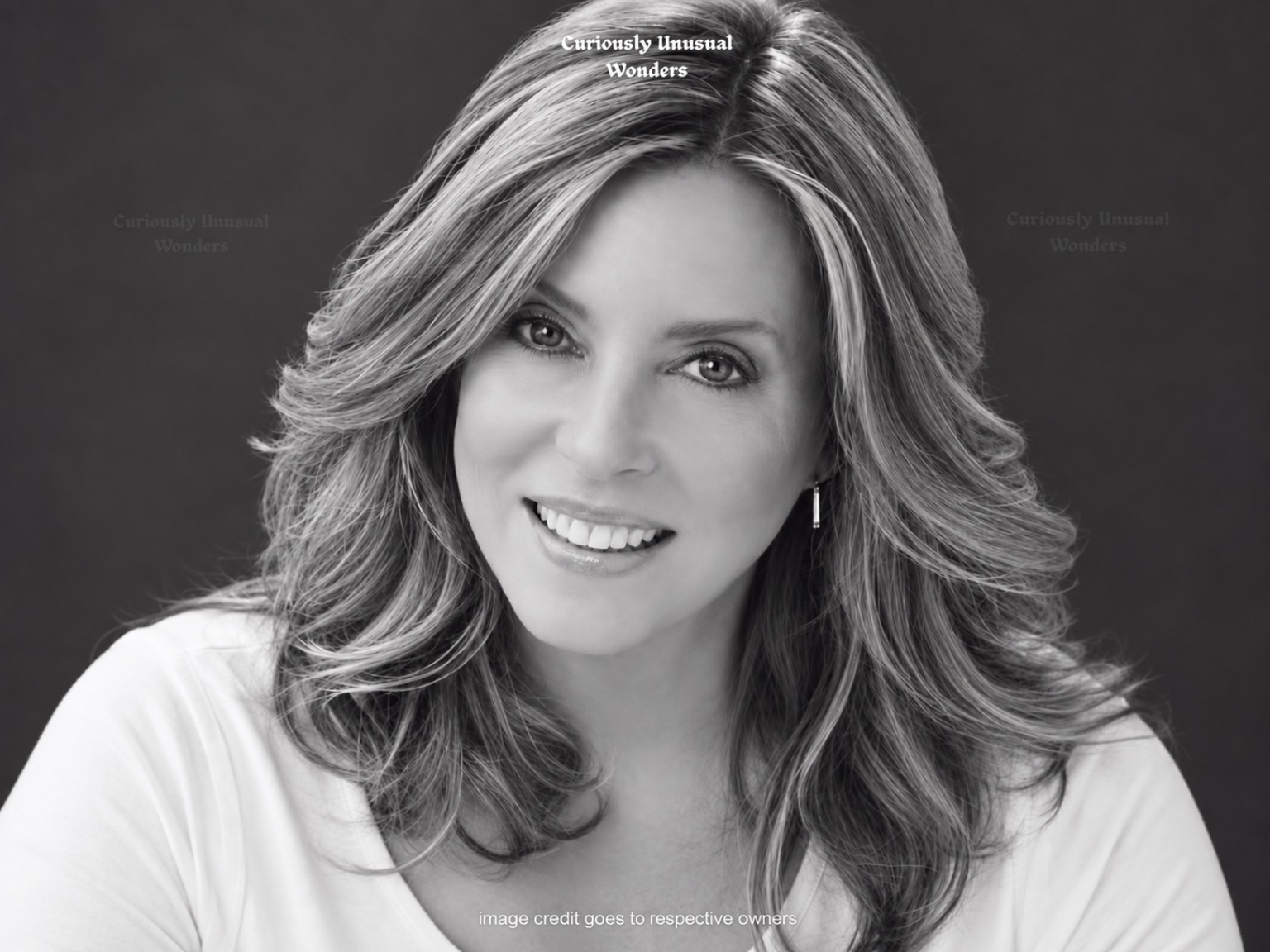
On March 15, 2002, six months and four days after leaving home for work on September 11, Lauren Manning finally returned home. The date was more than a discharge milestone. It marked the first time since the attacks that her daily life would no longer be organized around a hospital. She had survived intensive care, multiple operations, infections, respiratory complications, and months of rehabilitation. Now she had to discover what survival looked like inside an ordinary apartment. ([Vogue][8])
The journey home was emotionally complicated. Manning had spent so long surrounded by nurses, therapists, physicians, and equipment that the absence of those things could feel unfamiliar. At the hospital, help was always nearby. At home, ordinary objects had to be negotiated with. Doors, stairs, clothing, furniture, bathrooms, meals, and movement all became part of the rehabilitation process.
Greg helped her into the car and fastened her seat belt. They drove away from the rehabilitation environment that had defined the previous months. Manning later remembered leaving without looking back. There was relief in returning to her family, but there was also the recognition that she was leaving behind a place where every part of her recovery had been structured. Home would be less controlled. ([Vogue][8])
Her son Tyler was no longer the ten-month-old child she had left behind. He had grown during the six months she had been hospitalized. For a mother, that passage of time was impossible to recover. She could not recreate the months she had missed. What she could do was become present again.
That difference became important throughout Manning’s recovery. She did not describe herself as returning to an untouched life. Instead, she spoke of learning to live with what she called her “new normal.” The phrase acknowledged that the old version of ordinary life was gone. Her task was not to pretend otherwise, but to create an ordinary life that included the changes. ([Lauren Manning][11])
Returning home also meant confronting grief without the constant structure of rehabilitation. While therapy had kept her occupied, it had also postponed some of the emotional weight of the losses surrounding September 11. Now she had time to think about the colleagues who would not be coming home. Cantor Fitzgerald had lost 658 employees. Many of the people who had once filled her professional world were simply absent. ([CBS News][3])
The financial world had once been central to Manning’s identity. She had risen through a demanding industry and reached senior leadership at Cantor Fitzgerald. After the attacks and her injuries, that career could not simply resume. Her body required extensive ongoing rehabilitation, and the physical demands of her recovery reshaped what work could mean.
For many survivors, recovery is described as if there were a finish line. Manning’s experience showed something different. Leaving the hospital did not eliminate pain. It transferred the work into daily life. Rehabilitation continued for many months. She worked through a demanding schedule of physical therapy, reportedly six days a week, for an extended period after returning home. ([Wikipedia][10])
The details of that work were ordinary but consequential. Scar tissue had to be managed. Movement had to be maintained. Strength had to be rebuilt. Hands that had once handled professional tasks without thought now required continued care. Clothing could require special consideration. Compression garments became part of her routine.
Manning also had to relearn how to move through public spaces while living with visible injuries. Before September 11, she had moved through Manhattan as an executive among millions of other people. Afterward, strangers could recognize her injuries before they knew anything about her. That altered the social experience of ordinary activities.
Yet she gradually returned to public life. She attended events and spoke about her experience. In September 2002, she participated in a private memorial service for Cantor Fitzgerald employees. Her presence carried a complicated meaning: she represented survival, but she was also mourning people who had shared the professional world she had lost. ([Kiwix Server][12])
Her public story began to grow because people wanted to understand how someone so severely injured could survive. But Manning’s own account resisted reducing the experience to a simple miracle. Survival had required medicine, family, therapy, persistence, and time. It also involved grief, uncertainty, and the recognition that no amount of determination could restore those who had died.
Her husband’s earlier emails became the foundation for Love, Greg & Lauren, published in 2002. The book allowed readers to follow the recovery from Greg’s perspective and helped preserve the day-by-day record of the period when Lauren could not tell the story herself. Portions of proceeds supported relief efforts connected to the companies and families affected by the attacks. ([CBS News][3])
The attention brought opportunities as well as responsibility. Manning appeared in interviews and spoke to groups about her experience. She met people who had been affected by September 11 in entirely different ways. Some had lost relatives. Others had been injured. Some had simply watched the event unfold and struggled with its meaning.
In those encounters, Manning often emphasized the importance of choice in the face of circumstances that could not be changed. That idea later became central to how she described her recovery. The point was not that a person can choose what happens to them. September 11 was not a choice. The injury was not a choice. But she could choose what to do with the life that remained.
Her relationship with Tyler gave that principle a personal dimension. Parenting after catastrophic injury meant finding ways to participate even when physical limitations made ordinary activities more complicated. A child does not measure a parent by medical statistics. Tyler needed his mother present, responsive, and involved.
Manning eventually became a mother of two sons, with her family life continuing after the attacks. Her second son, Jagger, was born later. The growth of her family provided another reminder that the story after September 11 was not frozen in September 2001. Time continued. Children grew. Relationships changed. New responsibilities appeared. ([Famous Birthdays][9])
The public image of Manning also evolved. Initially, she was known primarily as the severely injured woman who had survived the World Trade Center. Later, she became an author and speaker who could describe both the attack and the long aftermath. Her memoir, Unmeasured Strength, published in 2011 by Henry Holt, expanded that account into a detailed first-person narrative. ([Wikipedia][13])
The title of that memoir captured an important idea in her story. Strength was not something that could be measured only by the number of operations survived or the percentage of burns treated. It could also be found in less visible actions: returning to therapy after a difficult day, tolerating another procedure, entering public life again, parenting, working, grieving, and accepting a changed body.
In the years leading to the memoir, Manning’s story continued to receive national attention. Interviews revisited September 11, but Manning increasingly talked about what came afterward. Ten years after the attacks, she was not simply remembering a morning in 2001. She was describing a decade of adapting to consequences that had never completely disappeared. ([Vogue][5])
The distinction between remembering and living became increasingly important. A historical event has a date. A survivor’s life does not. For Manning, September 11 was a permanent reference point, but it was not the only event that defined her. Her family, work, writing, advocacy, and continued rehabilitation all became part of the larger story.
In 2011, the publication of Unmeasured Strength gave Manning greater control over the narrative. She could explain the attack, but she could also describe the less visible years afterward. Readers could see that recovery was not a dramatic single moment. It was a collection of decisions repeated over time.
Her story also challenged the temptation to divide life neatly into “before” and “after.” The woman before September 11 did not vanish. Her professional discipline, humor, determination, and family commitments remained part of the person who emerged from the hospital. At the same time, the injuries changed her permanently. Both realities could be true.
As the decade progressed, Manning’s public work expanded. She participated in discussions about resilience, recovery, and the experiences of survivors. Her story was cited by public figures, including President Barack Obama, who referenced her in 2013 when speaking about resilience. Manning’s words and experience had moved far beyond the hospital where they had begun. ([Wikipedia][1])
Yet the public recognition did not erase the private consequences. Scars remained. Medical care remained part of life. Memories remained. The names of colleagues remained. And the family that had waited for her had to continue adapting alongside her.
That was perhaps the most important shift in Manning’s biography. Her story was no longer primarily about whether she would survive. It was about how a person constructs a meaningful life when survival itself has changed the terms.
Click Here to continue read next: PART4: Years Later, Lauren Manning Turned a Catastrophic Morning Into a Larger Conversation About Survival, Memory, Family, Work, and Choosing What Comes Next
Before the Morning That Changed Everything, Lauren Manning Had Built a Life Around Ambition, Family, Wall Street, and a Habit of Moving Forward
Part 3 of 4

