
The old letter remained in Sarah's drawer for several months.
Nobody touched it.
Then one Sunday afternoon, Daniel asked about it.
“Do you still have it?”
Sarah knew immediately what he meant.
“Yes.”
“Would you give it to me?”
She hesitated.
“Why?”
“I want to read it again.”
Sarah opened the drawer.
The paper had softened at the folds.
Daniel took it carefully.
He read the first paragraph.
Then another.
His father's handwriting looked smaller than he remembered.
Mia was sitting nearby, sketching.
She glanced over.
“What are you reading?”
“My father's letter.”
“Can I hear it?”
Daniel looked at Sarah.
Sarah looked at Mia.
“You can leave if you don't want to listen,” Daniel said.
“I know.”
Mia put down her pencil.
“Read it.”
Daniel began.
The letter described his father's fear that anger had become normal inside their family. It described Daniel as a child who had learned to anticipate footsteps, voices, and changes in mood. It described the promise Daniel had once made that he would never make his own children feel that way.
Daniel's voice faltered.
Mia listened.
Sarah listened.
Ethan wandered in halfway through and sat quietly.
When Daniel reached the final line, he stopped.
The room remained silent.
Ethan asked, “Did Grandpa write that for Dad?”
“Yes.”
“Was Dad already bad then?”
Daniel answered.
“I was a child then.”
Ethan nodded.
“But you became the person he warned you about.”
Daniel lowered his eyes.
“Yes.”
Mia looked at the letter.
“Why didn't you remember the promise?”
“I did.”
“Then why?”
Daniel struggled for an answer.
“Because remembering something isn't the same as living by it.”
Mia thought about that.
“That's sad.”
“Yes.”
She looked at him.
“Were you scared of Grandpa?”
Daniel nodded.
“Very.”
“Did you hate him?”
“Sometimes.”
“Do you still?”
Daniel took his time.
“I hate what he did. I don't spend my life hating him anymore.”
Mia nodded.
“Why not?”
“Because I don't want my anger toward him to control me.”
She looked at him carefully.
“That sounds like what you learned.”
“It is.”
Daniel folded the letter.
“I wish I'd understood it earlier.”
Mia reached toward the paper.
“Can I keep it for a while?”
Daniel looked surprised.
“If you want.”
She took it.
“I don't want to keep it forever.”
“You don't have to.”
She placed it beside her notebook.
That evening, Mia asked Sarah a difficult question.
“Do you think people can change because they finally understand what they did?”
Sarah answered carefully.
“Understanding helps. But change has to show up in behavior.”
“Like Dad?”
“Yes.”
“Then why do people say sorry if they're not going to change?”
“Sometimes because they want relief.”
Mia frowned.
“Relief from what?”
“Guilt.”
Mia looked toward the kitchen.
“So saying sorry can be for yourself.”
“It can be.”
“Dad's apologies feel different.”
“Why?”
“He doesn't ask me to say anything back.”
Sarah smiled.
“That is an important difference.”
The next week, Daniel attended a family counseling session.
The counselor asked each person to describe what safety meant.
Ethan spoke first.
“Not getting yelled at.”
Sarah said, “Being able to say no.”
Daniel said, “Knowing anger won't become punishment.”
Mia was last.
“Being able to tell the truth.”
The counselor wrote each answer down.
“Those are all important.”
Then she looked at Daniel.
“What happens when someone in the family disagrees with you?”
Daniel answered.
“We talk.”
“And if you're angry?”
“I step away.”
“And if someone doesn't want contact?”
“I respect it.”
The counselor nodded.
Mia looked at her father.
She could hear the words.
But she also remembered the evidence.
That was why they mattered.
One afternoon, Daniel received a call from his brother.
They spoke for several minutes.
Afterward, Daniel looked troubled.
“What happened?” Sarah asked.
“My brother found more old photographs.”
“Of your father?”
“Yes.”
“Do you want to see them?”
“No.”
Sarah waited.
“He said I should forgive Grandpa.”
Daniel shook his head.
“I don't know what forgiveness means for him.”
“You don't have to decide.”
“I know.”
Later, Mia found Daniel outside.
“Are you upset?”
“A little.”
“Because of Grandpa?”
“Yes.”
She sat beside him.
“You don't have to forgive him.”
Daniel looked at her.
“You're right.”
“You told me that.”
He smiled.
“I did.”
“So you should listen to yourself.”
Daniel laughed softly.
“Fair enough.”
The conversation reminded Mia of something.
She went inside and returned with the old letter.
“I think I understand why this matters.”
Daniel looked at her.
“Why?”
“Because Grandpa's letter wasn't only about what happened before.”
“What else?”
“It was about what happens next.”
Daniel nodded.
Mia continued.
“He couldn't change what he did. But he wanted Dad to stop it from happening again.”
“Yes.”
“You didn't.”
Daniel looked down.
“Not at first.”
“But you are now.”
“Yes.”
Mia folded the letter.
“I think maybe that's why I don't want to destroy it.”
Daniel asked, “Why?”
“Because it's proof that someone knew the pattern could end.”
Daniel's eyes filled.
He looked away.
Mia did not comfort him immediately.
She had learned that she did not need to rescue adults from difficult feelings.
After a moment, she touched his arm.
“Are you okay?”
“Yes.”
“Really?”
“Yes.”
“Then I'm going to make tea.”
Daniel laughed.
“Okay.”
The family continued their lives.
School.
Work.
Meals.
Appointments.
Soccer.
Art.
Laundry.
Arguments about chores.
There were no miraculous transformations.
There were habits.
Habits were what held the family together now.
One evening, Daniel lost his temper over a broken cabinet.
He did not shout.
But his voice became sharp.
Mia looked up.
Daniel stopped immediately.
“I'm sorry.”
Mia waited.
Daniel took a breath.
“I was frustrated.”
She nodded.
“Do you need to leave?”
“Yes.”
He walked outside.
When he returned, he repaired the cabinet.
No one praised him.
No one needed to.
Mia later told Sarah, “That's what change looks like.”
Sarah smiled.
“Maybe.”
“I think so.”
The next morning, Mia placed the old letter back in Sarah's drawer.
“I don't need it anymore.”
Sarah asked, “Are you sure?”
“Yes.”
“Why?”
“Because I know what it says now.”
Sarah closed the drawer.
The letter remained there.
Not forgotten.
Not worshipped.
Simply preserved.
A piece of family history that had once been a warning and had eventually become a reminder.
Daniel continued counseling.
He kept the notebook.
Mia continued drawing.
Ethan continued growing.
Sarah continued learning to trust without abandoning caution.
And the family slowly discovered that the strongest evidence of healing was not how rarely the past was mentioned.
It was how little the past dictated what they did next.
The old letter had warned of repetition.
Their lives were becoming evidence of interruption.
Click Here to continue read next: PART11: The Day Mia Finally Asked Daniel to Tell Her Everything Became the Moment Their Family Chose Truth Without Giving the Past Control
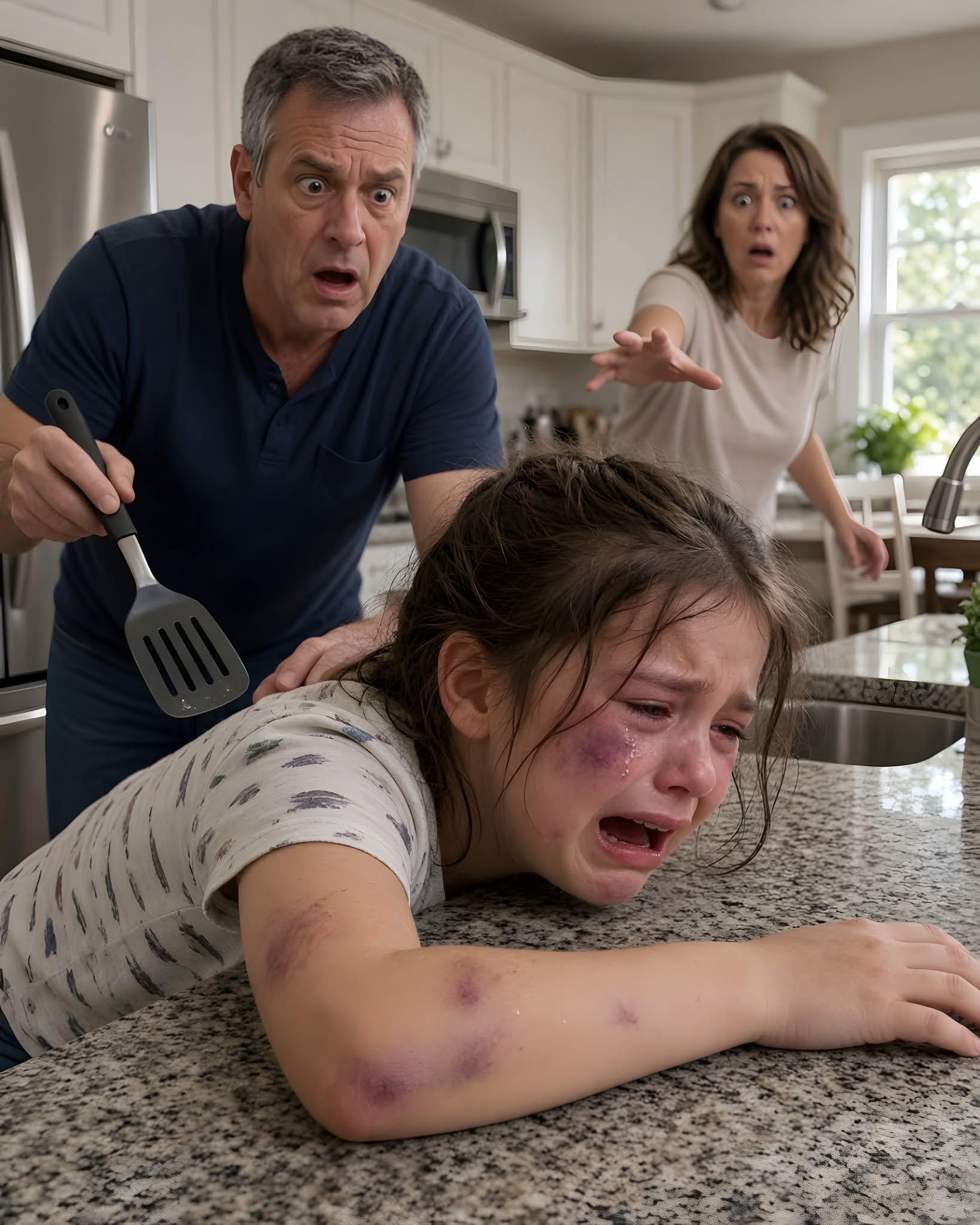
She Heard the Spatula Hit the Counter and Knew Something Had Changed Before Anyone Spoke
Part 10 of 16

