
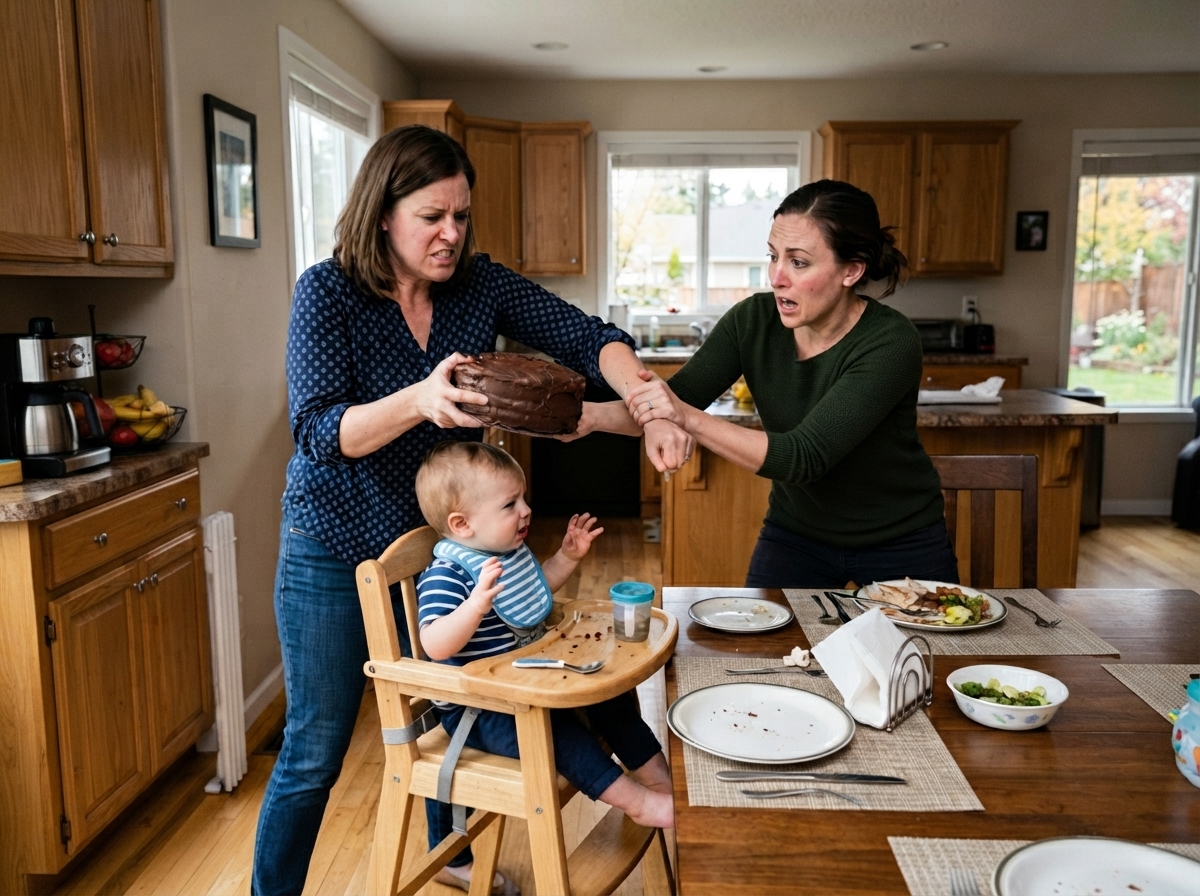
NOTE: This part resolves the legal mystery surrounding the house while examining the deeper emotional question of why the narrator’s father continued protecting a dangerous man and how that decision affected everyone.
The property dispute ended quietly.
There was no dramatic courtroom victory.
No shouting.
No triumphant speeches.
The legal documents were reviewed, the ownership history was reconstructed, and Lucas's family received the compensation they were entitled to. Our purchase of the house remained valid because we had not known about the earlier fraud.
But emotionally, the matter was not finished.
One question continued to bother me.
Why had my father protected Victor for so long?
We had evidence of fear.
We had evidence of threats.
We had evidence that my father wanted to protect me.
But there had to be more.
People don't maintain a secret for decades simply because they are frightened.
There is usually something else.
My mother knew where we needed to look.
She gave me the key to my father's old study.
“I never opened the bottom drawer.”
“Why?”
“He told me never to.”
I looked at her.
“You kept that promise too?”
“Yes.”
I almost smiled.
“You really were determined to keep every promise except the one that would have told me the truth.”
She winced.
“I know.”
The bottom drawer was locked.
The key fit.
Inside were bank statements, old photographs, and a notebook.
The notebook began twenty-seven years earlier.
My father had written about Victor.
The first entries were business notes.
Then the tone changed.
Victor threatened Lucas's father.
Victor threatened the accountant.
Then he threatened my father.
Finally, he mentioned me.
I turned the page.
My father had written that Victor had followed me home from school.
I was only thirteen.
I remembered nothing.
My father had never told me.
The next entry said he confronted Victor.
Victor warned him that if he went to the police, I would become part of the dispute.
That was the missing piece.
My father had not simply been protecting his reputation.
He believed Victor could reach me.
I continued reading.
My father wrote that he considered reporting everything.
Then he backed away.
He began collecting evidence privately.
That was when the red box appeared.
He intended to preserve proof in case something happened to him.
The documents were not meant to remain hidden forever.
They were meant to be insurance.
But years passed.
Fear became habit.
Habit became silence.
Silence became a system.
My father eventually admitted something in the notebook.
“I keep telling myself I am protecting my daughter. Perhaps I am only protecting myself from the guilt of what might happen if I act.”
I stopped reading.
That sentence changed how I remembered him.
He knew.
He understood that his silence had consequences.
He simply couldn't bear to risk the unknown.
I showed the page to my mother.
She cried.
“He never told me that.”
“He didn't tell anyone.”
We sat together.
For the first time, I felt sorry for him.
Not because his choices were right.
They weren't.
But because I finally understood the fear underneath them.
My father had been given a terrible choice.
Expose Victor and risk escalating the danger.
Or stay silent and allow the corruption to continue.
He chose silence.
It was the wrong choice.
But it was a human one.
The distinction mattered.
I didn't want to turn my father into a hero simply because I understood him.
Understanding was not absolution.
It was context.
The same applied to my mother.
And Emma.
And Lucas.
And even Victor.
People's reasons explained their actions.
They did not erase consequences.
That became the principle we carried forward.
Mia was older now.
She had grown from the baby who had once sat in the middle of the birthday table into a child who asked questions about everything.
She knew something unusual had happened on her birthday years earlier.
She knew there had been a family dispute.
She did not know all the details.
One afternoon, she asked me:
“Mom, why does everyone get quiet when you talk about Grandpa?”
I sat beside her.
“Because Grandpa made some mistakes.”
“Bad ones?”
“Yes.”
“Did he hurt people?”
“Some of his choices hurt people.”
She thought for a moment.
“Was he bad?”
I didn't answer immediately.
Then I said:
“I think people are more complicated than that.”
She frowned.
“How?”
“Someone can love you and still make a terrible decision.”
“Like when I broke your vase?”
I laughed.
“That was not quite the same.”
She smiled.
“But you were angry.”
“Yes.”
“And you still loved me.”
“Always.”
She nodded.
“Then I understand.”
I wasn't sure she did.
But someday she would.
We decided that the family history should be documented properly.
Not as a dramatic story.
As a record.
We created a folder with copies of every verified document.
We wrote explanations beside them.
What was known.
What was uncertain.
What had been proven.
What remained disputed.
Lucas contributed his father's letters.
My mother contributed my father's notebook.
Emma contributed Michael's research.
Even the police provided copies of records that could legally be released.
The result was not a story about heroes and villains.
It was a story about choices.
That distinction made the archive valuable.
Years later, Lucas asked me why I had kept his family involved.
“Because they're part of the truth.”
He smiled.
“My mother thought you'd hate us.”
“I never did.”
“You had every reason.”
“No.”
He looked surprised.
“I was angry at what happened.”
“So was I.”
“But anger isn't ownership.”
He understood.
The house eventually became ordinary again.
We painted the kitchen.
Replaced the cabinets.
Bought a new dining table.
The old birthday table was donated.
I kept the cake stand.
Not because I wanted to remember the fear.
Because I wanted to remember that my son was safe.
That night had taught me that ordinary moments could change without warning.
But it had also taught me that ordinary life could return.
One evening, my husband found me looking through the old photographs.
“You still do that?”
“Sometimes.”
He sat beside me.
“Which one?”
I held up the photograph of my father and Lucas.
“Why did he keep this?”
“Maybe because he wanted to remember what happened.”
“Or maybe because he knew someday we'd need it.”
My husband smiled.
“You always look for clues.”
“Occupational hazard.”
“You don't have an occupation involving clues.”
“I do now.”
He laughed.
Then he looked at the photograph.
“Do you miss him?”
“Yes.”
“Even after everything?”
“Yes.”
That was the truth.
I missed my father.
I missed the version of him I knew as a child.
I missed the man who taught me to ride a bicycle.
The man who helped me with homework.
The man who stayed awake when I was sick.
Those memories didn't disappear because I learned the truth.
But they changed.
I no longer needed to believe he was perfect.
I could love him honestly.
That was freedom.
The final legal letter arrived several months later.
The property dispute was officially closed.
The documents would be preserved.
No further claims were expected.
I read the letter.
Then I placed it beside my father's notebook.
The house was finally ours in every sense.
Not because we had defeated someone.
Because the uncertainty was gone.
My mother visited that weekend.
She walked through the kitchen.
“Do you remember the birthday?”
“Yes.”
“I wish I could erase it.”
I shook my head.
“Don't.”
She looked at me.
“Why?”
“Because if you erase it, you erase what we learned.”
She nodded slowly.
“You're right.”
Emma came too.
We sat around the same kind of table.
There was no cake.
Just coffee.
My son was playing in the living room.
He ran in.
“Mom!”
“What?”
“Can I have a snack?”
Everyone laughed.
The tension broke.
My mother looked at him.
“He has no idea how much changed because of that birthday.”
“No,” I said.
“And maybe that's good.”
“Yes.”
He ran away.
I watched him.
That was when I realized something.
The real victory wasn't that the documents had been found.
It wasn't that Victor had been stopped.
It wasn't even that the property dispute had ended.
It was that my son had no reason to carry our fear.
He could simply be a child.
He could grow up knowing that adults sometimes make mistakes and that families can survive difficult truths.
He would never need to protect us from questions.
He would never need to choose between loyalty and honesty.
That was the inheritance I wanted to give him.
Not money.
Not property.
Not secrets.
Truth.
Click Here to continue read next: PART8: Years After the Birthday That Exposed Everything, My Son Asked One Simple Question That Finally Showed Me What Our Family Had Learned
The Birthday Cake Was Still Warm When My Sister Tried to Take It Away, and the Reason She Gave Me Made Everyone at the Table Go Silent
Part 7 of 8

