
The investigation did not produce a single dramatic document that explained everything.
Instead, the truth emerged gradually.
A date here.
A transaction there.
A signature that did not match.
A document that referred to authority I had never granted.
The pattern became harder to dismiss with every new record.
Evan's business had been struggling.
That much became clear.
The house had value.
That was also clear.
And someone had tried to connect the two.
My property had been treated as though it were available for financial arrangements I had never approved.
The attorney explained that we had to let the process continue.
So we did.
I wanted to confront Evan.
Not because I expected him to confess.
I simply wanted to ask him how he could look at my daughter, his wife, and their child and decide that their home was something he could use for his own financial problems.
But anger wasn't evidence.
We stayed with the evidence.
Delilah found that harder than I did.
She had spent years responding to Evan's moods.
Now she had to learn not to.
When he called, she didn't answer.
When he sent messages designed to make her feel guilty, she showed them to the attorney.
When he talked about Noah needing his father, she stopped defending herself.
One evening, she sat at my kitchen table with her phone turned facedown.
“He keeps saying I ruined everything.”
“You didn't.”
“He says the family would still be together if I had apologized.”
I looked at her.
“Would you want that family back?”
She didn't answer immediately.
Then she shook her head.
“No.”
The word surprised her.
I could see it.
She had expected herself to feel guilty.
Instead, she felt something closer to relief.
“I don't want to go back,” she said.
“Then don't.”
She looked toward the window.
“I thought leaving meant I failed.”
“You didn't leave because you failed.”
“Then why?”
“Because eventually you stopped accepting what was hurting you.”
She was quiet.
Then she smiled.
Not fully.
But enough.
The legal process continued.
The property records confirmed what I already knew: the house remained mine.
The questionable financial documents were formally challenged.
The attorneys requested additional records.
The situation became increasingly uncomfortable for Evan.
His earlier confidence disappeared.
His messages became shorter.
Then they stopped.
Judith stopped contacting Delilah too.
For years, she had been able to make my daughter feel as though every disagreement was her fault.
Now she had no control over the conversation.
There were no arguments to win.
No apologies to demand.
Only records.
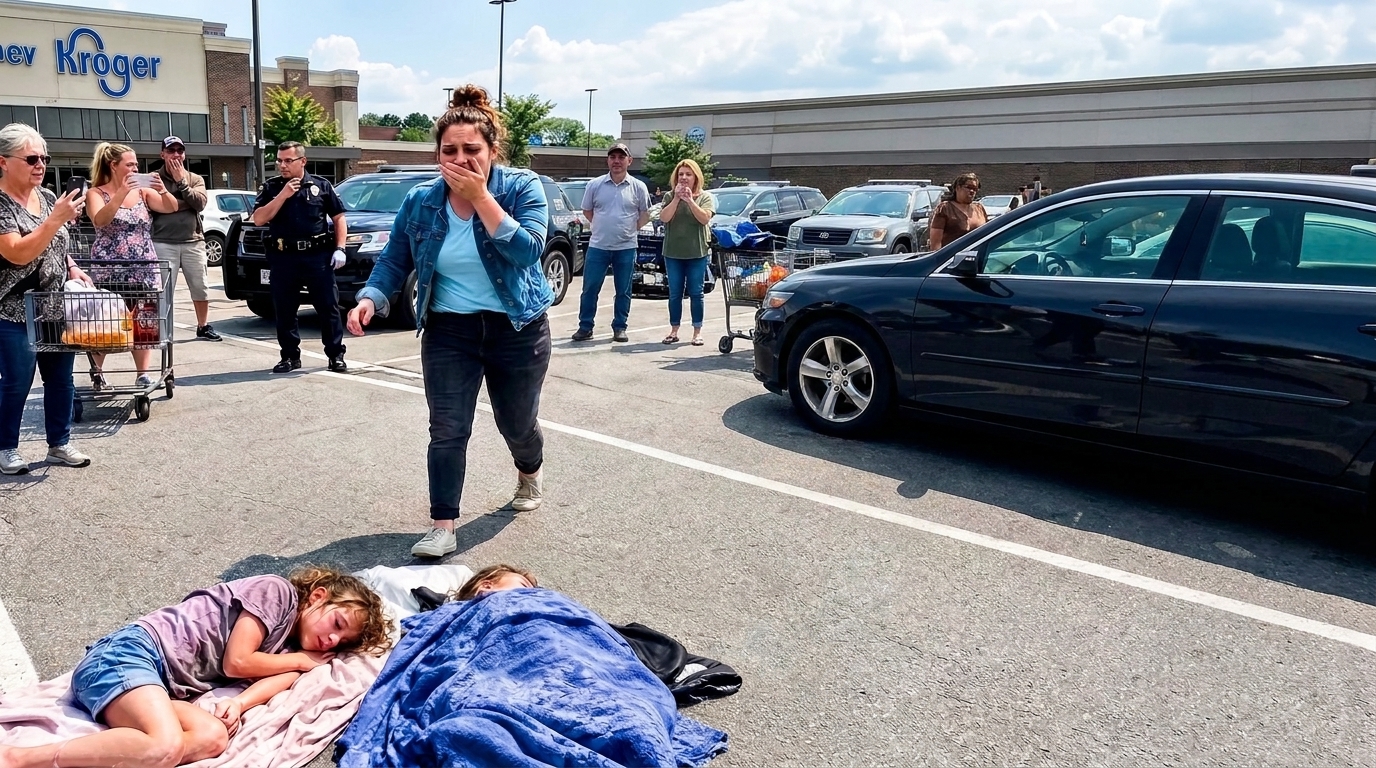
Six months after I found Delilah and Noah in the supermarket parking lot, my daughter rented a small house near mine.
It wasn't large.
It didn't have the polished floors or extra rooms of the house I had originally bought for her.
But the first night she slept there, she called me.
“We're home.”
I smiled.
“Good.”
She laughed softly.
Noah had his own bedroom.
His dinosaurs were everywhere.
One was on the dresser.
Two were beneath the bed.
Another had somehow ended up inside the bathroom cabinet.
The backyard was small, but Noah loved it.
He could run.
He could kick a soccer ball.
He could spill orange juice without worrying that an adult would scream at him.
That mattered more than the size of the house.
Delilah returned to teaching.
The first morning she left for work, she stood by my driveway holding her coffee.
“I feel nervous.”
“You'll be fine.”
“What if I'm not?”
“Then you'll learn.”
She smiled.
“That's your advice?”
“Usually.”
She laughed.
Then she drove away.
Watching her car disappear down the road, I realized how much had changed.
Six months earlier, she had been sleeping behind the wheel of an old blue sedan.
Now she had a job.
A home.
A routine.
And, most importantly, choices.
One afternoon, Delilah and I sat on my porch while Noah played in the yard.
He had arranged several dinosaurs beside the soccer ball.
“Grandma,” he called, “this one is the biggest.”
“I see.”
“And this one is the fastest.”
“I see that too.”
Delilah laughed.
We watched him run across the grass.
After a while, she spoke.
“I don't understand why I stayed so long.”
I didn't answer immediately.
She continued.
“I knew Judith was controlling me.”
She rubbed her hands together.
“I knew Evan always took her side.”
“I knew the house wasn't his.”
She paused.
“But every time I thought about leaving, I convinced myself it wasn't bad enough.”
I looked at her.
“That happens.”
She looked at me.
“I feel embarrassed.”
“You shouldn't.”
“I should have known.”
“You knew something was wrong.”
“But I didn't act.”
“You acted when you could.”
She looked toward Noah.
He was chasing his soccer ball.
“I keep thinking about that parking lot.”
“So do I.”
“I was ashamed.”
“I know.”
“I thought you would be disappointed.”
I reached over and took her hand.
“I was never disappointed in you.”
Her eyes filled.
“I thought you might think I was weak.”
“I thought you were trying to survive.”
She looked down at our hands.
For a while, neither of us spoke.
The legal case was still moving through its proper channels.
The house remained protected.
The questionable transactions had been challenged.
Whatever consequences Evan and Judith eventually faced would come through that process, not through revenge.
That mattered to me.
I didn't want Delilah to build her new life around hatred.
I wanted her to build it around herself.
Noah ran toward us.
“Grandma!”
“Yes?”
“Mom said I can have ice cream.”
Delilah looked at him.
“I did not say that.”
“You said maybe.”
“That means no.”
Noah frowned.
I laughed.
“You heard what you wanted to hear.”
He considered this.
Then he ran back toward the yard.
Delilah shook her head.
“I missed this.”
“What?”
“Normal things.”
I understood.
Normal had become precious.
A child asking for ice cream.
A messy backyard.
A morning at work.
A quiet house.
No one demanding an apology.
No one making her feel guilty for existing.
She looked at me.
“I think I finally understand something.”
“What?”
“Leaving didn't destroy my family.”
She looked toward Noah.
“It gave me the chance to build one that felt safe.”
I squeezed her hand.
“That's right.”
The sun was beginning to drop behind the trees.
Noah's shadow stretched across the grass.
For the first time since I had found my daughter asleep in that parking lot, I felt the tightness in my chest begin to loosen.
But I knew the story wasn't really about a house.
The house had been important.
The documents had been important.
The attempted financial arrangements mattered.
But the deepest damage had happened long before anyone signed a paper.
My daughter had been taught to doubt herself.
She had been taught that keeping peace mattered more than protecting herself.
She had been taught that speaking up made her difficult.
And it had taken a frightened child, a spilled glass of orange juice, and three nights in a parking lot for her to finally stop believing it.
The next morning, I received an update from the attorney.
The questionable transactions connected to the property had been formally challenged.
The house was secure.
The records were preserved.
There would be further legal steps, but the property itself was no longer exposed in the way Evan had apparently intended.
I read the message twice.
Then I called Delilah.
She answered from her classroom during a break.
“Is everything okay?”
“Yes.”
I told her.
She exhaled.
“Good.”
There was no celebration in her voice.
Just relief.
Then she said something I knew she needed to hear.
“I don't want to spend the rest of my life thinking about them.”
“You don't have to.”
“I want to think about Noah.”
“You should.”
“And my students.”
“Yes.”
“And my house.”
I smiled.
“Your house.”
She laughed.
That evening, I drove to her place.
Noah was outside with his dinosaurs.
Delilah was sitting on the front step.
She looked tired from work, but it was the ordinary tiredness of someone who had spent a full day doing something meaningful.
Not the hollow exhaustion I had seen in the parking lot.
I sat beside her.
For a while, we watched Noah play.
Then she rested her head against my shoulder.
“Mom?”
“Yes?”
“Thank you for finding us.”
I looked at her.
“I didn't find you.”
She frowned.
“You found me.”
“No.”
I pointed toward the yard.
“You found your way back.”
She was silent.
Then she smiled.
This time, there was no hesitation in it.
No apology.
No fear that someone would decide whether she deserved to be happy.
Her smile reached her eyes.
And that was the part I wanted to remember.
Not the cold parking lot.
Not the forged signature.
Not Evan's silence.
Not Judith's anger.
I wanted to remember my daughter sitting beside me in the evening light, finally understanding that she did not need anyone's permission to protect herself.
Most people don't leave the moment they are mistreated.
They leave when they finally believe they deserve something better.
Delilah had reached that moment.
And this time, she wasn't going back.
Click Here to continue read next: PART5: The Investigation Kept Opening Doors Evan Had Tried to Keep Closed, and Delilah Finally Saw Why Her Silence Had Been So Important to Him
I Found My Daughter and Grandson Asleep in a Car, and the Fear on Her Face Told Me This Was Far Worse Than a Family Argument
Part 4 of 8

