
By the time six months had passed, my daughter's life looked nothing like it had on the morning I found her.
She had returned to teaching.
She had rented a small house near mine.
Noah had his own bedroom.
There were dinosaurs on the floor, books on the couch, crayons on the kitchen table, and a soccer ball permanently lodged beneath one of the chairs.
The house wasn't perfect.
That was part of what made it feel like home.
Delilah could choose where everything went.
She could decide what Noah ate for breakfast.
She could leave a cup on the counter without someone criticizing the way she had placed it.
She could come home tired from work and sit in silence without wondering whether she had violated somebody else's expectations.
The freedom was quiet.
That was why it mattered.
One Saturday morning, I arrived with groceries.
Noah opened the door.
“Grandma!”
He threw his arms around me.
“Hello, troublemaker.”
“I didn't do anything.”
“That is exactly what troublemakers say.”
He laughed.
Behind him, Delilah called from the kitchen.
“Don't encourage him.”
“I would never.”
“You already are.”
The ordinary exchange made me smile.
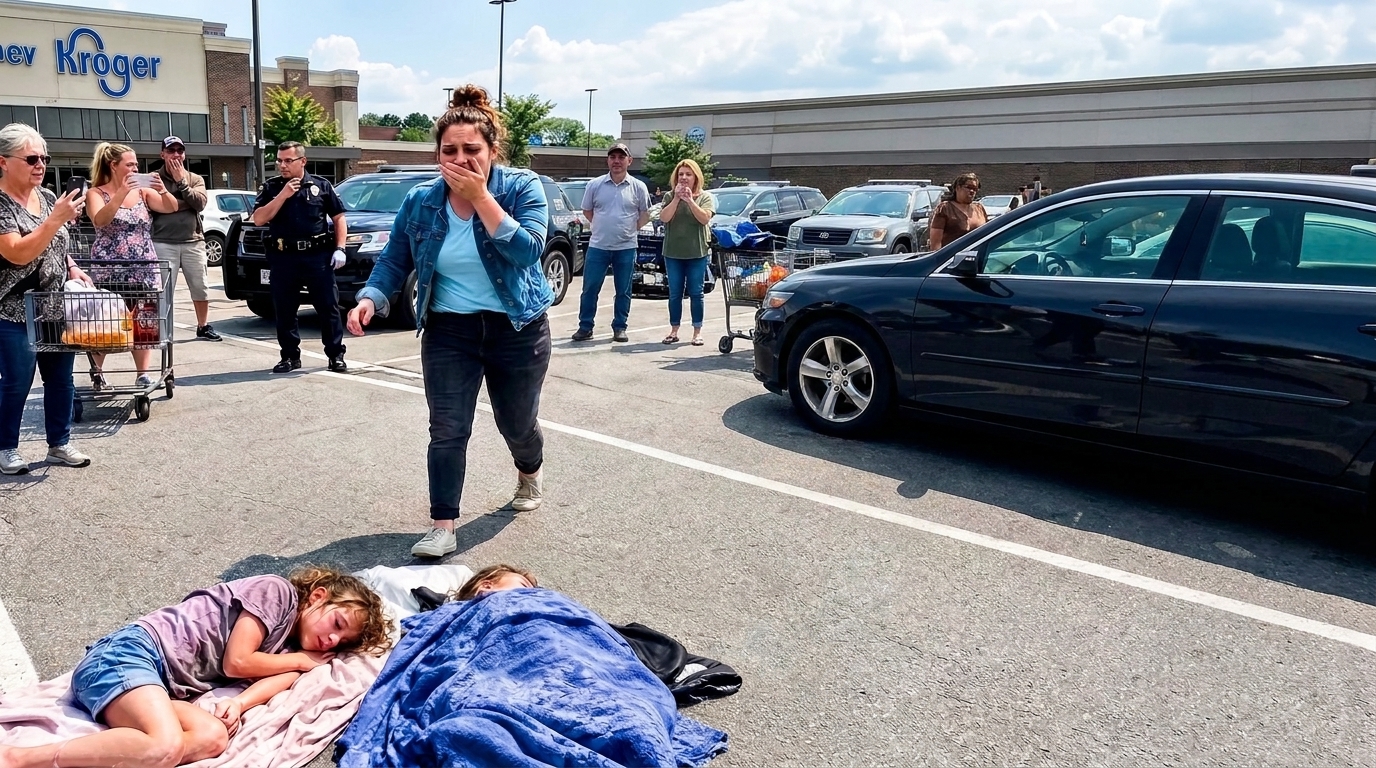
Six months earlier, I had found them sleeping in a car.
Now Noah was arguing with me about whether dinosaurs could play soccer.
It felt like a miracle, but I didn't call it one.
It had taken choices.
Hard ones.
There were still legal matters being handled.
There were still questions about Evan's financial dealings.
There were still things that would take time.
But the immediate danger had passed.
The property remained mine.
The questionable documents had been challenged.
The house had not been lost.
And Delilah was no longer living inside it.
Sometimes I wondered what would have happened if I hadn't stopped at that supermarket.
What if I had chosen another store?
What if I had arrived an hour later?
What if Delilah had decided to drive somewhere else?
Those questions were impossible to answer.
I stopped asking them.
What mattered was that I had found them.
And she had let me help.
That second part mattered more than I could explain.
A person can offer a hand.
They cannot force someone to take it.
Delilah had taken mine.
The investigation continued quietly.
Our attorney explained that the legal system did not move according to our emotions.
There were procedures.
There were records to verify.
There were people who needed to examine evidence before conclusions could be reached.
I accepted that.
So did Delilah.
She had become remarkably patient.
One afternoon, she sat on my porch holding a folder.
“I got another update.”
“What did they say?”
“They confirmed again that the house is still protected.”
I nodded.
She smiled.
“You look relieved.”
“I am.”
She looked toward the street.
“I thought I'd be happier.”
“You are.”
“Then why don't I feel like celebrating?”
“Because you lost something too.”
She looked at me.
“What?”
“The life you thought you were going to have.”
She was quiet.
That was true.
Leaving Evan wasn't only about escaping something bad.
It meant giving up the future she had once imagined.
The marriage.
The house.
The family arrangement.
The idea that if she just tried harder, everything would eventually become peaceful.
She had lost that illusion.
Even when leaving was necessary, loss was still loss.
“I thought I would feel victorious,” she said.
“You don't have to.”
She nodded.
“I mostly feel tired.”
“That makes sense.”
She leaned back.
“I don't hate him.”
I looked at her.
“I don't think I do.”
“You don't need to.”
“I thought I should.”
“No.”
“Why?”
“Because your future doesn't need to be built around what you feel about him.”
She considered that.
“I'd rather not think about him.”
“Then don't.”
She smiled.
“I like that answer.”
That evening, Evan called.
Delilah saw the name.
She didn't panic.
She didn't cry.
She didn't ask me what to do.
She simply let the phone ring.
When it stopped, she put it facedown.
Noah looked up from the floor.
“Who was it?”
“My dad.”
Noah frowned.
He was still learning how relationships could become complicated.
“Are you going to see him?”
“Not tonight.”
“Why?”
Delilah looked at him.
“Because grown-up problems take time.”
Noah accepted that.
Then he returned to his dinosaurs.
I watched my daughter.
She wasn't hiding the truth from him.
But she wasn't burdening him with adult details either.
That balance was something she had learned.
Later that night, she told me that she had finally started sleeping through the night.
“I didn't realize how badly I needed that.”
“I did.”
She looked embarrassed.
“Mom.”
“What?”
“You always knew.”
“I knew you were struggling.”
“I wish I'd listened to you earlier.”
I shook my head.
“You listened when you were ready.”
She smiled.
“That's becoming your favorite sentence.”
“Maybe.”
She laughed.
The next morning, Noah spilled cereal.
Milk ran across the table.
He froze.
I saw it happen.
His eyes immediately searched for Delilah's reaction.
She stood beside him.
For one brief moment, the past seemed to return.
Then she smiled.
“It happens.”
Noah blinked.
“You're not mad?”
“No.”
He looked at the mess.
“Really?”
“Really.”
He picked up a towel.
“I'll help clean it.”
“I'll help.”
They wiped the table together.
No shouting.
No fear.
No punishment.
Just a five-year-old cleaning up a normal accident.
I turned away because my eyes had filled with tears.
Delilah noticed.
She didn't say anything.
She understood.
That small moment mattered.
It showed us that the past did not have to dictate the future.
A spilled drink could simply be a spilled drink.
A mistake could remain a mistake.
A disagreement did not have to become a threat.
A home could be a place where people felt safe enough to make mistakes.
Months earlier, Evan had believed he could use the house to pressure my daughter.
He had apparently believed that ownership could be blurred by years of occupation.
He had apparently believed that my daughter would return because she had nowhere else to go.
He had misjudged her.
He had also misjudged me.
The property records had protected the house.
But documents could not protect my daughter from everything.
She had to learn to protect herself.
That was the real change.
One afternoon, she came to my house after work.
She put her bag down and sighed.
“Long day?”
“Yes.”
“Bad?”
“No.”
She smiled.
“One of my students brought me a drawing.”
“What did she draw?”
“Her family.”
“That sounds nice.”
“It was.”
Delilah sat down.
“She said she wants to be a teacher when she grows up.”
I smiled.
“Maybe she has a good teacher.”
Delilah looked at me.
“I think I do too.”
I laughed.
“You're trying to flatter me.”
“It worked.”
We sat quietly.
Then she said, “Mom, I don't think I ever thanked you properly.”
“For what?”
“For keeping the deed in your name.”
I looked at her.
She smiled sadly.
“I used to think it was just paperwork.”
“It was.”
“But it protected us.”
“It helped.”
She nodded.
“I understand now why you did it.”
I looked toward the window.
Years earlier, when I had kept the deed, I hadn't expected anything like this.
I had simply believed that promises were not enough protection.
Now I understood the wisdom of that decision in a way I never wanted to understand.
The house had become part of a conflict I could never have predicted.
But the papers had preserved one thing.
Choice.
The house was still mine.
Delilah could move forward without carrying the financial consequences of something she had never authorized.
Noah could grow up without knowing the details of the documents that had nearly pulled his home into an adult crisis.
That was enough.
The legal process would continue as it needed to.
Whatever came next would come through the proper channels.
We did not need revenge.
We needed distance.
We needed stability.
We needed time.
And time was finally giving my daughter something she had not had in years.
Room to hear her own thoughts.
Click Here to continue read next: PART7: Sitting Beside My Daughter as She Watched Noah Play, I Realized the Real Thing She Had Lost Was the Fear That Once Kept Her Trapped
I Found My Daughter and Grandson Asleep in a Car, and the Fear on Her Face Told Me This Was Far Worse Than a Family Argument
Part 6 of 8

