
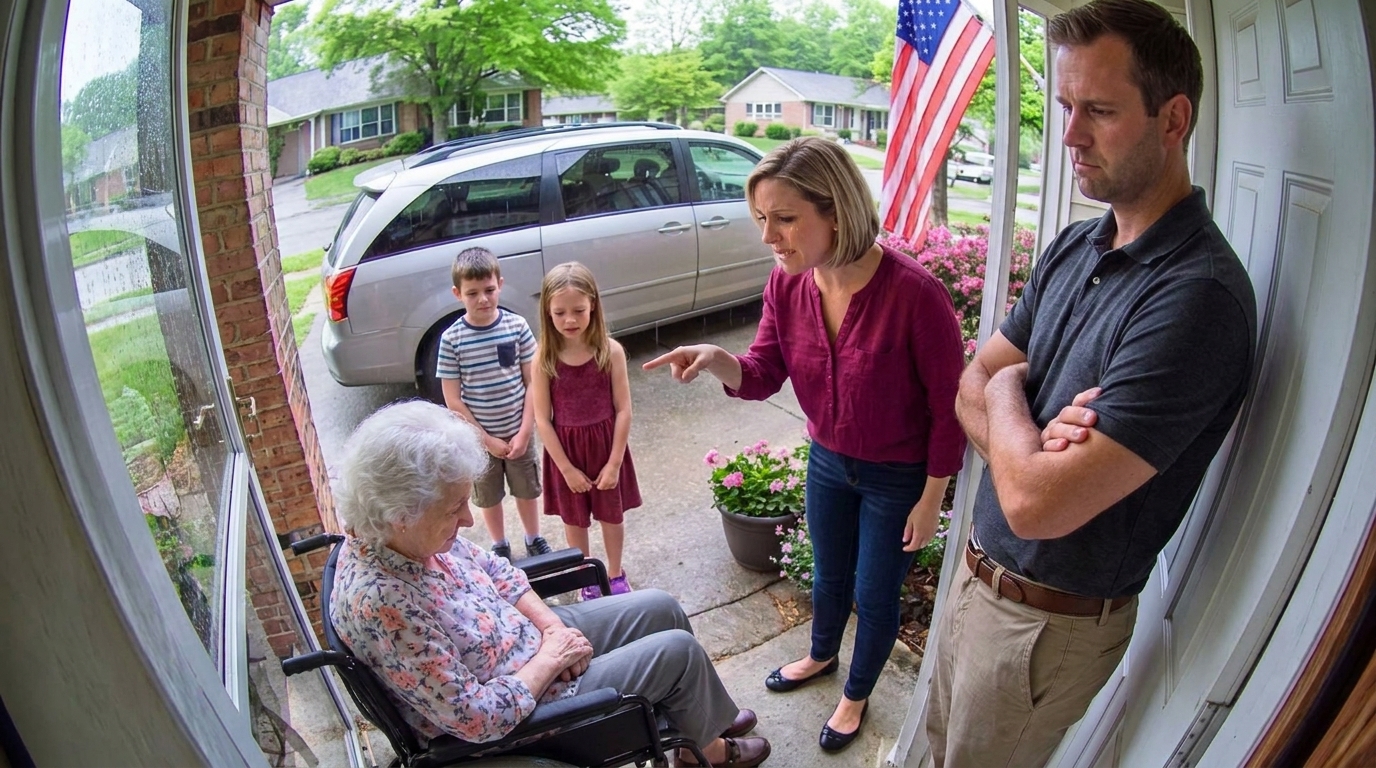
Michael sat in the same living room where he had once asked Helen for money.
This time he did not look around for evidence of wealth.
He looked at his mother.
“I don't know what to say.”
Helen sat opposite him.
“Then don't say anything yet.”
They remained quiet.
Outside, wind moved through the trees.
Michael looked older.
Not physically.
Something in his expression had changed.
The confidence he once wore like armor was gone.
“I was ashamed,” he finally said.
Helen waited.
“I wanted everyone to think I was successful. I thought if I kept borrowing, I could eventually become successful enough to pay everything back.”
“And when that failed?”
“I borrowed again.”
“And when Dad tried to stop you?”
“I lied.”
Helen nodded.
Michael looked at his hands.
“When I thought you had nothing, I told myself I was protecting myself.”
Helen's voice was quiet.
“You were protecting your lifestyle.”
“Yes.”
The admission hurt, but it was honest.
That mattered.
Helen reached for a folder.
She placed it on the table.
Michael looked at it.
“What is that?”
“A copy of the foundation's new family assistance policy.”
He looked confused.
“I don't understand.”
“I created it because of what happened.”
Helen explained that the foundation would provide financial counseling, emergency housing, rehabilitation support, and legal guidance to families facing crises.
“But there is no direct cash assistance to relatives of board members,” she said.
Michael nodded.
“You made sure no one can do what I did.”
“Yes.”
He looked ashamed.
“I deserved that.”
“No,” Helen said. “People deserve boundaries when money becomes dangerous.”
Michael looked at her.
“Is that what Dad was trying to give you?”
Helen smiled.
“I think so.”
They talked for nearly two hours.
For once, Michael did not ask about the estate.
He asked about Robert.
He wanted to know what his father had been like when they were alone.
Helen told him stories.
Some were funny.
Some were embarrassing.
She told him about Robert's terrible singing, his habit of falling asleep while reading, and the way he always pretended not to notice when Helen bought something unnecessary.
Michael laughed.
“I forgot that version of him.”
“You were busy becoming someone else.”
Michael lowered his head.
“I know.”
Before he left, Helen gave him a copy of one photograph.
The same photograph Robert had left in the envelope.
Michael stared at it.
“Where did you find this?”
“Your father left it for me.”
Michael turned it over.
He read the words.
I spent my life trying to protect you. I hope one day you won't need me to.
His eyes filled.
“He knew.”
“What?”
“That I would need to grow up.”
Helen nodded.
“Maybe.”
Michael held the photograph carefully.
“I wish I had listened.”
“So do I.”
He stood.
At the door, he turned.
“Mom?”
“Yes?”
“Thank you for letting me come inside.”
Helen looked at him.
“You're still my son.”
Michael nodded.
“But I understand,” he said, “that being your son doesn't give me ownership of your life.”
Helen smiled.
“That is a good place to start.”
He left.
Helen closed the door gently.
She did not cry.
She simply stood there, listening to his footsteps disappear down the path.
The months that followed were quieter.
Michael rebuilt his life slowly.
He worked ordinary jobs.
He attended financial counseling.
He continued repaying what he could.
Ashley eventually returned with the children.
Her relationship with Michael remained complicated, but she no longer protected his secrets.
Helen kept her distance while remaining available when the children needed her.
There were no grand reunions.
No sudden transformation.
Trust returned in small pieces.
A birthday call.
A visit.
A meal.
An apology followed by changed behavior.
Helen learned to appreciate the difference.
The investigation into the development company eventually concluded.
Several people faced legal consequences.
Michael accepted responsibility for his part.
Daniel lost his license and faced prosecution for his own misconduct.
The remaining assets connected to the scheme were recovered where possible.
Helen did not become involved beyond cooperating with investigators.
She had finally learned that justice did not require revenge.
Robert's estate continued growing.
Helen could have purchased mansions, private aircraft, expensive jewelry, and every luxury she had once denied herself.
She did not.
She kept the house.
She replaced the dangerous bathroom upstairs with an accessible one downstairs.
She bought a comfortable wheelchair.
She repaired the garden.
And she kept the old Honda.
Jonathan asked her once why.
Helen smiled.
“Because my husband drove it until it became part of the family.”
The foundation became larger than Robert had imagined.
Helen added programs for caregivers and emergency assistance for people facing sudden disability.
She also established a small scholarship in Robert's name.
The first recipient was a young woman whose mother had become disabled after an accident.
Helen personally handed her the scholarship.
“You don't have to repay us,” Helen said.
The young woman looked surprised.
“Then what do I do?”
Helen smiled.
“When you are able, help someone else.”
The words felt right.
Not because they were inspirational.
Because they were practical.
One evening, nearly a year after the guardianship petition, Helen sat alone in Robert's office.
The red ledger remained locked away.
She no longer needed to open it.
She knew what it contained.
She knew what it had cost.
She knew what it had taught her.
The money had revealed Michael.
The legal documents had protected her.
The ledger had exposed the truth.
But none of those things had repaired the family.
That required something money could not purchase.
Choice.
Michael had chosen to take responsibility.
Ashley had chosen to stop protecting his secrets.
Helen had chosen to forgive without surrendering her boundaries.
And Robert, even after death, had left her the freedom to make those choices herself.
Helen looked at his photograph.
“You could have told me.”
The room remained silent.
“I would have been angry.”
Still nothing.
“But I would have understood.”
She smiled through her tears.
“Eventually.”
The next morning, Helen moved the photograph from the office to the living room.
She placed it beside the wooden dish containing Robert's glasses.
Then she opened the curtains.
Sunlight crossed the floor.
For years, she had thought the house was a place where memories waited.
Now it felt like a place where life was continuing.
Michael visited that afternoon with the children.
The youngest ran straight toward Helen.
“Grandma!”
Helen laughed as the child wrapped both arms around her.
Michael stood at the doorway.
He no longer hesitated before entering.
But he still waited for her invitation.
Helen noticed.
That small respect meant more to her than any promise.
“Come inside,” she said.
He smiled.
“I brought lunch.”
“What did you bring?”
“Your favorite.”
Helen raised an eyebrow.
“You remembered?”
“I remember more than you think.”
They sat together around the table.
The meal was ordinary.
There were spilled drinks, complaints from the children, and an argument over dessert.
Helen laughed harder than she had in months.
For the first time, the family was together without anyone discussing money.
That was the true ending.
Not wealth.
Not punishment.
Not even forgiveness.
A woman who had arrived at her son's door believing she had nothing left had discovered that her life was worth protecting.
Her husband's hidden fortune had changed her circumstances.
His careful planning had protected her from exploitation.
But the final gift was something simpler.
He had left her the freedom to choose who she would become after he was gone.
Helen never forgot the morning Michael had closed the door.
She did not need to.
That moment had shown her what she needed to know.
And when Michael finally learned to knock without expecting the door to open, she learned something too.
A closed door could be the beginning of a boundary.
A boundary could become the beginning of respect.
And sometimes, when respect had finally been earned, the door could open again.
The End
Read more original stories on Feel Every Story.
When the Door Closed, Helen Realized Her Son Had Become Someone She Could No Longer Reach
Part 8 of 8

