The letter arrived on a Tuesday morning, addressed to me as the parent of a child connected to the school community.
I almost set it aside with the other envelopes until I noticed the name printed beneath the school's crest. The headteacher wanted to arrange a meeting about the incident involving Noah outside the gates several weeks earlier.
I read the letter twice.
The school had reviewed the report submitted by the safeguarding coordinator. The students involved had been spoken to, and the administration was examining its procedures for dealing with harassment near the entrance. The headteacher wanted to discuss possible improvements and asked whether I would be willing to share my observations.
My first reaction was anger.
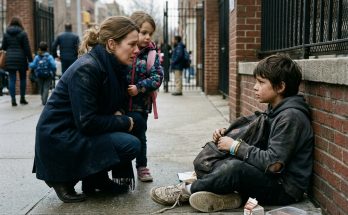
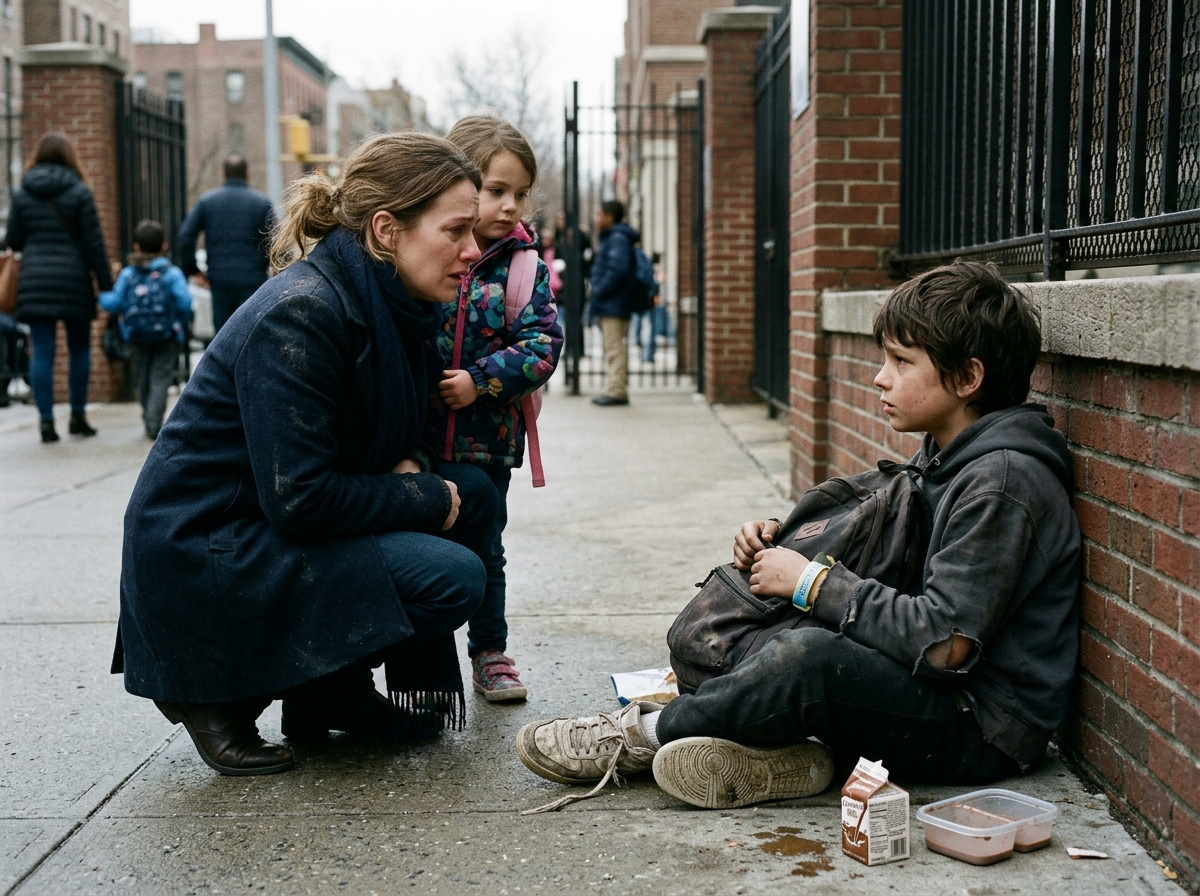
I remembered the carton of chocolate milk hitting the pavement, the students laughing, and Noah gathering his scattered food while trying not to look frightened. I remembered the way he had said that he was used to being treated that way.
Part of me wanted to tell the school exactly what I thought of its failure to intervene sooner. Another part wanted to protect Noah from becoming the center of a discussion he had never asked to join.
I contacted Elena before replying.
She agreed that the school should address the behavior, but she reminded me that Noah's identity and personal history needed to remain private. He was not a public lesson, and his experiences should not be shared without his informed agreement.
“I don't want him sitting in a room while adults talk about him as though he isn't there,” I said.
“Then make that boundary clear,” Elena replied. “You can discuss what you witnessed without revealing details he hasn't agreed to share.”
I wrote back to the headteacher, accepting a meeting on the condition that the conversation focus on school safety and the response to bullying. I would not provide personal information about Noah beyond what was necessary to address the incident.
The meeting took place later that week. The headteacher, Ms. Patel, and two members of the school safeguarding team were present. They listened while I described what I had seen: the students throwing food, the laughter, the phone recording, and the way Noah had reacted when adults approached him.
“I want to understand why nobody stopped it before I arrived,” I said.
The headteacher folded her hands.
“Staff members were not aware of the situation until it had already escalated. That does not excuse what happened. We are reviewing supervision around the entrance and how reports of harassment are handled.”
“What about the students who recorded him?”
“They have been spoken to, and their parents have been contacted. We are addressing the incident under our behavior policy.”
I looked at Ms. Patel.
“Will Noah be expected to meet them?”
“No,” she said immediately. “He will not be required to participate in a meeting or reconciliation process. Any contact would need to be considered carefully, and his wishes would matter.”
That answer eased some of my concern.
I explained that the incident had shown how easily a child could become isolated in a crowded public place. The students had felt protected by their numbers, while Noah had been alone and visibly vulnerable. It was not enough to punish individual behavior after the fact. The school needed a way for students to report bullying, for staff to notice when someone was being targeted, and for children to know that asking for help would not make them the next subject of ridicule.
The headteacher took notes.
“We've been discussing a stronger response to incidents around the gates,” she said. “Would you be willing to review a draft of our proposed guidance?”
“I can offer observations,” I replied. “But I don't want this to become a story about one particular child. The procedures should protect any student who finds themselves in that situation.”
She agreed.
Over the next two weeks, the school developed clearer instructions for reporting harassment, strengthened adult supervision during arrival and dismissal, and reminded students that recording someone being humiliated could worsen the harm. The school also arranged an age-appropriate session about bullying and bystander behavior, without naming Noah or describing his circumstances.
I attended the final planning meeting and asked whether students would be encouraged to seek help without being pressured to confront the person who had hurt them.
“Yes,” Ms. Patel said. “We want students to know that they can speak to an adult privately. They don't have to prove their courage by confronting someone alone.”
I left the meeting feeling that something useful had come from the incident. It did not undo what Noah had experienced, and I would not pretend that a revised policy could erase the memory of being surrounded and mocked. But the school had taken responsibility for improving its response rather than treating the incident as an unfortunate misunderstanding.
When I mentioned the meeting to Noah, I kept the explanation brief.
“The school is changing some of its rules about bullying,” I told him. “I described what I saw, but I didn't share your private history.”
He looked up from his sketchbook.
“Did you tell them about the bracelet?”
“No.”
“Did you tell them I'm your son?”
“No. That wasn't necessary for the meeting.”
He appeared relieved.
“Good.”
I waited, allowing him to decide whether he wanted to say more.
“Are the boys still there?” he asked eventually.
“I don't know whether they are at the entrance every day. The school has spoken with them and is increasing supervision.”
He frowned.
“What if they see me again?”
“You shouldn't have to deal with them alone. If you feel unsafe, you can move to a public area and ask a trusted adult for help. We can also discuss with Elena what to do if you encounter them again.”
He considered that answer.
“I don't want them knowing where I stay.”
“I won't share that information with them.”
Noah returned to his drawing, his shoulders slightly less tense.
A few days later, the headteacher sent a message asking whether I would speak at a parent meeting about creating a more welcoming school environment. I declined the invitation to speak publicly about the incident. I explained that I could contribute to the school's planning, but I would not use Noah's experience as a personal story for an audience.
The headteacher accepted my decision.
That evening, Sophie asked why I had turned down the invitation.
“Because Noah's story belongs to him,” I explained. “I can help the school make things safer without telling everyone about his life.”
“Even if the story might help other people?”
“Yes. We can talk about bullying without revealing details that someone hasn't agreed to share.”
She thought about that.
“Could I tell my class not to throw food at people?”
I smiled.
“You can certainly tell them that.”
The next morning, Sophie told her teacher that she wanted to help make the playground kinder. Her teacher arranged a small classroom discussion about what students could do when they saw someone being mistreated. Sophie did not mention Noah by name, and she did not describe the bracelet or the circumstances of his birth.
She simply said that if someone was being hurt, it was better to find help than to laugh.
When she told me about the discussion, I felt proud of her. But I was careful not to tell her that she had become responsible for changing other people's behavior. She was seven. She could learn to be kind without carrying the burden of fixing every injustice she encountered.
Noah heard about the classroom discussion during a visit.
“Did she tell them about me?” he asked.
“No,” Sophie answered. “I didn't say your name.”
He looked at her for a moment.
“Thanks.”
She shrugged. “I didn't think you'd want me to.”
He seemed to appreciate that she had considered his wishes.
Later, while they drew together, Noah asked whether the school had changed the way adults watched the entrance.
“Yes,” I said. “They are paying closer attention.”
“Will it stop everything?”
“No system can guarantee that nobody will ever behave badly. But the school can make it harder for bullying to go unnoticed and easier for people to get help.”
He nodded, apparently satisfied with the distinction.
Before leaving, he placed his drawing on the refrigerator beside the first picture he had made of the school entrance. This new picture showed the same pavement, but it included a teacher standing near the gates and several students walking past without throwing anything.
I did not ask whether the picture represented what he hoped would happen or what he believed would happen.
I simply asked whether he wanted it displayed.
“Yes,” he said.
I placed it beside the first drawing.
The two pictures did not erase the original scene. They showed that Noah could return to the place in his mind and imagine something different, without anyone telling him that he should forget what had happened.
That evening, I looked at the drawings while preparing dinner. I had once believed that protecting my son meant finding the perfect explanation for why I had left him. Now I understood that protection also meant guarding his privacy, respecting his choices, and refusing to turn his suffering into something other people could consume without his permission.
Noah had already spent too many years having decisions made around him.
I would not make another one simply because I thought it might produce a good story.
Click here to continue reading: PART 12: The Day My Son Chose His Own Place at the Table, I Finally Understood What Our Family Could Become
The Blue Hospital Bracelet That Made a Mother Stop in the Middle of the Street
Part 11 of 28