
The first morning in my new house, I woke before the alarm and did not know where I was.
For a few seconds, I stared at the pale ceiling, listening to the unfamiliar refrigerator hum from the kitchen. There was no pond outside the window. No long gravel drive. No workshop roof catching the first light. No eleven acres waiting beyond the glass. I reached for my phone automatically, expecting some urgent message from Travis, then stopped.
There was nothing.
I lay still and listened to the quiet.
It was different from the silence in our old house. That silence had always carried expectation. If Travis was away, I wondered whether he would call. If he was home, I wondered what mood I would find when I walked into the kitchen. If an envelope arrived, I wondered whether I was supposed to open it. If he said he had handled something, I wondered whether I should ask what that meant.
This silence asked nothing of me.
I got out of bed.
The kitchen was small enough that I could see the entire room from the doorway. Two cabinets. A narrow counter. A table for four. A window overlooking a strip of lawn that needed mowing. I had laughed when the realtor called the place “cozy.”
Now I liked the word.
There was no financial file cabinet in the spare bedroom because I had no spare bedroom yet. My important papers were in one locked drawer beneath my desk. The deed to the house sat in a folder beside my will. My bank statements arrived in my email. My passwords were stored in a system Travis had once mocked as unnecessary.
I made coffee.
Then I opened my laptop.
The first thing I saw was an email from Evelyn.
Subject: Final Distribution Confirmed.
The sale of the old property had cleared. The six-acre transaction had been completed months earlier, and the remaining proceeds from the final sale of the residence had now been allocated according to the settlement.
I read the figures carefully.
Not because I distrusted Evelyn.
Because I trusted myself now enough to want to understand them.
I opened the spreadsheet she had attached and followed every line.
Legal fees.
Taxes.
Settlement obligations.
Property expenses.
Net proceeds.
My finger moved slowly down the screen.
At the bottom was the amount transferred to my account.
I checked it against the bank statement.
Everything matched.
I closed the laptop.
Then I laughed softly.
The laugh surprised me.
Nothing extraordinary had happened.
No one had called.
No secret had been uncovered.
No confrontation had taken place.
I had simply checked my own numbers and found them correct.
That ordinary act felt like a victory I did not need anyone else to witness.
A week later, Evelyn called.
“Travis's attorney sent a question.”
My stomach tightened.
“What kind?”
“They want clarification concerning the language about future claims against the property.”
“There is no property.”
“There was a property.”
I smiled despite myself.
“Fair point.”
She explained that Travis's business had continued to deal with lenders and that certain old financial documents still referenced the former address. Nothing created a new claim against me, but his attorney wanted written confirmation that the property had been sold and that the proceeds had been handled separately from his business.
“Do I need to do anything?”
“Sign one acknowledgment.”
I read it.
Then I asked two questions.
Evelyn answered both.
I signed.
The difference between that signature and the one on the fraudulent financing document was enormous.
No one had placed it in front of me while watching the clock.
No one had said, “It's just insurance.”
No one had become angry when I asked to read it.
I knew what I was signing.
That mattered.
A month later, I received another letter from Travis.
I almost threw it away.
Instead, I opened it.
He wrote about the old house.
He said he sometimes drove past the road.
He said the new owners had changed the fence.
He mentioned the workshop.
Then he wrote something that made me stop.
I was wrong to think that because I earned more money, I had more authority.
I read the sentence twice.
It was the closest thing to an apology I had ever received from him.
The rest of the letter was less clear.
He wrote that he had believed he was protecting himself. He said he had been afraid the company would fail. He said fear had made him make decisions he would not have made if he had believed we could talk honestly.
I did not know whether that explanation was true.
It might have been.
But understanding why someone did something did not erase what they had done.
I placed the letter in a drawer.
I did not answer.
That decision felt strangely peaceful.
A few days later, Marlene visited.
She brought a lemon cake and immediately criticized my kitchen.
“You have nowhere to put anything.”
“I know.”
“You need shelves.”
“I know.”
“You're smiling.”
“I know.”
She looked around.
“You really like this place.”
“I do.”
She set the cake on the counter.
“Do you miss the farm?”
I thought about it.
“Yes.”
“Do you regret selling it?”
“No.”
She nodded.
That answer seemed to satisfy her.
We ate cake at the little table while rain tapped the window.
Marlene asked whether I had heard anything about Travis's company.
I told her it was still operating.
“Do you feel sorry for him?”
I considered the question.
“I feel sorry that he built a life where he thought fear justified control.”
Marlene nodded slowly.
“That isn't the same thing.”
“No.”
I looked toward the window.
“I don't hate him.”
That was true.
Hatred would have required him to remain important enough to occupy my attention every day.
He no longer did.
A few months later, I started volunteering at a financial-literacy program at the community center.
The invitation had come through someone who knew about my legal experience.
At first, I refused.
Then I changed my mind.
The first class was small.
Six women sat around a folding table with notebooks in front of them. Some were married. Some were divorced. One was newly widowed. One had recently started her first job after staying home with her children for years.
The instructor asked what people wanted to learn.
Budgets.
Credit.
Taxes.
Retirement.
Property ownership.
Passwords.
Emergency savings.
I listened.
Then one woman asked a question.
“What if my husband says I don't need to understand the finances because he handles them?”
The room became very quiet.
I did not tell her what to do.
I told her what I had learned.
Know what accounts exist.
Know whose name is on them.
Keep copies of important documents.
Understand debts.
Understand property titles.
Know where insurance policies are.
Know how to access your own money.
And never sign something you do not understand simply because someone you love becomes impatient when you ask questions.
The woman wrote everything down.
After class, she thanked me.
“You made it sound simple.”
“It isn't always simple.”
She looked worried.
“No.”
“But knowing what is yours to understand makes it less frightening.”
That sentence stayed with me.
I had spent years thinking confidence came from knowing everything.
It didn't.
Sometimes confidence came from knowing what questions to ask.
That evening, I returned home and opened the drawer containing my father's letter.
I read it again.
The paper was worn now.
The ink had faded slightly.
I placed it beside my current house deed.
Two documents.
One from the man who gave me the first home.
One proving I had chosen the second.
I realized I no longer needed either document to tell me who I was.
That was perhaps the greatest change of all.
Click Here to continue read next: PART6: When Travis Asked to Meet One Last Time, I Went Without Anger and Discovered the Conversation Was Not About Money
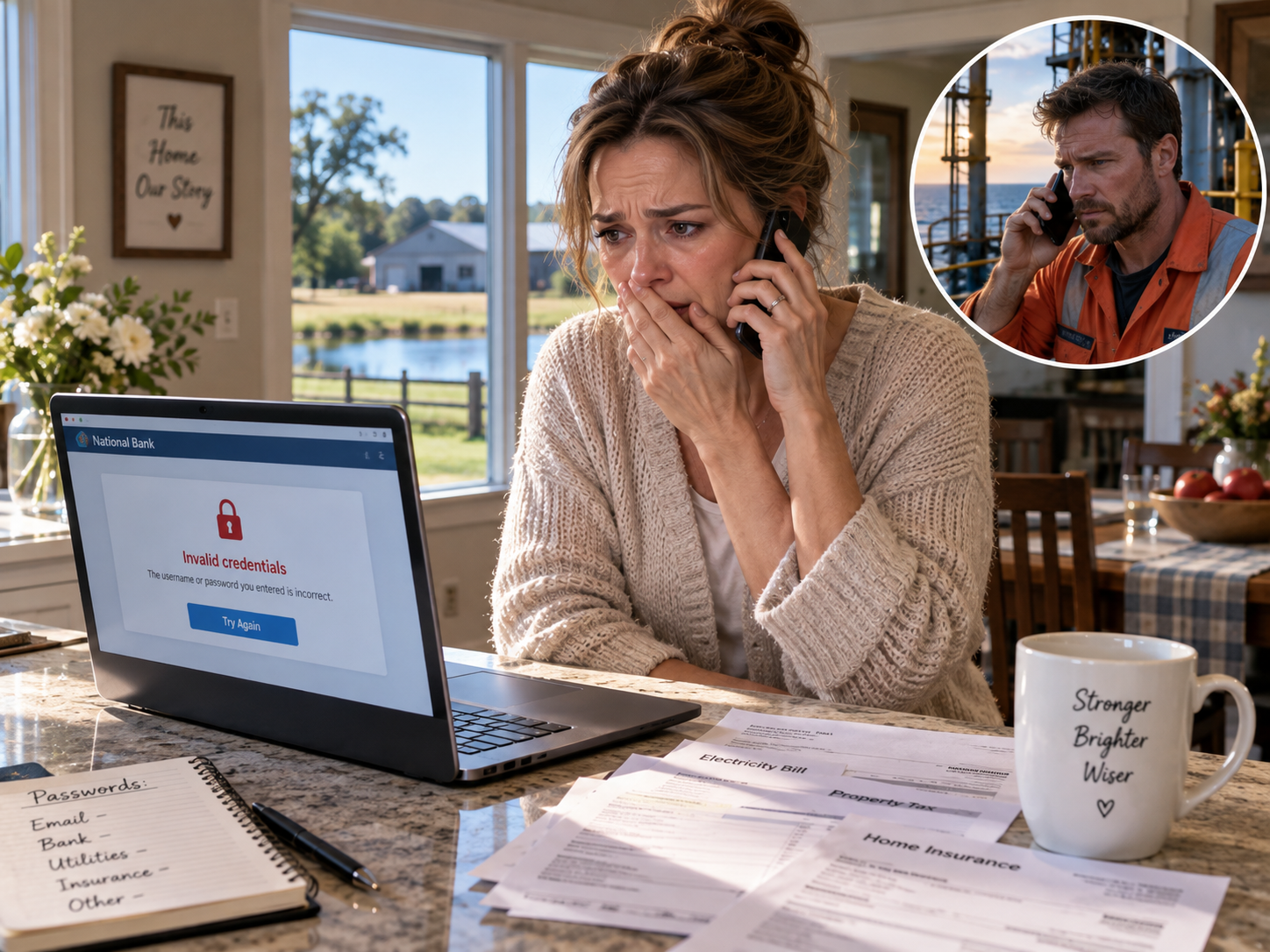
The Morning My Password Failed, I Realized My Husband Had Quietly Moved Our Money and Changed More Than I Knew
Part 5 of 16

