
The answer to the question surrounding Lauren Manning's later life could not be found in one speech or one anniversary. It emerged gradually through the work she chose to do after September 11. Her survival had become internationally known, but the life that followed required a different kind of effort—less dramatic from the outside, more repetitive, and much longer.
Manning's official biography describes her as a former managing director and partner at Cantor Fitzgerald, an author, speaker, entrepreneur, and leader whose work has continued long after the attacks. Her story has been chronicled in major media and in her memoir, “Unmeasured Strength.” ([Lauren Manning][8])
The basic chronology is now well established. Manning was born in 1961 as Lauren Grace-Forshay Pritchard, was raised in Georgia, graduated from Glynn Academy, and later earned an MBA from Fordham University. She began her finance career at Lehman Brothers before joining Cantor Fitzgerald and eventually becoming managing director of its global market data division. ([Wikipedia][2])
On September 11, 2001, she entered the North Tower while heading to work. American Airlines Flight 11 had struck the building, and the resulting fire traveled through the elevator shafts into the lobby. Manning was engulfed in flames and suffered burns over 82.5 percent of her body. ([NY1][1])
She escaped the building and received emergency treatment. Doctors initially gave her a small chance of survival. She spent months in critical care, underwent numerous surgeries, suffered lung collapses and other complications, and remained in a medically induced coma for an extended period. ([Wikipedia][2])
Her husband Greg documented those early months through daily emails to family and friends. The messages later became “Love, Greg & Lauren,” published in 2002. The book captured the uncertainty of a period when the family could not assume that the next medical update would be good news. ([Google Books][3])
Manning eventually woke, began walking, reunited with her son, left the hospital, entered intensive rehabilitation, and returned home. Her physical therapy continued for eighteen months after her return. The recovery was measured not in one dramatic breakthrough but in thousands of repeated movements and adjustments. ([Wikipedia][2])
The public story developed alongside the private one. Manning became known as one of the most seriously injured survivors of the attacks, and journalists followed her recovery. She appeared on television programs and spoke publicly about the experience, gradually becoming the person who could explain not only what happened inside the North Tower but what happened afterward. ([Lauren Manning][6])
In 2011, she published “Unmeasured Strength.” The memoir gave her direct control over the narrative. Instead of allowing her identity to remain fixed at the moment she escaped the building, she could tell the longer story: childhood, education, career, marriage, motherhood, the attack, the medical crisis, and the process of rebuilding. ([Lauren Manning][11])
The book also established a new form of professional work. Manning became a speaker whose subjects included adversity, leadership, courage, determination, and the process of adapting after a life-changing event. Her official speaking materials describe a career built around those themes. ([Lauren Manning][9])
Her public role brought recognition from people who had encountered her story through different channels. Oprah Winfrey, Katie Couric, Hillary Clinton, and others publicly discussed Manning's recovery, while President Barack Obama cited her in a 2013 speech about resilience. ([Lauren Manning][8])
Those public references helped make Manning a recognizable figure, but they did not change the physical reality of her recovery. In 2021, she explained to CBS New York that she still experienced ongoing pain and fragile skin. Her description of recovery emphasized that reaching a new stage did not mean permanently leaving every difficulty behind. ([CBS News][4])
That point became especially important as the anniversaries passed. Twenty years after the attacks, Manning could stand at the memorial and look at a rebuilt World Trade Center site. The buildings had changed, the city had changed, and her own life had changed, but memories remained vivid. She described the experience as containing both sadness and hope. ([CBS News][4])
The twenty-fifth anniversary in 2026 brought another round of attention. NY1 interviewed Manning about her memories and her recovery, while Forbes featured her at its Power Women Summit in Manhattan. The interviews showed that Manning remained active and publicly engaged a quarter-century after the event that had made her known around the world. ([NY1][1])
Her appearance at the Forbes summit was particularly significant because it placed her in a setting far removed from the hospital rooms where her public story had begun. She was discussing survival, grief, motherhood, and the choices people make after adversity, not simply recounting the attack itself. ([Forbes][10])
By then, her professional identity had expanded again. Forbes identified her as founder and executive director of Narrative Mindworks and president of Narrative Mindworks Healthcare Technologies. Her work involved narrative practices, healthcare communication, public health communication, and systems designed around patients and survivors. ([Forbes Europe][12])
That direction had an obvious connection to the experiences that had reshaped her life, but it would be too simple to describe the work as merely an extension of her 9/11 story. Manning had developed business and leadership experience before the attacks. She was applying those abilities to different problems after them.
Her involvement with Sanctuary for Families represented another part of that continuing work. She served on its board, connecting her public role with an organization focused on survivors of domestic violence, sex trafficking, and related gender violence. ([Lauren Manning][9])
Meanwhile, her family remained part of the life she had built. Greg had stood beside her during the worst months of her medical crisis, and their children became part of the years that followed. The young son who had been ten months old on September 11 was no longer a baby when Manning began writing and speaking about the experience publicly.
That passage of time changed the family story as well. The child whose existence had helped shape Manning's determination to survive grew up alongside a mother whose physical recovery continued. The attack became part of family history rather than simply an event described in newspaper archives.
Manning's career before September 11 also remained important. She had been a senior financial executive, and the skills she developed there did not vanish after the attacks. Her later work as an entrepreneur, speaker, and organizational leader reflected a continuation of professional discipline in a different direction.
Her memoir became another professional accomplishment. “Unmeasured Strength” reached the New York Times bestseller list, giving Manning a platform beyond interviews and public appearances. ([Wikipedia][2])
The memoir also established a permanent written record that could outlast individual news cycles. A television interview lasts minutes. A newspaper article captures a particular moment. A book allows a reader to return to the chronology repeatedly and encounter the experience through Manning's own narrative.
That mattered because the public image of a survivor can easily become simplified. A photograph, a headline, or a short television segment can reduce a complicated person to a single event. Manning's written and professional work created more room around the story.
The twenty-fifth anniversary made that distinction especially visible. In September 2026, she was not merely being introduced as the woman who survived the North Tower fire. She was being presented as an author, founder, speaker, mother, and survivor whose work had continued for decades. ([Forbes][10])
There is also an important factual correction when discussing the requested biography. Lauren Manning does not have a verified date of death or cause of death because current reporting from September 2026 shows her alive and publicly active. NY1 interviewed her on September 8, 2026, and Forbes featured her at a summit on September 10, 2026. ([NY1][1])
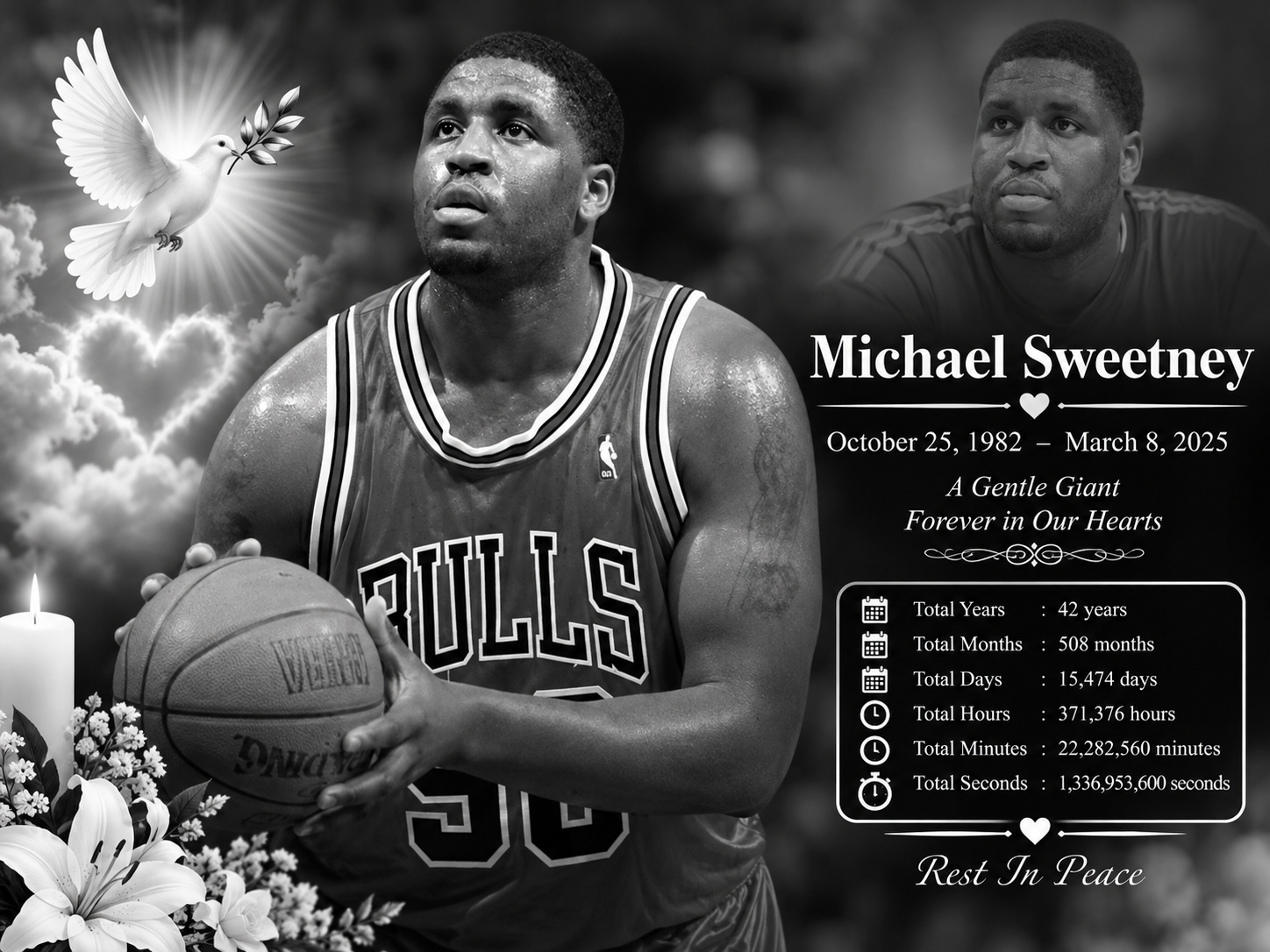
The supplied memorial image also displays the name “Michael Sweeney,” not Lauren Manning. That graphic therefore does not provide reliable biographical information about Manning. The verified record instead identifies Manning as a living 9/11 survivor born in 1961. ([Wikipedia][2])
That distinction changes the direction of the story, but it does not weaken it. There is no death scene to reconstruct and no cause of death to invent. The true outcome, as documented in September 2026, is that Manning survived the attack and continued building a life twenty-five years afterward.
Her biography therefore remains open rather than concluded by a memorial date.
The woman who entered the North Tower in 2001 became a patient, a rehabilitation survivor, an author, a speaker, a mother, an entrepreneur, and a leader whose work reached into healthcare and survivor-focused organizations.
The fire became part of her history, but it did not become the final sentence.
The unanswered question from the beginning has therefore changed shape. It is no longer whether Lauren Manning would survive.
She did.
The more revealing question is what she chose to do with the life that survival made possible.
Click Here to continue read next: PART5: The Life After Survival Took on a New Shape as Manning Turned Years of Medical Recovery Into a Career Built Around Stories, Listening, and Human Connection
Before the World Knew Her as a Survivor, Lauren Manning Was Building a Life on Wall Street, Raising a Young Family, and Moving Through Manhattan With Ordinary Ambitions
Part 4 of 16

