
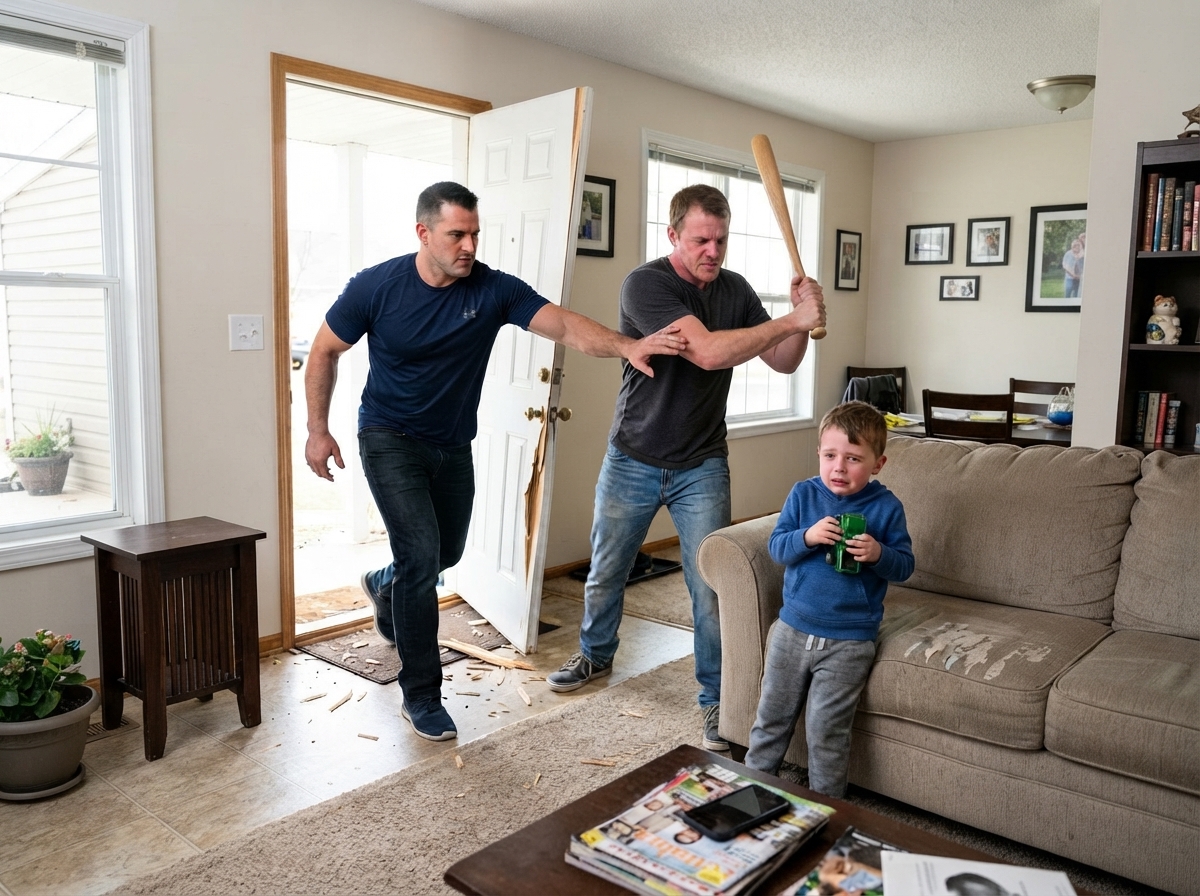
NOTE: This part focuses on Noah's growing understanding, the family's decision about age-appropriate honesty, and the emotional closure created when everyone accepts responsibility for their choices.
Noah asked the question on a rainy Tuesday evening.
"Mom, why did everybody lie?"
I was washing dishes.
Daniel was sitting at the table.
I turned off the water.
"What makes you ask that?"
He shrugged.
"I know something happened."
Daniel looked at me.
Noah continued.
"Marcus said adults believed the wrong thing about me."
I dried my hands.
"Yes."
"Why?"
I sat beside him.
"Because people were scared and angry."
"That's not a reason to lie."
"No."
He looked at Daniel.
"Dad lied too."
Daniel did not defend himself.
"Yes."
Noah's eyes widened.
"About the file?"
"Yes."
"Why?"
Daniel took a breath.
"Because I thought keeping a secret would protect people."
"Did it?"
"No."
Noah nodded.
He was quiet for a long time.
Then he asked the question I had been expecting.
"Did I do something wrong?"
I immediately shook my head.
"No."
"Then why did they say I did?"
"Because another person made a mistake."
"Why?"
"Because he was afraid."
Noah looked confused.
"Adults are weird."
Daniel laughed softly.
"Sometimes."
Noah thought about it.
Then he said, "If someone tells me to keep a secret, should I tell you?"
"Yes."
"Even if they say I'll get in trouble?"
"Especially then."
He nodded.
That was the lesson we wanted him to carry.
Not fear.
Not suspicion of every adult.
Judgment.
He needed to understand that some secrets were harmless surprises.
Birthday presents.
A planned trip.
A gift.
But secrets involving threats, fear, injuries, money, or someone telling him not to tell his parents were different.
Those should always be brought to a trusted adult.
Noah listened carefully.
Then he asked, "Is Evan still in jail?"
I hesitated.
"He's still dealing with the consequences of what he did."
"Is Marcus sorry?"
"Yes."
"Is Dad sorry?"
Daniel answered.
"Very."
Noah looked at him.
"Then why did you do it?"
Daniel's face became serious.
"Because I was afraid that telling the truth would hurt someone I loved."
Noah considered that.
"Did it hurt them anyway?"
"Yes."
The boy nodded slowly.
That answer seemed to satisfy him.
Children sometimes understand consequences better than adults do.
The next morning, Noah drew another picture.
This time, it showed a large house with three people standing outside.
The front door was enormous.
There was a baseball beside it.
Above the roof, he had drawn a bright sun.
I asked him what it meant.
"The door keeps people safe."
I smiled.
"That's one way to see it."
"And the baseball is for playing."
I looked at Daniel.
He laughed.
"Good answer."
Noah had reclaimed the object too.
The bat was no longer a symbol of the morning he had been frightened.
It was simply something used for baseball.
That mattered.
The past had become smaller.
Not gone.
Smaller.
The legal process continued in the background.
Evan's conviction became final.
Daniel's brother accepted the consequences of his actions.
The old company records were preserved.
The school completed its review.
Marcus remained in contact with us, but the relationship was different.
There was respect now.
Careful respect.
The kind built from knowing what someone had done and watching what they did afterward.
My mother was still absent from our lives.
That was a separate wound.
She had never been involved in the bat incident directly, but her influence over me had shaped how I reacted to conflict for years.
I realized that I had learned secrecy from more than one person.
Different secrets.
Different reasons.
The same result.
Silence.
Daniel and I continued counseling.
Eventually, we needed fewer sessions.
Not because everything was perfect.
Because we had learned how to speak before problems became walls.
If Daniel was worried, he told me.
If I was suspicious, I asked instead of assuming.
If Noah was frightened, we listened before explaining.
That became our family rule.
Listen first.
Explain second.
Decide third.
Never reverse those steps.
One afternoon, I received a letter from the prosecutor's office.
It contained information about the final disposition of the old evidence.
I read it carefully.
The file my father had protected would remain archived.
The evidence could no longer be hidden.
For decades, the truth had moved between people.
Now it belonged to the record.
I folded the letter.
Daniel looked at me.
"How does it feel?"
"Finished."
"Really?"
I thought.
"Almost."
"What isn't finished?"
I looked toward Noah's room.
"Us."
He understood.
Legal cases could end with a judgment.
Families did not.
Families had to live with what happened afterward.
We had to teach Noah.
We had to repair our marriage.
We had to decide which relationships deserved another chance.
We had to learn how to remember without reliving.
That took time.
One summer evening, we drove to the baseball field.
Noah played while Daniel and I sat in the bleachers.
The sun was low.
The field lights had not yet turned on.
Noah hit the ball.
It rolled toward the fence.
He ran.
I watched him laugh.
Daniel leaned toward me.
"Do you remember that morning?"
"Every day."
"Does it still hurt?"
"Sometimes."
He nodded.
"Me too."
I looked at him.
"But it doesn't control us."
He smiled.
"No."
That was the difference.
We remembered.
We didn't live there.
After the game, Noah ran toward us.
"Did you see that?"
"Of course."
"I almost hit it out."
"You almost did."
He smiled proudly.
Then he looked at the sky.
"Can we get ice cream?"
Daniel laughed.
"After dinner."
Noah groaned.
I smiled.
Ordinary arguments.
Ordinary requests.
Ordinary family life.
I had once underestimated how precious ordinary could be.
On the drive home, Noah fell asleep in the back seat.
Daniel drove.
I looked through the window.
Streetlights passed over us.
For the first time in years, I wasn't thinking about what might happen next.
I was simply present.
That was perhaps the greatest change.
Fear had once trained me to live ahead of myself.
Always anticipating the next betrayal.
The next accusation.
The next crisis.
Now I could stay in the moment.
Not because the world was perfectly safe.
Because I trusted myself to respond when something happened.
That was what my mother had taken from me.
And that was what I had rebuilt.
My own judgment.
My own voice.
My own boundaries.
When we arrived home, Daniel carried Noah inside.
I followed.
The repaired front door closed behind us.
The lock clicked.
Noah woke briefly.
"Mom?"
"I'm here."
He smiled sleepily.
"Good."
I tucked him into bed.
He reached for my hand.
"Can I ask you something tomorrow?"
"Anything."
"Even a hard question?"
"Especially a hard question."
He smiled.
Then he closed his eyes.
I sat there for a while.
I thought about how many adults had once assumed children could not handle truth.
Sometimes they couldn't handle all of it.
But children could handle honesty when it was given with care.
They could handle knowing they were believed.
They could handle being told when adults had made mistakes.
What children could not handle was being made responsible for secrets they did not create.
I would never do that to Noah.
The next morning, he asked his question.
"Why did Marcus think Dad was bad?"
I explained the old conflict in simple terms.
I told him that people sometimes make decisions based on incomplete information.
I told him Marcus had been wrong.
I told him Marcus had admitted it.
Noah listened.
Then he said, "So Dad wasn't the bad guy."
I looked at Daniel.
"No."
"Marcus wasn't either?"
"Not in the way you thought."
"And Evan?"
I took a breath.
"Evan made serious choices that hurt people."
Noah nodded.
Then he asked, "What about Grandma?"
The room went quiet.
I had known that question would come.
"Grandma made choices that hurt our family."
"Is she bad?"
I shook my head.
"I don't think people are that simple."
"What did she do?"
"She made me afraid to trust my own decisions."
"Why?"
"Because she was afraid of losing me."
Noah frowned.
"Did she lose you?"
I looked at him.
"Yes."
He thought about it.
"Because she was afraid?"
"Partly."
"That's sad."
"It is."
He was quiet.
Then he said, "Maybe people shouldn't make others scared just because they're scared."
I felt tears come to my eyes.
"That's exactly right."
He hugged me.
Daniel joined us.
For a moment, the three of us stood together in the kitchen.
The same kitchen where the story had once begun.
But it was no longer the same kitchen.
The fear was gone.
The secrets were gone.
The lies had lost their power.
The door was strong.
Our family was stronger.
And Noah knew he could ask questions.
That was enough.
Click Here to continue read next: PART8: Years Later, the Broken Door Was Only a Memory, but the Lessons From That Morning Quietly Shaped the Family We Chose to Become
The Door Exploded Open Before Sunrise, and My Son’s Terrified Face Told Me Something Was Wrong With the Story I Had Been Given
Part 7 of 8

