
The kitchen remained silent after Brandon finished reading Nicholas's letter.
The paper lay between us.
Nobody reached for it.
Outside, wind moved through the orchard, brushing branches against one another with a soft, dry sound.
Brandon looked at me.
“Did Dad really believe we would do this?”
I answered honestly.
“I don't know what he believed.”
“You do.”
“No. I know what he wrote.”
He lowered his eyes.
Melissa was crying now, but quietly. She kept wiping her cheeks with the heel of her hand as though embarrassed by the evidence of her own emotion.
Vincent remained standing.
He had the calm expression of a man who had already considered every argument they might make.
Brandon finally spoke.
“We weren't trying to hurt you.”
I looked at him.
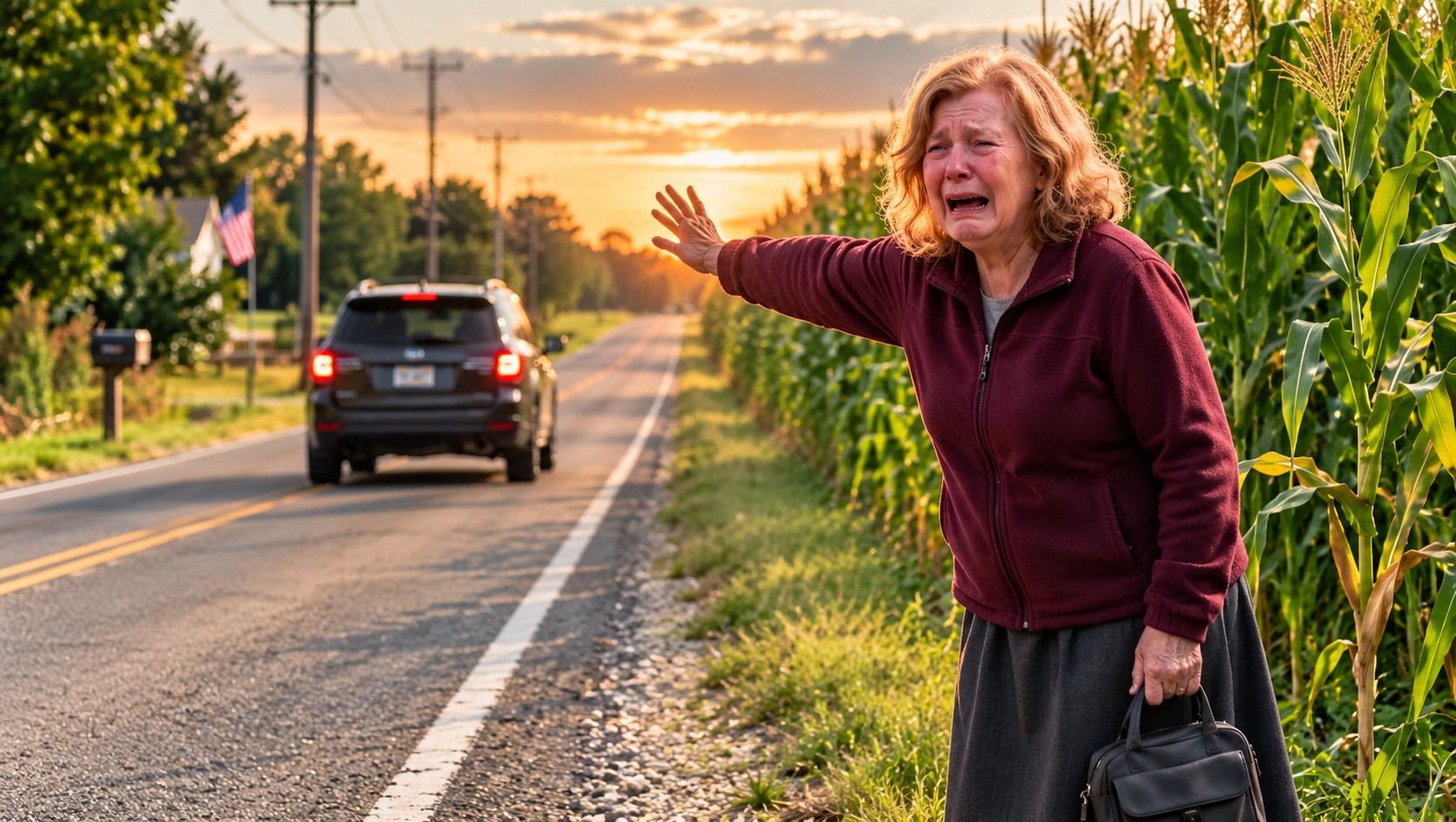
“You left me beside a road.”
His jaw tightened.
“We were under pressure.”
“That explains your fear. It does not explain what you did.”
Melissa whispered, “We thought once everything was settled, you would understand.”
I turned toward her.
“Understand what?”
She did not answer.
“Say it.”
She swallowed.
“That we didn't know what else to do.”
The honesty was painful because it arrived so late.
I had wanted an apology.
What I had received instead was an explanation.
They were desperate.
Brandon had stretched himself far beyond what he could afford. His condominium represented a life he had built around appearances, and keeping it had become difficult.
Melissa had accumulated debts she had hidden from us.
They had both looked at the orchard and seen money.
Not rows of trees.
Not the farmhouse where they had grown up.
Not the land Nicholas and I had worked through forty years of heat, rain, frost, and failed seasons.
Money.
A way out.
Brandon sat down.
“We thought the developer's offer could solve everything.”
“For you.”
“For all of us.”
I almost smiled.
“You didn't ask me.”
“You would have said no.”
“Yes.”
“That is why.”
The words landed harder than anything else he had said.
He seemed to realize it only after hearing himself.
“You needed my agreement,” I said.
He nodded.
“So you decided I shouldn't be there to give it.”
His silence answered.
Melissa looked toward the window.
“I knew it was wrong.”
I waited.
“I knew,” she repeated. “But I was scared.”
“Scared of what?”
“Losing everything.”
I thought about that.
Then I asked quietly, “What did you think I would lose?”
She looked at me.
“My home?”
She nodded.
“My life?”
Another nod.
“My husband?”
Her face crumpled.
“Yes.”
“And you still thought I should be the one to sacrifice?”
She could not answer.
For years, I had been the person who solved problems.
When Brandon needed help with tuition, Nicholas and I found a way.
When Melissa needed money for something she had convinced herself was urgent, we helped.
If one of them made a mistake, we softened the consequences.
That was what parents did, I had believed.
You caught your children when they fell.
Somewhere along the way, my children had learned a different lesson.
They had learned that I would always be there to catch them.
They had mistaken love for an unlimited guarantee.
Brandon looked at the deed.
“What are we supposed to do now?”
I knew the question.
It was the same question I had heard throughout their childhood.
What do we do now?
What can you fix?
Who can you call?
How much can you give?
But this time I did not answer immediately.
I looked at Vincent.
He remained silent.
He understood.
The decision had to come from me.
“I am not selling the orchard.”
Brandon's shoulders dropped.
“I am not signing it over.”
Melissa wiped her eyes.
“And I am not moving into a facility because you have decided my life is inconvenient.”
Brandon stared at the floor.
“We thought you needed somewhere easier.”
“No.”
“You're alone.”
“I have lived alone for three days.”
“You can't manage everything forever.”
“Neither can you.”
That stopped him.
I continued.
“You are adults. Your debts are yours. Your expenses are yours. Your decisions are yours.”
Brandon looked wounded.
“You're our mother.”
“Yes.”
“You're supposed to help us.”
“I have helped you.”
“You could still help.”
I felt the old instinct rise.
It would have been easy.
I could ask Vincent about loans.
I could sell something smaller.
I could use orchard profits.
I could pay a portion of Brandon's debt and help Melissa negotiate hers.
I could make their crisis disappear.
And then, eventually, they would have another crisis.
I looked at Nicholas's letter.
He had understood this.
He had seen the pattern.
Perhaps that was why he had written what he did.
He had not wanted me to punish our children.
He had wanted me to stop rescuing them from every consequence.
“Your father wanted you to become adults,” I said.
Brandon's face tightened.
“You think we're children?”
“No.”
“Then why are you treating us like we can't make our own decisions?”
“Because you made a decision that required me to disappear.”
That ended the argument.
Melissa reached for the letter.
She read it again.
This time, she did not cry.
She simply sat there.
The afternoon light shifted across the kitchen floor.
Vincent gathered the legal papers.
“There is one more matter.”
Brandon looked up.
“The signature.”
He explained that the document claiming Nicholas had transferred control would have to be examined.
If it was not authentic, relying on it could have serious consequences.
Brandon immediately said he had not forged anything.
Melissa said nothing.
I looked at her.
“Melissa?”
She shook her head.
“I didn't sign it.”
“Did you know about it?”
She hesitated.
That was enough.
Brandon turned toward her.
“You said it was handled.”
“I thought you handled it.”
“I gave it to you.”
“You told me Dad had signed it.”
“I thought he had.”
Their voices rose.
I watched them argue over a piece of paper neither could now explain.
The document that had been so powerful two days earlier had become evidence of how badly they had gambled.
Vincent stopped them.
“Enough.”
The room went quiet.
“You have already made the situation worse by acting before verifying ownership.”
Brandon looked at me.
“What do you want us to do?”
I answered carefully.
“I want you to leave.”
Melissa looked startled.
“Mom—”
“Not forever.”
Neither moved.
“I need time.”
Brandon stood.
He looked toward the hallway that led to the rooms where he had grown up.
For a moment he seemed to remember himself as a boy.
Then the memory disappeared behind embarrassment.
He reached for the door.
Before he left, he turned.
“Are you really not going to help us?”
I could have softened the answer.
Instead, I told him the truth.
“You need to learn how to help yourselves.”
The door closed.
Melissa remained on the porch for another minute.
Then she followed him.
Vincent watched from the kitchen.
“You did the right thing.”
I shook my head.
“I don't know.”
“You will.”
I walked outside.
The orchard stretched ahead of me.
Nicholas and I had planted the first trees when we were young enough to believe forty years was an impossibly distant future.
Now those trees were old.
So were we.
I touched the rough bark of one of the nearest trunks.
There were scars in it from storms.
Branches had been cut away.
New growth had appeared beside old wounds.
I thought about what Vincent had said.
Damaged things could survive.
But survival did not mean returning to what had existed before.
That evening, I sat alone on the farmhouse porch.
The road where Brandon had left me was only a few miles away.
I could still picture the dust.
The suitcase.
The closed car door.
But I no longer saw myself standing there as a helpless widow.
I saw the moment differently.
My children had believed they were removing me from my future.
Instead, they had forced me to look directly at it.
And for the first time, I understood that forgiveness would have to mean something different from surrender.
Click Here to continue read next: PART4: I Could Forgive My Children Without Handing Them the Life They Had Tried to Take From Me, and That Changed Everything
My Son Said He Was Taking Me Somewhere Safe, But the Road Ahead Told Me Exactly What He Had Already Decided
Part 3 of 4

