
Six months later, Vanguard Dynamics no longer looked like Aaron's company.
The name remained.
The factories remained.
The engineers remained.
The workers remained.
But the ownership had changed, and with it came a different culture.
Vance Enterprises had completed the restructuring without mass layoffs.
The patent licenses were restored under new agreements.
The debt was repaid according to the settlement.
The sixty million dollars recovered from Daniel's accounts went toward stabilizing the company and compensating the employees who had been placed at risk.
The Prescott family name disappeared from the executive floor.
Aaron did not fight it.
He surrendered his remaining controlling interest as part of the legal settlement.
He also cooperated with the investigation.
Daniel was prosecuted.
Jasmine accepted responsibility for her role and became a witness against him.
Victor survived.
He eventually moved away from the city.
Before leaving, he gave me one final piece of advice.
"Don't spend the rest of your life proving you were right."
I remembered that sentence often.
Because he was right.
Being right had never been the real victory.
The victory was no longer needing anyone else to acknowledge it.
I moved into a smaller house.
Not the Prescott estate.
Not the Vance mansion.
A place with wide windows, a garden, and enough quiet for me to hear my own thoughts.
I began traveling again.
This time, I chose the destinations.
I sat wherever I wanted on airplanes.
Sometimes by the window.
Sometimes in the aisle.
Once, on a completely ordinary commercial flight, I took the middle seat because an elderly woman wanted the window.
She thanked me.
I smiled.
The gesture felt strangely meaningful.
I had spent years thinking a seat represented my place.
Now I knew better.
One afternoon, George told me someone was waiting outside.
"Aaron."
I looked up from my desk.
"Did he say why?"
"No."
I considered telling George to send him away.
Instead, I said, "Let him in."
Aaron entered a few minutes later.
He looked different.
Not broken.
Not powerful.
Simply older.
He wore a plain suit.
No expensive watch.
No entourage.
No company badge.
He stopped several feet from my desk.
"How are you?"
"Well."
He nodded.
"I'm glad."
I closed the folder in front of me.
"Why are you here?"
He took a breath.
"I wanted to return something."
He placed a small box on the desk.
I opened it.
Inside was my wedding ring.
I had left it behind the night I moved out.
Aaron had kept it.
"I thought you threw it away."
"I couldn't."
I touched the ring once.
Then closed the box.
"You should keep it."
He looked surprised.
"I don't want it."
"Then sell it."
He smiled faintly.
"I don't think I could."
We stood in silence.
Then he said, "I've been working."
"Where?"
"A small consulting firm."
"How small?"
He laughed.
"Small enough that I answer my own emails."
I smiled despite myself.
It was the first time we had laughed together in months.
Aaron looked down.
"I owe you an apology."
"You've apologized."
"Not properly."
He paused.
"I was ashamed of how much I needed you. So I convinced myself I didn't need you at all."
I listened.
"I made your support feel like weakness because I was afraid it would make me feel weak."
He swallowed.
"And when Jasmine gave me an easier way to feel powerful, I took it."
I nodded.
"I know."
"I hurt you."
"Yes."
"I don't expect forgiveness."
I looked at him.
"That's good."
He smiled sadly.
"I deserved that."
He picked up the box.
"Can I ask you something?"
"What?"
"Are you happy?"
I thought about it.
Then answered honestly.
"Yes."
He nodded.
"Good."
He turned toward the door.
"Aaron."
He stopped.
I walked around the desk.
"I don't hate you."
He looked back.
"I don't know whether that helps."
"It isn't supposed to."
He smiled.
"Fair enough."
He left.
I stood by the window after he was gone.
Outside, the garden moved gently in the afternoon wind.
There had been a time when I thought the end of our marriage would feel like a victory.
It didn't.
It felt like an empty room after the furniture had been removed.
But empty rooms can be rebuilt.
So I did.
I expanded the research institute.
I created scholarships for young engineers.
I made sure the workers at Vanguard had stronger protections than they had before.
I stopped hiding my family's involvement in the businesses I helped build.
Not because I wanted recognition.
Because secrecy had nearly destroyed something important.
Months later, I received an invitation to the opening of a new research center.
I almost declined.
Then I saw the name of the lead engineering program.
It was dedicated to my late grandfather.
I went.
The building was bright and modern, filled with young engineers carrying laptops and arguing over prototypes.
I stood near the back during the ceremony.
A young woman approached me.
"Ms. Vance?"
"Yes?"
"I just wanted to thank you."
"For what?"
She smiled.
"I got the scholarship."
I shook her hand.
"Then make something useful."
She laughed.
"I will."
When she walked away, I looked around the room.
This was what I had been protecting.
Not a marriage.
Not a reputation.
Not a company logo.
People.
Work.
Possibility.
My phone vibrated.
A message from Michael.
He had sent a photograph.
Vanguard's newest prototype had passed its final safety test.
The caption read:
"We're finally building it right."
I smiled.
Then I put the phone away.
That evening, I returned home alone.
I made tea.
Opened the windows.
And sat quietly in the living room.
For the first time in years, there was no one waiting for me to fix something.
No husband expecting me to rescue his company.
No secretary trying to take my place.
No family member calculating what my inheritance could buy.
Just silence.
And I discovered that silence could be peaceful when nobody was using it as punishment.
I looked at the small box containing my old wedding ring.
I had not thrown it away.
Not because I wanted Aaron back.
Because some parts of your life deserve to remain remembered without remaining unfinished.
I placed the box in a drawer.
Then I closed it.
The next morning, I boarded a plane.
There was no private jet.
No executives.
No staged seating arrangement.
No one watching to see who sat beside whom.
I found my seat by the window.
A flight attendant smiled.
"May I help you with anything?"
I looked out at the runway.
"No, thank you."
The plane began moving.
As it lifted above the city, the streets became thin lines beneath the clouds.
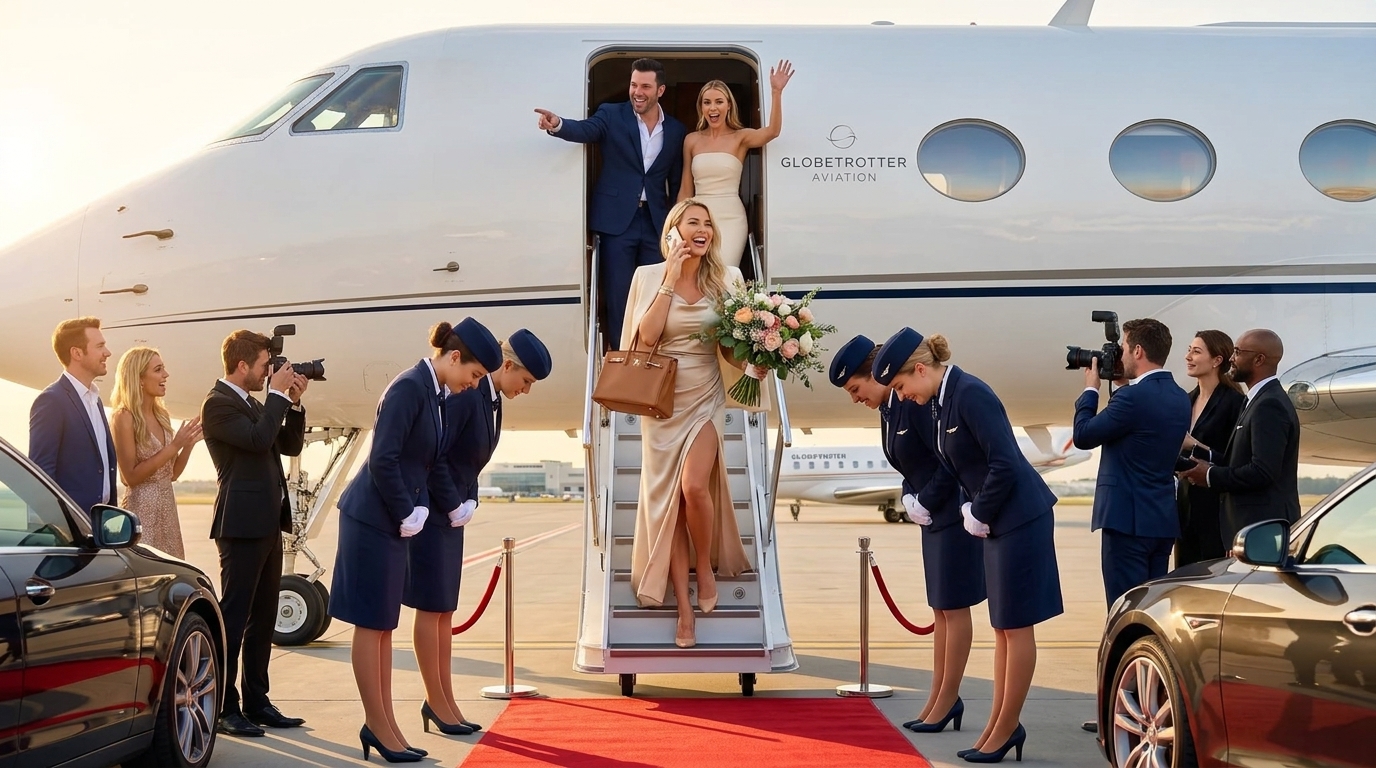
I thought about the woman who had once stood at the entrance of a private jet while her husband gave away her seat.
She had believed she was losing her marriage.
She had been wrong.
She was losing the version of herself that had spent too long asking permission to matter.
The seat had never been the point.
The choice had.
And when the plane disappeared into the morning sky, I finally understood that leaving had not been the end of my story.
It had been the first decision I had made entirely for myself.
The End
Read more original stories on Feel Every Story.
She Took My Seat Before Takeoff, and My Husband Made It Clear Whose Comfort Mattered More Than Four Years of Marriage
Part 8 of 8

