
Mara did not want to give the interview.
The archive director explained that a documentary team wanted to record the history of the Bellweather records. They wanted a family member to describe how the documents had been discovered.
Mara immediately suggested someone else.
“Ask the historian.”
“He doesn't know what it was like.”
“Ask Mom.”
“She doesn't want to.”
“Rose?”
“She said absolutely not.”
Mara sighed.
“Then don't do it.”
The director smiled.
“You're the last person left.”
Mara laughed.
“That sounds suspiciously like pressure.”
“It is.”
She agreed reluctantly.
The interview was scheduled for Saturday.
Helen knew about it.
“You don't have to tell everything,” she said.
Mara looked at her.
“That's exactly what scares me.”
“Why?”
“Because I don't want to become like you.”
Helen's expression changed.
Mara immediately regretted the words.
“I didn't mean—”
“I know.”
Helen sat beside her.
“What do you mean?”
“I mean I don't want to decide what people can handle.”
Helen nodded.
“Then don't.”
Mara looked at her.
“It's that simple?”
“No.”
Helen smiled.
“But it starts there.”
The interview took place in the archive.
The cameras were small.
The room was quiet.
The interviewer asked Mara about the first photograph.
She described the envelope.
The clipping.
The hidden room.
The ledgers.
The family members who had been separated.
Then came the question she feared.
“What was the hardest part?”
Mara paused.
She could have said the discoveries.
She could have said the lies.
Instead, she answered honestly.
“The hardest part was realizing that people I loved had been afraid of the truth for so long that they forgot the truth was mine too.”
The interviewer lowered her notes.
Mara continued.
“I was angry.”
“Are you still?”
“Yes.”
“With whom?”
Mara considered.
“Different people, for different reasons.”
She did not name anyone as entirely good or entirely evil.
Her family story had taught her that people were complicated.
Fear could make a person lie.
Love could make a person lie.
Shame could make a person hide.
Good intentions could still cause harm.
But consequences remained.
The interviewer asked about Daniel.
Mara answered carefully.
“He did things he regrets.”
“Do you forgive him?”
Mara smiled slightly.
“That is between him and the people he hurt.”
The interviewer nodded.
“What about your mother?”
“I love her.”
“Even after everything?”
“Because of everything.”
The interview ended after two hours.
Mara thought that was the end.
It wasn't.
The documentary team later found another photograph.
It showed the boarding house on the morning after the fire.
In the background was a man standing beside a vehicle.
The image was too distant to identify him.
But on the vehicle's door was a symbol.
Mara recognized it from one of the old ledgers.
A small black circle crossed by a line.
The mark had appeared beside several names.
She brought it to Rose.
Rose stared.
“That was the transport company.”
Mara frowned.
“Transport?”
“That's what they called it.”
“Who owned it?”
Rose looked at the paperwork.
“Several people.”
“Any names?”
“One.”
She pointed.
Mara read the name.
It was unfamiliar.
But the company had operated until recently.
The family did not investigate.
The authorities did.
The inquiry uncovered financial records connecting the old operation to a modern company that had changed ownership several times.
No living family member was accused of wrongdoing.
The connection was historical.
But it demonstrated something important.
The old network had not vanished overnight.
It had fragmented.
Pieces had been absorbed into ordinary businesses.
The discovery made Mara think about how history survived.
Not as a straight line.
As fragments.
A photograph.
A receipt.
A signature.
A box forgotten in storage.
A name written on the back of a picture.
Any one piece could look meaningless.
Together, they told a story.
Months later, Mara received a letter from a woman whose grandmother's name appeared in the recovered records.
She had spent years believing her grandmother had abandoned the family.
The archive proved otherwise.
Her grandmother had been hiding from an abusive husband.
The woman wrote that knowing this changed the way she understood her grandmother.
Not because it made the past happy.
Because it made it accurate.
Mara showed the letter to Helen.
Helen cried.
“This is why we kept the records,” she said.
“No.”
Helen looked at her.
“This is why we told the truth.”
Mara smiled.
“That too.”
Anna began volunteering at the archive.
She had developed an interest in preserving photographs.
Rose teased her.
“You'll become as obsessed as Mara.”
Anna smiled.
“Maybe.”
Daniel occasionally brought coffee.
He never asked to be praised.
He simply helped.
Helen began gardening again.
Small things.
Tomatoes.
Herbs.
Flowers.
She said she liked watching something grow without needing to know what it would become.
Mara understood.
One afternoon, Helen called her into the bedroom.
“I found something.”
Mara smiled.
“Another secret?”
“No.”
Helen opened a drawer.
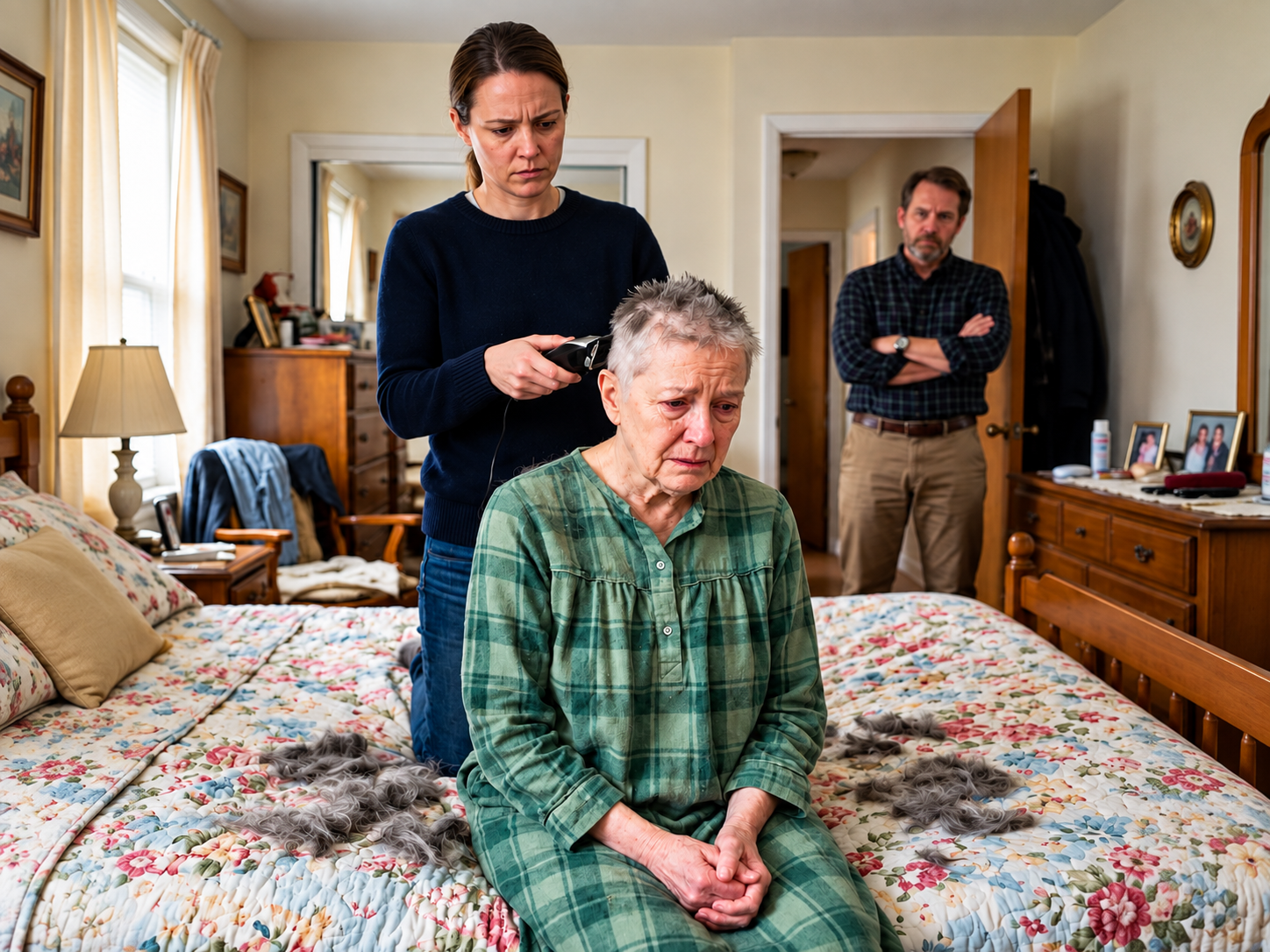
Inside was the old pair of clippers.
Mara stared.
“You kept them?”
“I couldn't throw them away.”
“Why?”
Helen shrugged.
“They were there when everything changed.”
Mara picked them up.
The cord was wrapped neatly.
The blades were dull.
She looked at her mother.
“Do you regret cutting your hair?”
Helen laughed.
“Every morning for the first month.”
Mara smiled.
Then Helen became serious.
“I thought I needed to cut away the person I had been.”
“What changed?”
“I realized she deserved compassion too.”
Mara placed the clippers back.
That sentence stayed with her.
Her mother had spent years judging her younger self.
But the girl who had been seventeen had been frightened.
The woman who had escaped had been exhausted.
The mother who had lied had been terrified.
None of those choices became harmless because the reasons were understandable.
But understanding them allowed the family to stop turning the past into a courtroom.
That evening, Anna asked Mara whether she wanted to visit Bellweather again.
Mara laughed.
“Why?”
“I want to see the place without being afraid.”
Mara thought about it.
“Okay.”
They went the following weekend.
The old foundation was covered in grass.
The well remained sealed.
The trees had grown taller.
Anna stood where the boarding house entrance had once been.
“I don't feel anything.”
“That's okay.”
“I expected something.”
“Like what?”
“I don't know.”
Mara looked around.
“This place doesn't own you.”
Anna smiled.
“I like that.”
They sat beneath a tree.
For the first time, Bellweather looked like a piece of land rather than a wound.
Anna leaned back.
“My mother saved me.”
Mara nodded.
“And your mother?”
“She saved herself too.”
Mara looked at her.
“That sounds important.”
“It is.”
They stayed until sunset.
On the way home, Anna said, “I think I finally understand.”
“What?”
“Why you kept telling me that the past isn't a prison.”
Mara smiled.
“Did I?”
“Yes.”
“What do you think it means?”
Anna looked out the window.
“It means you can remember where you came from without living there.”
Mara smiled.
“That sounds right.”
Back at Helen's house, they found Helen waiting on the porch.
She looked at both daughters.
“You took your time.”
Anna laughed.
“We were talking.”
“About what?”
Mara looked at Helen.
“Home.”
Helen smiled.
Then she opened the door.
They went inside together.
Click Here to continue read next: PART16: Years After the First Cut of the Clippers, Mara Finally Understood What Her Mother Had Been Trying to Say Without Words
By the Time the Last Gray Hair Fell, Mara Knew Her Mother Was Hiding Something More Painful Than Fear
Part 15 of 16

